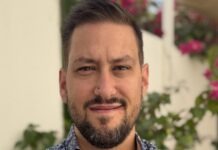

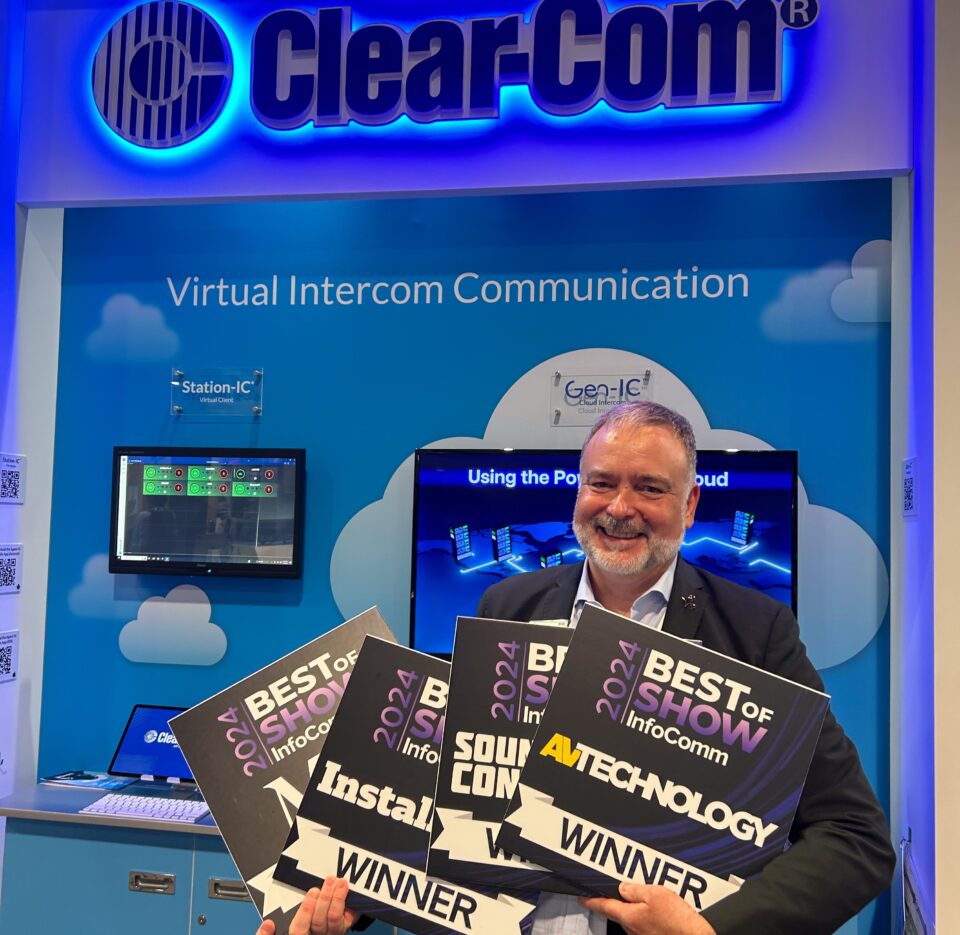
A conversation with Bob Boster, President of Clear-Com, USA, reflecting on 19 years of leadership, strategic decision-making, and guiding the company into the AI era.
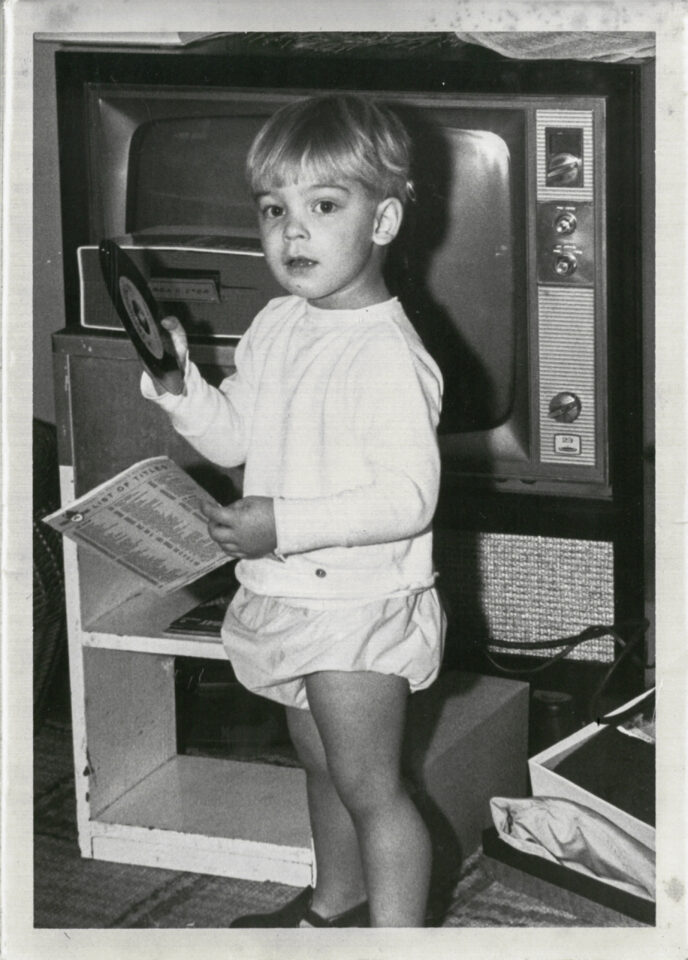 Family Roots and Upbringing: A Northeastern Heritage
– When and where were you born?
I was born on June 15, 1965, in Trenton, New Jersey. It was not the best of places, and we didn’t stay there long. My family moved around quite a bit during my childhood, driven mostly by the evolution of my parents’ careers.
– What were the times like for your family?
As a family, we placed a lot of importance on education, the arts, and culture. My parents were college-educated and believed in creating meaningful experiences for their children. While I didn’t travel internationally as a child, we did travel domestically quite a bit.
— Just to dig a little deeper—where do your parents originate from, in terms of heritage?
Both sides of my family have deep American roots. As I mentioned earlier, my mother’s family came from outside Harrisburg, Pennsylvania, and my dad was also from the same general region. I’d describe my background as typical Northeastern U.S., grounded in civic-minded and professionally driven values.
 – Was your family primarily based in Pennsylvania?
My parents both had ties to Pennsylvania—that’s actually where they met. My mother’s family was from an area just outside Harrisburg, which is the state capital. Her father was a lawyer, and she was on an academic path that got interrupted when I was born. But she eventually returned to her education and completed her degree at the University of Connecticut. She went on to work professionally as an economic developer.
— And what about your father? What field was he in?
My father studied at Penn State University and was trained in the field of planning. He worked in several areas—land use planning, transportation planning, solid waste management, and other kinds of public resource planning. His work was very much about the public good and infrastructure.

— Did you grow up with siblings?
Yes, I have one brother from my parents’ marriage. Later on, my parents separated while I was still in high school. My father eventually remarried, and from that marriage I have a stepsister—though I just consider her my sister.
We’ve always had a close relationship.
Growing Up on the Move: Career Shifts and Geographic Transitions
— Was all the travel during your childhood work-related, or was it more about adventure?
Mostly adventure, although both my parents were executive directors in their respective fields, and their careers involved a lot of turnover. In the U.S., when there’s a political shift in a local, county, or state government, it’s common for incoming leadership to dismiss senior personnel and bring in their team.
My parents were often affected by those transitions, which meant we moved frequently. So yes, we did some travel just for exploration, but much of the moving was due to changes in my parents’ jobs. Over the years, I lived in New Jersey, Pennsylvania, Connecticut, upstate New York, Massachusetts, and North Carolina.

First Memory on Stage: A Childhood Introduction to Performance
— What’s your first childhood memory?
Probably being on stage in a community theater production of 13 Clocks by James Thurber. It was performed at Amherst College. I was on stage for most of the performance. So my earliest memory is likely from those rehearsals. I was about eight years old at the time.
School Years: A Love for History and a Balanced Attitude
— What were your favorite subjects in school? And what kind of student were you — a model pupil or more of a troublemaker?
My favorite subject was probably history, although in the U.S., we also have a subject called social studies — a combination of civics, culture, and political science. I was a pretty good student. I earned good grades and was generally well-behaved. I wasn’t disruptive in class and usually stayed aligned with the teacher.

High School and University: From Massachusetts to North Carolina
— Let’s go back to your education. You mentioned going to school in Connecticut or North Carolina?
I attended a private boarding school in Massachusetts called Northfield Mount Hermon for the last three years of high school. Later, I went to the University of North Carolina at Chapel Hill. I started there in 1983 as a full-time student.
— Was all the travel during your childhood work-related, or was it more about adventure?
Mostly adventure, although both my parents were executive directors in their respective fields, and their careers involved a lot of turnover. In the U.S., when there’s a political shift in a local, county, or state government, it’s common for incoming leadership to dismiss senior personnel and bring in their team.
My parents were often affected by those transitions, which meant we moved frequently. We did some traveling just for exploration, but much of the moving was due to changes in my parents’ jobs. Over the years, I lived in New Jersey, Pennsylvania, Connecticut, upstate New York, Massachusetts, and North Carolina.
 Early Mentors: How Keith McMillen Shaped My Professional Outlook
— Who was your first professional mentor, and when did you meet them?
Well, I suppose I had a few mentors earlier in some of my artistic endeavors before I officially entered my professional career. But if I focus specifically on my professional path, I was strongly influenced by the Director of Engineering at Orban at the time—a man named Keith McMillen.
— What kind of work did Keith do?
Keith is a fascinating individual. He’s done extensive work in instrument design over the years and is likely well known among those in the music technology and instrument-building community. He’s worked with companies like Oberheim and several others, contributing to the development of music-making technology for a long time. Today, I believe he runs his own company, Keith McMillen Instruments.
— What made him stand out as a mentor?
Keith was an incredible mentor, without ever explicitly trying to be one. And honestly, that’s the best kind of mentor. Someone who doesn’t just lead by example, but who shares their insights in a way that feels open and accessible. Keith embodied that perfectly. He never positioned himself as “the teacher,” but I felt his guidance profoundly.

The Most Important Lesson: Believing in Unconventional Talent
— What’s the most important lesson Keith taught you—something that’s stayed with you ever since?
I learned a lot from Keith, and he wasn’t the only person around me at that time who contributed to my development—but his influence was foundational.
— What exactly did he help you realize?
The most important lesson he taught me—and one that has stuck with me ever since—is the value of being open to help from people who may not have formal experience but are intelligent, capable, motivated, and eager to learn.
— How did he put that into practice?
Keith had an exceptional ability to bring together individuals who didn’t necessarily fit the mold of traditional technical talent, but who brought fresh perspectives and energy to the table. That openness to unconventional contributions became a core part of my leadership style. Over the years, it’s made a big difference.
 Staying Motivated as a Young Leader: People Were Always the Fuel
— And what about your early years as a young entrepreneur or leader? What drove you during moments of burnout or self-doubt? What kept you going every day?
I’ve always drawn deep inspiration from my colleagues and collaborators—the people I work with. That’s been a constant theme throughout my entire career, regardless of role or responsibility.
— Has that changed as you’ve taken on more senior roles?
Even now, being in a position of global leadership for a brand as iconic as Clear-Com, that sense of inspiration hasn’t faded. You know, the Clear-Com name has become so deeply recognized that it’s often used generically—like people say “Clear-Com” when they mean intercom, whether it’s our product or not.
— What does that responsibility feel like?
To be entrusted with a brand that holds that kind of cultural weight is humbling. And in every chapter of my career, what’s consistently fueled my motivation is the people—the professionals around me who show up, who dedicate their time, energy, passion, creativity… or sometimes, the exact opposite—order, precision, structure.
— Is it really about the team?
It doesn’t matter what their specific contribution is. What matters is their engagement, their commitment, and the shared belief in what we’re building together. That sense of mutual investment has always kept me going.
— That’s beautiful.
You just have to be willing to see them.
 Company Culture at Clear-Com: Inherited Values and Human Connections
— As a leader, how important is team culture to you personally?
It’s essential. At the end of the day, you don’t want to just manage people — you want to work with people you want to work with. You’re not just their boss; you’re their collaborator. That sense of shared purpose matters.
— Do you see your team as a kind of extended family?
Absolutely. You build lasting friendships with the people you work with closely and over time. When someone on your team has a major life moment — a new child, a house purchase — and you feel genuinely happy for them, that says something about the relationship. That human connection is a huge part of leadership.
— What kind of company culture do you aim to create or support at Clear-Com?
The great thing is, I didn’t have to create the culture here — I inherited it. From day one, Clear-Com has been built on two core values: mutual respect among team members and taking care of the customer. That’s the foundation.
— What does that look like in practice?
Even during tough times — when we struggled with manufacturing or component shortages — the reason Clear-Com survived and retained loyalty was because we supported our customers. When someone called for help, we were there. That’s the culture: we look out for each other, and we look out for the people we serve.
— Is your job as a leader to maintain that standard?
Exactly. My role is to make sure that new people coming in can see that culture, feel it, and integrate into it. Occasionally, yes, you have to reinforce the values directly, but more often than not, people recognize it quickly. I don’t need to build that culture — I just carry it forward.

Joining Clear-Com: From Sales Role to Brand Stewardship
— If I’m correct, you joined Clear-Com 19 years ago?
Exactly right. Almost at my 20th anniversary now.
— That’s a major milestone! Let’s rewind for a moment. You were 41 when you joined. Where was Clear-Com as a company at that time? What stage was it in?
It was a challenging period. When I came in, Clear-Com was part of the Vitec Group, alongside a variety of other companies — most of the major tripod manufacturers, lighting companies, and other brands focused on systems surrounding the camera.
— Was Clear-Com already the strong global brand it is today?
Not quite. The brand was respected, but we were going through tough times. There were real struggles with manufacturing — delays in shipping, component shortages, and quality control issues. Those operational limitations held us back. And on top of that, Vitec had recently acquired another intercom brand, Drake Electronics from the UK, so there was some internal restructuring underway.
— What role were you hired for initially?
I joined as the Western Regional Sales Manager, based in California. At the time, I had already held several leadership positions — I’d been Managing Director of a UK office for another company, led product management, and worked in regional sales.
— Why go back to a frontline sales role after that?
Honestly, I was ready for a shift. I had been working in the radio business, which was in real commercial decline at the time. I needed to move into a space with broader long-term viability. Clear-Com made sense because I had a background in both live theater and broadcasting — two of its primary markets. So, when the opportunity came up, I said: “Absolutely. I’m ready to take on a sales role. Please consider me.”
 From Sales Role to Strategic Growth: The Turning Point at Clear-Com
— Was Clear-Com your first job in sales?
No, I had already been in sales during a couple of earlier roles. I was with ENCO Systems before, and I had a sales position there covering the Western U.S. I left that role to take up the Western Regional Sales position at Clear-Com — so at that point, I was staying within the sales track.
— What was the onboarding experience like at Clear-Com?
When I arrived, I reported to Ed Fitzgerald — someone who really taught me a lot about intercom. He was a great person and one of the people who helped carry the Clear-Com culture forward over the years. Ed looked at my résumé and said, “Frankly, I could just as easily be working for you as you for me.” But then he added, “If it’s between you and me, I would suggest that you don’t start here. We’re struggling to ship product.”
— That’s a bold thing to say to a new hire.
It was. But I appreciated the honesty. I told Ed I’d give it a shot anyway. And we got through it — we took care of customers, we found B-stock to cover delays, we solved problems for people. We kept the flame alive until the business could regain its footing.
 — What were the first major changes that turned things around?
A key milestone was the decision to merge Clear-Com and Drake under the Clear-Com brand. Then we launched the Eclipse family, which became our flagship product in broadcast. It introduced some forward-looking technology and helped us stand out in several regions.
— So that helped stabilize the business?
That was the beginning of it. We also improved on the manufacturing side. But even then, it was clear that the Vitec Group wasn’t the right long-term home for us. Vitec’s model worked well for steady-volume products — like tripods or lighting — but our sales were more variable, more complex. It didn’t quite align.
— What happened next?
The CEO at the time realized this and initiated conversations that eventually connected us with HME — HM Electronics in Southern California. At the time, HME had a wireless intercom business that was competitive with ours, but they also operated in other sectors and had real manufacturing capability.

They acquired Clear-Com and merged their pro audio division with ours under the Clear-Com brand. I was involved in the entire process of bringing those organizations together. By then, I had already served as Director of Sales for a big part of the world and was promoted to VP of Sales during the acquisition.
— Was it a smooth transition?
It was a serious effort — lots of moving parts. HME had a strong manufacturing infrastructure and wireless expertise that we lacked. On our side, we had good technology but needed help producing at scale. Combining those strengths sets us up for the next phase of development.
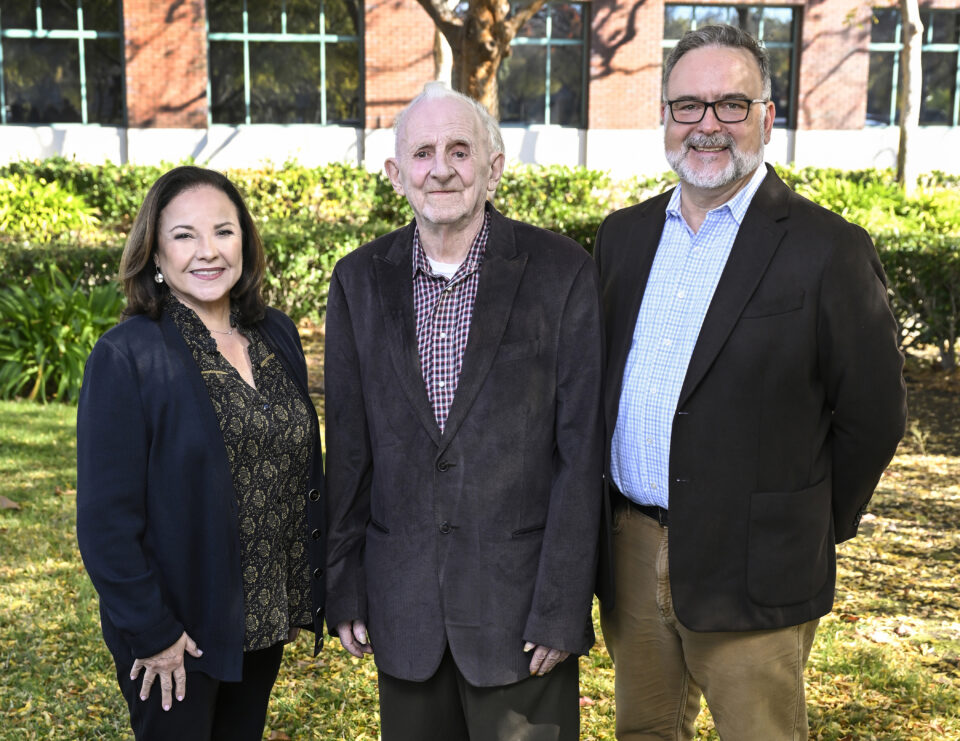
A Strategic Merger That Worked: Clear-Com and HME Unite
— It sounds like both Clear-Com and HME saw a strong opportunity in that partnership. Would you describe it more as a strategic fit or something deeper?
Deeper. It was the perfect kind of “1 + 1 = 3” acquisition — the kind that everyone hopes for, but that rarely works out that way in reality.
— A lot of mergers collapse within the first couple of years.
Exactly. And I think the reason it worked in our case is largely due to the leadership of our CEO at the time, Mitzi Dominguez. She was running the Clear-Com side of the business during the HME acquisition and played a huge role in visualizing what that integration would look like.
— What did she bring to the table?
Mitzi had a real vision for how the collaboration could work — not just operationally, but culturally. She made it her mission to bring those two organizations together in a way that was effective and lasting. She’s been a great mentor to me over the years, and that moment was a defining example of her leadership.

Life Beyond Work: Family, Music, and Craft Beer
— Before we dive back into business topics, I want to ask something more personal. Do you have kids or a family? What does your life look like outside of work?
Great question. Yes — I’m very happily married. This summer will be our 10th anniversary. I have a daughter from my first marriage, and my wife has two children from her first marriage — a daughter and a son. I consider all three of them my children.
— Are they grown?
— Yes, they’re all adults now and out of the house. Fortunately, we live close to some of them, so we get to see them often. I’m a pretty family-oriented person. When I’m not traveling for business, I prioritize spending time with family above anything else.
— What do you enjoy doing at home?
One of my favorite things is cooking and entertaining close friends and family. I worked in restaurants through college — mostly in kitchens — so I’m quite comfortable in that space. I love putting meals together and creating an atmosphere at home.
— What else are you passionate about?
Live music is a big one. I especially enjoy independent music — not just indie rock, but all kinds of genres that sit outside the mainstream. My perfect evening is a live show with 60 people in the room and a great performance on stage.
 — Any other hobbies?
I’m a passionate craft beer enthusiast. I enjoy exploring local breweries, learning about beer styles, and tasting what different regions are doing in the craft scene. That’s a big hobby of mine.
— What about sports?
I still follow women’s soccer and basketball closely. My wife and I are season ticket holders for our local professional women’s soccer team — it’s something we both love and share as a hobby. It’s part of our weekend routine, and we look forward to it every season.
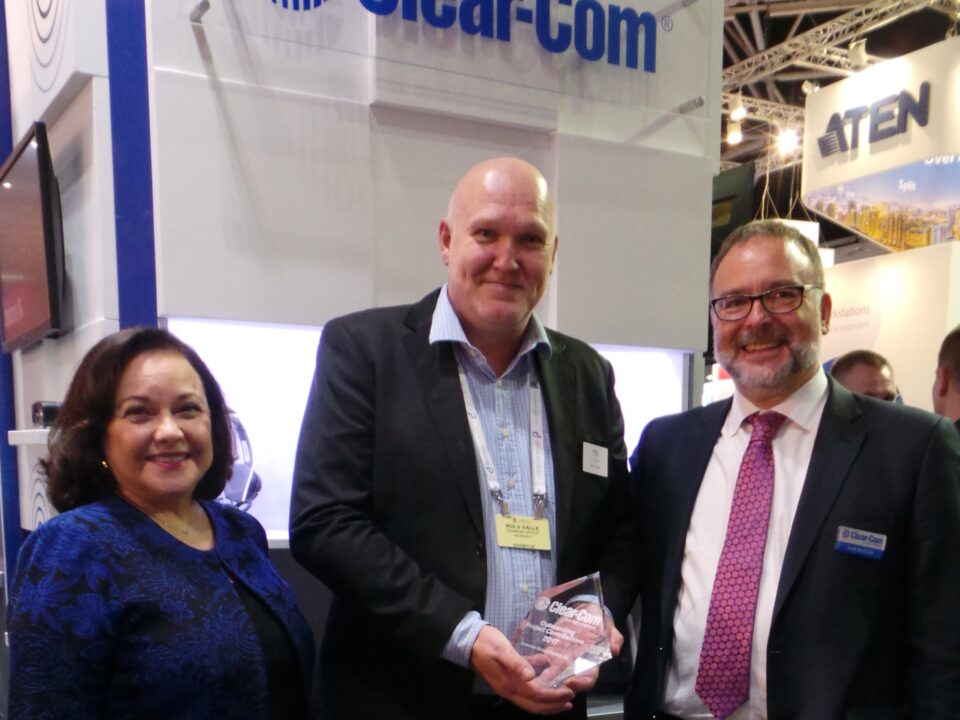
From VP of Sales to President: Leading Clear-Com Through Evolution
— Coming back to the business side: at that point, you were already VP of Global Sales at Clear-Com, correct?
Yeah, at that moment, I was VP of Sales for Clear-Com.
– What happened next? Post-merger, there’s usually a lot of reorganization — politics, leadership reshuffling, roles shifting. How did you navigate that period, and what path led you to your current title?
Sure. I think the realization within the organization was that the business would benefit from having a dedicated president. We already had a CEO in place — Mitzi Dominguez — who was ultimately the top executive, but it became clear that we needed someone focused on external leadership. Someone customers could turn to as a direct advocate — someone they recognized as their main point of connection to Clear-Com’s executive team.
 — Was that role created specifically for that reason?
Essentially, yes. The marketplace needed to know who was standing behind the customer experience. Internally, I was already very involved in multiple parts of the business. As VP of Sales, I was naturally touching product development, global support, and marketing anyway, even if they weren’t formally in my reporting line. So transitioning into the president role wasn’t a huge leap structurally.
— How was your working relationship with Mitzi at the time?
Very strong. That was key. Mitzi was still CEO and retained responsibility for many of the back-office and operational aspects of the business — including manufacturing. We ended up with a solid division of responsibilities: she oversaw internal execution, and I focused on customer-facing strategy and leadership. It was a natural alignment.
— Did your day-to-day responsibilities change significantly when you became president?
Not immediately. I continued to directly oversee the global sales organization for a period after the transition. But gradually, additional departments like product management, global service and support, and marketing began to roll up under me.
– Was the shift more evolutionary than abrupt?
Exactly. It wasn’t some massive structural change. It was more of a formalization of things I was already involved in — a realignment of reporting lines, not a revolution. And because my leadership style is very collaborative, it didn’t feel disruptive. I had already been working closely with those teams; now I was doing it with a different title and slightly broader responsibility.
— For the organization, does it feel natural?
Yes, I believe so. For the team, it didn’t feel like a sudden change in direction. It was just the next logical step in how we were already working together.
 Leading with Purpose: Profitability, Expansion, and Strategic Vision
— When you became president, aside from being a visible and trusted figure for customers, what specific responsibilities did the board and shareholders entrust you with? What were their main expectations for you as the company’s leader?
Well, first and foremost, it was important for us to continue moving toward consistent profitability. At the time we were acquired, we weren’t yet consistently profitable, and, of course, any business has to be financially sustainable to secure its future. That’s just a given.
 — Were there also growth targets in addition to profitability?
Absolutely. We had a clear vision of where the business could grow — both in terms of revenue and operational efficiency. Improving both the top line and the bottom line became my primary responsibility, and I was given significant freedom to develop and advance plans in that direction.
Expansion Strategy: Organic Growth, Acquisitions, and New Markets
— What’s been your long-term strategy for expansion and market growth since taking on that role? For example, David Ross once told us his model was “expand, expand, expand” — largely through acquisitions. What’s your take on that approach?
So, multiple things. And I’ll be honest with you — part of that question I’m not going to answer directly. Not because it isn’t a good question, but because, well… it’s our strategy. We’re actively working to grow this business, and some elements of that are not something I’d want to share openly — especially with our competitors potentially reading or listening. I hope you understand.
 — Fair enough. Can you share what you can talk about?
Sure. Acquisition is one tool we consider important — and we’ve used it. One example: I was directly involved in our acquisition of Trilogy Communications, a UK-based intercom manufacturer. Trilogy had previously been one of our competitors, but they also offered complementary capabilities — particularly in the defense sector.
— Was the defense market part of Clear-Com’s focus before that?
We had already started expanding in that direction, and Trilogy accelerated that effort. Their specialized solutions for military communications aligned well with our broader goals. So that acquisition made a lot of sense and helped us build presence in a new vertical. And we remain open to further strategic acquisitions where they make sense — it’s something we continue to consider.
— Beyond acquisitions, what are some internal paths to growth?
We see major opportunities for Clear-Com’s core value — real-time, full-duplex communication — across many industries, not just our traditional strongholds like broadcast or live performance. We’re now actively exploring markets where people need high-quality, low-latency, highly available audio comms to do complex, collaborative work.
 — Can you give an example?
Sure. Traditionally, our customers are people putting on a show or producing a program. And I love both those worlds. But the same communication demands exist in many other domains: from launching a rocket to performing surgery. That’s the exciting part — taking what we do best and adapting it to support new types of missions where real-time voice coordination is critical.
Rethinking Boundaries: Communication Beyond Broadcast
— You mentioned expanding Clear-Com’s communication tools beyond traditional markets. What kind of industries are you referring to?
It’s wide open. Whether it’s running a ride at a theme park, drilling for oil, operating a tollway — or any number of other complex environments — if there’s a need for people to talk to each other in real time to do something critical, that’s where we can be useful.
– Is it less about market verticals and more about function?
Exactly. I don’t see our potential as being limited to just the industries we’ve historically served. What matters is that we enable people to coordinate effectively. And the kinds of platforms people want to use for that type of work are evolving fast. So we’re keeping an open mind and letting that mindset drive how we grow.

A Defining Achievement: Profitability Without Losing Culture
– Looking back at your career so far, what would you say is your biggest professional achievement? Something you’re truly proud of?
That’s tough — I’ve had a strange and fortunate convergence of experiences that made many things possible. But I’d say the most meaningful is helping bring Clear-Com to a point of consistent profitability without sacrificing our company culture.

— Why is that so important to you?
Because in many companies, when you make major structural or financial shifts, the culture suffers. People lose what made the place special. At Clear-Com, we had to change a lot to become sustainable and competitive, but I feel proud that we did it while maintaining the DNA of the business — a culture that’s now 57 years old.
— Any other milestone you’d place alongside that?
Getting through COVID without losing a single member of our team to the disease, while keeping our California factory operational. That required a huge group effort. I wasn’t the only one responsible, but I had a hand in that success, and I’m proud of what we accomplished.
 Leading Through Crisis: Clear-Com’s COVID Strategy
— How did you manage the business through COVID, especially with all the shutdowns in California? We have an office in San Francisco and still feel the impact.
COVID came in two phases. First, we were all dealing with the disease itself — the health impact, the personal risk. Then, as the immediate crisis subsided, we faced the global supply chain disruption, which was also entirely COVID-related, but less about health and more about logistics.

— How did you handle the first phase?
We created a leadership-level task force to meet regularly and manage the response across both of HME’s key businesses: Clear-Com and the drive-thru communications division. Both were deemed essential services, so we had to keep manufacturing running.
— What changed in the factory?
We restructured the production floor — layout, workflows, hygiene protocols — everything was redesigned to prevent transmission. And we were successful. No outbreaks. The credit goes to the incredible team that ran the factory during that time.
— And how did Clear-Com survive from a business standpoint when live events stopped entirely?
Our live performance business was completely flat — theaters, concerts, anything with an audience just disappeared. But we had already built a strong foundation in IP-based communications over networks and the Internet.
 — Had you tools ready?
Exactly. Our customers already knew what we could offer. So we helped them pivot: from live event support to remote production, remote meetings, and virtual broadcasts. Through rental partners and integrators, we enabled production teams to operate fully distributed — including directing news broadcasts from home.
— People did that?
All over the world. I can’t tell you how many TV professionals took their intercom panel home, plugged it into their router, and connected back to the station to call cues remotely. We also provided tablet and mobile-based solutions to make that possible. Our systems helped keep productions running in some of the most challenging conditions imaginable.
 Navigating the AI Revolution: Adaptation Without Hype
— We’ve seen back-to-back transformations: first COVID, now the rapid rise of AI. How has the AI revolution begun to impact you personally, your business, and Clear-Com’s place in the industry?
Well, your last question — about where AI will take us in five years — is a tough one. I have some ideas, but I honestly don’t feel prepared to make solid predictions. There are just too many unknowns. The chances of being right are slim, and the factors are changing constantly.
— Fair. But how is AI impacting your operations today?
It’s already here. We’re using AI in different ways across our workflows — though I won’t list them for the same reasons I mentioned earlier: it’s part of our internal strategy. But what I can say is that AI has already made a measurable impact on productivity and efficiency. We’re applying it to accelerate tasks, remove repetitive labor, and unlock time for real human focus — using it the way it should be used: as a tool to empower people.
 — What about your customers — are they affected yet?
Somewhat, yes. But I’d say the full effect is still developing. I believe that five years from now, broadcasting and live production will still be thriving. Whether it’s information or entertainment, the need for well-produced content won’t disappear. And AI will help us get better at that — not replace us.
— Are you not worried about automation taking over creative work?
No. I don’t believe creating meaningful content for humans is something we’ll just outsource to robots. But I do think we’ll need to learn how to work with AI, even treat it as a sort of partner in the creative and production process. That’s coming.

A Dreamer’s Vision: Faster Innovation, Real Human Connection
— You’re a dreamer — what is your dream today, professionally? Not just about growing the business, but your dream as a leader and builder?
— My dream is to deliver truly life-changing products — and to do it faster. I want us to be able to go from concept to implementation in a timeline that meets the market’s needs. Right now, that’s hard. We’re still a hardware-driven business, which means we’re constrained by physical realities. This isn’t a cloud-native platform — it’s real-world gear that people wear, hold, or mount in control rooms.
— Is speed the barrier?
Exactly. Hardware takes time. Development is complex. But the goal is to remain profitable and mission-driven while also increasing our speed — from R&D to deployment. That’s my dream: to unlock that capability without compromising what we stand for.

Capturing History: A Message to the Industry
— Before we close, is there anything you’d like to share with our audience — future leaders, readers, and anyone interested in Clear-Com and your journey?
Yes. A few years ago, we had the opportunity to celebrate Clear-Com’s 50th anniversary. During that process, we made a point to capture our history — our milestones, stories, challenges. And that moment showed me something.
— What was that?
That our industry is not very good at preserving its history. We’re so focused on the next trade show, the next release, the next customer — we rarely pause to document what we’ve done. I want to thank you for doing this work. Interviews like this are part of the historical record, and that matters.
— That’s great to hear.
I also want to encourage my peers in the industry: take the time to capture your stories. When the time comes to celebrate your company’s legacy, you’ll be glad you did.

Final Thought: Tell Your Story — Someone Needs It
— Any final message to the industry or fellow professionals?
Yes. Whether you’re leading a company, working in a nonprofit, or building something entirely new — be prepared to tell your story. That story might be the difference-maker for someone else. It might inspire them, guide them, or help them avoid mistakes.
— Even if the outcome wasn’t perfect?
Exactly. Whether your business was a great success, a tough struggle, or somewhere in between — take the time to capture it. Document it. And then, when the moment is right, share it. You never know who needs to hear it.