

By Sarah Foss, Chief Technology Officer, Chief Information Officer of Audacy, Inc.
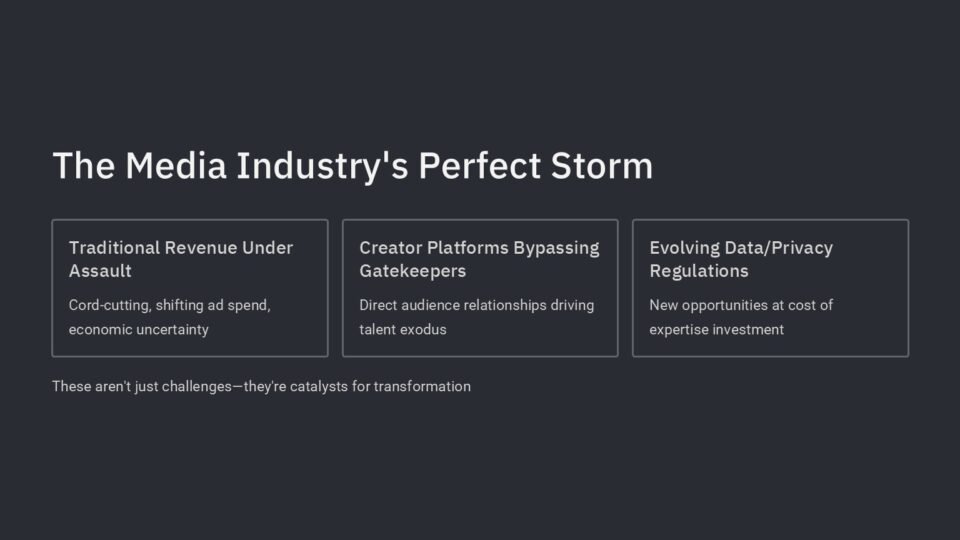
All of us know that the media industry is experiencing a seismic shift. Traditional revenue streams are under assault from cord-cutting, shifting ad spend, and economic uncertainty. This isn’t just about competition for eyeballs; traditional media is losing some of its brightest to creator platforms that offer direct audience relationships, bypassing the old gatekeepers. And let’s not forget the ever-changing landscape of data and privacy regulations. While these regulations can unlock new content types through personalization, they demand significant investment and deep expertise in rapidly evolving global laws. Tech giants like Google, Meta, and Amazon don’t just compete—they redefine the rules entirely.
These aren’t just challenges, they’re catalysts. Economic pressures are driving innovation, forcing us to embrace technology adoption and automation. We’re also seeing a wave of merger and acquisition activity, often fueled by private equity, reshaping the competitive landscape. Out of this necessity, new monetization models are being born, enabled by groundbreaking technologies, system innovation, and, increasingly, Generative AI. Media companies that are aggressively investing in multiple platforms, creating compelling content, and building direct relationships with consumers are the ones commanding premium pricing and cultivating fierce customer loyalty.
But here’s what’s fascinating: companies thriving in this chaos have technology leaders who have evolved: the CTO and CIO are no longer behind-the-scenes support roles—they are center-stage revenue architects.
 From Cost Center to Growth Catalyst
The best media companies are no longer just creating content—they’re engineering monetization. That shift isn’t being driven solely by CMOs or COOs. It’s being led with forward-thinking CTOs who see revenue opportunities embedded in every byte of technology.
Today’s technical leaders aren’t asking “How can we support the business?” They’re asking, “How do we design the systems that become the business?”
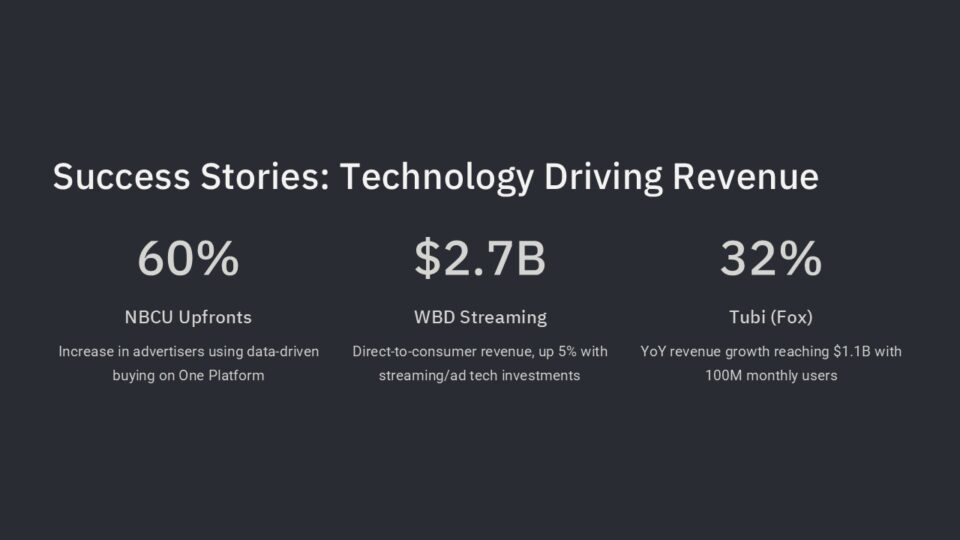
Consider NBCUniversal’s One Platform, which unified TV and digital inventory under a single programmatic system. Based on the success of NBCU’s platform investments, at their recent Upfronts, NBCU reported an incredible increase of nearly 60% of advertisers transacting on advanced audiences–or “data-driven” buying. Or look at Warner Bros. Discovery’s (WBD) recent financial report, which showed that its direct-to-consumer (DTC) streaming revenue rose 5% to $2.7B and delivered a sizable profit. Their investments in streaming and ad tech helped ad revenue jump 27% in Q4 2024 in a year-over-year comparison.
Fox, in their recent earnings report, acknowledged how their streaming Tubi offering–the ad-supported FAST service–had 17% YoY expansion in fiscal Q4 viewing time and an amazing 32% revenue growth in the same period. Fox’s investments, tech or otherwise, have more than 100 million active monthly users and more than $1.1B in revenue.
This isn’t about incremental improvements to existing systems. It’s about reimagining technology as a key driver of revenue growth. And media companies with technology-first monetization strategies are outperforming traditional approaches.
 Ad Tech Innovation as Revenue Multiplier
The traditional advertising crisis demands tech solutions. Forward-thinking companies are expanding their existing Ad Tech systems to incorporate data-driven capabilities, deliver better content for consumers and advertisers, command higher CPMs/rates, and retain business against purely digital competitors. This isn’t just “digital transformation”; it’s a digital expansion designed to fortify current business models.
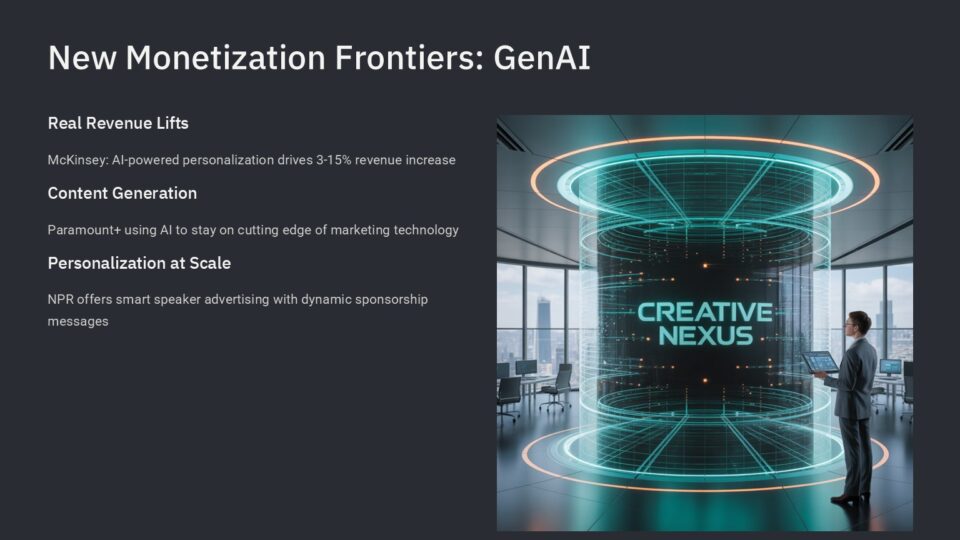
But they’re not the only ones. At the recent Variety Entertainment Marketing Summit, Paramount’s Streaming EVP shared that integration of AI is one of the ways that Paramount+ is staying on the cutting edge of marketing technology.
And expanding beyond their traditional radio footprint, NPR offers smart speaker advertising through National Public Media, with unique sponsorship messages dynamically served adjacent to their content.
These aren’t marketing wins—they’re engineering triumphs that directly translate to revenue acceleration. When tech can prove ROI to advertisers in real time, it doesn’t just reduce churn–it commands premium pricing.
 Subscription Technology Gets Sophisticated–and Includes Ad Tech
Nearly every media company has either launched or considered a subscription offering. Why? Because consumers are still willing to subscribe to multiple audio and video services to get the content they want, when they want it.
Winners differentiate through subscription technology sophistication. Spotify’s churn prediction model is well known to have reduced not only subscriber churn but also increased premium user retention.
Hulu’s ad-supported tier technology, still thought to be one of the most successful blends of ad-tech and subscription models, is projected to have ad-supported subscriptions increase by 65% in 2025. Their business model has paid off.
It’s no longer about who has the most subscribers. It’s who can keep them the longest, spend the most, and engage the deepest.
 Data Platforms as Revenue Engines
Data isn’t just a buzzword—it’s the foundation of modern monetization. By building critical data platforms for both first-party and third-party integrations, media companies can better monetize their existing content platforms and uncover entirely new revenue streams.
For instance, The New York Times‘ subscriber data system, built by its technology team, drove 40% digital revenue growth. Their digital revenue reached $335 million in Q1 2025, with digital-only ARPU climbing to $9.54.
Data informs more than advertiser success; it has shored up content investments by the largest producers. HBOMax uses its data platform to predict hit shows before production. Disney+ execs, in multiple online interviews, have referenced the value of data and analytics to inform their content and strategic initiatives based on subscriber preferences. These platforms don’t just support the business—they actively generate better revenue opportunities.
And in case you haven’t experienced your feeds like every Gen Zer, Spotify Wrapped campaigns drive over 20 million social shares and significant subscriber acquisition.
Companies investing in data platforms are monetizing more intelligently—and sustainably. Data is no longer a “nice to have” for the business—it is the business.
 The Creator Economy Wake-Up Call
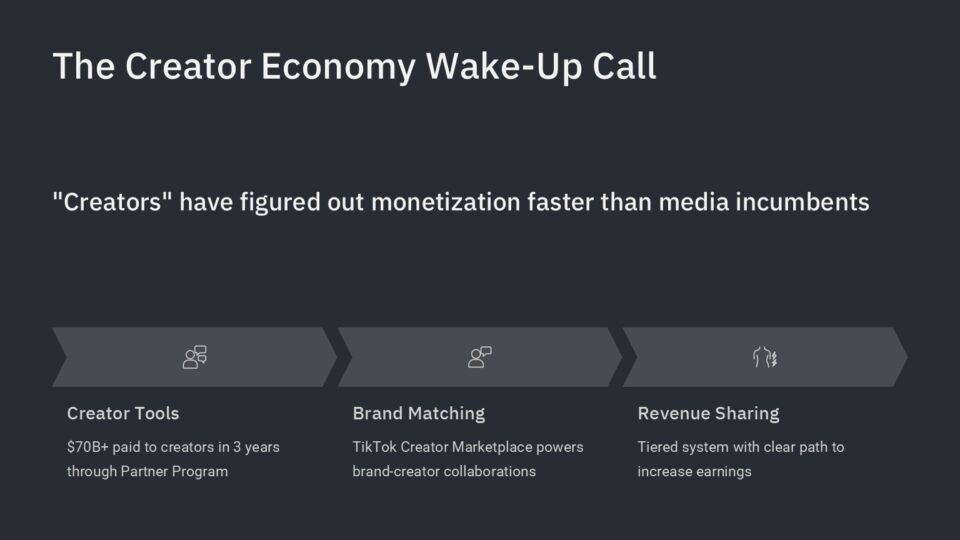
Here’s the hard truth: “creators” have figured out monetization models faster than media incumbents. But that doesn’t mean traditional players can’t win.
YouTube, TikTok, and Twitch didn’t just empower creators—they built revenue systems around them. In many cases, these new content development platforms are also providing new ways to make money, not just save it.
- Creator Tools: YouTube has paid over $70 billion to creators over the past three years through its Partner Program, fostering platform loyalty.
- Brand Matching: TikTok Creator Marketplace (TTCM) is a key in-app platform for brand-creator collaborations, which is one of several monetization methods available.
- Revenue Sharing Automation: Twitch helps creators monetize through a tiered revenue system and provides a clear path for creators to increase their earnings, which in turn fosters creator loyalty.
If legacy media wants to compete, it has to adopt the same platform mindset: create infrastructure that allows others to create and profit.
 New Monetization Frontiers
Generative AI isn’t theoretical anymore. It’s driving real revenue lifts–fast. McKinsey research shows AI-powered personalization can drive 3-15% revenue lifts, and media companies are already capturing these gains.
A real opportunity lies in shoppable video and social commerce. Shoppable video and social commerce are forecasted to explode from $695B to $3.7T by 2029.
Due to strong growth driven by brand investment and high engagement rates, TikTok’s Creator Marketplace has become a major part of marketing strategies, with 50% of marketers using influencers in 2023. These paid recommendations are highly effective, prompting nearly 45% of consumers to shop for products. With the upcoming Gen Z demographic, 60% use TikTok daily, and 50% have purchased directly from the platform, with 75% becoming repeat buyers.
Amazon Prime Video has a natural connection to shopping and reported that 88% of its viewers have also shopped on the site, demonstrating a strong link between watching content and making purchases. (The additional benefit for Amazon was that they had significantly increased ad revenue and impacted the broader streaming ad market.)
Like TikTok and Amazon, media platforms that lean into this now will own the new digital storefronts.
 Technology Leaders Moving Forward
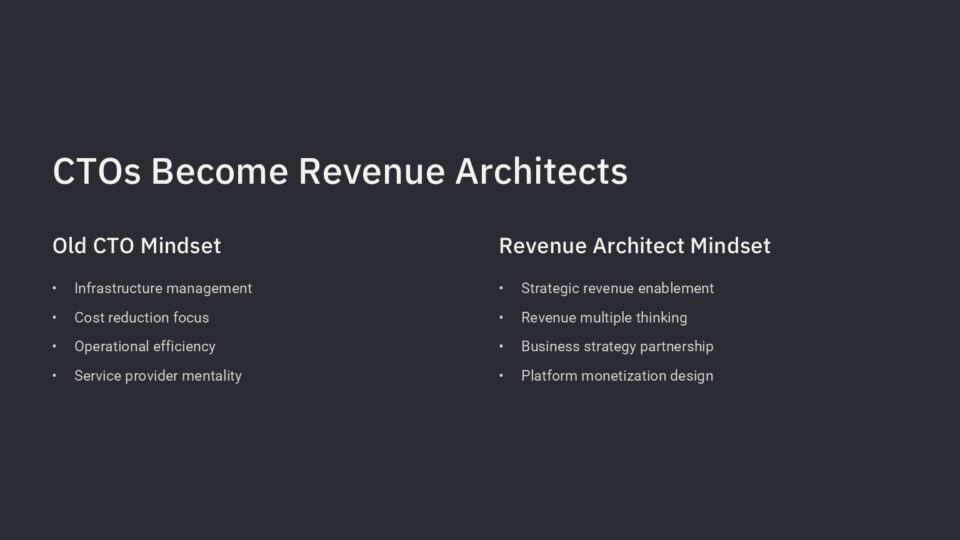
As these monetization opportunities have expanded, the systems to manage them need to change dramatically. Thus, the role of the CTO/CIO has fundamentally transformed from infrastructure management to strategic revenue enablement. To successfully implement monetization capabilities, technology leaders must master both the technical aspects of system deployment and the complex human dynamics of organizational change.
The most successful technology leaders today share common characteristics. They think in revenue multiples, not cost reductions. They architect platforms for monetization opportunities, not just operational efficiency. They partner with marketing, sales, and finance as business strategists, not service providers.
These leaders understand that every technology decision creates or destroys revenue potential. They measure success in subscriber growth, ad yield optimization, content ROI, and customer lifetime value. They build systems that adapt and evolve with changing market conditions.
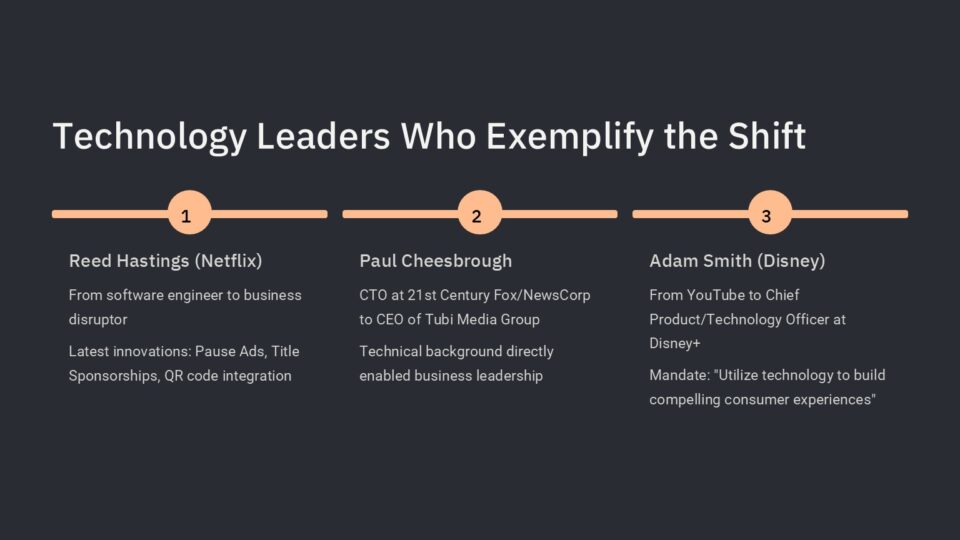
Reed Hastings, now Chairman/Co-Founder of Netflix, exemplifies the technology leader as a business disruptor. Starting as a software engineer, he continuously exploits technology for revenue innovation. Netflix’s latest ad formats—Pause Ads, Title Sponsorships, and QR code integration—represent ongoing technical innovation driving new revenue streams.
Paul Cheesbrough moved from CTO roles at 21st Century Fox and NewsCorp to CEO of Tubi Media Group, overseeing three business lines focused on streaming, advertising, and engineering services. His technical background directly enabled his business leadership success.
Disney‘s Chief Product and Technology Officer, Adam Smith, joined from YouTube, where he grew Music, Premium, Subscriptions, and Commerce capabilities. Upon joining Disney+, he said his mandate is clear: “Utilize technology to build compelling consumer experiences that drive engagement and discovery.”
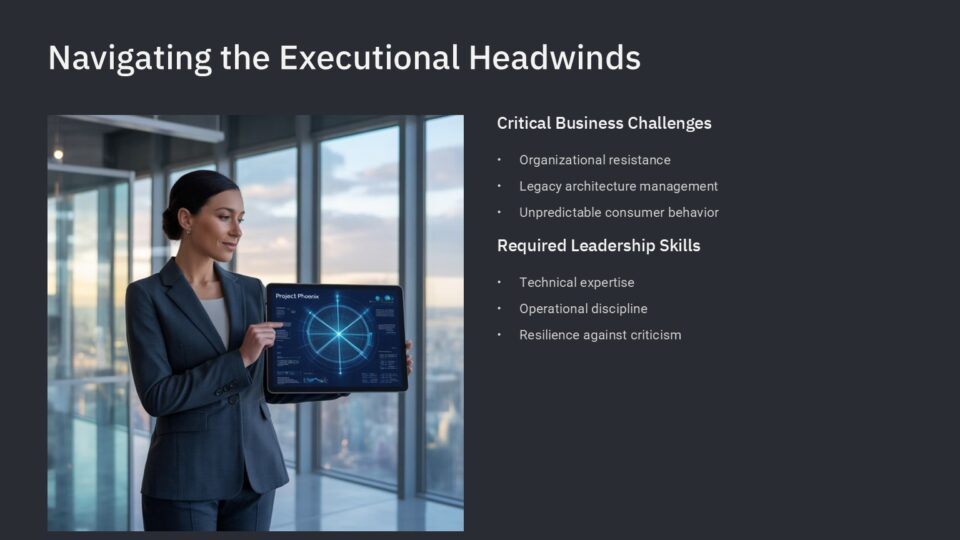
Not wanting to come across as only having rose-colored glasses, such bold moves can create executional headwinds. Tech leaders need to navigate critical business topics such as organizational resistance, management of legacy architectures, and unpredictable consumer behavior that impact their strategy. Effective technology leaders now must be skilled in our field, but also paired with resilience and operational discipline–and have a very thick skin to weather any internal criticism for change.
The leaders above, and countless others in our field, prove that technology can no longer be evaluated in isolation. Every investment must be justified by its revenue impact—whether through cost efficiency, market expansion, or new business creation.
 Be the Profit Engine
The media industry’s perfect storm isn’t subsiding—it’s intensifying. How we monetize our content and services will continue to change – because our consumers will demand new ways to engage with them.
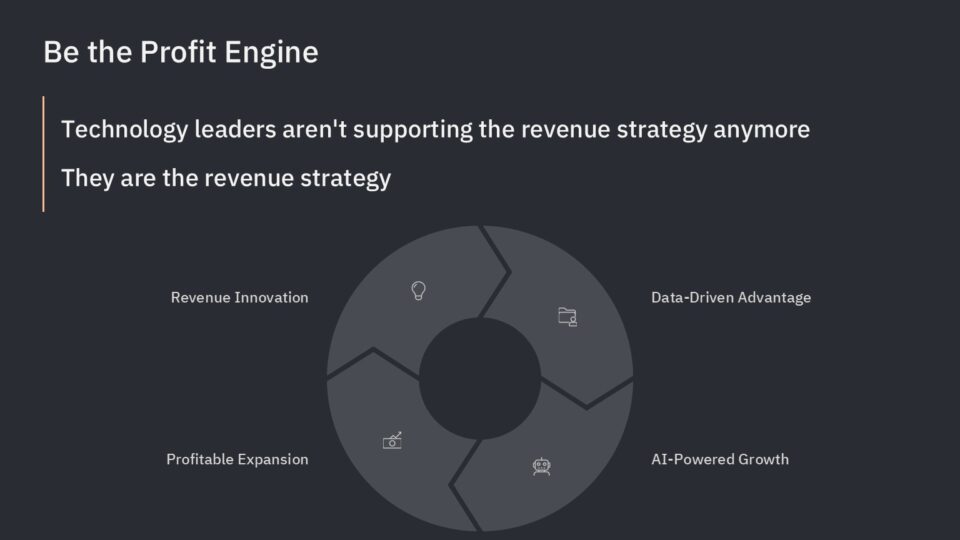
The technology leaders who thrive will be those who embrace their role as revenue architects. They’ll build platforms that not only support the business but also actively generate new monetization opportunities. They’ll use data not just for operational insights but for competitive advantage. They’ll deploy AI not just for cost savings but for revenue acceleration.
The companies that emerge stronger from this transformation will be those where technology leadership and revenue strategy are inseparable. Where the CTO isn’t just keeping the lights on—they’re illuminating the path to profitable growth.
The evolution is complete. Technology leaders aren’t supporting the revenue strategy anymore. They are the revenue strategy.