
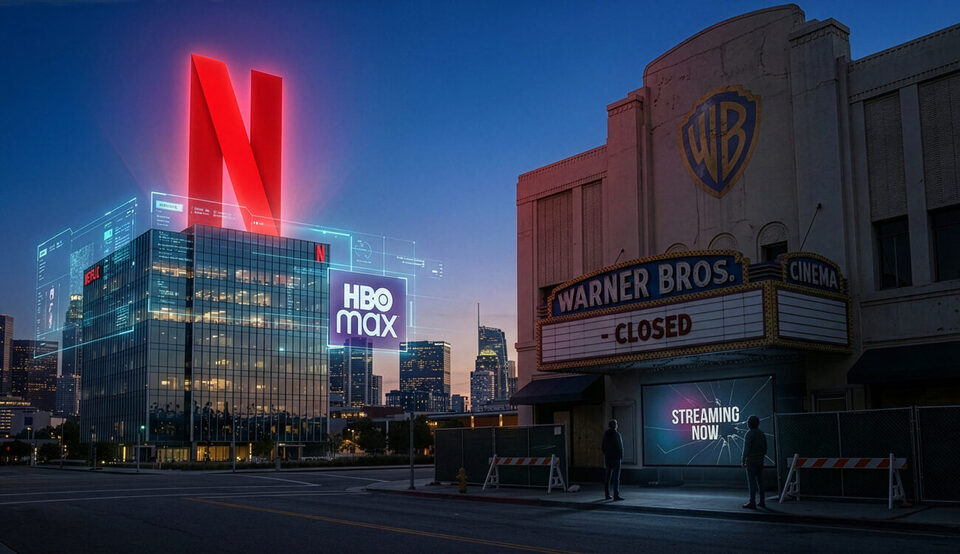
Netflix agreed to acquire Warner Bros. Discovery’s studios and HBO Max streaming platform for $83 billion at $27.75 per share.
The transaction requires U.S. regulatory approval and has raised concerns across the theatrical exhibition industry about the future of cinema distribution.
Conflict With Theatrical Model
Netflix’s subscription-based model prioritizes monthly subscriber revenue over box office performance. Traditional studios rely on theatrical windows to maximize film profitability before releasing titles on streaming or home video platforms. The acquisition could reduce Warner Bros.’ theatrical output, creating a potential threat to theaters worldwide.
Acquisition Context
The deal follows a bidding competition between Netflix, Paramount, and Comcast. The acquisition includes Warner Bros. studios, HBO Max, and decades of content libraries, including DC Universe franchises.
 Theatrical Release Paradox
Warner Bros. has a recent record of consecutive box office successes. Under Netflix ownership, high-performing theatrical releases could delay content availability on the platform, conflicting with Netflix’s streaming-first strategy. Co-CEO Ted Sarandos has emphasized that theatrical distribution is not central to Netflix’s business model.
Theater Industry Concerns
The potential reduction of Warner Bros.’ theatrical releases could affect 15–20 major films annually. Theater operators depend on these releases to maintain attendance and revenue. A shift to streaming-first distribution could accelerate theater closures and impact related local economies.
 Regulatory Review and Industry Response
The acquisition faces antitrust scrutiny in the U.S. and internationally. Netflix already commands around 40% of the global streaming market. Producers, Congress members, and the Directors Guild of America have expressed concern about reduced theatrical output and potential creative impacts on industry professionals.
Strategic Implications
The Warner Bros. acquisition marks Netflix’s first purchase of a major studio. It creates potential conflicts between Netflix’s streaming-first model and Warner Bros.’ traditional theatrical infrastructure. The $83 billion price requires significant financial commitment, with long-term success dependent on aligning studio operations with Netflix’s distribution philosophy.