


Artificial Intelligence. Two words that, depending on the person you ask, either send the mind racing with images of a brave new world where everything zooms along faster, cheaper, and better—or a bad dream world where the studios are ruled by code and your next big show is greenlit because the formulas tell it will catch exactly 6.3 million viewers in week one.
Here’s the truth: AI isn’t salvation or devastation for the movie and television industry. It’s just the newest in a long chain of technologies that will change the manner in which we work—if we let it. And if we’re smart, it won’t be in charge; it will be making us stronger. That’s the difference, because I’ve seen what happens when we do get it wrong.
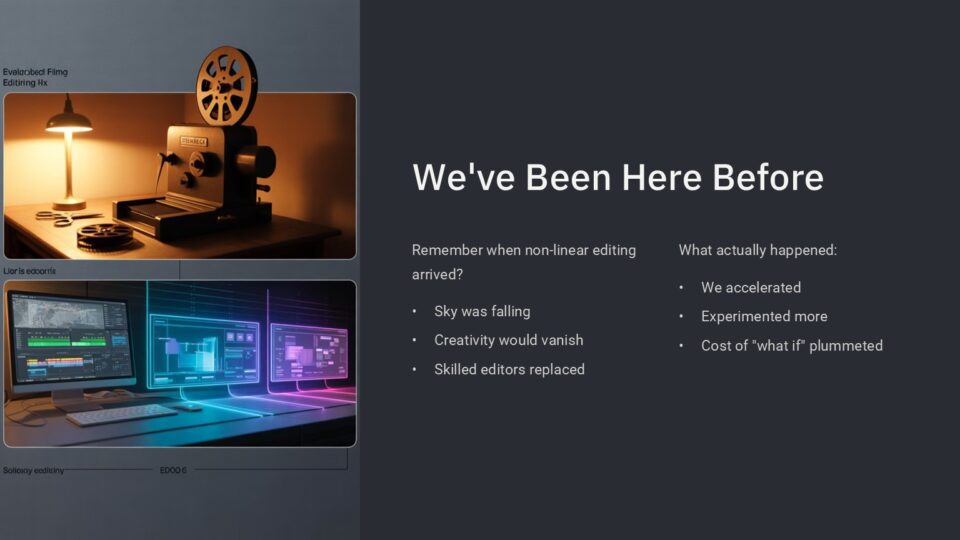 Lessons From Non-Linear Editing in Media Production
We’ve been here before. I remember when non-linear editing arrived. Everybody was fretting that creativity would vanish or that kids would replace skilled editors with Final Cut on their bedroom iMacs. What actually happened was that we accelerated. We experimented more. We made improvements because the cost of “what if we try this?” plummeted.
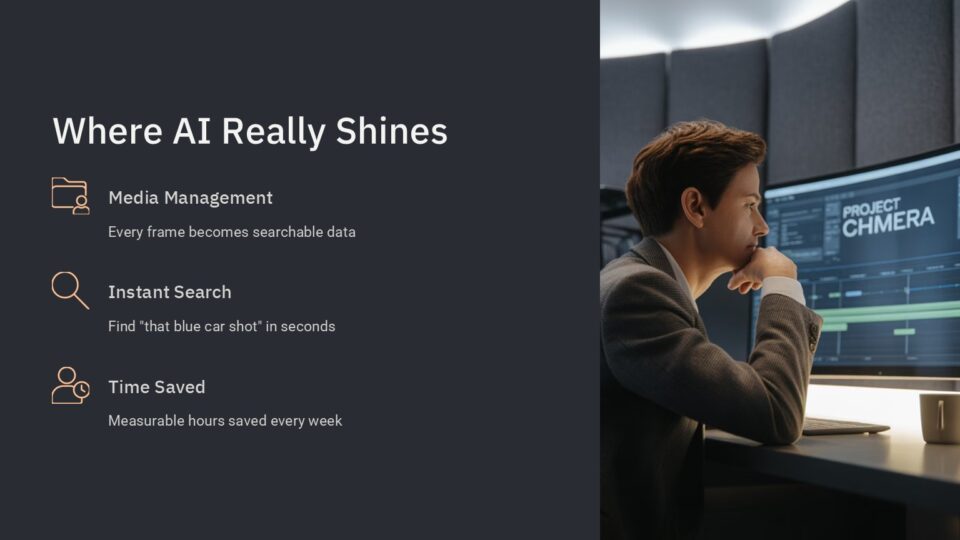 AI in Broadcast Workflows: The 2025 Transformation
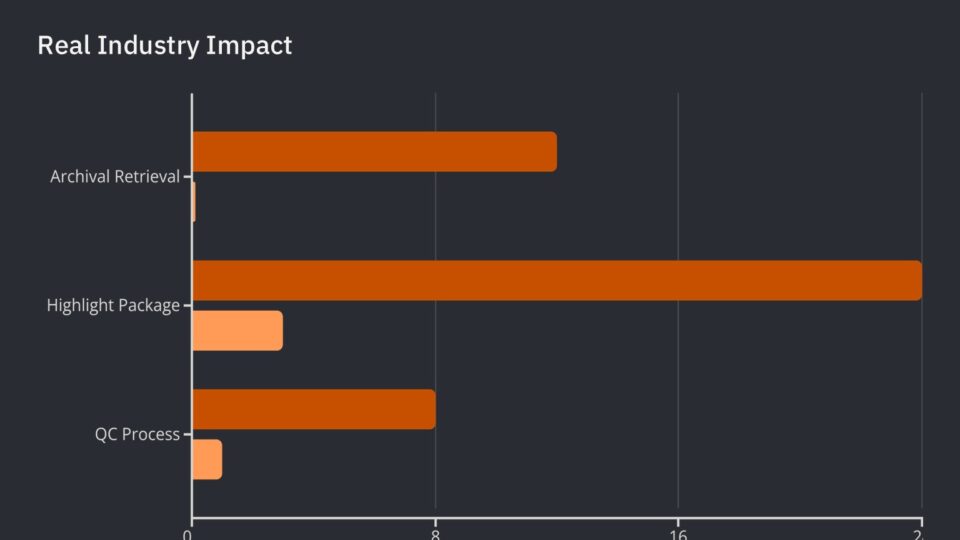
AI is our 2025 version of that shift—only this time, rather than revising the narrative, it’s about how we run the entire business behind it. Where AI really shines in our world is not in writing or directing talent—it’s in all those things that fill the pantry. Take media management. Every single frame we capture today becomes data, and there is just a hell of a lot of it. AI can watch, listen, and mark our clips for us—pick out faces, transcribe dialogue, read signage—so the shot you need is searchable in seconds, not gone in a hard drive cemetery. I’ve lost entire afternoons searching for “that one exterior shot with the blue car” from two seasons ago. AI can deliver it before you’ve even reached the bottom of your coffee mug.
 AI in Media Management and Cloud Storage Solutions
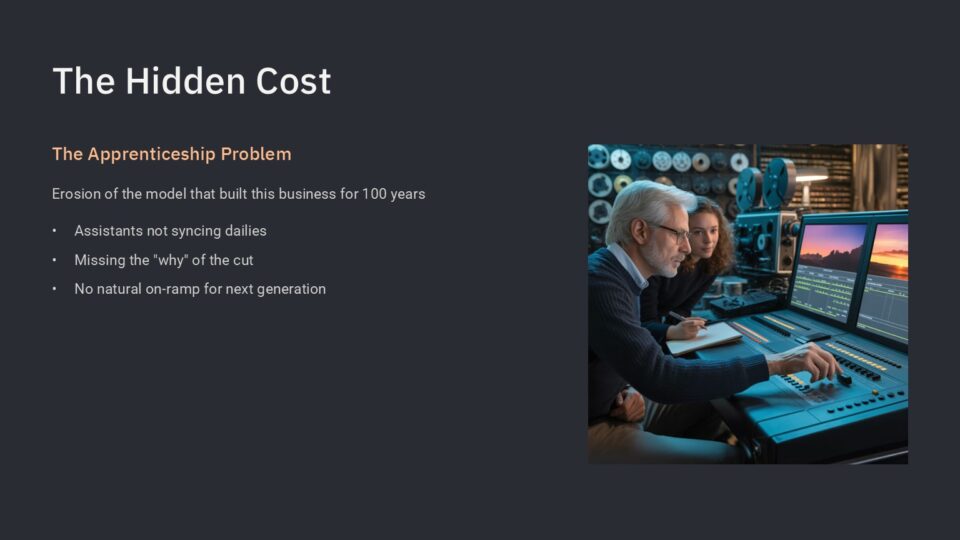
Throw that into a well-organized NAS or private cloud, and you’re talking real, measurable hours saved every single week. That level of velocity is habit-forming, but with it comes a quieter menace we don’t talk about nearly enough: the erosion of the apprenticeship model that’s built this business for a hundred years. Not merely that an assistant editor isn’t learning by making cuts or syncing dailies, but they’re learning by sitting in the room with the senior editor—watching the choices they make, hearing the why of the cut, drinking in pacing and problem-solving nearly by osmosis. If AI is taking over the mechanical work, there’s a fear that the assistants never even get in the room to start. And if they’re not in the room, they’re not learning.
 AI in Apprenticeship Training and Career Development
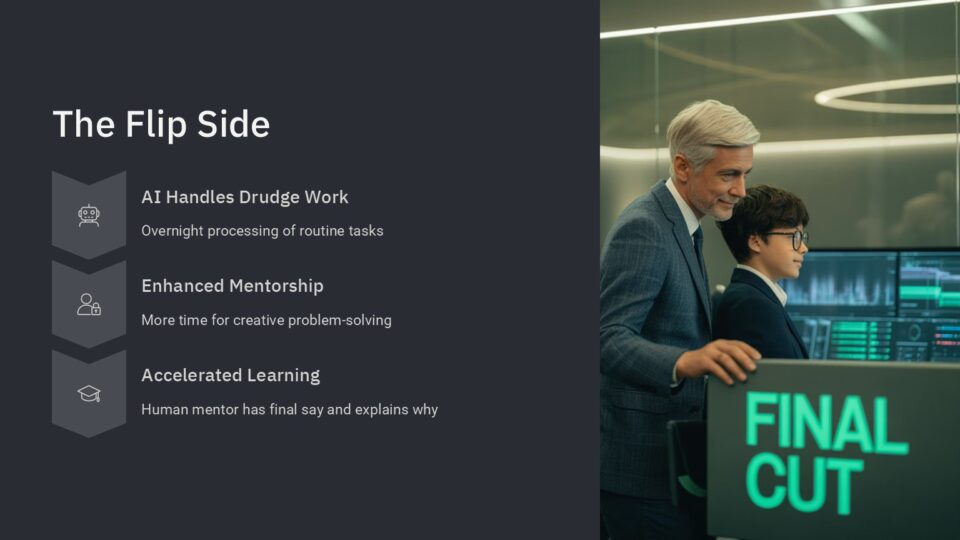
We’ve already seen versions of this in other fields, where entry-level jobs disappear because the “entry-level” tasks have been automated, leaving no natural on-ramp for the next generation. But there’s a flip side. Used thoughtfully, AI could actually enhance the apprenticeship model. If assistants are not bogged down half the week fighting with media or re-exporting a file for the fifth time, they are able to spend more of their hours listening, testing, and getting hands-on with creative problem-solving with a mentor watching over them. Imagine an AI system performing the drudge work at night, and the next day’s schedule open for an assistant to sit with a senior editor and work through a critical scene assembly. The AI will set up possibilities, but the human mentor has the final say as to which direction to head—and be able to explain why.
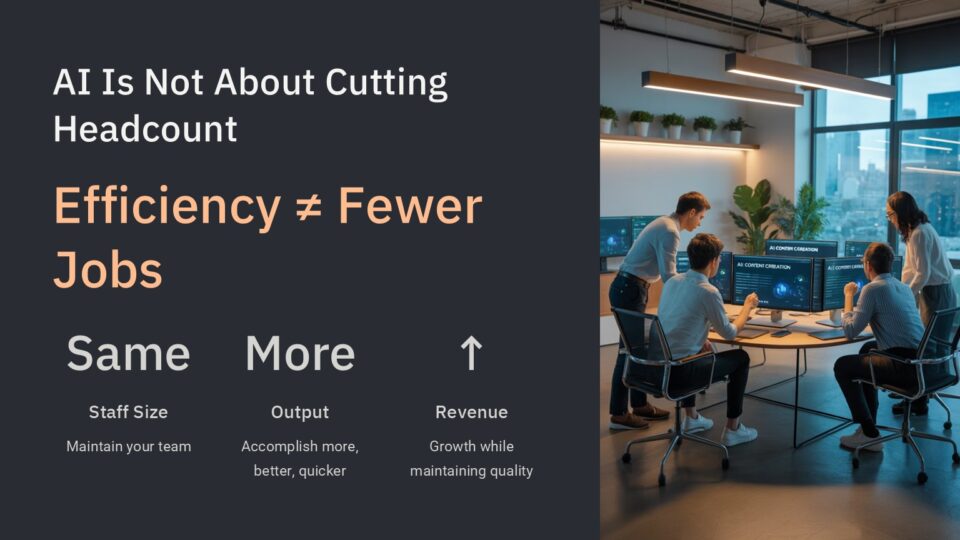 AI in Media Workflows: Efficiency Without Job Cuts
That’s not replacing apprenticeship; that’s accelerating it. And here’s something to keep in mind for any leader: AI deployment must never be about cutting headcount simply to conserve costs. Efficiency is necessary, to be sure, but firing workers to cut payroll expenditures is a short-term win with long-term costs. The real power play is accomplishing more using the same number of heads—doing more, better, and quicker, and increasing revenue growth while maintaining (or even boosting) quality.
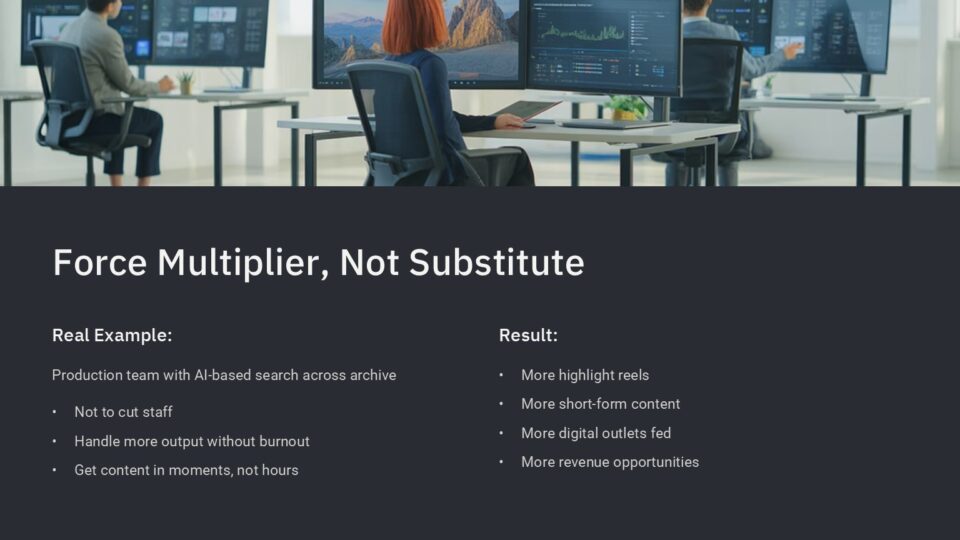 AI for Revenue Growth and Content Expansion
Increasing revenue always beats simply cutting expenses, and if you can do both, that’s the holy grail. There is a production team that installed an AI-based search and logging system across its archive. It wasn’t to cut the staff—it was to allow the staff it had to handle a lot more output, increasing revenue opportunities. They were able to get what they required in a matter of moments and make more highlight reels, deploy more short-form content, and feed more digital outlets. The result wasn’t fewer jobs—it was more product, more engagement, and more chances for revenue.
That’s how AI should work—not as a human substitute, but as a force multiplier for humans.
 AI in Monetization and Content Distribution
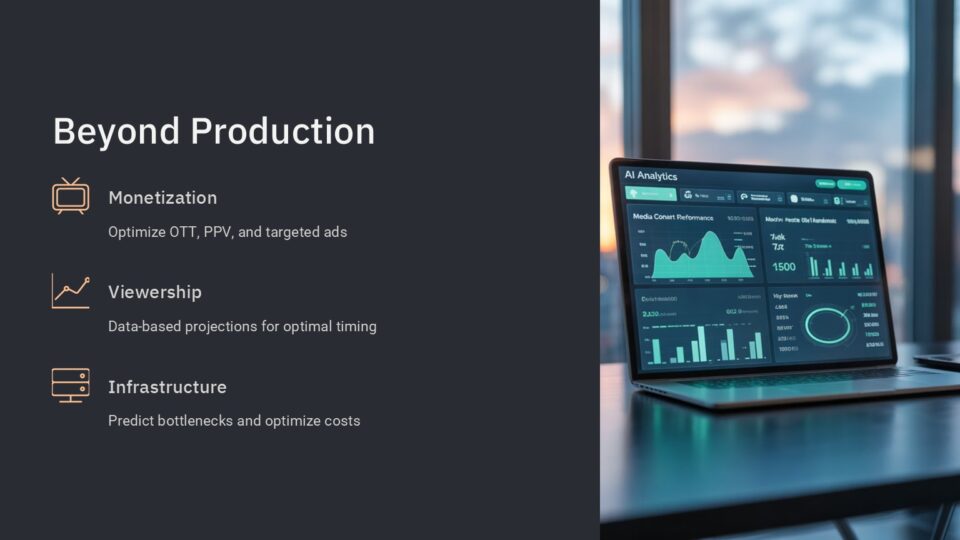
The same goes for monetization and distribution. With an era where we’re constantly switching between OTT platforms, pay-per-view tests, and targeted ads around the clock, AI’s ability to decipher watching behavior and forecast outcomes is a game-changer. It can tell you to air a series when retention would be optimal, or whether a particular market would pay you greater CPMs on ad-supported shows. These are not estimates—they’re data-based projections that you can test before spending a single dollar on promotion. AI can even help us get smarter about our infrastructure.
 AI for Storage, Compute, and Workflow Optimization
I’ve long preached the value of “owning your baseload” when it comes to storage and compute. Just as we’ve learned to balance on-premise resources with cloud bursts when needed, AI can predict when you’ll hit your editing bay bottleneck, or when your cloud egress fees are about to ambush you.
Savings can then be plowed back into new features—without a single addition to the staff.
 AI in Quality Control and Compliance for Media Files
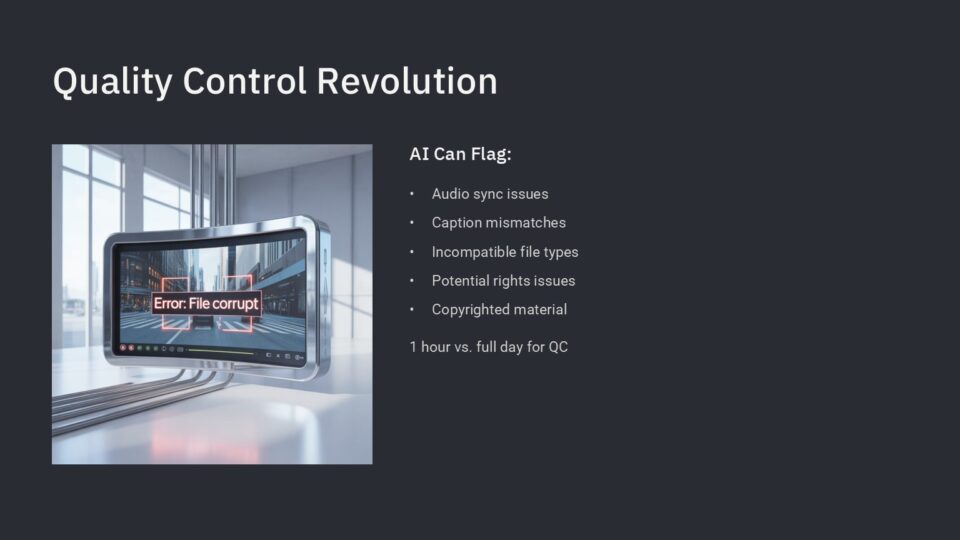
And don’t neglect quality control. AI can flag your masters for technical compliance before distributing them, pointing out audio sync issues, captions that fail to match, or file types that will bounce back off the broadcaster’s ingest system. It can even spot probable rights issues by picking up on logos or copyrighted material within a shot.
 Risks of Blind Trust in AI Technology
In each of these, what would have taken two human operators a whole day now takes under an hour—and the humans still do the final okay, but with a much shorter, concentrated checklist of things to check. So plenty of things to adore. But here’s where I slam on the brakes. Because I’ve also seen what goes wrong when people have blind trust in technology. AI, like every technology that preceded it, is only as good as you are. Garbage in, garbage out—and the garbage comes in very insistent recommendations.
It’s tempting to report back “the AI said so” and skip the gut check, but this is how you end up with expensive mistakes and processes you don’t own.
 AI Costs and Hidden Expenses in Media Workflows
And then there’s expense. We learned the hard way with cloud services that a “low monthly fee” can become a budget-busting nightmare if you’re not watchful. AI services share the same creep factor, especially when compute time, training material, and integration are not factored in initially. The lesson: pilot small, validate the ROI, then scale.
 Ethical and Legal Challenges of AI in Media
There are ethical and legal issues as well that will keep attorneys working overtime for decades. Face recognition is brilliant at asset tracking—until it unwittingly brings up privacy issues. The tools to scrape, dissect, and remix content are out there, but the laws on who the output belongs to remain murky at best. Which brings me back to a mantra I’ve repeated for years: Don’t let technology drive your business. Let your business drive your business, and let technology enable it.
 Adopting AI Wisely in Broadcast and Entertainment
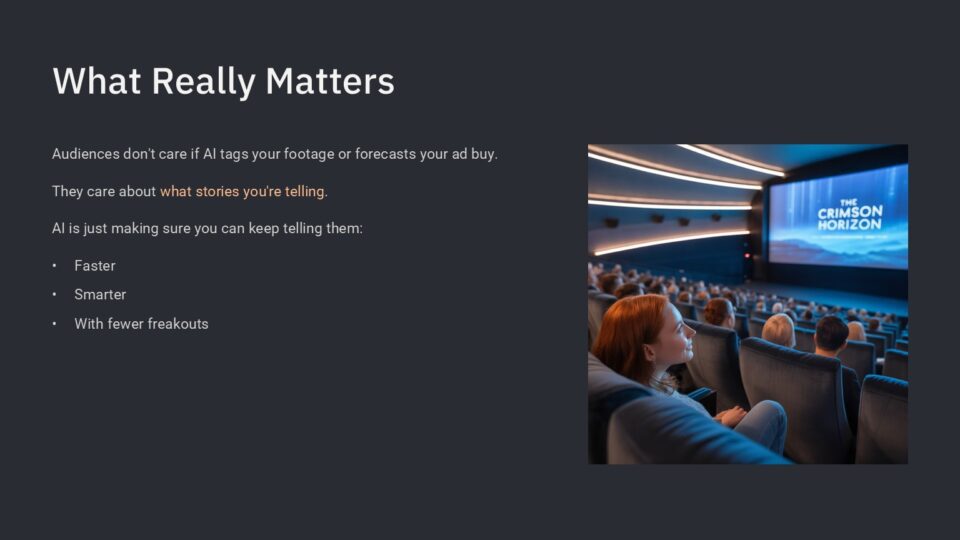
The winners in this next round of our commerce won’t be those that adopt AI the fastest, but those that adopt it the most wisely—embracing it where it will make the greatest difference, with humans in the mix, and never forgetting the aim of what their business actually does. AI must be the über-capable assisting editor who works all night without a murmur of complaint, not the call-making director. Because what audiences are really interested in is not whether you’re letting an algorithm tag your footage or forecast your ad buy—they’re interested in what stories you’re telling. The other is just making sure you can keep telling them, faster, smarter, and hopefully with fewer freakouts along the way.