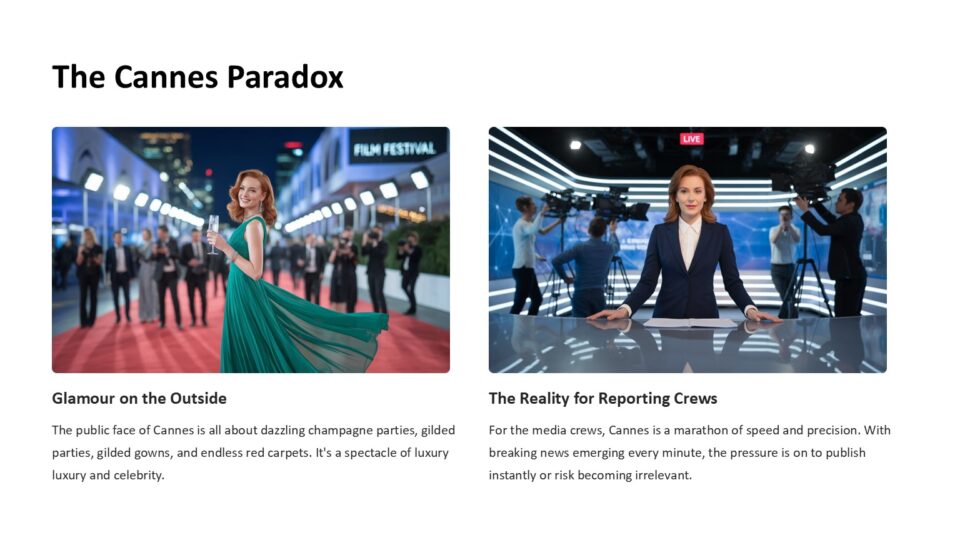
 May in Cannes is a paradox. On the outside, it’s all glamour — champagne parties, gilded gowns, and red carpets that seem to go on forever in the sun of the Riviera.
By Dennis Radeke, Senior Director, Global Agencies of LucidLink, USA
But under the flashbulbs and photo calls, it’s a marathon of speed and stamina for the reporting crews. The breaks are arriving minute by minute, and in the festival’s manic speed, the margin between publishing now or publishing an hour later can be in the conversation — or being absent altogether.
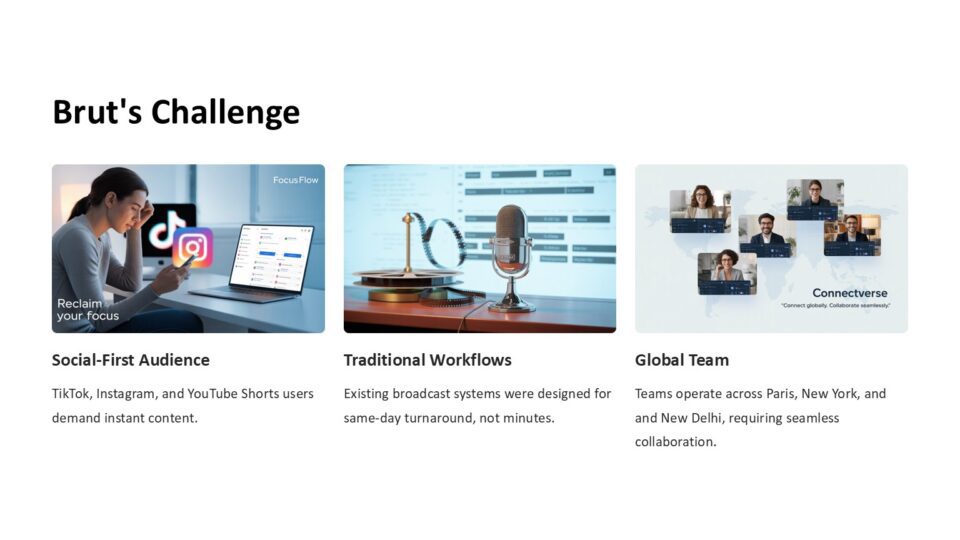
For Brut., Europe’s number one social-first media brand, Cannes is not enough. They aspire to own the moment. Their audience is world-aware, itchy, and steeped in the instant image short form of TikTok, Instagram, and YouTube Shorts. They expect live red carpet entrances, celebrity soundbites, and unproduced behind-the-scenes glimpses while the moment is hot.
 The problem is, broadcast workflows were never designed for that sort of pace. In ancient times, a same-day turnaround would be considered lightning-fast. Content would move in the form of file-based handoffs, overnight hard-drive shipping, and glacial server transfers. Even in the cloud storage era, many teams simply traded one type of delay for another — waiting for massive files to download before an editor could even begin working on them. For Brut., working above Paris, New York, and New Delhi, those latencies were not just frustrating; they were a creative ceiling.
Gabriel Millet, the Head of Post-Production for Brut., recalls the frustration: “By the time something was cut and ready to publish, the moment had already gone.”
A great interview or a red-carpet shot could be viewed hours later, but the conversation would have passed them by. The bottlenecks were numerous: shipping hard drives across continents, manually tagging media in ways that caused gaps, waiting out hours-long downloads before editing could begin, and wrestling with duplicate assets and version-control confusion.
 For Cannes 2024, Brut. threw the old playbook out. Rather than simply trying to be faster on a flawed system, they tried to redesign the production pipeline itself — cutting out every unnecessary step between camera and editor’s timeline. Not only was speed the goal, but it was also about changing how the work was done.
The result was an end-to-end AI-powered process that married two technologies into one seamless procedure. Live streams from Cannes flowed directly into Moments Lab’s MXT-2 platform, where multimodal AI automatically tagged faces, scenes, and dialogue the moment they occurred. This was no keyword guessing, no half-guess, half-human process — it was a relentless digital researcher scouring each frame and delivering just the right thing.
 LucidLink took care of the rest. Every labeled clip fell directly into a LucidLink Filespace, a cloud-optimized storage collaboration area that editors used as a local drive. That meant ProRes high-res files could be streamed into Adobe Premiere Pro from anywhere on the globe — not downloaded, not synced, and not bogged down in the relinking frustration that typically stalls post-production.
Millet puts it in simple words: “The video data is usable immediately in Premiere Pro, anywhere. That saves huge amounts of time.”
The turnaround was significant. The interview on a red carpet could be shot, cut, captioned, and posted in minutes — sometimes even before the talent had left the building. Editors could also switch to breaking news midday, chase breaking moments, and recycle content on the fly across multiple social platforms. And since the workflow bypassed file wrangling, creative decisions weren’t clouded by the threat of imminent technical holdups.
 The Cannes stats told the story: more than 600 million views of Brut. France, Brut. America, and Brut. India, and a 90 percent year-over-year uptick in engagement. Three continents worked together from the same live Filespace without a single download or manual relink.
Cannes by the Numbers
600M+ total views
90% year-over-year growth in engagement
Three continents working together in the same live Filespace
Zero downloads or manual relinking
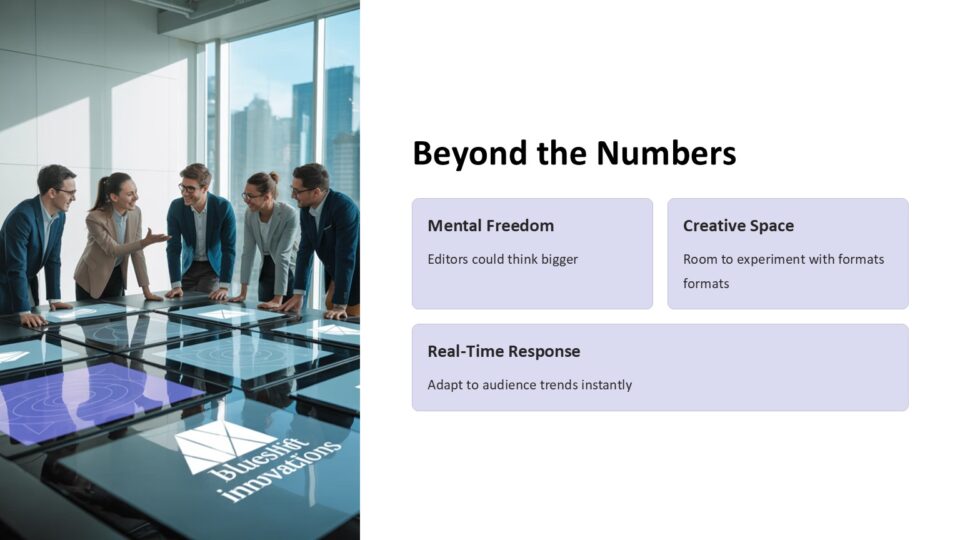
But perhaps the biggest shift was harder to quantify. Removing the friction enabled Brut.’s editing teams to think bigger. Once the process no longer stood in the way, ambition moved in to occupy the vacuum. Editors had mental room to experiment with formats, make sharper cuts, and respond to reader trends in real time. Technology was no longer a constraint; it was a speed-up.
 In so many respects, Cannes was a microcosm of change rolling through broadcast production. The industry has long wrestled with keeping new capabilities in balance with simplicity. The move from SDI to IP, from HD to UHD, and the advent of OTT — each offered new potential, but too frequently at the cost of increased complexity.
Brut.’s Cannes pipeline showed that innovation does not always mean more steps. AI negates the search for the perfect time. LucidLink negates waiting for the media. All together, they create a system that’s seamless even under high-pressure production circumstances.
“From sports to news, the faster you go from capture to publish, the greater the impact. In media, latency kills relevance.”
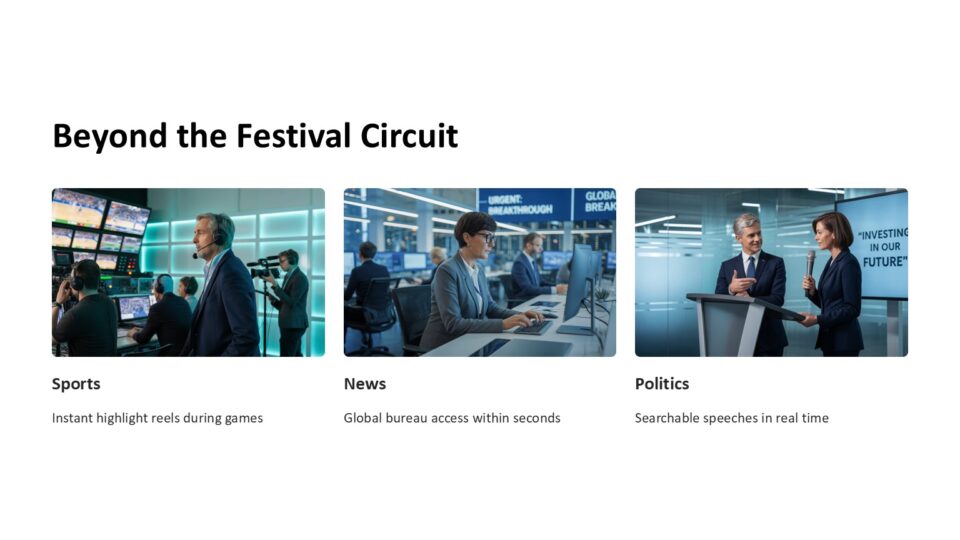
The uses are far more than festival circuits. Sports broadcast crews could use similar pipelines to locate and provide highlight reels for many teams during a game. Newsrooms could ingest, tag, and send field video out to bureaus worldwide within seconds. Political reporters could make speeches searchable in real time, facilitating richer, more contextual coverage while the action is unfolding. In all instances, the bottom-line truth is the same: the sooner you can get from capture to publish, the more timely and impactful your content will be.
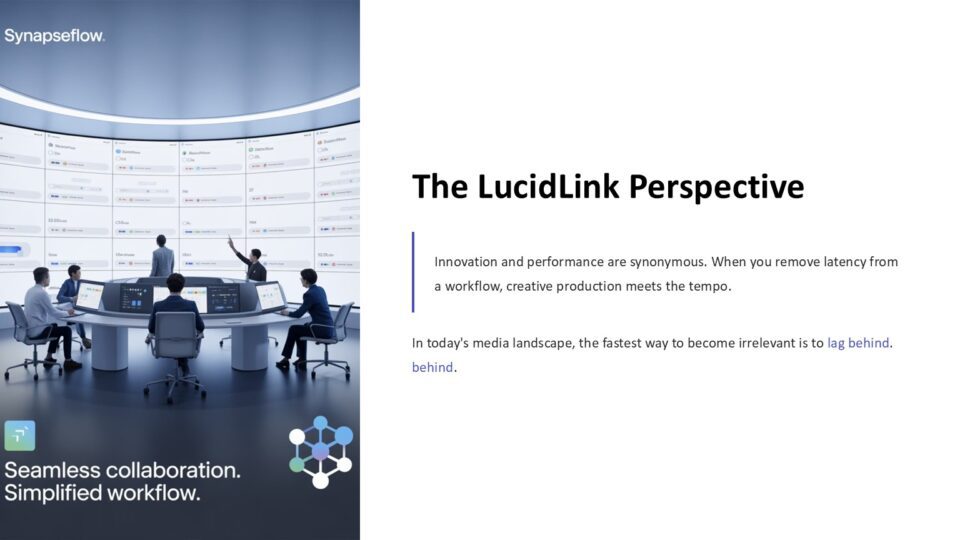
To us at LucidLink, the Cannes project reinforced something we see across the industry: innovation and performance are synonymous. When you remove latency from a workflow, creative production meets the tempo. Brut.’s reporting was not a coincidence of good luck — it was the result of testing all assumptions for how a story proceeds from lens to viewer and replacing the elements that slowed it down. In today’s hyper-competitive media landscape, the fastest way to become irrelevant is to lag. Staying ahead means equipping the right people with the right tools at the right moment.
The story doesn’t end on the Croisette. At IBC 2025, we’ll be pulling back the curtain on this workflow in From Capture to Cut: Real-Time Workflows Powered by AI and the Cloud. Together with our partners at Moments Lab, LucidLink CPO Richard Yu and Moments Lab CTO Fred Petitpont will discuss not just how the Cannes shoot was done, but what it means for live and near-live content production in the future.
Attendees can meet us at Stand 6.A12 in Hall 6 from September 12–15 to see how these guidelines can change the way sports get covered, news gets gathered, and events get broadcast.
Cannes was the trial by fire. The lesson holds everywhere: if you have to move faster, start clearing out all that slows you down. The television future will not be determined by who has captured the most footage, but by who is able to get it in front of the audience before it’s stale.