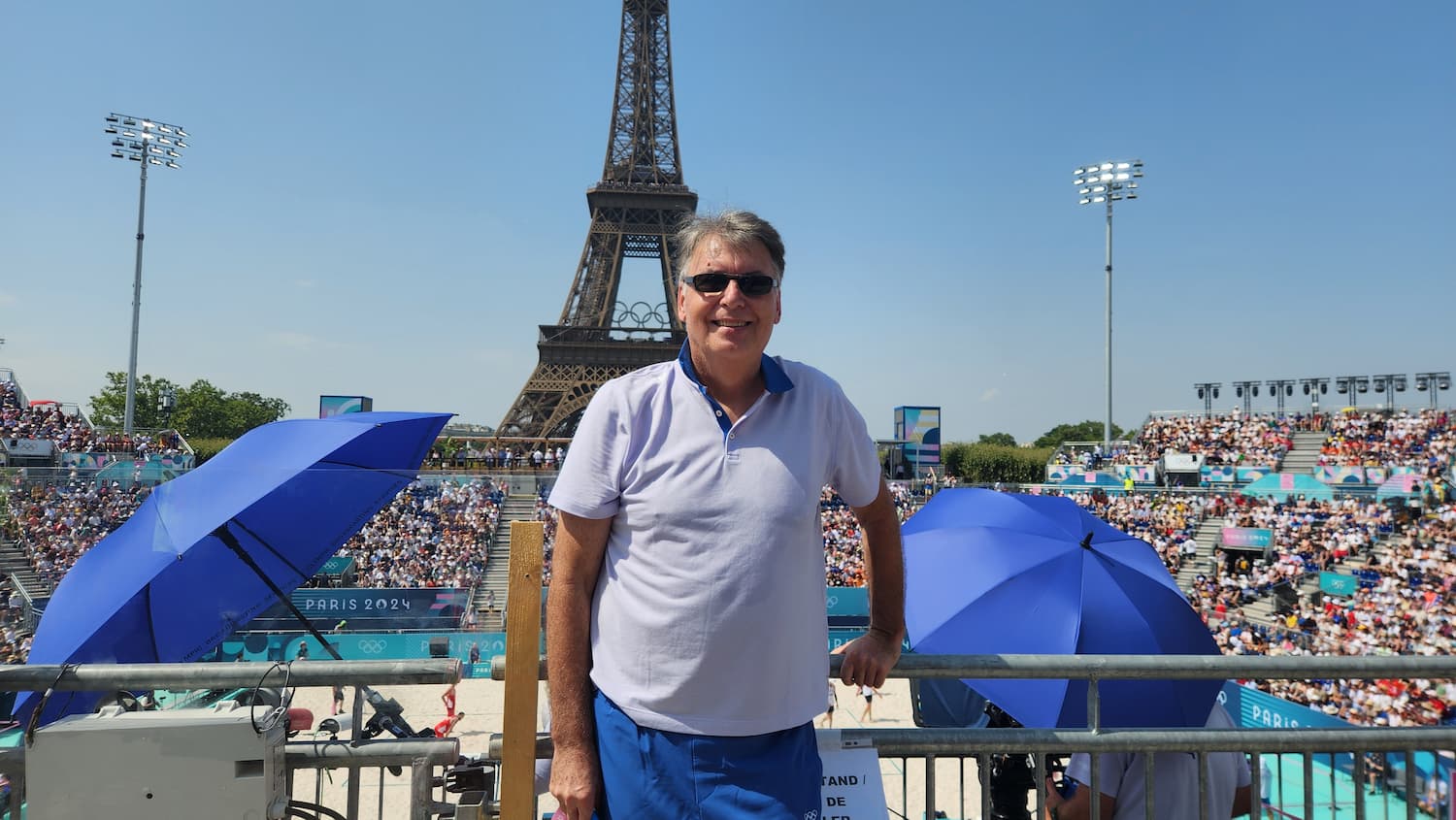
From a Canadian childhood interrupted by the Soviet system to decades inside the Olympic broadcast infrastructure, Alex Czernienko’s journey spans sport, engineering, migration, and some of the most complex live productions in the world.
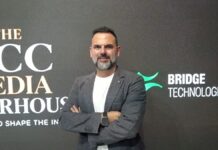
Alex Czernienko, Operator at Telemundo in the Broadcast Operation Center during the World Cup 2026, never planned a career in broadcasting. Born in Montreal and raised in Soviet Ukraine after his family was prevented from returning to Canada, he survived political pressure, the collapse of an Olympic dream, years of factory work, and a difficult return to Canada with almost no support.
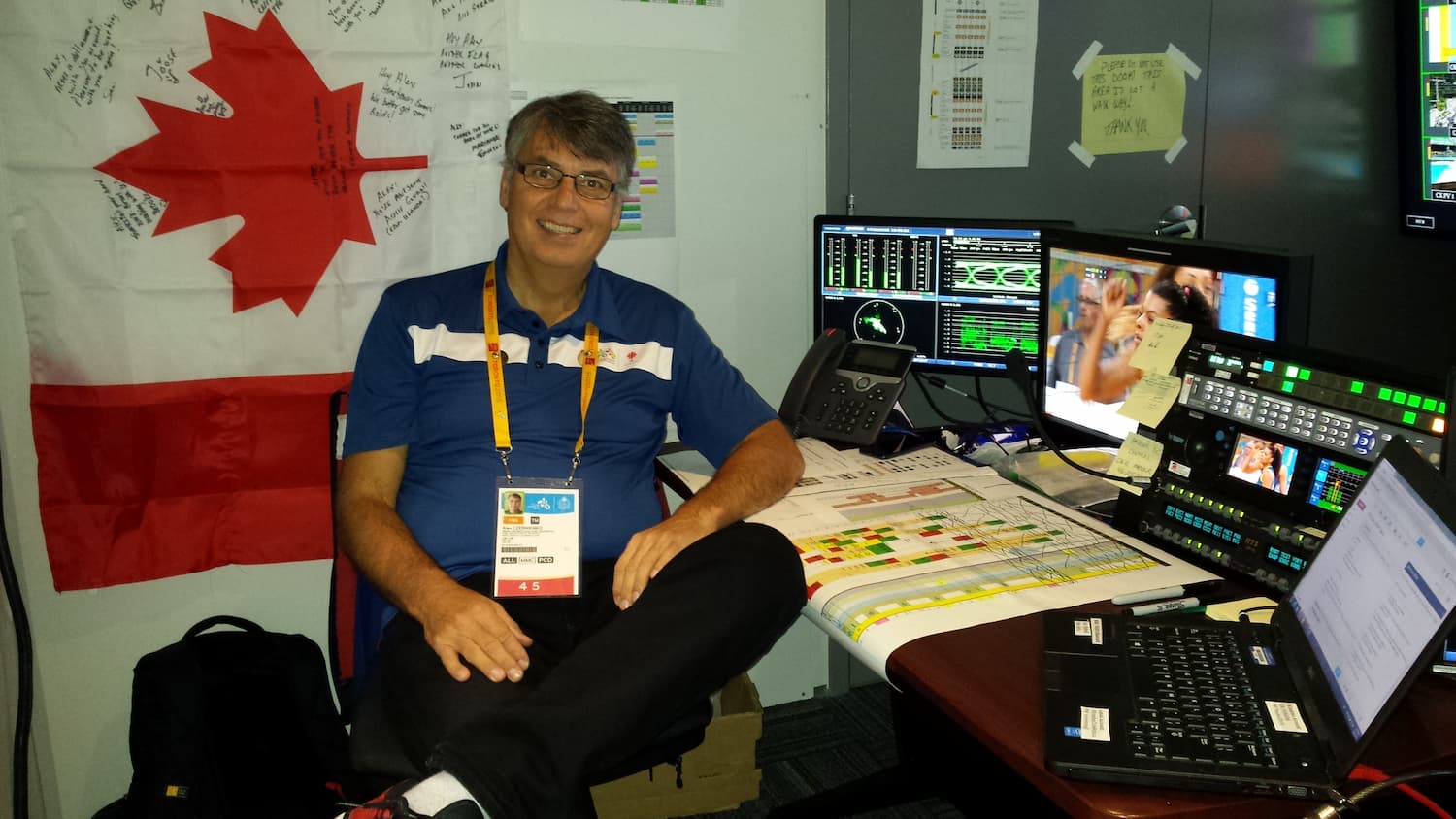
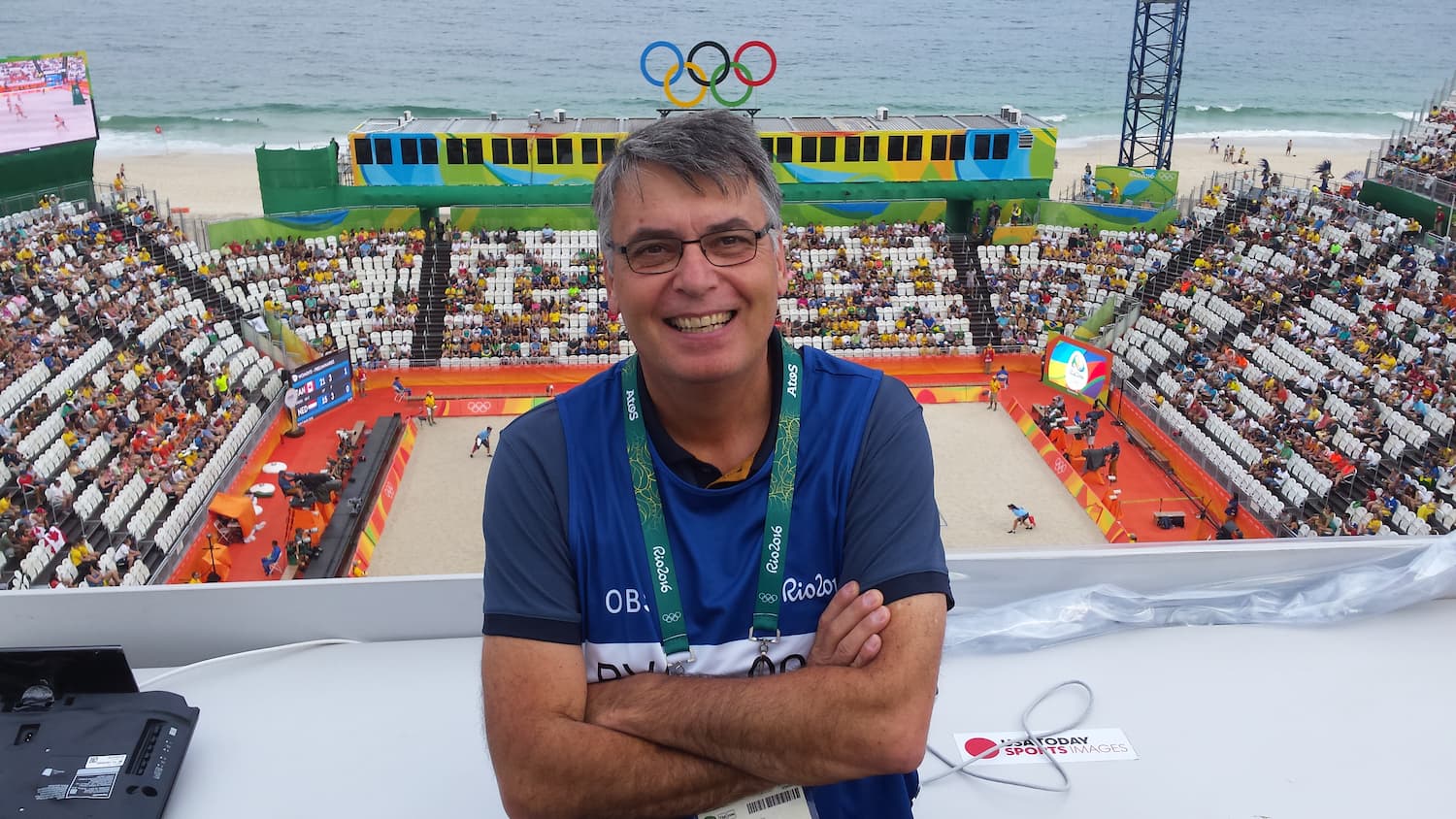
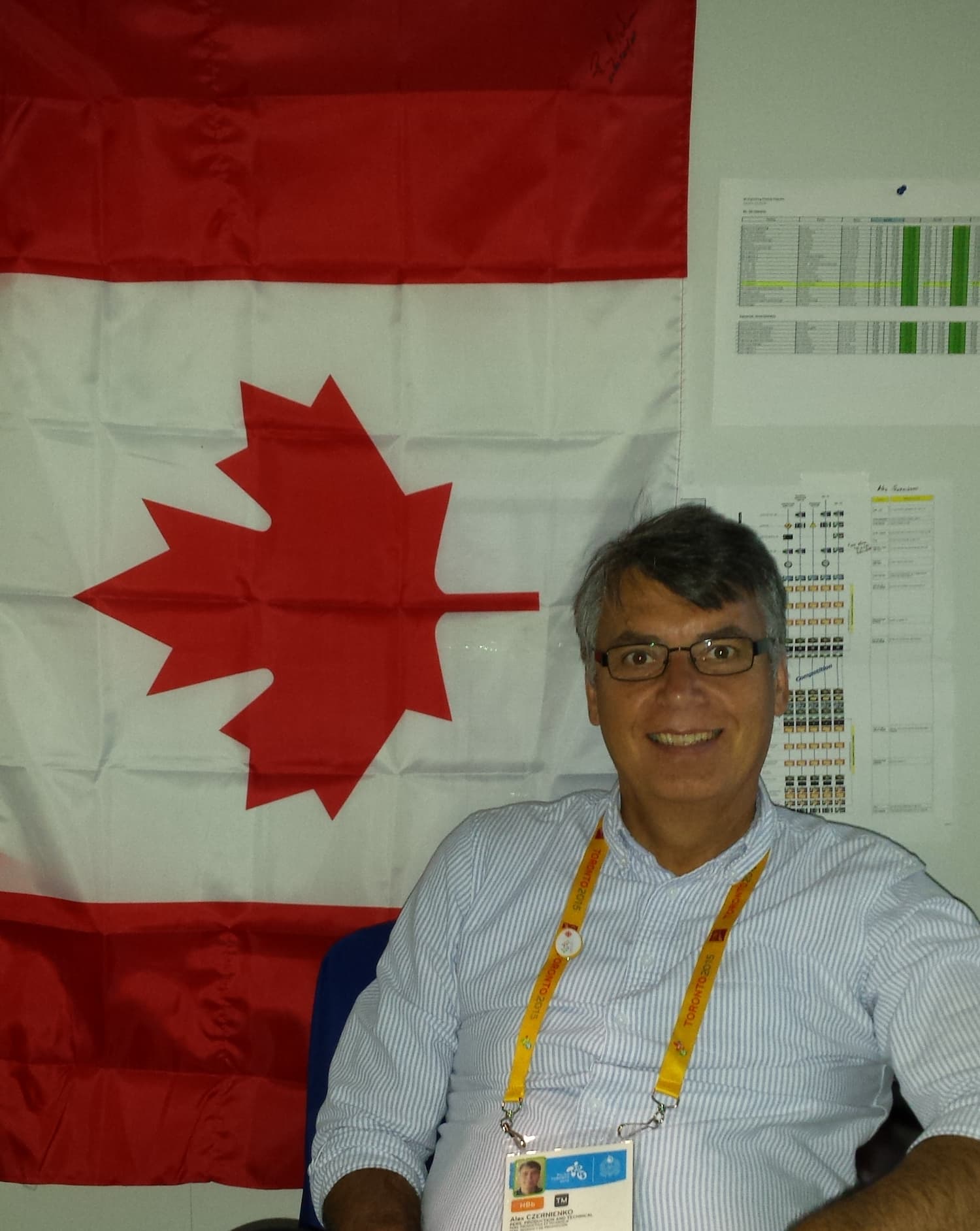
Through persistence, technical curiosity, and relentless self-education, he became part of the global broadcast industry, working on Olympic Games, FIFA World Cups, and major international productions across four decades. Today, his collection of signed flags from global sporting events tells the story of a life shaped by resilience, engineering, and the pursuit of belonging.
The Gulf & MENA Decision-Makers Forum | Sport, Broadcast, AI & Monetization
Before Broadcasting: Sport
— What is your hobby?
My hobby began with sports. I was an athlete once, and my dream was to compete at the 1976 Olympic Games in Montreal. An injury changed that path, but it didn’t take away my love for the Olympic spirit.
— When did collecting flags become part of your life?
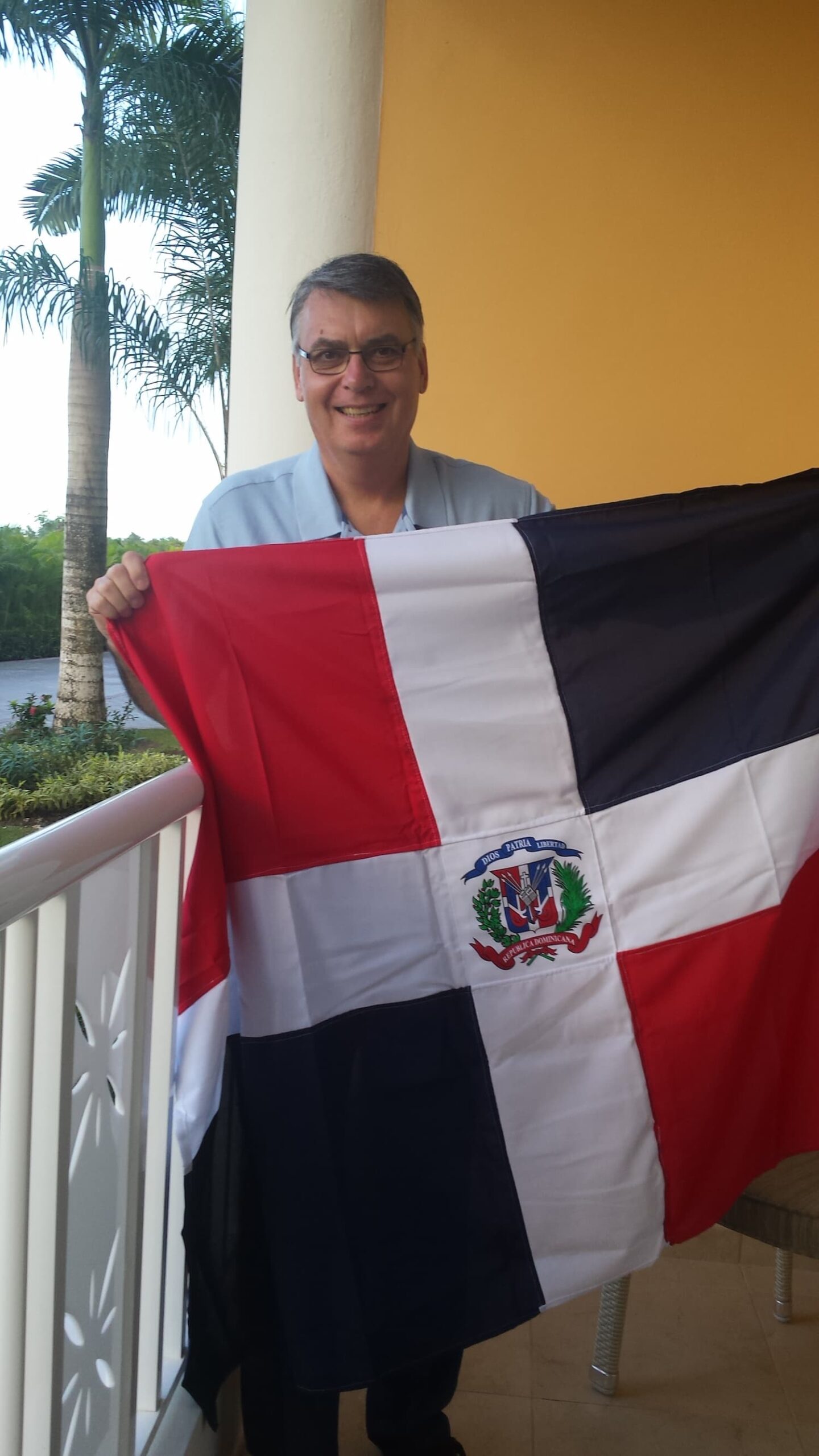
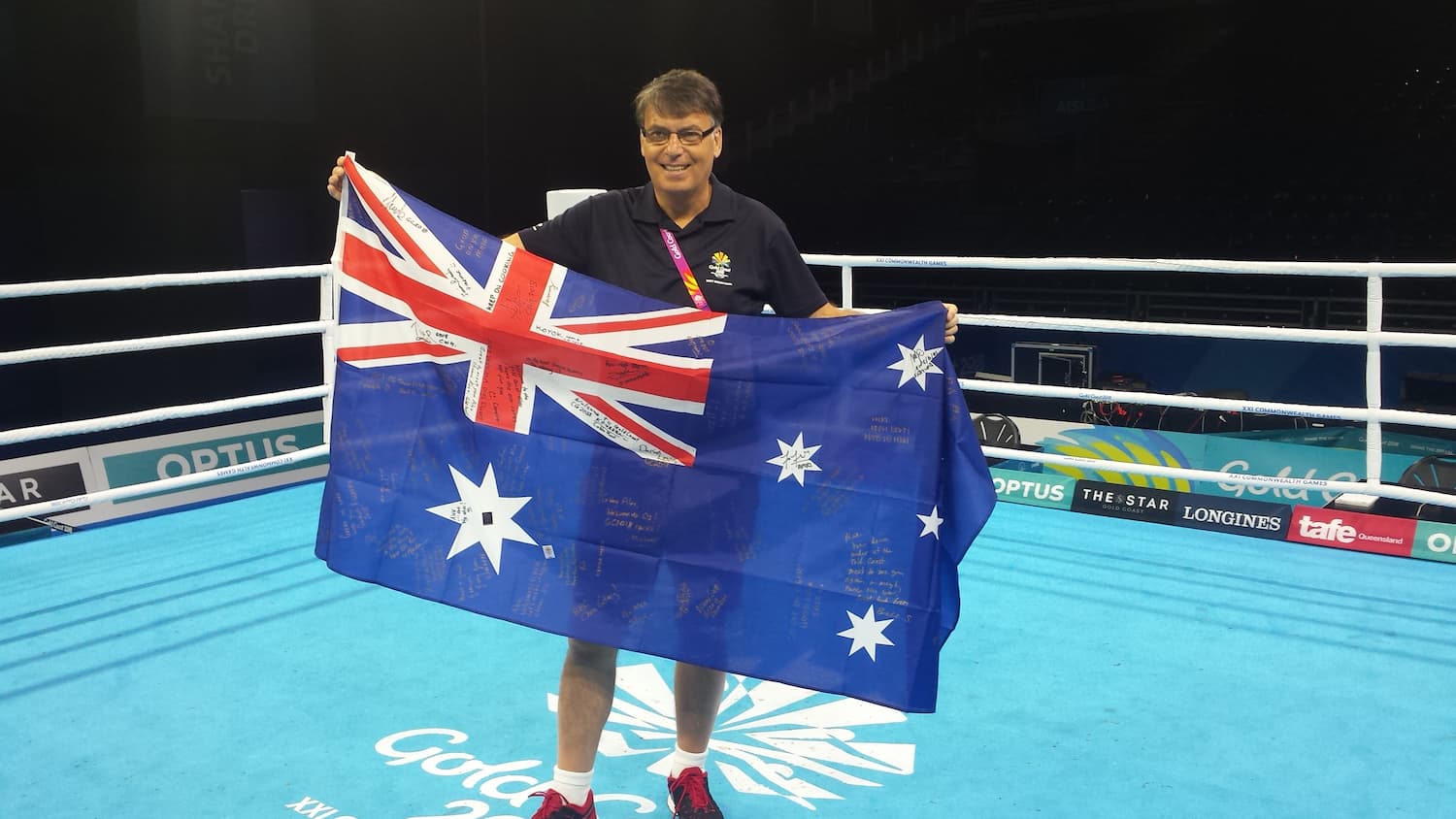
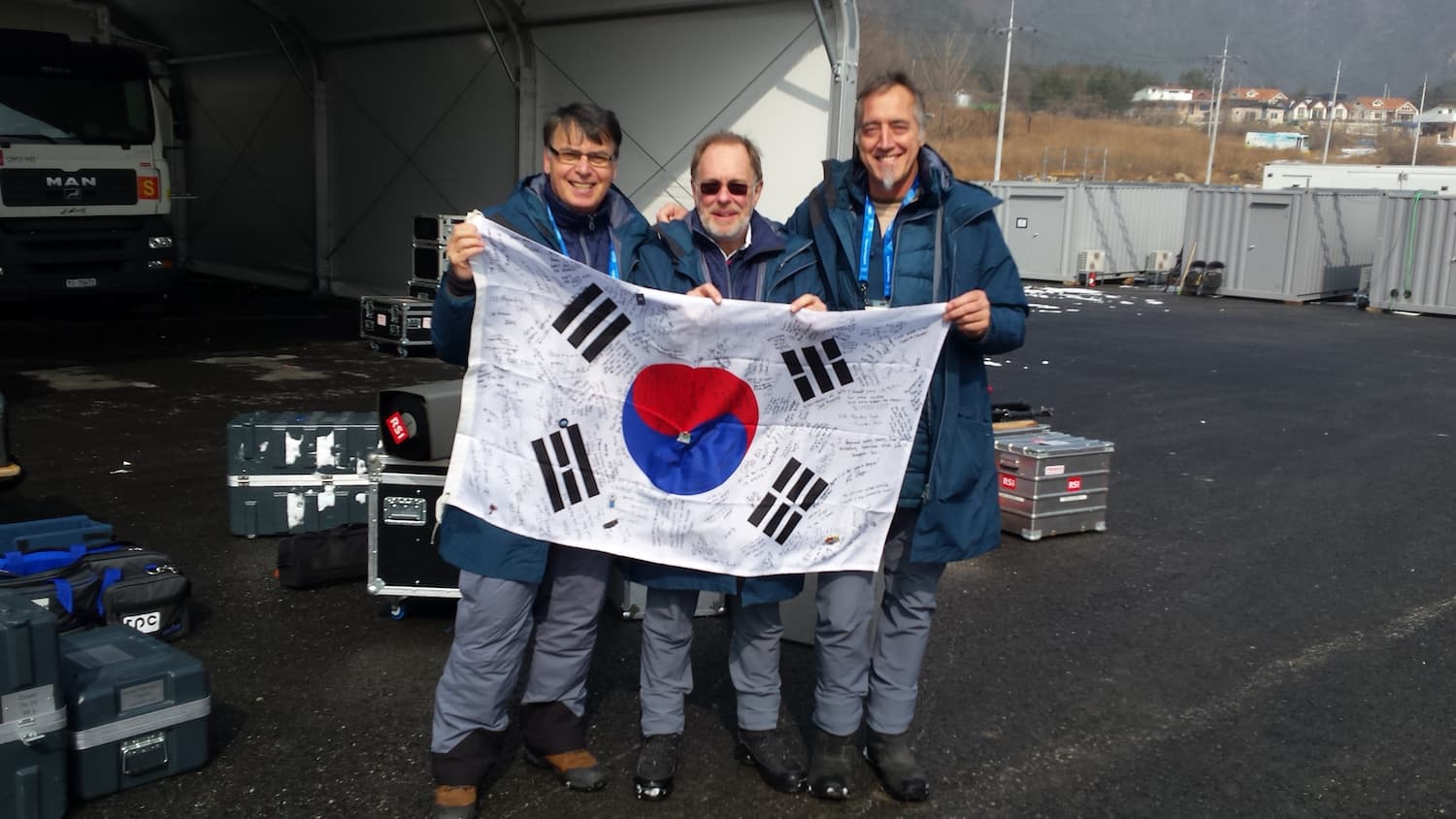
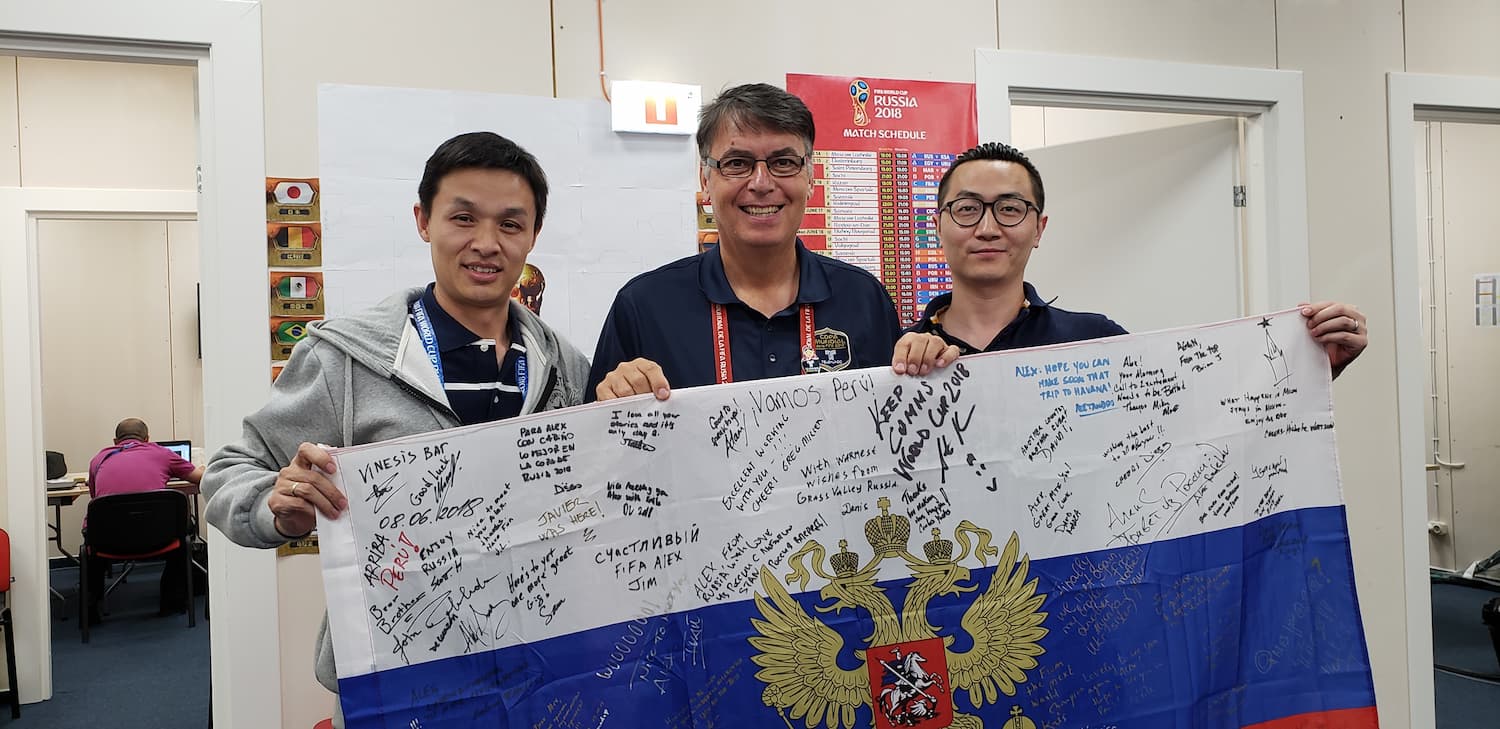
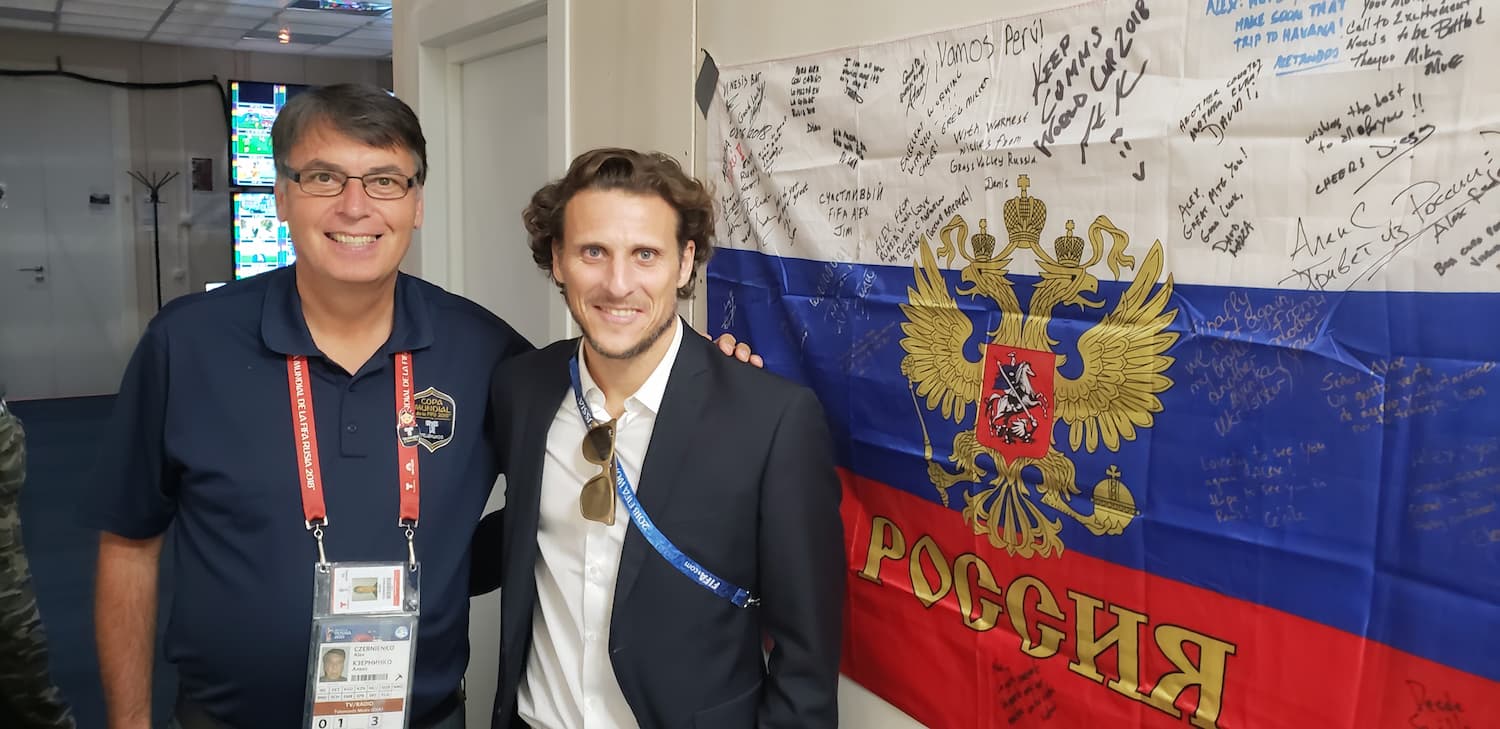
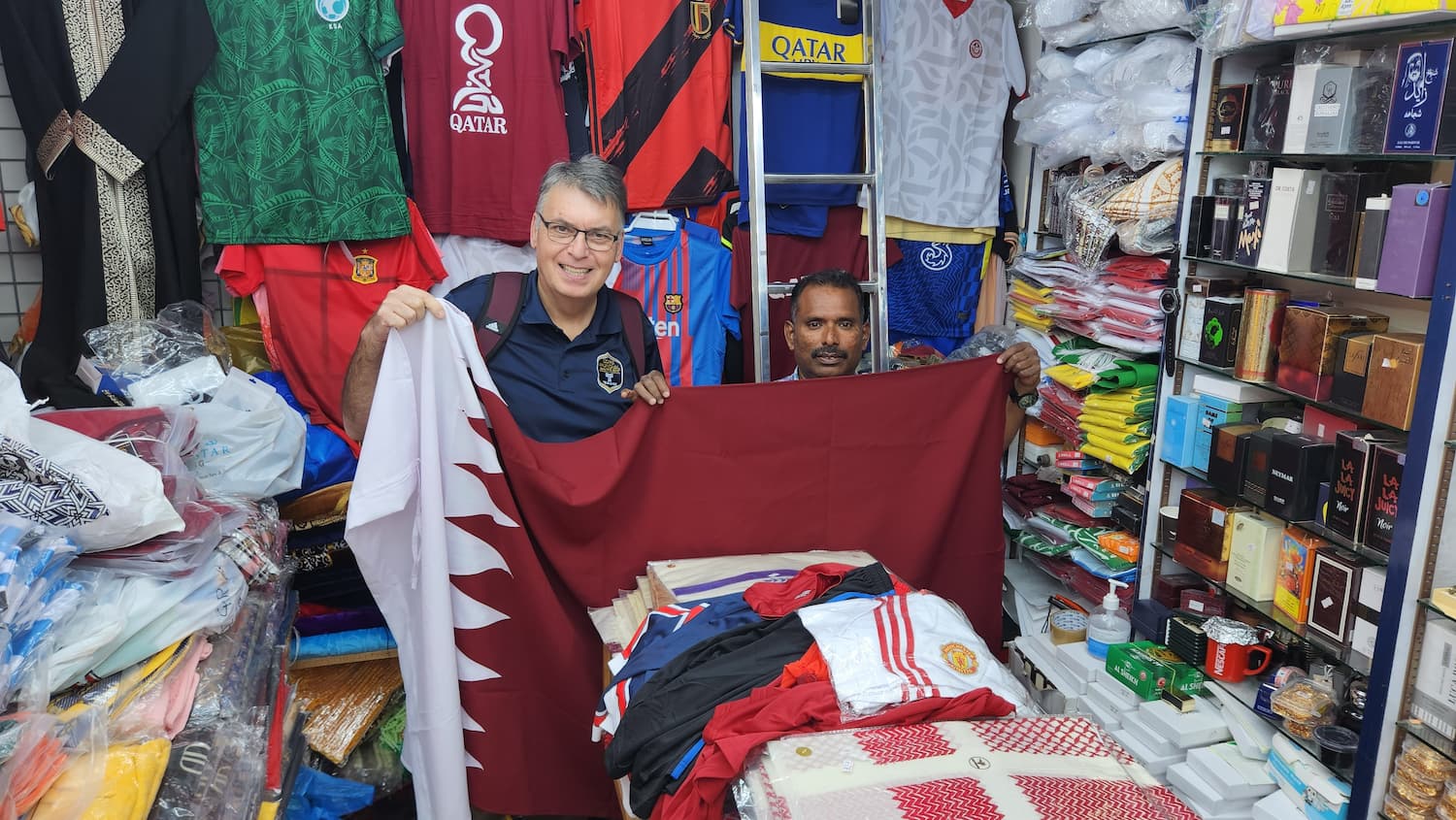
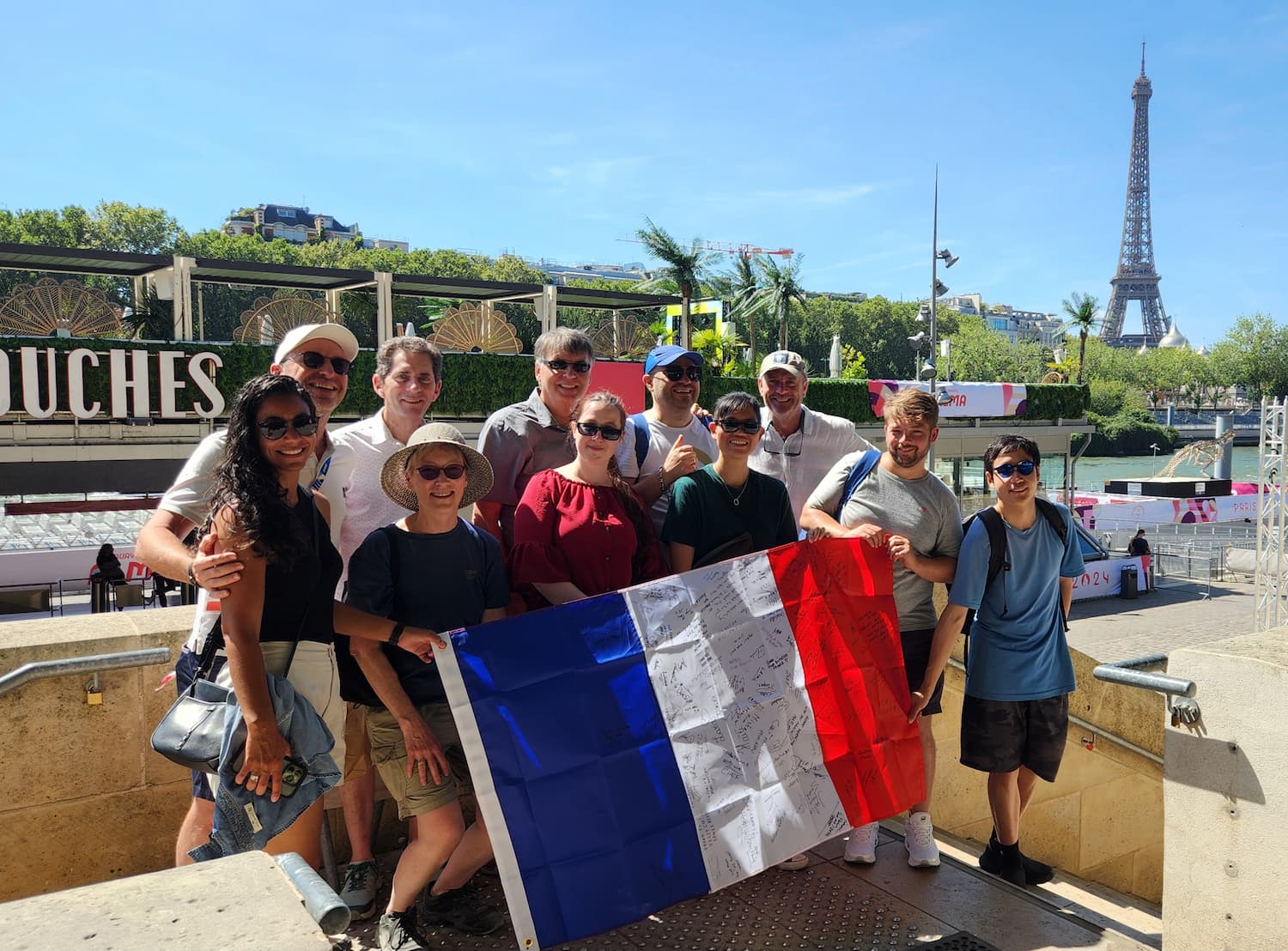
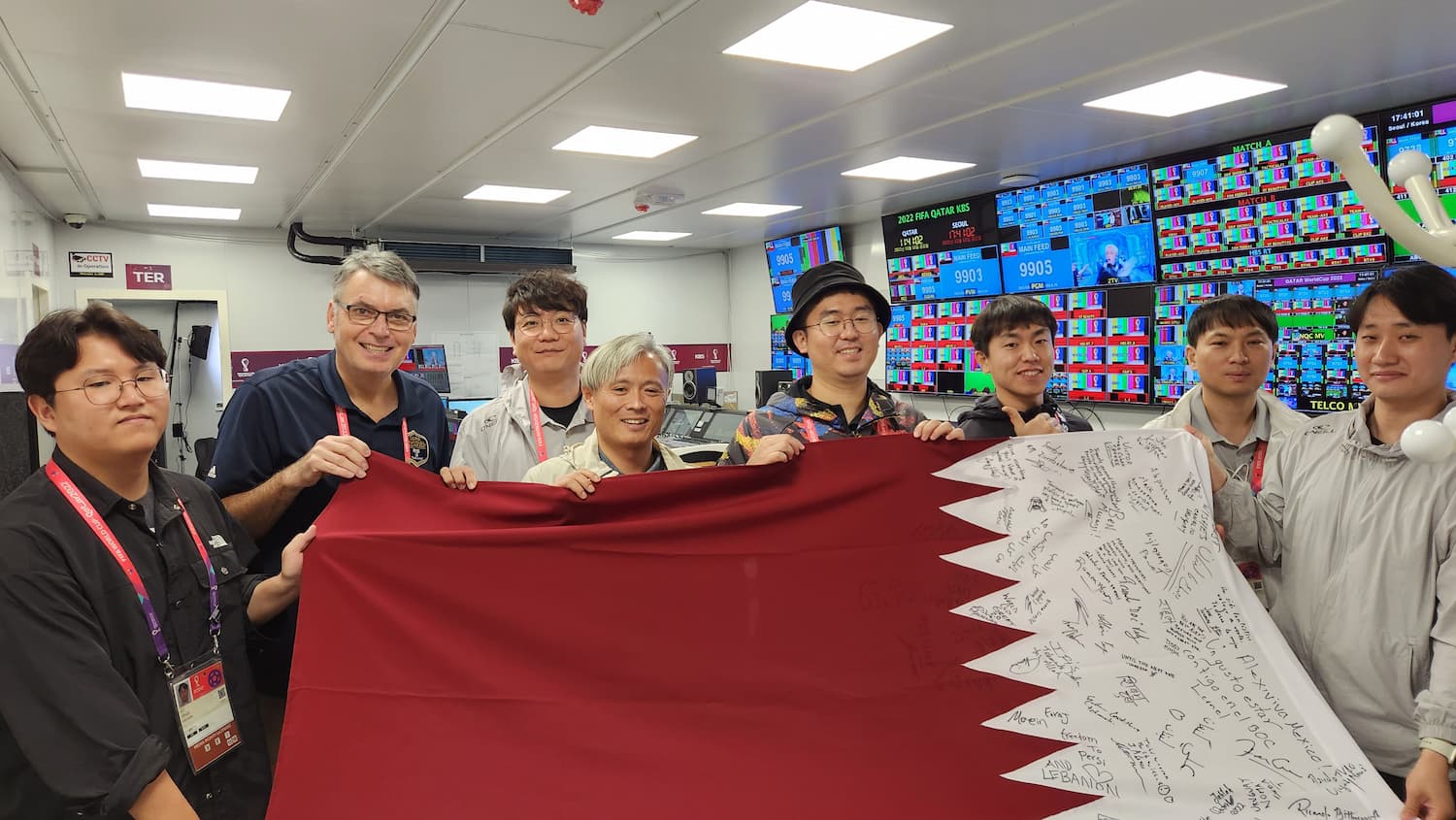
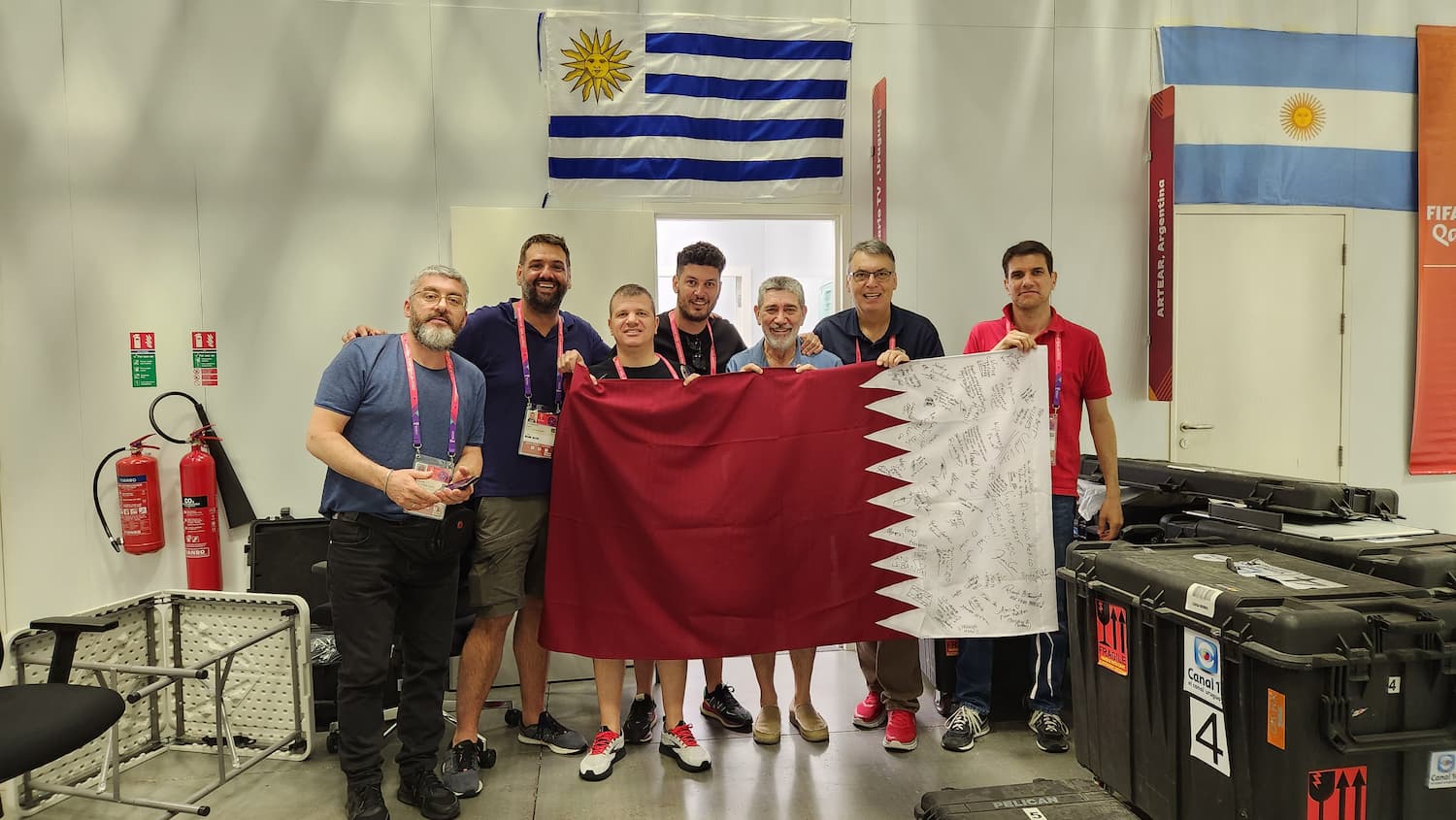
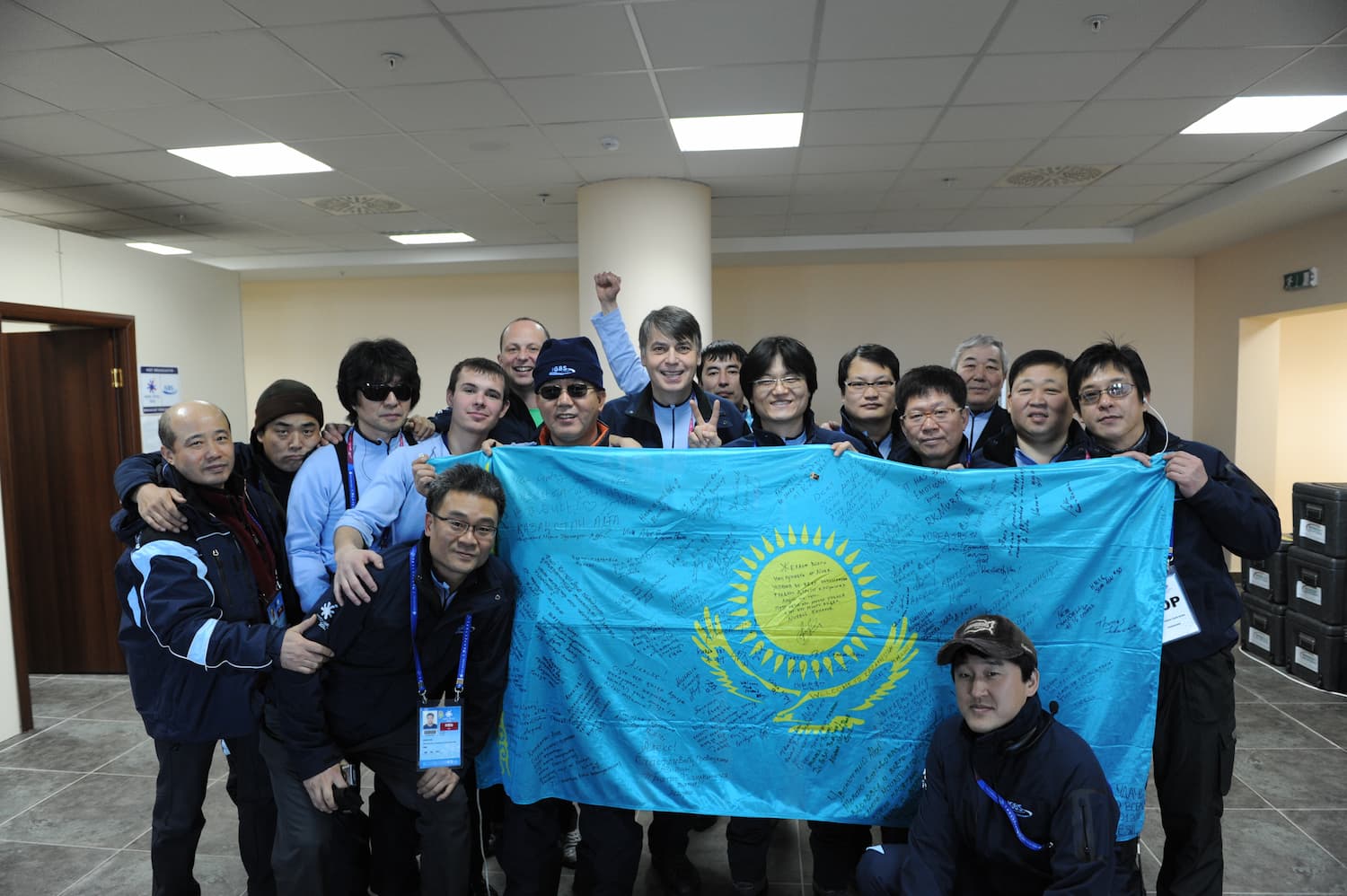
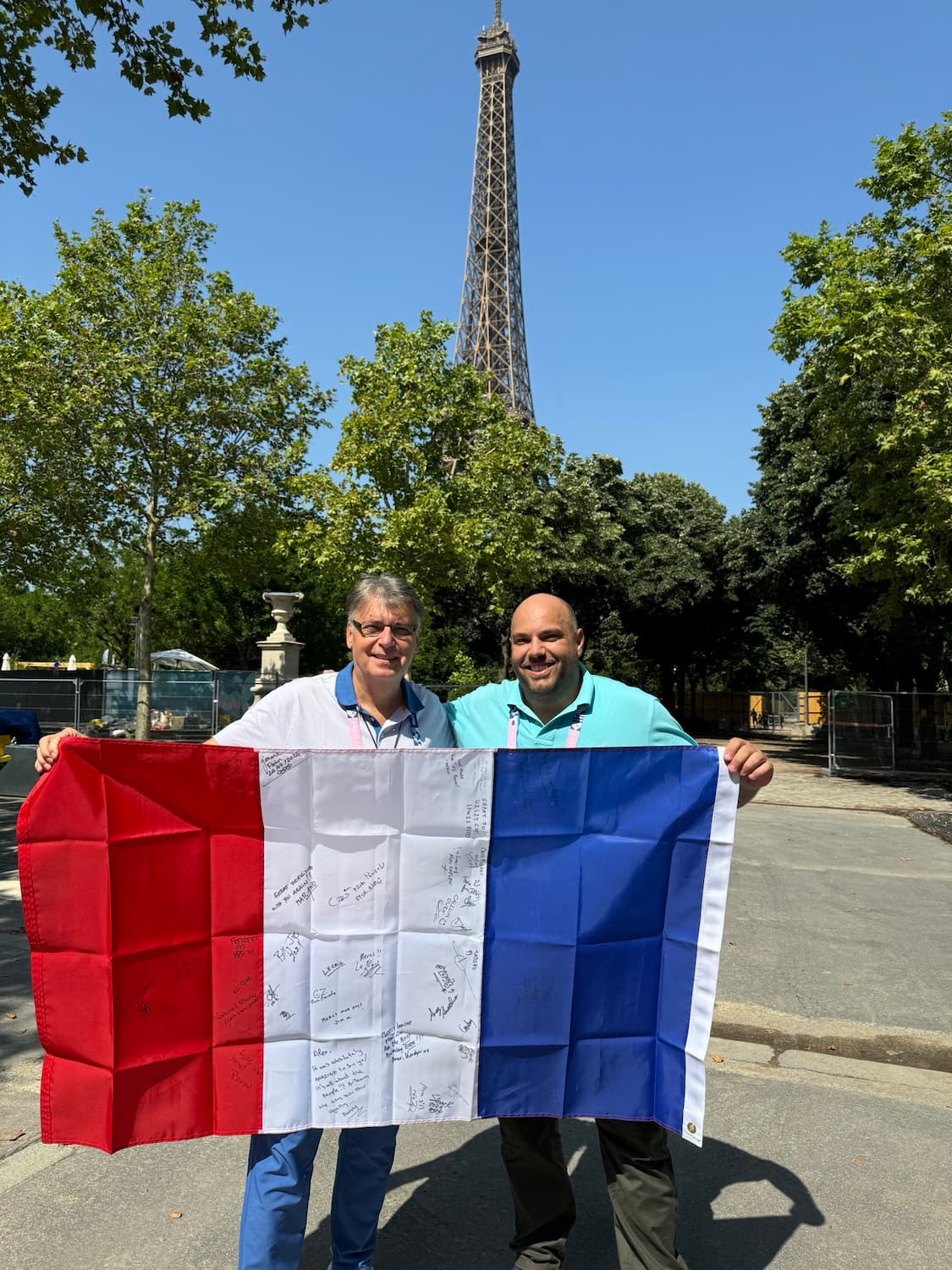
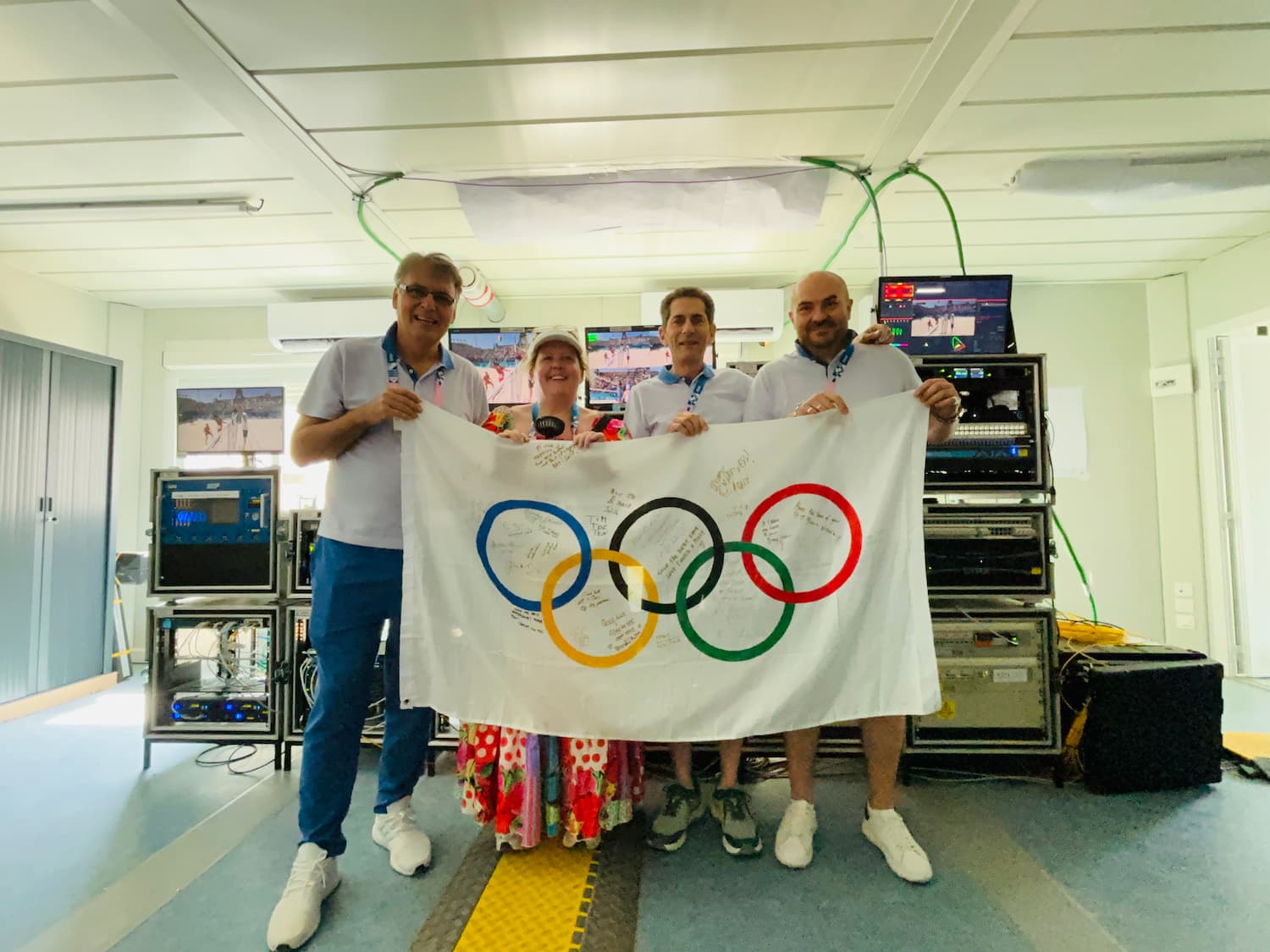
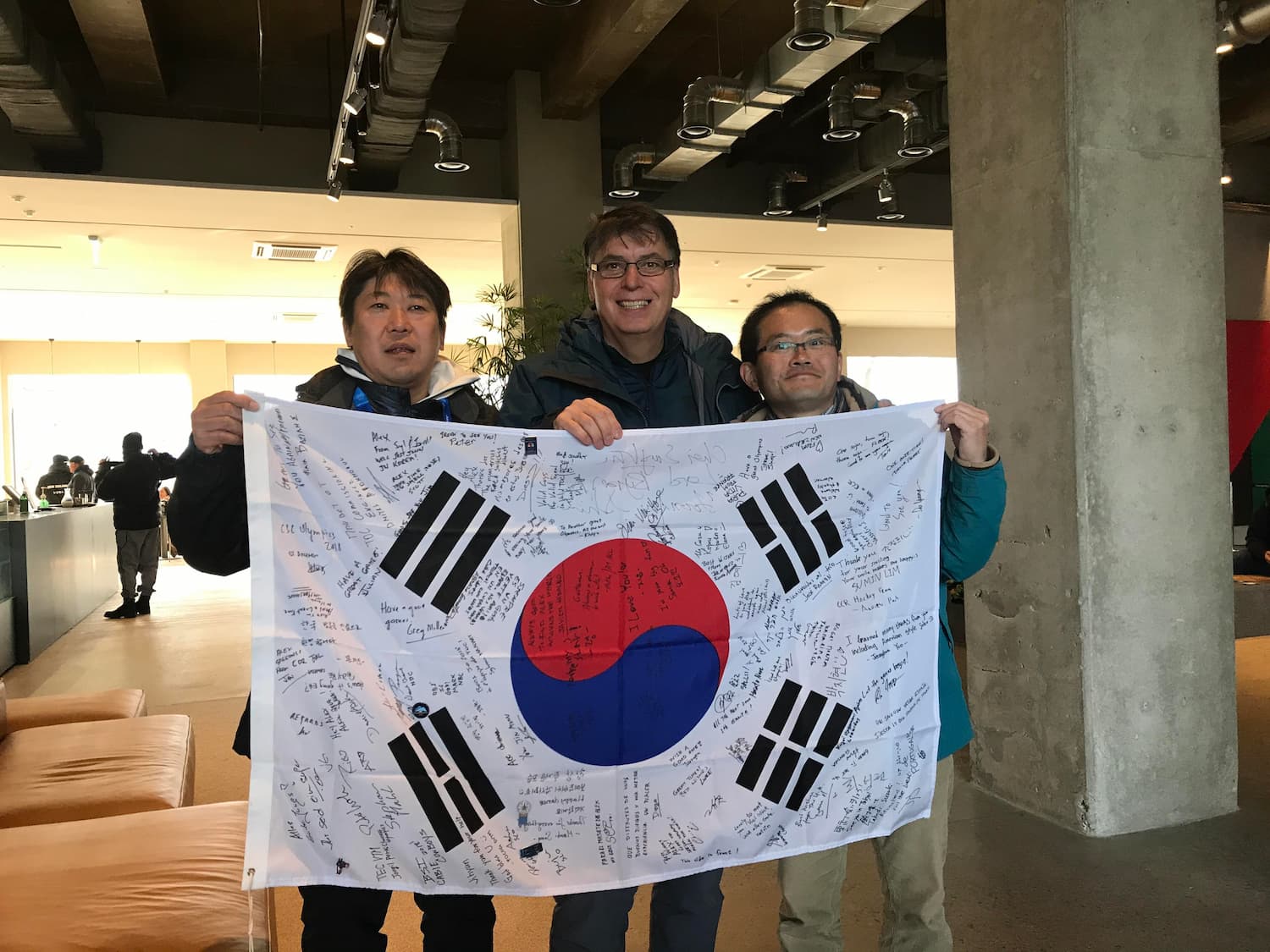
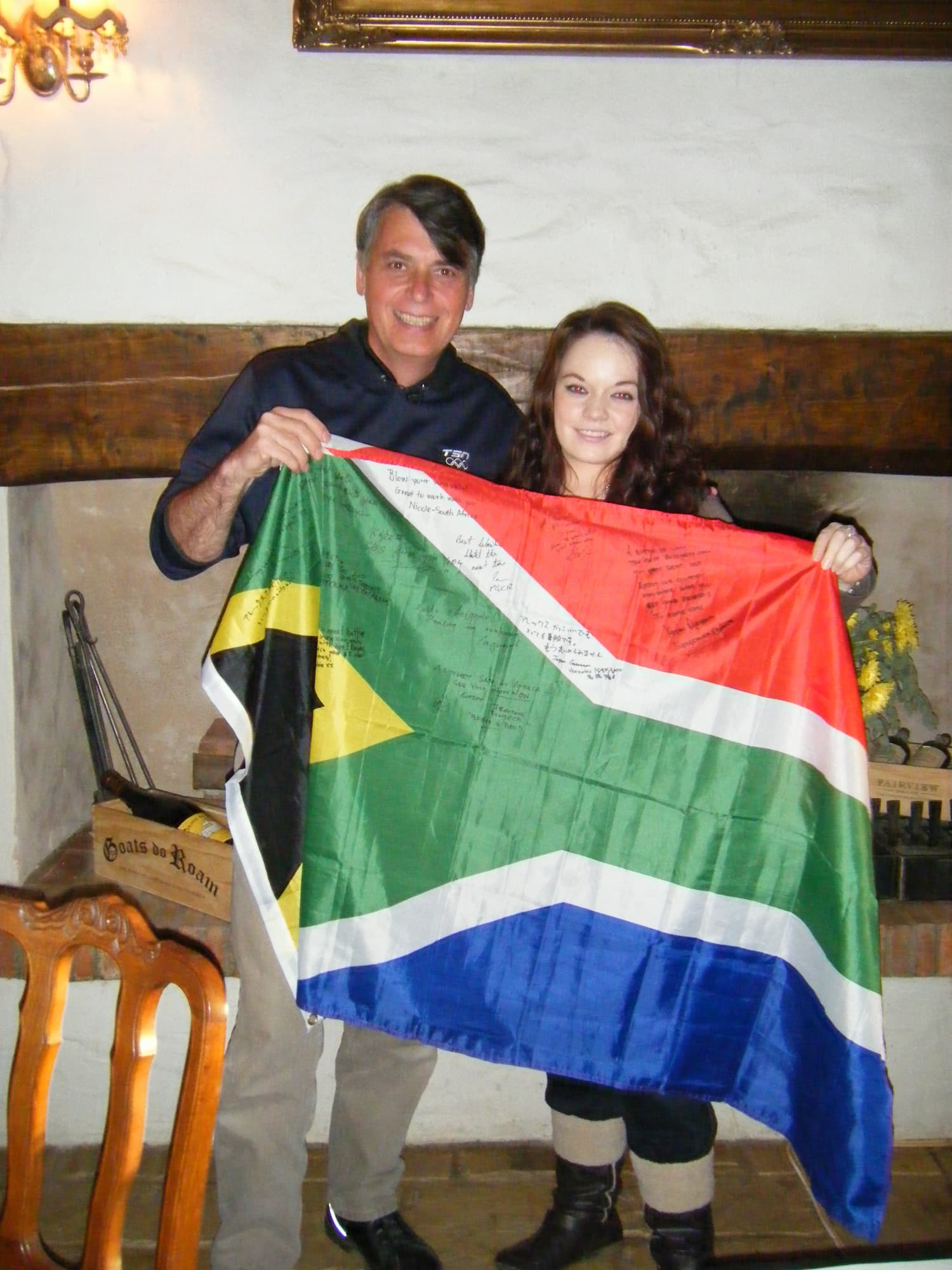
Years later, when I began working at the Olympic Games, a new hobby found me. I started collecting flags from the countries where I worked. I asked colleagues and friends to sign them, and each one became a memory — a story stitched into fabric. What began as a simple souvenir turned into a tradition that followed me from event to event.
— How large has the collection become over the years?
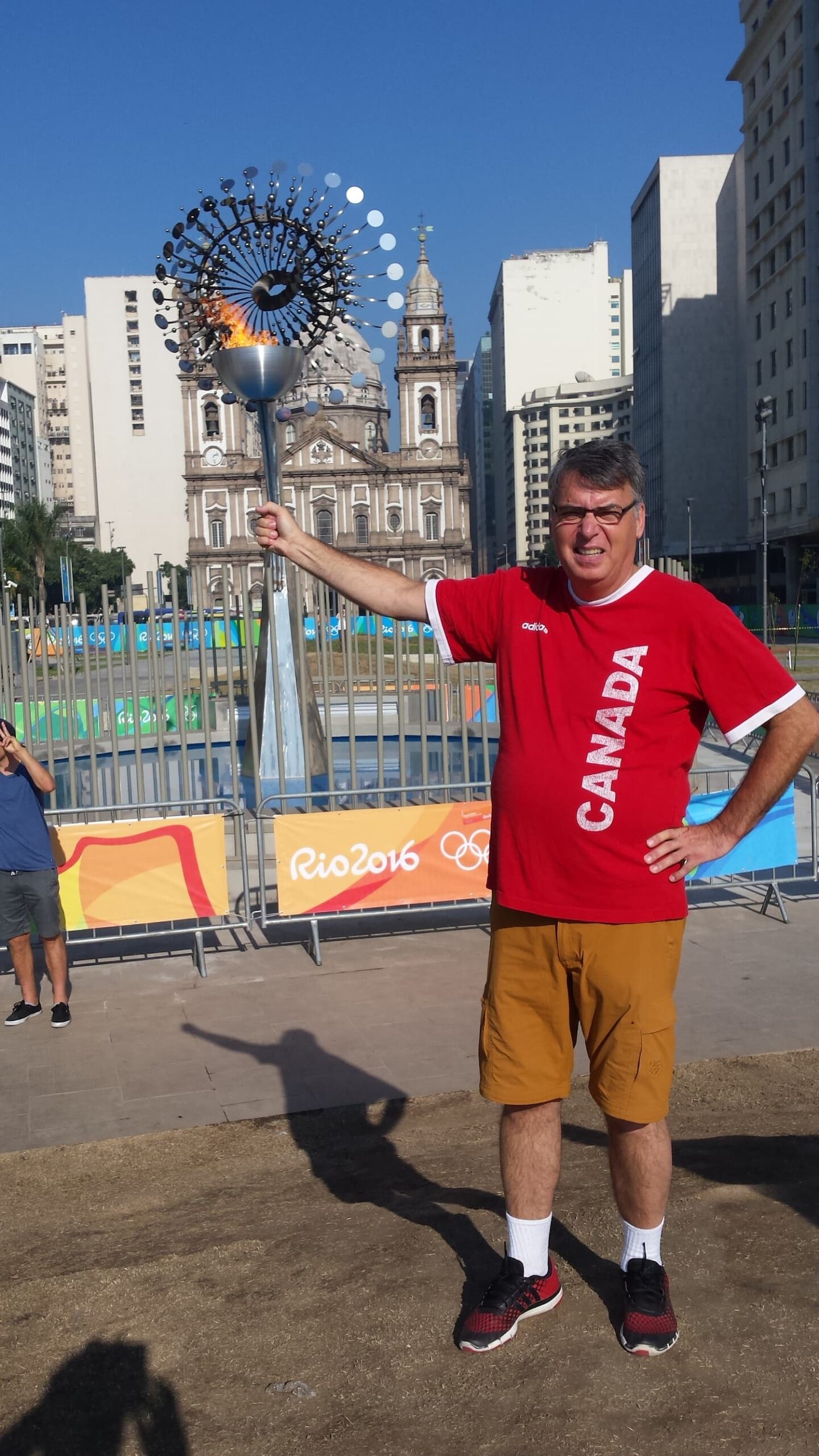
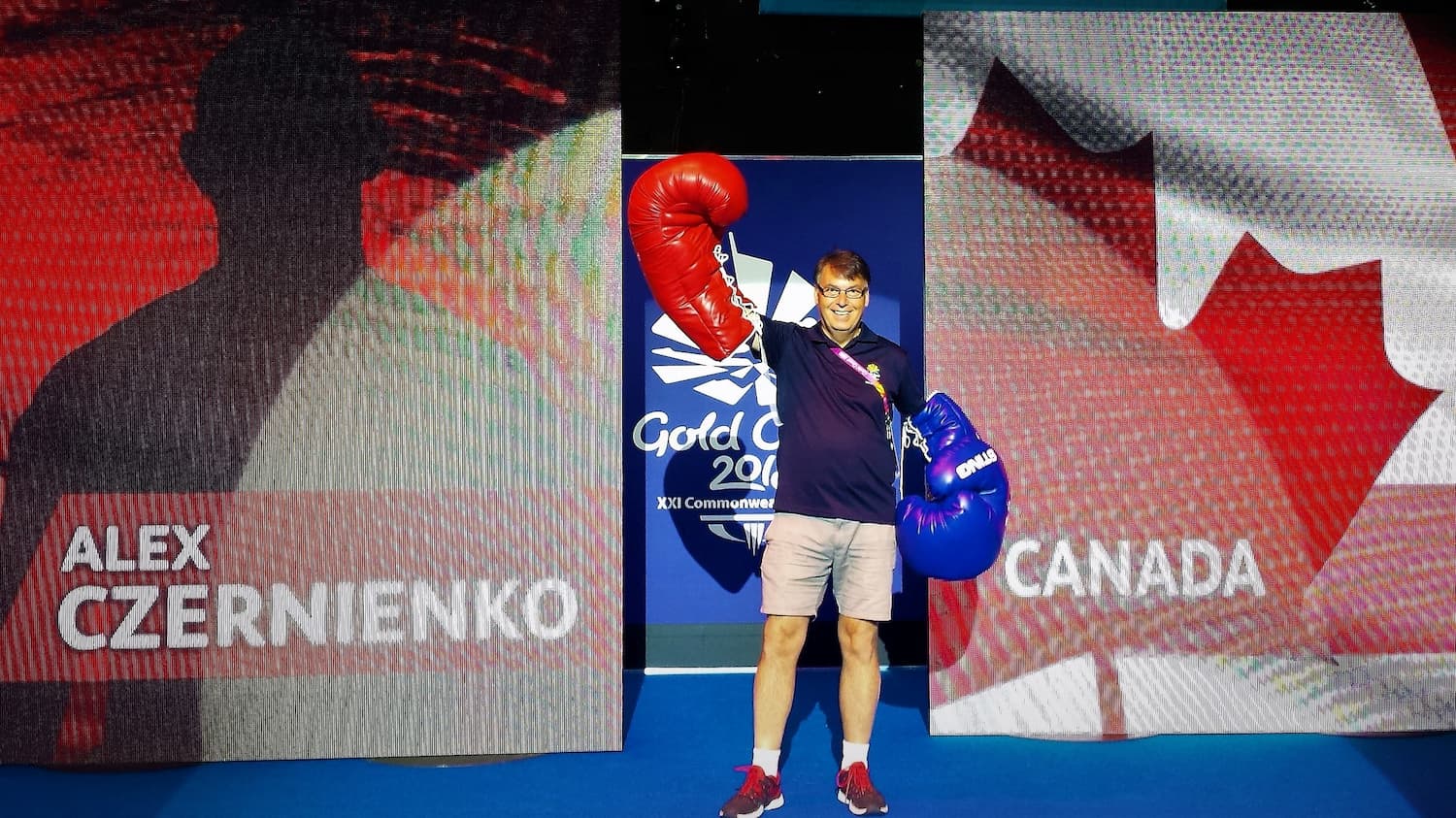
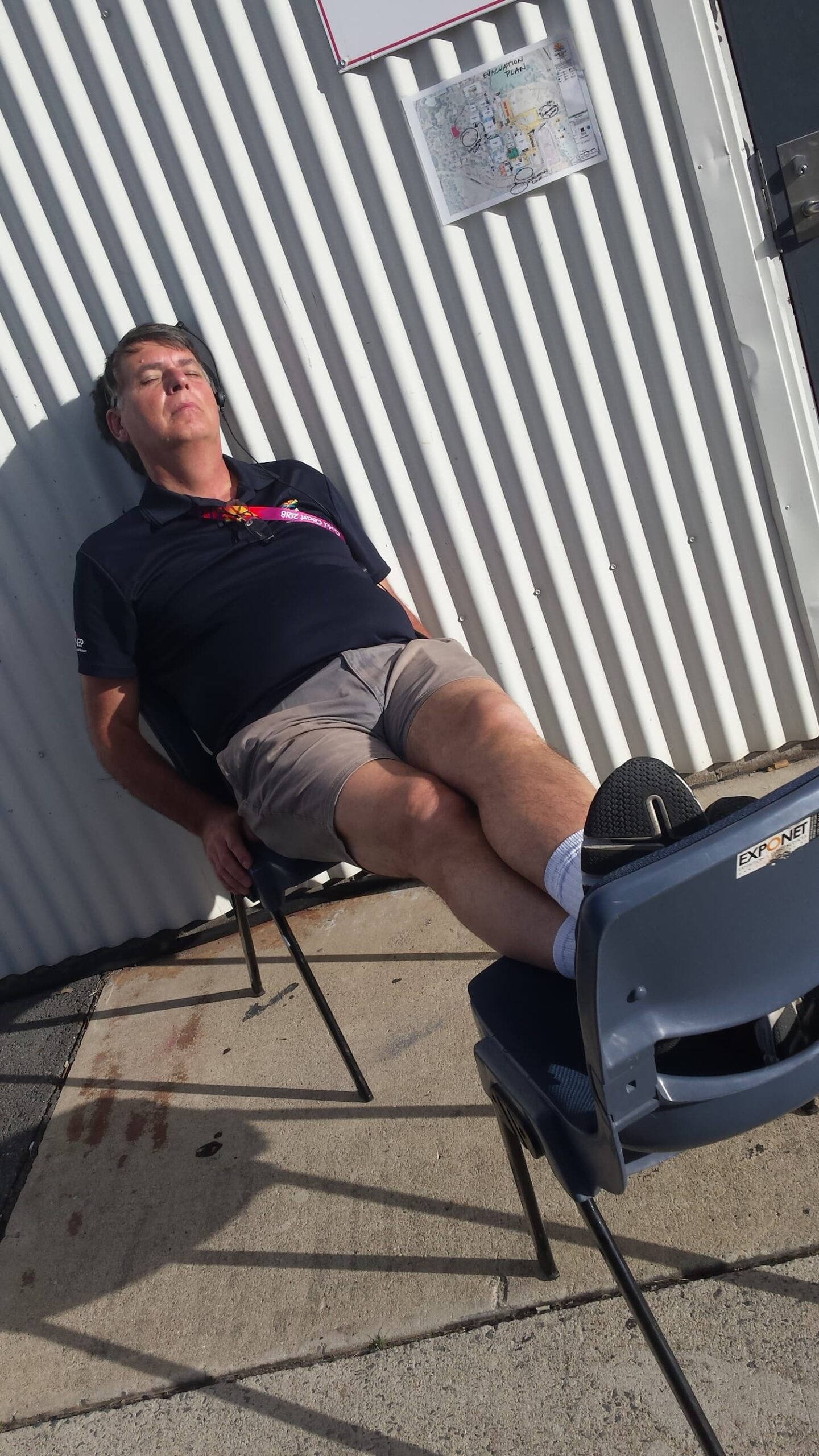
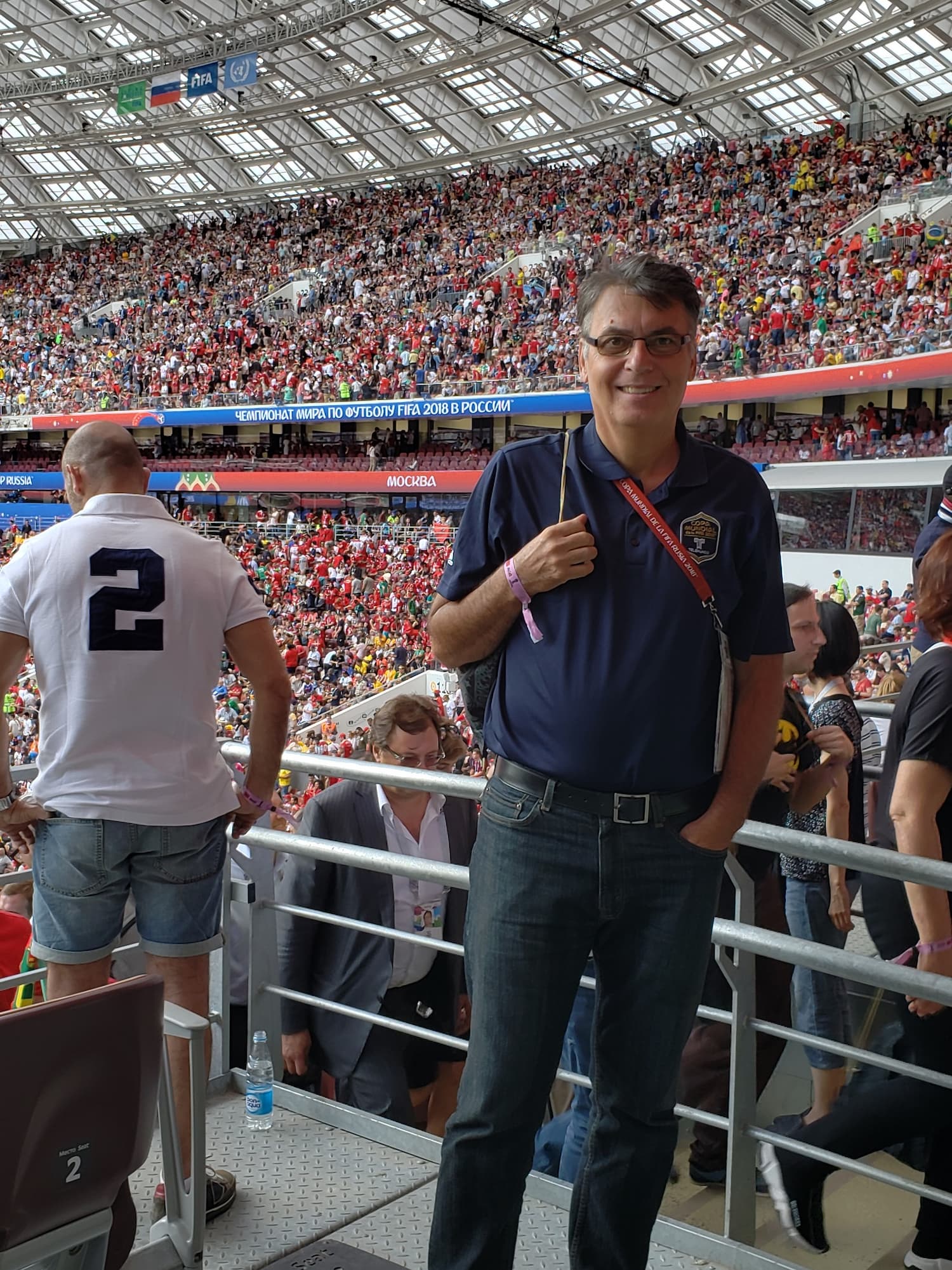
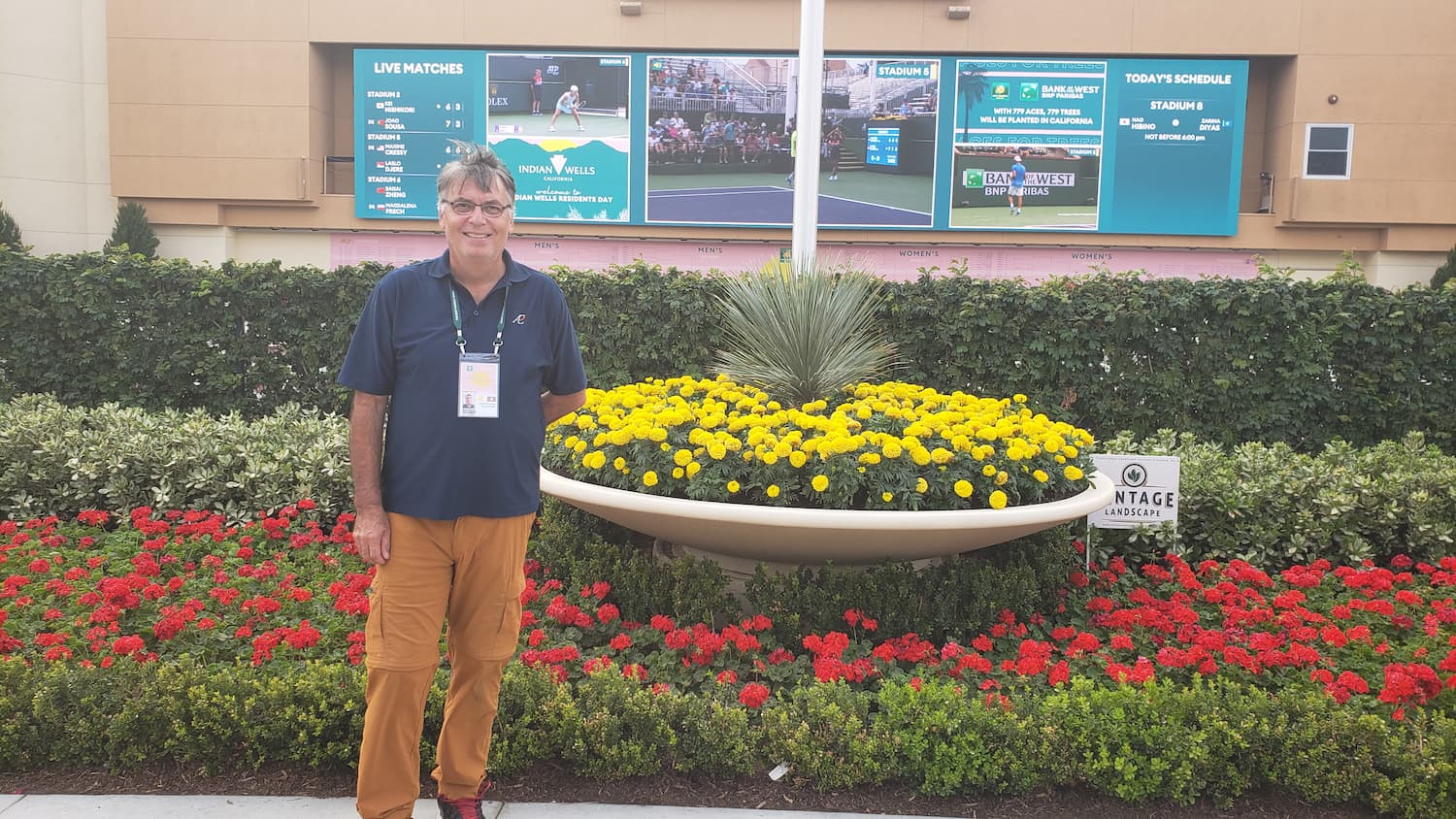
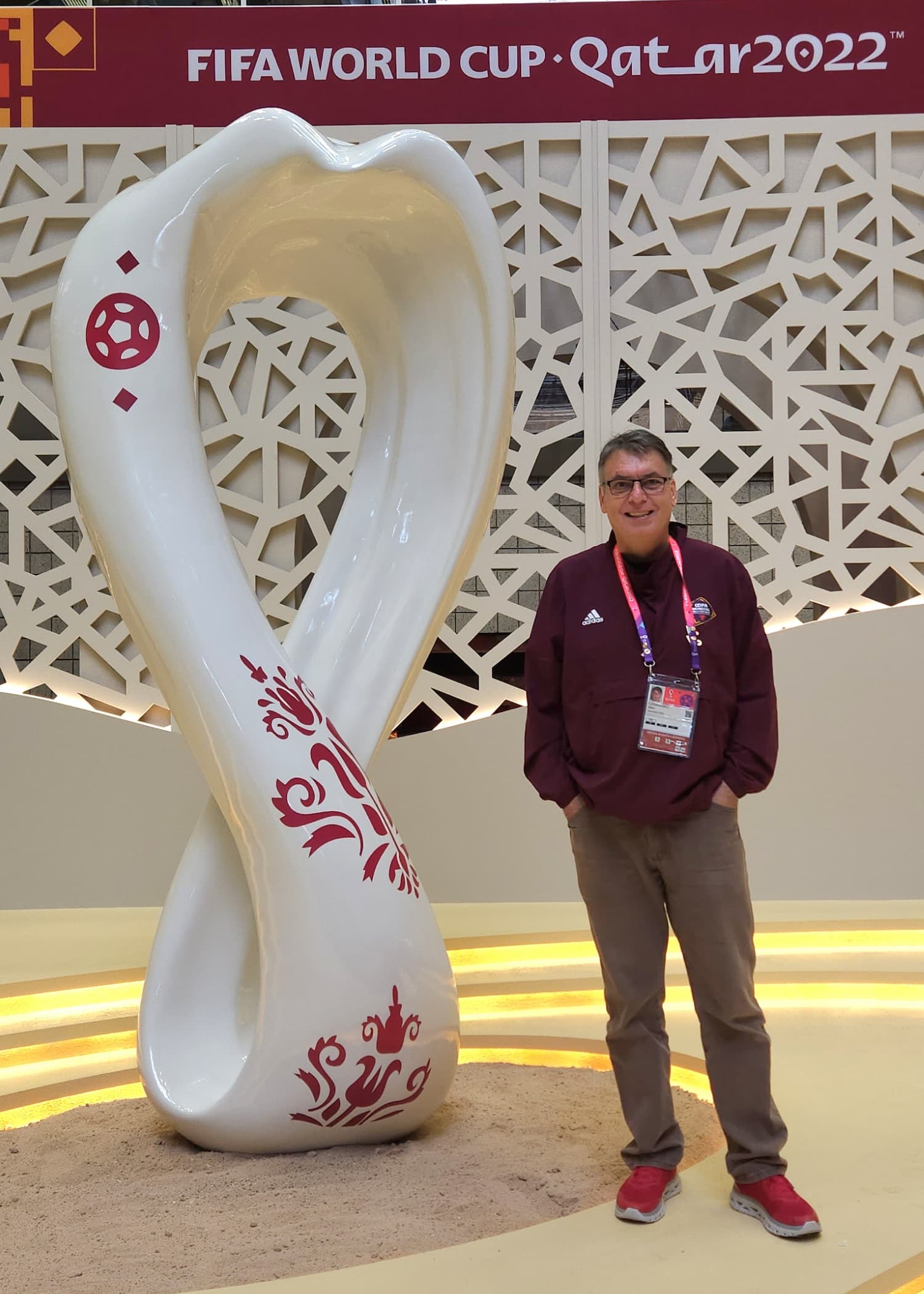
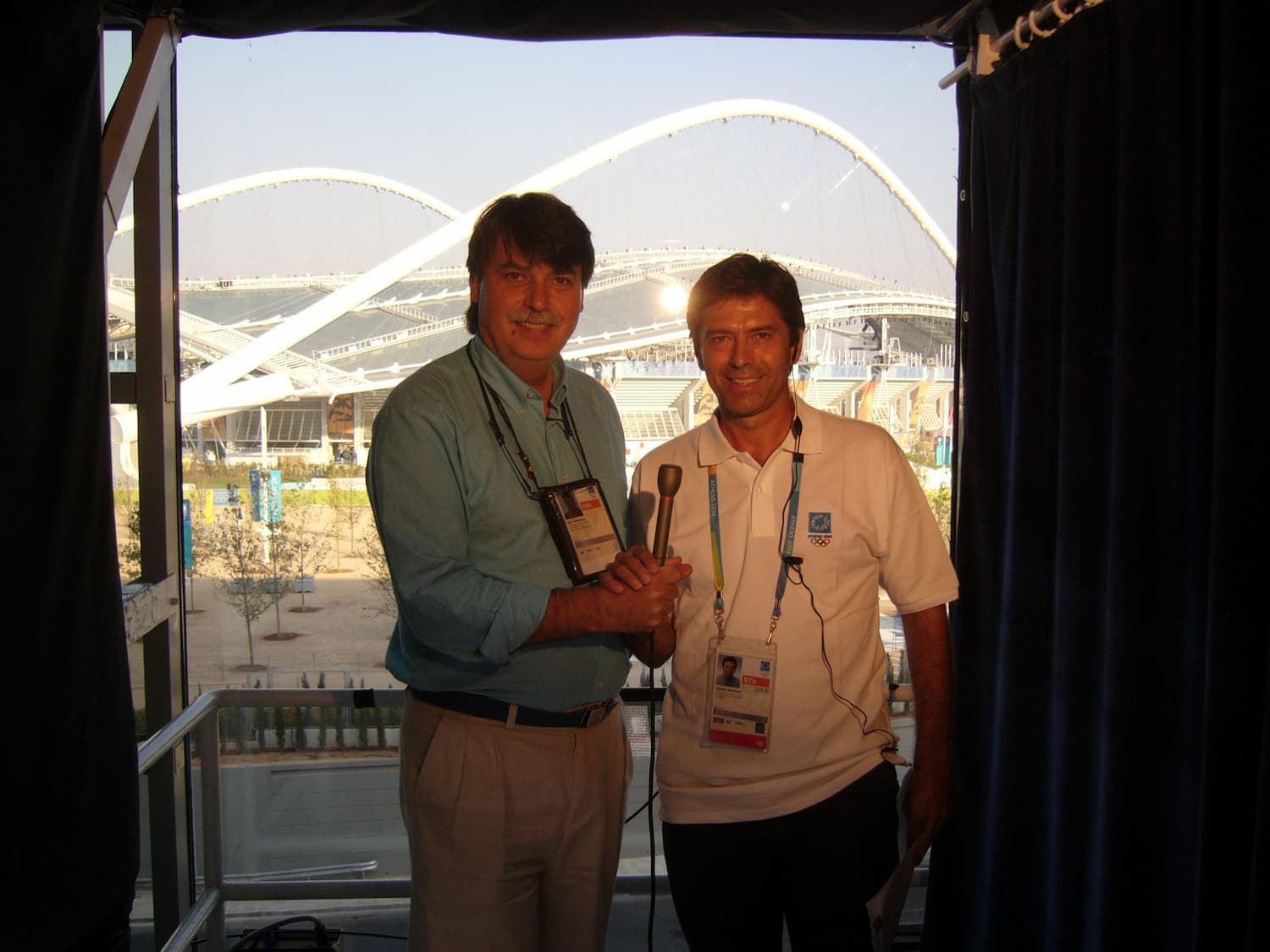
Over the years, my work took me far beyond the Olympics: Pan-American Games, Asian Games, Commonwealth Games, European Games, FIBA Basketball, major tennis tournaments, FIFA World Cups… and with each assignment came another flag.
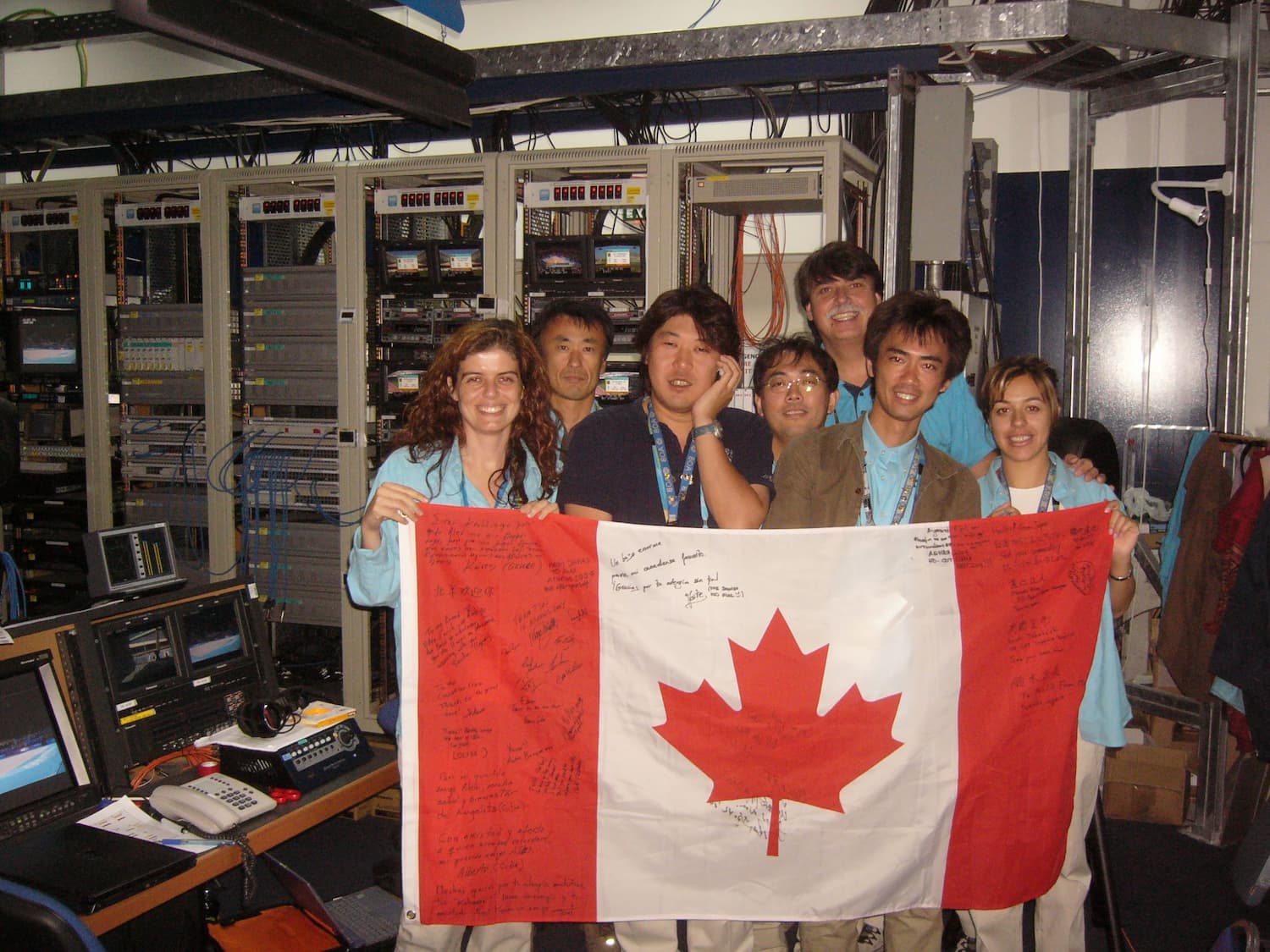
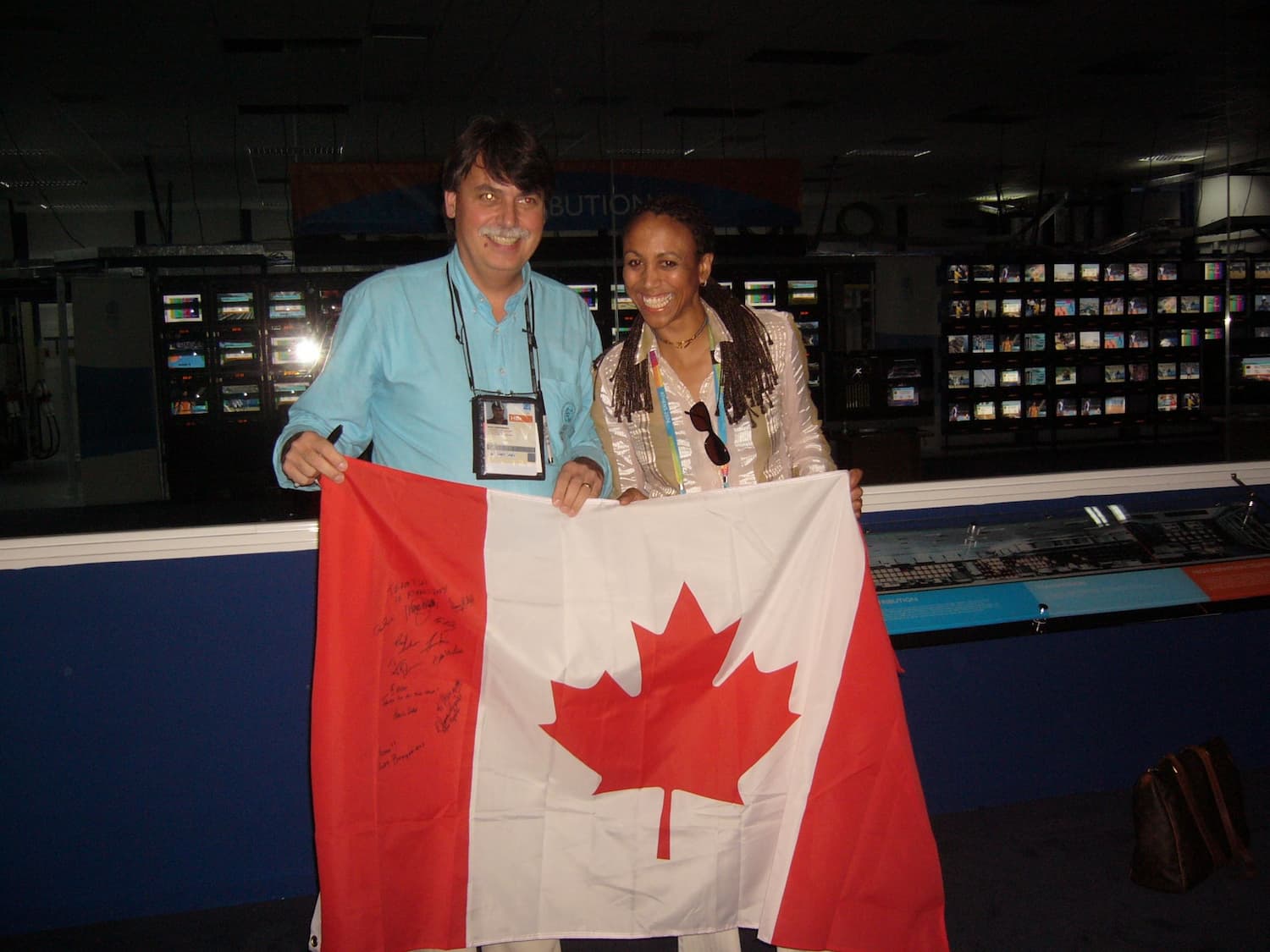
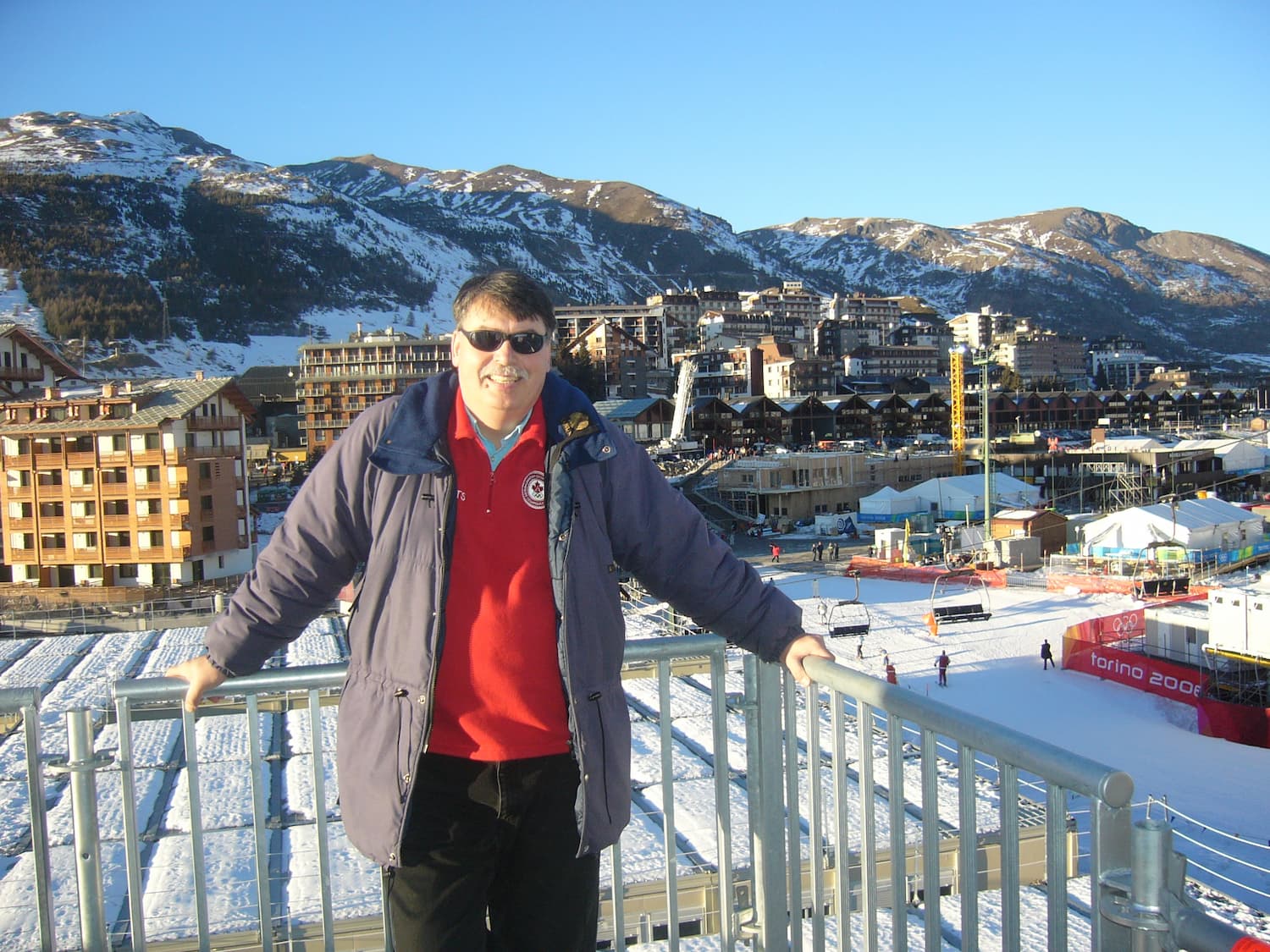 My very first one was the Montreal Olympic Games flag. At the time, I didn’t know it would become the start of a collection. Today, I have 62 flags — each one a reminder of the places I’ve been, the people I’ve worked with, and the moments that shaped my life.
That is my hobby. And it tells my story better than anything else.
— What sport did you do before your Olympic career?
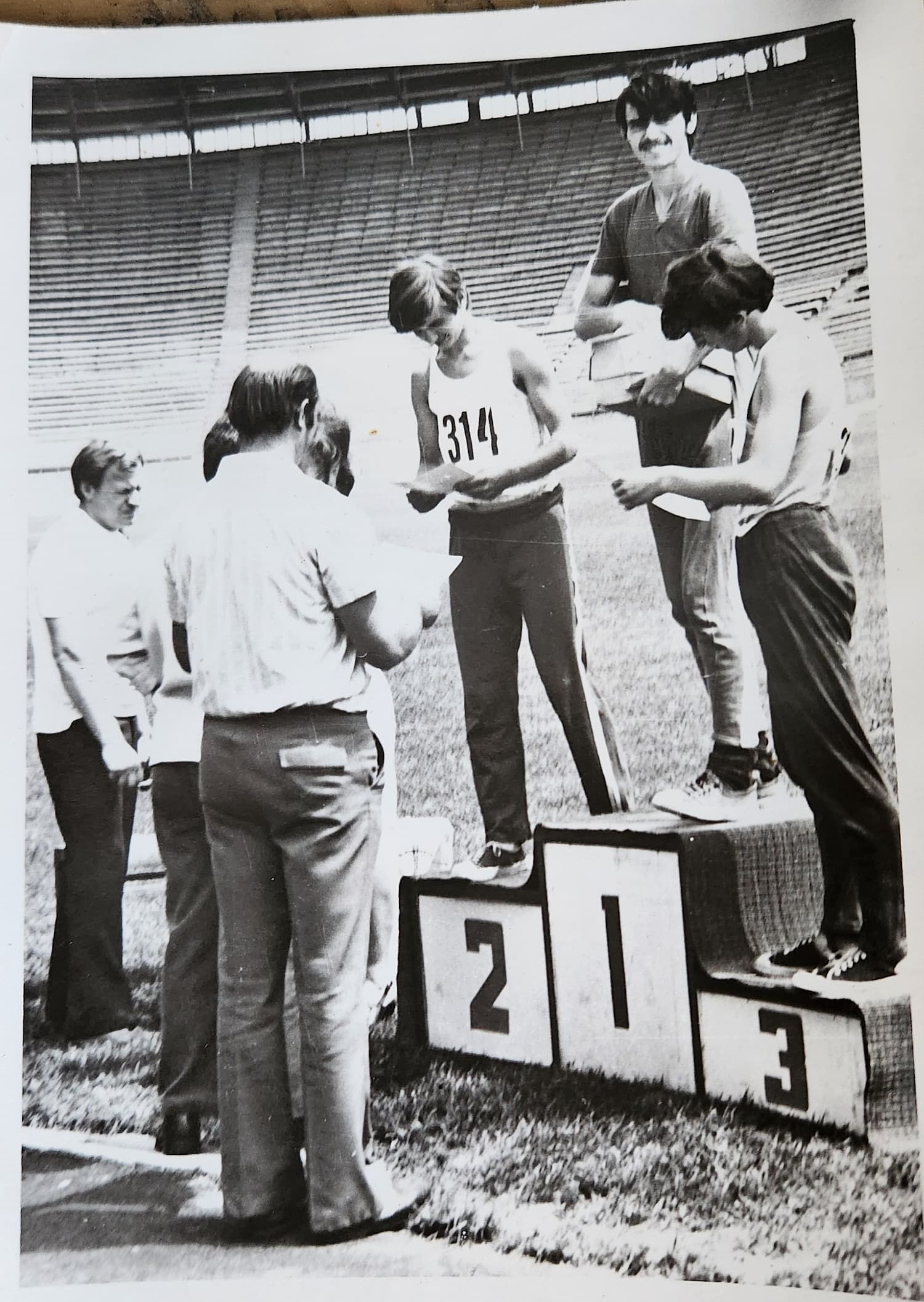
Before broadcasting, my life was all about sport. I ran the 400‑meter hurdles. I joined a sports club at age 12, and after my first year, I dreamed of becoming a decathlete. But when I entered a sports school at 15, the coaches told me—after a physical examination—that I was built for the 400‑meter hurdles. When I asked why, they explained that my upper body wasn’t strong enough for the demands of the decathlon. I was born in Montreal, but I grew up in Ukraine, in the city of Zhdanov, known today as Mariupol.
A Canadian Childhood Interrupted
— How did your family end up in Soviet Ukraine after leaving Canada?
After the war, my mother discovered that some of her relatives were living in Ukraine. Her family originally came from Gdansk, Poland, and her name was Elizaveta Winskovskaya. My father was Belarusian.
My mother had survived a concentration camp during the war, and once she learned her relatives were alive in Ukraine, she gathered us, and we went to visit them. But when we arrived, we were not allowed to return. The Soviet authorities detained us and forced us to stay. It is a long story. The only reason I was eventually able to leave was that I had been born in Canada and had the right to return as a Canadian citizen.
— What did that Canadian citizenship mean in practice?
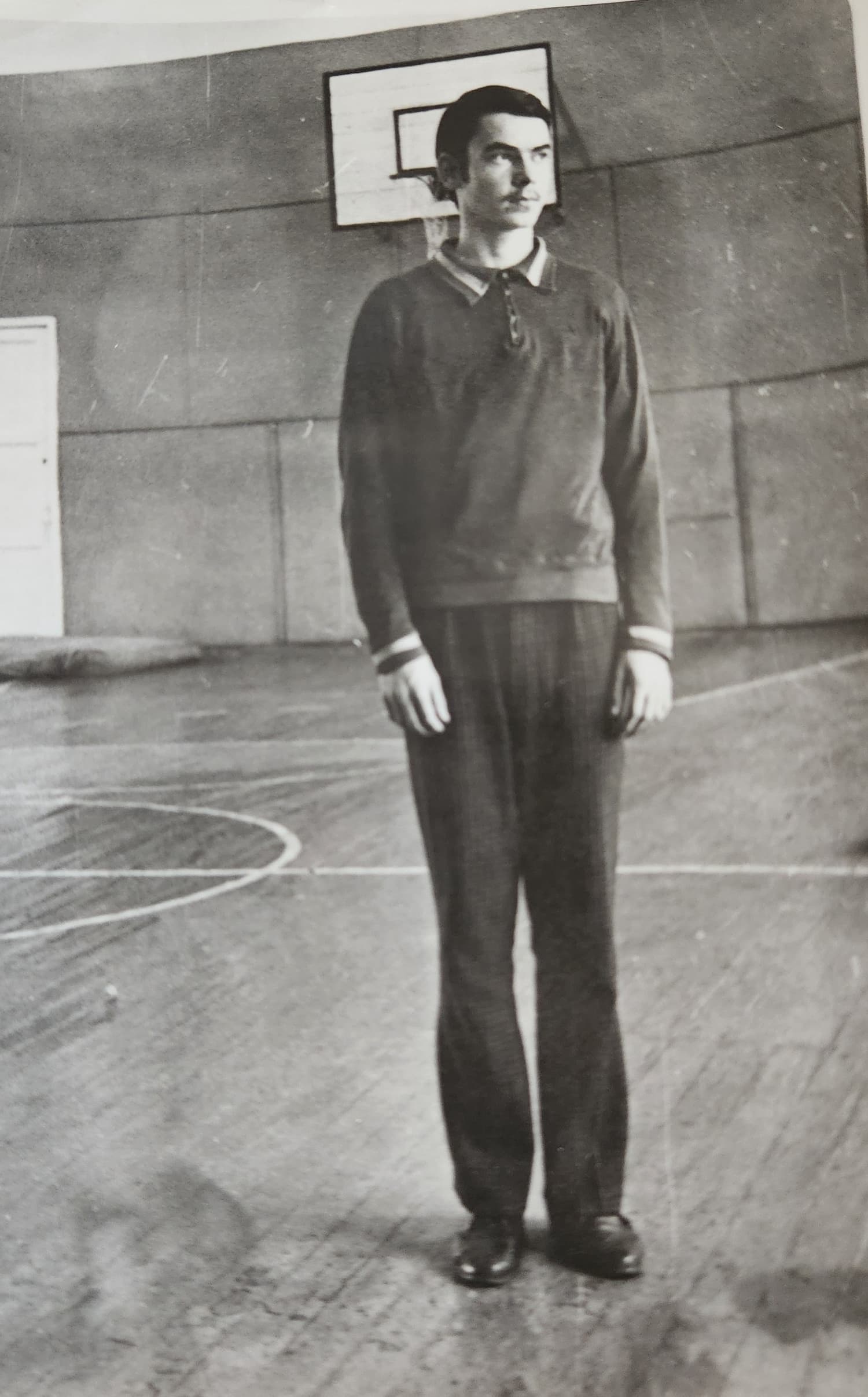
As a Canadian citizen, I wanted to receive my Canadian passport, and the only path was through the Canadian embassy, so I could one day return to Canada. Soviet law claimed that anyone who had lived abroad for more than five years lost their Soviet citizenship. But my mother had never been a Soviet citizen, and my father was born in Belarus before it became part of the Soviet Union. Even so, the authorities treated them as Soviet citizens. We went to the embassy often, searching for a way forward. Life in Ukraine was complicated when you were born in Canada.
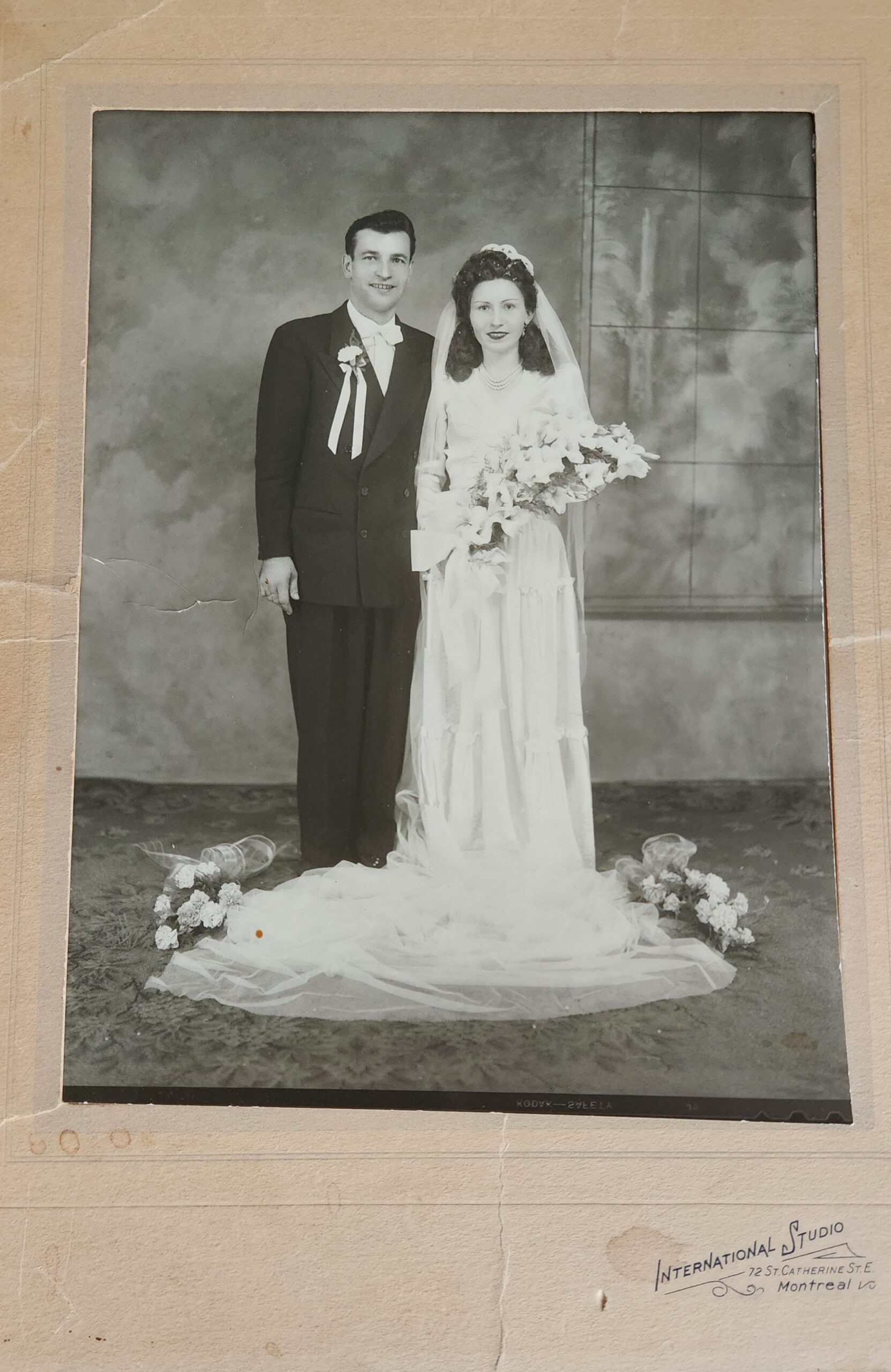
— What year did you move there with your parents?
In 1961.
— How old were you?
I was almost five years old. We arrived from Montreal port, through Gdansk to St. Petersburg.
“They Called Us Americans”
— Do you remember how people treated you?
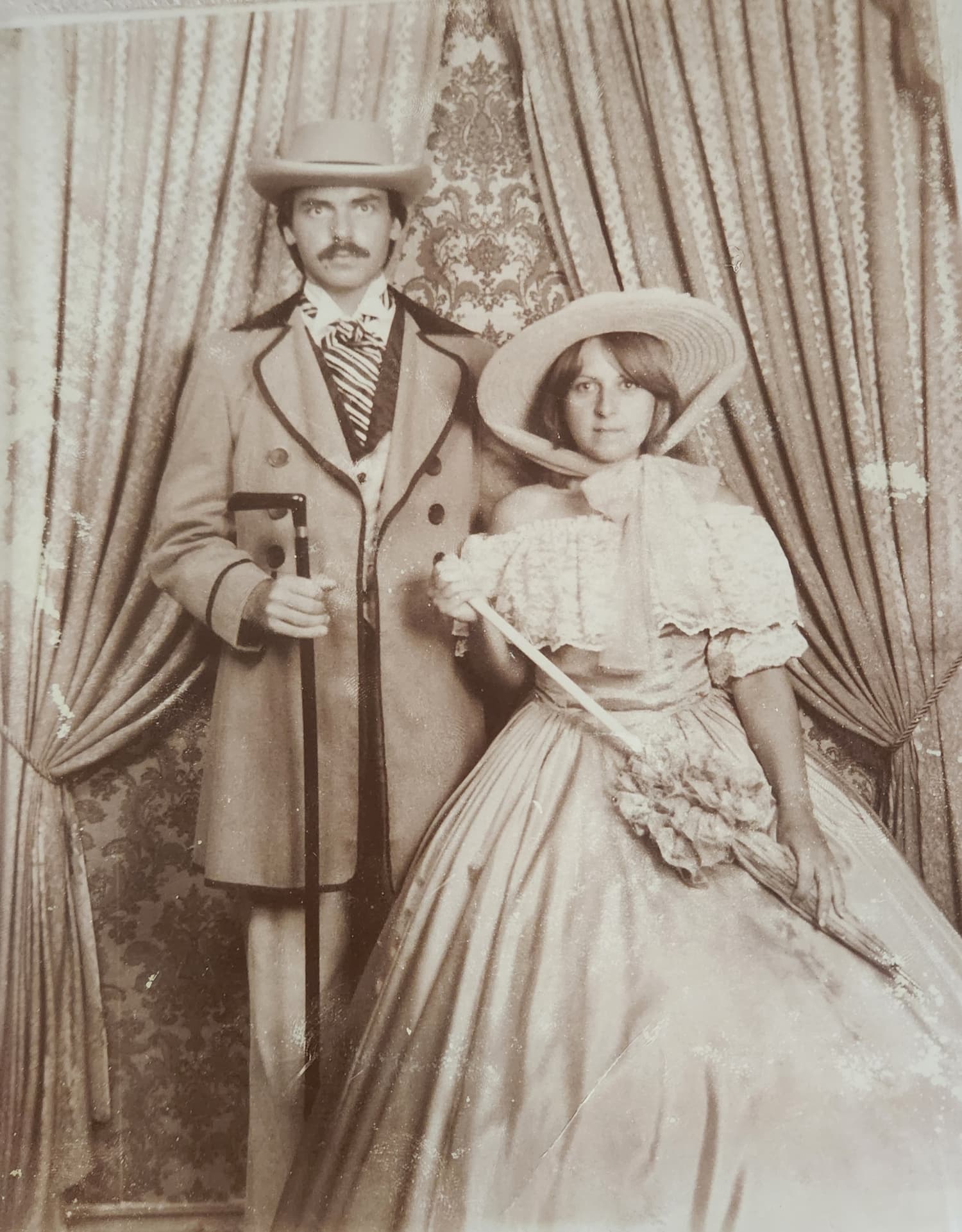
Yes. We were often shouted at. People called us Americans. Some neighbors did not allow their children to play with me. It took time. At some point, I refused to continue speaking English and French with my mother. The first language I learned in Canada was German.
— Why German?
Because my nanny was from Germany, and my parents spoke German. My mother was very good with languages. She had red hair, so people often thought she was German.
— Was she Ukrainian, Jewish, or Polish?
She was Polish. Many Poles were also imprisoned in concentration camps during the war. My father was taken away when he was 17. He worked in a labor camp in Germany.
A Family Marked by War
— What did your mother tell you about her time in the concentration camp?
My mother had been taken to a concentration camp. She never shared many details about what happened to her there. I only know that she had numbers tattooed on her wrist and shoulders, and she burned them because she did not want to carry those reminders. She spoke very little about that period of her life. We had a Polish book at home with photographs and stories about concentration camps, but she rarely talked about her own suffering.
Childhood in Zhdanov
— Let’s go back to the time when it was difficult to live in Ukraine. Where was it?
It was in Zhdanov, the city now known as Mariupol. I continued my studies in Russian. Ukrainian was introduced only in grade four, and in Soviet Ukraine, the language was not freely used. I still remember a junior championship in Kharkiv where kids from Latvia and Estonia asked us why we didn’t speak Ukrainian among ourselves.
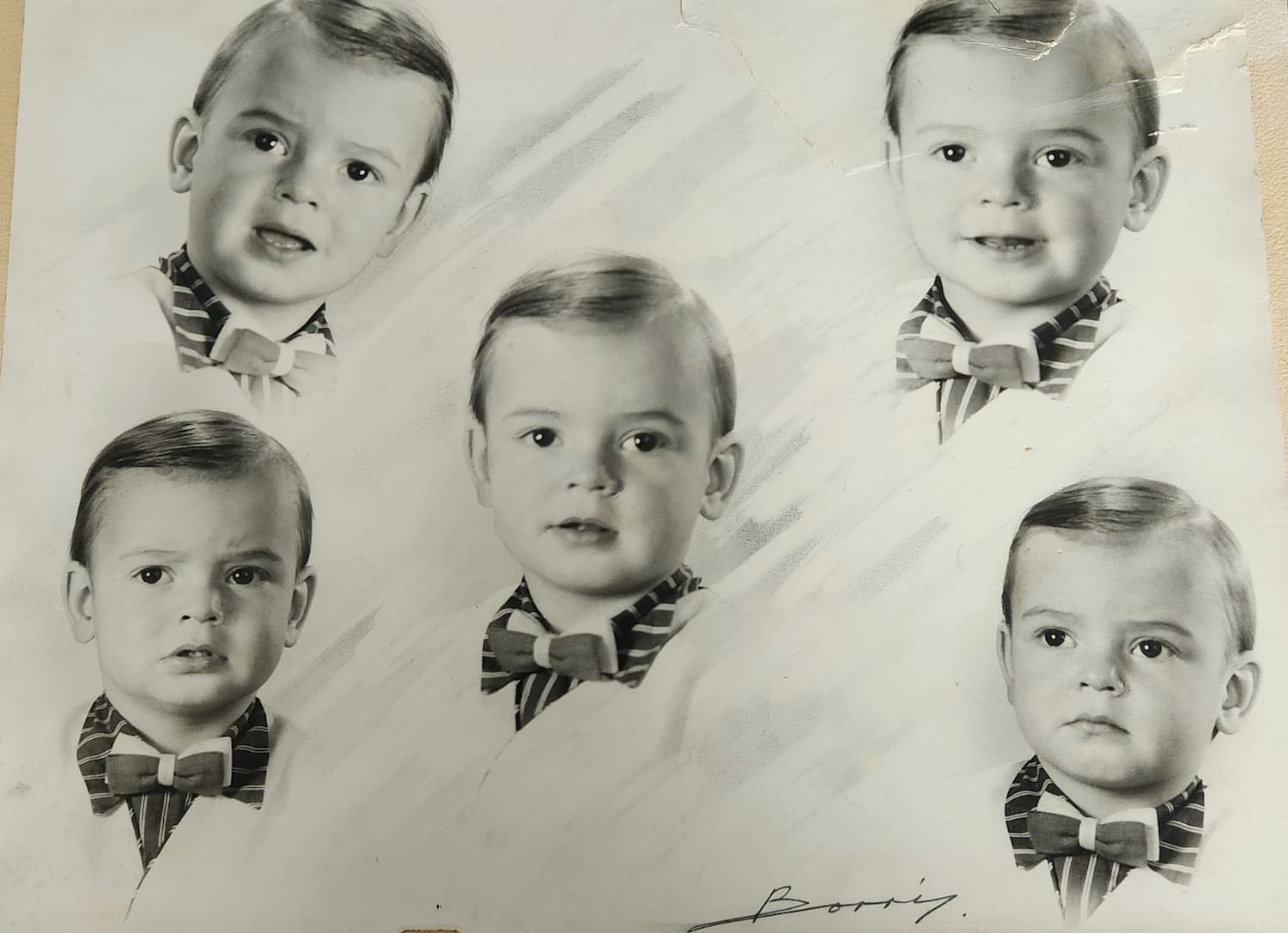
My childhood was difficult. I was, as people say, a boy who grew up with problems. I didn’t do well in school and had no school friends. I only began to find a group of friends when I joined a sports club.
— Why?
Because I had no interest in school, the treatment I received only pushed me further away. Teachers and principals called me “American dog” and “American rat.” One principal even called me “Hitler” just because I combed my hair to the left side.
— Why American, if you were from Canada?
They didn’t know the difference. I tried to explain that Canada and the United States are two separate countries, but it didn’t help. The principal, who was a geography teacher, said all the time, America. I think it is just to humiliate you.
Sport as a Way Out
— It sounds as if they were trying to break you psychologically.
Yes, but it also taught me resilience — how to fight, endure, and achieve. And I developed very “thick skin.”
— Who helped you find a different direction?
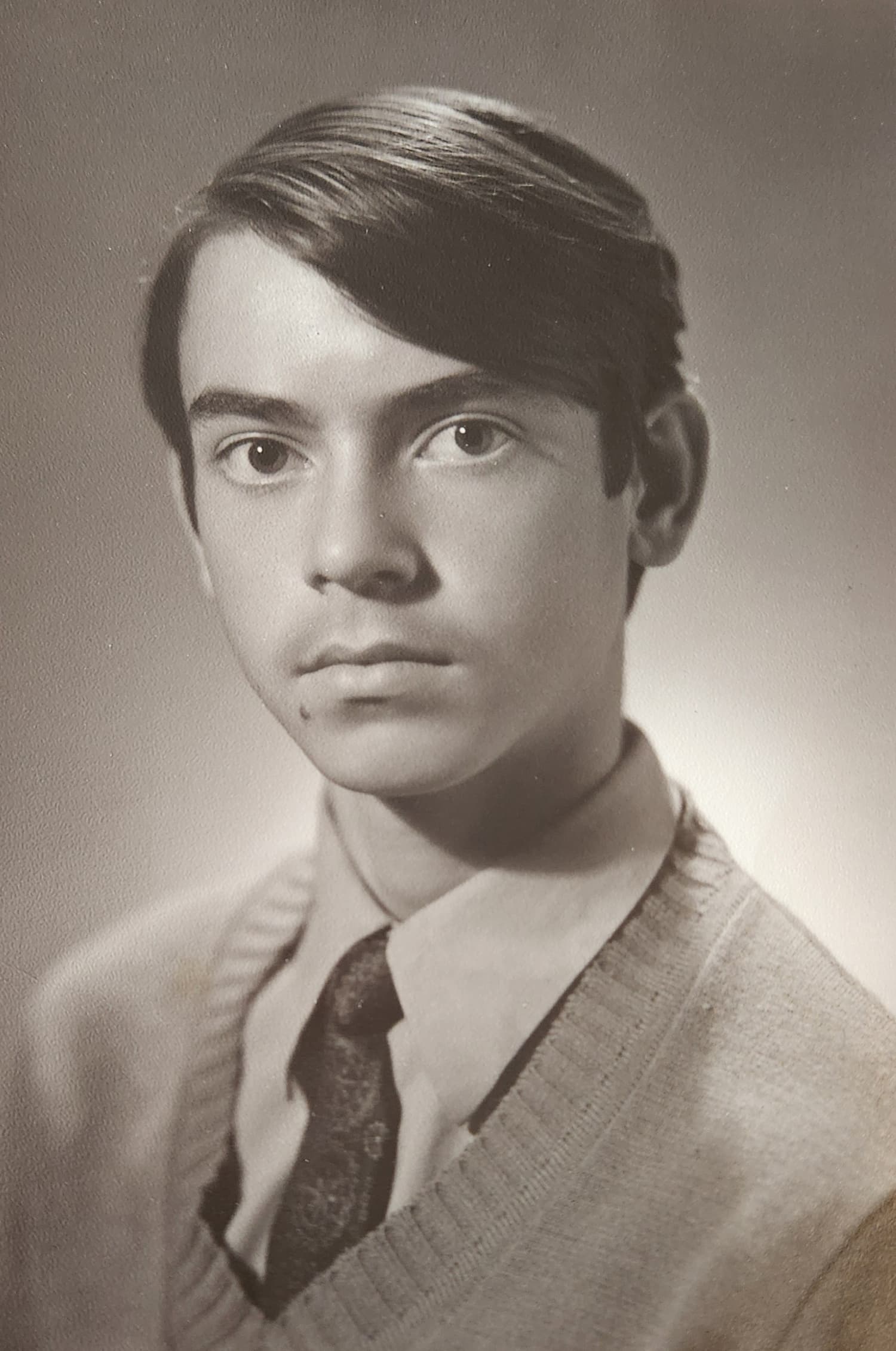
Across the street lived a neighbor, Valentin Syromyatnikov. He was an athlete and a champion of Ukraine in the pole vault. When I was 12, he found out that I had been arrested for trying to rob a bank. At that age, it’s easy to fall under the wrong influence. Valentin told me to join a sports club, and that advice changed everything.
— When did the Olympic dream first appear?
I began training seriously, spending my summers in sports camps and at a sports school. The state paid for everything, and the system supported young athletes well. That’s when the dream took shape. He took me one day to go to Alushta in Crimea for three days of his camp. He introduced me to his national team athletes in track and field. I watched my neighbor, I watched friends winning medals and cups, and I felt the atmosphere of achievement. I set a goal for myself: one day, I wanted to reach the Olympic Games.
A Dream Blocked by a Passport
— When did you realize that the Olympic dream might be blocked?
When I was 16, it became clear that my Olympic dream might be blocked. I had been chosen to compete at the European Junior Championships in Bulgaria, but I was denied a visa for one reason: I was born in Canada. At that time, I still didn’t have a Soviet passport. And pressure was applied for me to get a Soviet passport. I refused to take one because I was a Canadian, and I had my Canadian birth certificate. The authorities told me that, since I was born in Canada, they believed I might try to ask for political asylum.
— Political asylum from whom?
I said to them, “Why would a person from the Soviet Union ask for political asylum in the Soviet Union?” But the pressure only grew. The police began pushing me to accept a Soviet passport. In the Soviet Union, you were required to receive your internal passport when you turned 16.
Trips to Moscow
— How often did you go to the embassy?
Our trips from Ukraine to Moscow became very frequent. We had to go there almost every week. Sometimes my mother simply called the embassy. She had a special code there. When she used it, they knew it was us. My mother would tell them that everything was fine, that we were still together, that we had not been separated, and that nothing had happened to us.
At the same time, I kept trying to get a Canadian passport. I told them: “I am a Canadian citizen. I need a Canadian passport.” But time kept passing.
“The American Embassy Can Help You”
— How did the situation change?
Everything changed very suddenly. The police kept pressuring me to take a Soviet passport, and I had reached the age when I could be drafted into the Soviet army. I started receiving hand‑delivered notices to appear for a medical exam — the first step toward conscription.
So, I went to Moscow. It happened at OVIR [the Soviet government office where citizens had to apply for an exit visa to leave the Soviet Union], and the whole situation was strange.
I was sitting there when an elderly woman approached me and asked, “Are you Alex Czernenko?” I said yes, even though I had never seen her before.
She then said, “The Canadian embassy will not help you. The American embassy can help you.” I went to the office to speak with the director about my exit visa. He told me that I had to go back to Ukraine, Zhdanov, and apply for a visa there.
— Did you believe her?
I did not know what to believe. So, I went to the American embassy the following day.
— How did you manage to get inside?
I had an old letter from the Canadian embassy, written in English. It said that our family was invited to the embassy to discuss returning to Canada. It wasn’t anything official, just a letter, but I showed it to the policeman at the entrance. He pretended he could read English, nodded as if he understood, and let me in.
At the American embassy, they told me, “Go to the Canadian embassy. Request that you urgently need a Canadian passport. If they don’t give you one, don’t leave. They will say to you that you can’t stay there. The Canadian embassy wants you to present your strong position.
The Gate of the Canadian Embassy
— What did you do then?
I went to the Canadian embassy without any documents. The gates were open because a car was about to leave, and I ran straight through them. A policeman tried to stop me, but I pulled him with me into the courtyard. At that moment, Madame Consul got out of the car. In heavy Russian, she told the policeman, “He is a Canadian citizen. Let him go.” She brought me inside the embassy.
— Did they give you the passport immediately?
No. There was a long discussion. They brought me into a back room, and a Canadian interpreter joined us. I told them I was 17, and that Soviet law required me to take a Soviet passport at 16, which was why the police kept harassing me. I also explained that the military was sending warning letters — telegrams — saying that if I didn’t show up for the medical commission on the exact dates, they had the right to arrest me. I told them everything that had happened that day, including how I entered the embassy, and that it certainly didn’t help my case.
— What was happening outside the embassy while you waited?
While I was waiting afterward, a Canadian employee came over and said quietly, with concern, “Mr. Alex, there are about nine police officers outside the Canadian embassy.”
— What did you tell the Canadian officials?
I asked them directly, “Am I a Canadian citizen?” They told me without hesitation that I was a Canadian citizen by birth. I said that if I walked out of the embassy without a Canadian passport, my chance of ever returning to Canada would be gone. It didn’t happen right away. It took a couple of days, and I stayed inside the embassy the whole time while they processed the documents. I even remember writing a small note saying IOU-eight rubles for the passport.
When it was finally ready, they gave it to me and escorted me to the metro. They reassured me I needed to go back to Ukraine, Zhdanov, and apply for my exit visa.
The First Visit
— What happened when you came back?
The next day, after I arrived back from Moscow, the police showed up. A captain. He came and told me that I was 17 and had no passport. He didn’t say which passport — he just insisted that I needed to get one, and if I refused to obtain a Soviet passport, I would be persecuted. I told him calmly that I already had a passport. He looked at me, confused, and asked, “What passport?” I showed him my Canadian passport. He examined it carefully, and his attitude changed at once. He apologized, returned it to me, and left.
The Second Visit
— And that was the end of it?
No, it didn’t end there. About an hour or an hour and a half later, there was another knock. The same police captain came back, but now he had a KGB officer with him. You could see the difference immediately — the uniform, the posture, the attitude.
The KGB officer asked for my passport. I handed it to him, and after a glance, he said, “Oh, this is toilet paper.”
 I reacted instantly. I took the passport back, walked to the bathroom door, opened it, and said, “If it’s toilet paper — throw it away.”
He froze. I held the passport in front of him and told him, calmly but firmly, “You know you can’t do that. And do you know why?” I paused, looking him straight in the eyes. “Because you know this is one of the most powerful and most respected passports in the world.”
Under Pressure
— Did they come back again?
No, they did not return after that. But I understood very clearly what was coming next. I knew I would be called into the army, and I knew the pressure would continue in other forms.
They began following me. At the same time, I kept training. I ran, I worked, and my coach stood by me. He helped with documents, signed certificates, and made sure I could keep competing. At 17, I jumped 7 meters 18 centimeters in the long jump and ran the 400 meters in 50.82 seconds. Even now, I sometimes wonder what might have happened if I had been able to stay on that path.
“WHAT IF?!”
The Decision to Run
— When did you decide to leave?
The decision to leave the Soviet Union had been made years earlier. But until I received a visa, there was nothing I could do. Eventually, it became obvious that I had to go to Moscow. There was no other path left. So, I took the train, fully aware that this might be my only chance to get real reassurance from the Canadian embassy.
 — Who did you meet there?
At the embassy. By that time, I already had my Canadian passport, so when I arrived at the embassy in Moscow and had my Canadian passport in hand, I showed my passport to the policeman, and he saluted me. He let me in without hesitation. I explained everything again in detail, step by step, to embassy personnel. Again, I was told that I needed to return to Ukraine, and they would guarantee that I would receive a visa.
— And did it work?
Yes, it did. I went back to Ukraine, and the process began to process my application for an exit visa.
— Where did you finally receive your visa?
The application took place in Donbass region-Donetsk. It is 130 km from Zhdanov.
Ten Days to Leave
— How did you finally receive the signal to leave?
I arrived and received a telegram. It said I had to return to Donetsk to receive my visa. There was no time to think — everything had to happen quickly. From Zhdanov to Donetsk, there weren’t many options. The train and bus schedules were limited, and the only real alternative was a taxi — an expensive choice, but there was no choice. Early in the morning, I took a taxi. I was determined to get my visa. I didn’t want to lose a single hour. I understood this was the final step.
 — How does that visa process work?
When you receive permission to leave, the visa is valid for three months. But in my case, they delayed everything until I had only ten days left. Ten days to leave the country. When I returned home, I packed quickly. I took only what truly mattered: my medals, my diplomas, my awards, and a few books. I had just one suit.
— Were you allowed to take your personal awards with you?
When I was leaving Moscow at the airport, the police confiscated all my medals, diplomas, and awards. The only possession they allowed me to take was my Junior Championship Cup. They took it apart, inspected every piece, and finally handed it back. I had to reassemble the cup myself.
— Did you have a chance to say goodbye to your parents?
I had no money, so I asked a friend for help and borrowed whatever I could. When I left for Moscow, I didn’t even say goodbye to my parents. I didn’t see them before leaving. Our only farewell was over the phone. I wasn’t even sure I would ever see them again.
Buying a Ticket
— How did you try to buy a ticket to Canada?
I went straight to the embassy and said that I wanted to go to Canada with Air Canada. They told me it was possible, so I went to buy a ticket. But at the airline office, they told me that only foreign citizens could buy tickets. I showed them my Canadian passport. They still refused.
 — How did the embassy help you?
So, I went back to the embassy and asked them to write a letter to the director of the airline. They had a smile on their face, but they did it. They prepared an official letter stating that I was a Canadian citizen returning to Canada for permanent residence — returning to my homeland.
— Did the letter work?
With that letter in hand, I went to the airline ministry. I handed it over and waited. After some time, they finally allowed me to buy a ticket for an Air Canada flight.
The Last Flight
— What happened after you got the ticket?
I went back to the embassy and showed them that I had the ticket. The consul was genuinely happy to see me. She swore from excitement. And then immediately apologized.
There were very few people on that plane — around nine in total. It was the last Air Canada flight leaving Moscow at that time. Only later did I learn that the Executive Director of the NHL Players’ Association, Alan Eagleson, and his delegation were on that plane.
— What year was it?
It was 1975. I was 18 years old. The Soviet Union government allowed me to exchange just 38.00 Canadian dollars.
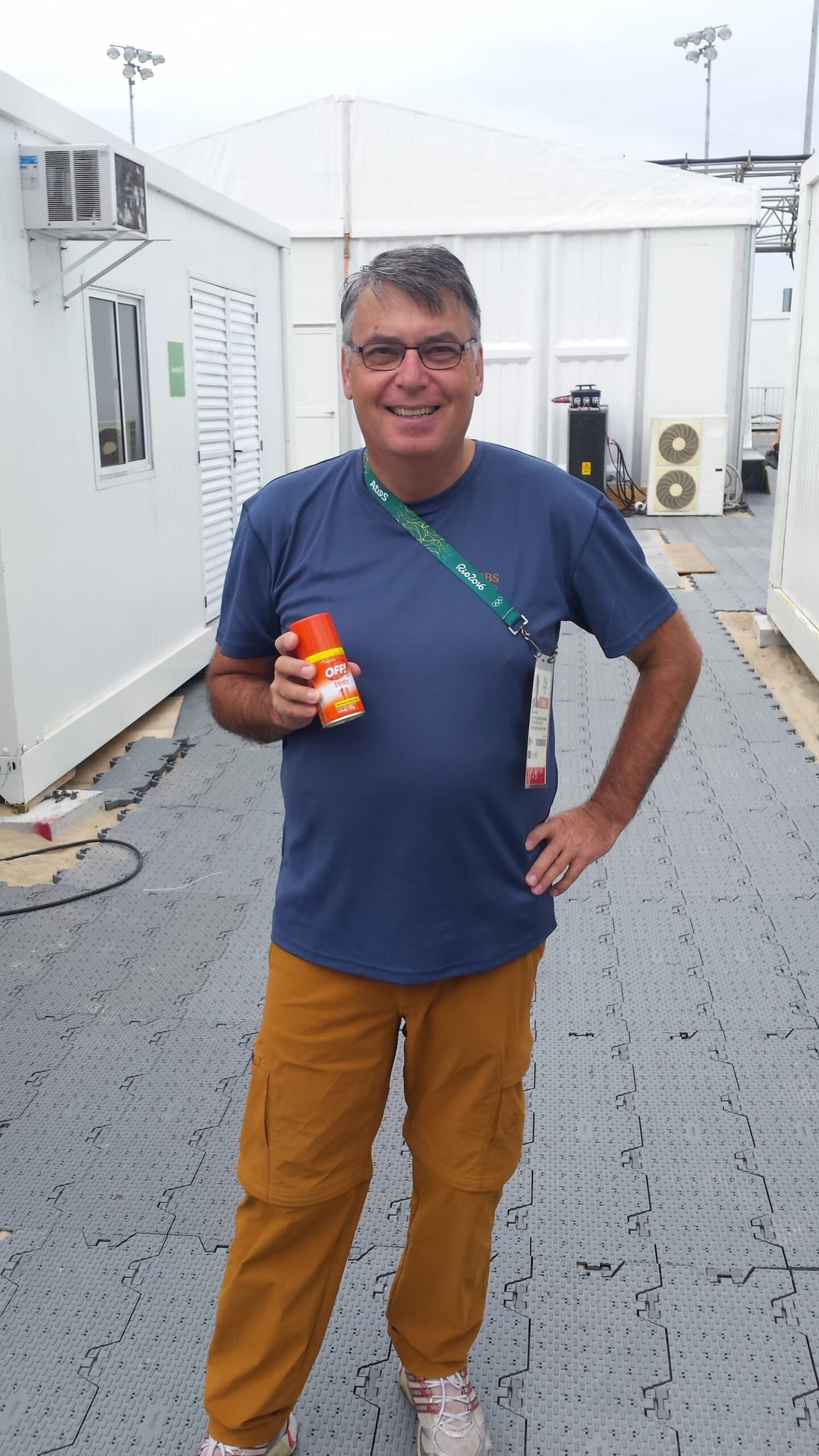 Back to the Beginning
— Let’s go back to your family. You said your mother was in a concentration camp. How did your family end up in Canada?
After the war, emigration became possible. My mother stayed in Germany and worked there as a nanny. That was one of the first opportunities — women were allowed to emigrate to Canada under those early programs. She came to Canada from Germany at the end of 1947. I don’t remember the exact date, but it was right after the war, during those first waves of emigration.
— Did your mother come alone?
She came as part of a group of women, but in reality, she was alone. She left without her parents and didn’t even know if they were alive. There were no contacts, no letters, no way to find out. She was very young at the time. Only later, once she was already in Montreal, did she begin to receive bits of information and slowly re‑establish connections. That was when she learned that her family had survived and were living in Ukraine, Mariupol.
Two Routes, One Meeting
— And your father?
My father came a different way. After the war, he was in Germany, and from there he moved to Belgium. In 1949, men were finally allowed to emigrate. They were given options — Australia, Canada, and the United States. He chose Canada and arrived in Montreal. There were groups of emigrants then — Poles, Belarusians — and that is where he met my mother. They married in 1951 in Montreal.
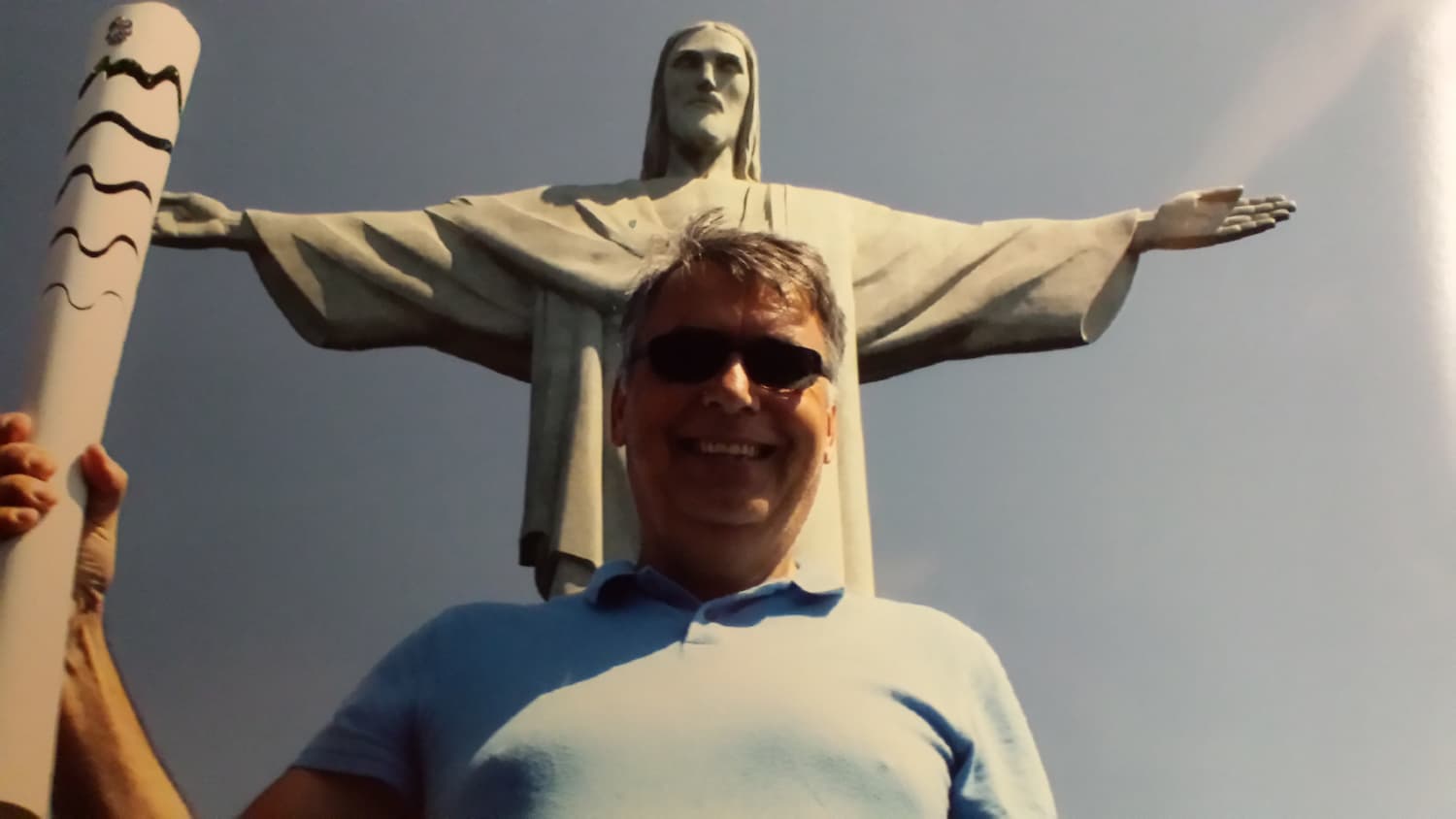 — Do you know which camp your mother was in?
If I remember correctly, she spent two years in Buchenwald and two years in Oswiecim. Auschwitz was a place where hundreds of thousands of people died. Many of them were Poles. And of course, we know the scale of the destruction of the Jewish people — it was a racial program of extermination. But Poles were also systematically killed.
— You said you spoke German at home. What about in Canada?
That was in Canada. At home, our nanny spoke German, and later, there was Polish as well. I speak Polish, but I can’t read or write it. In Canada, the main languages were English and French, but in Montreal at that time, English dominated. French became much more widespread later, especially in the early 1970s. I knew some French because I played with other children. I grew up in a household shaped by a multilingual culture.
Starting From Zero
— What happened when you returned to Canada?
When I came back, I had only thirty‑eight dollars in my pocket. And I no longer had a working language. At the airport, I handed over my Canadian passport. They spoke to me in English and French, but I understood almost nothing. I just looked at them and waved, trying to show that I had arrived — but without any words.
— How did your new life in Canada begin?
Oh, in Canada… it was not easy. I arrived with almost nothing. All I knew was sport. I had no profession, no practical skills outside athletics. In the Soviet system, if you were in a sports school, everything was built around that. You trained; you competed — that was your whole life.
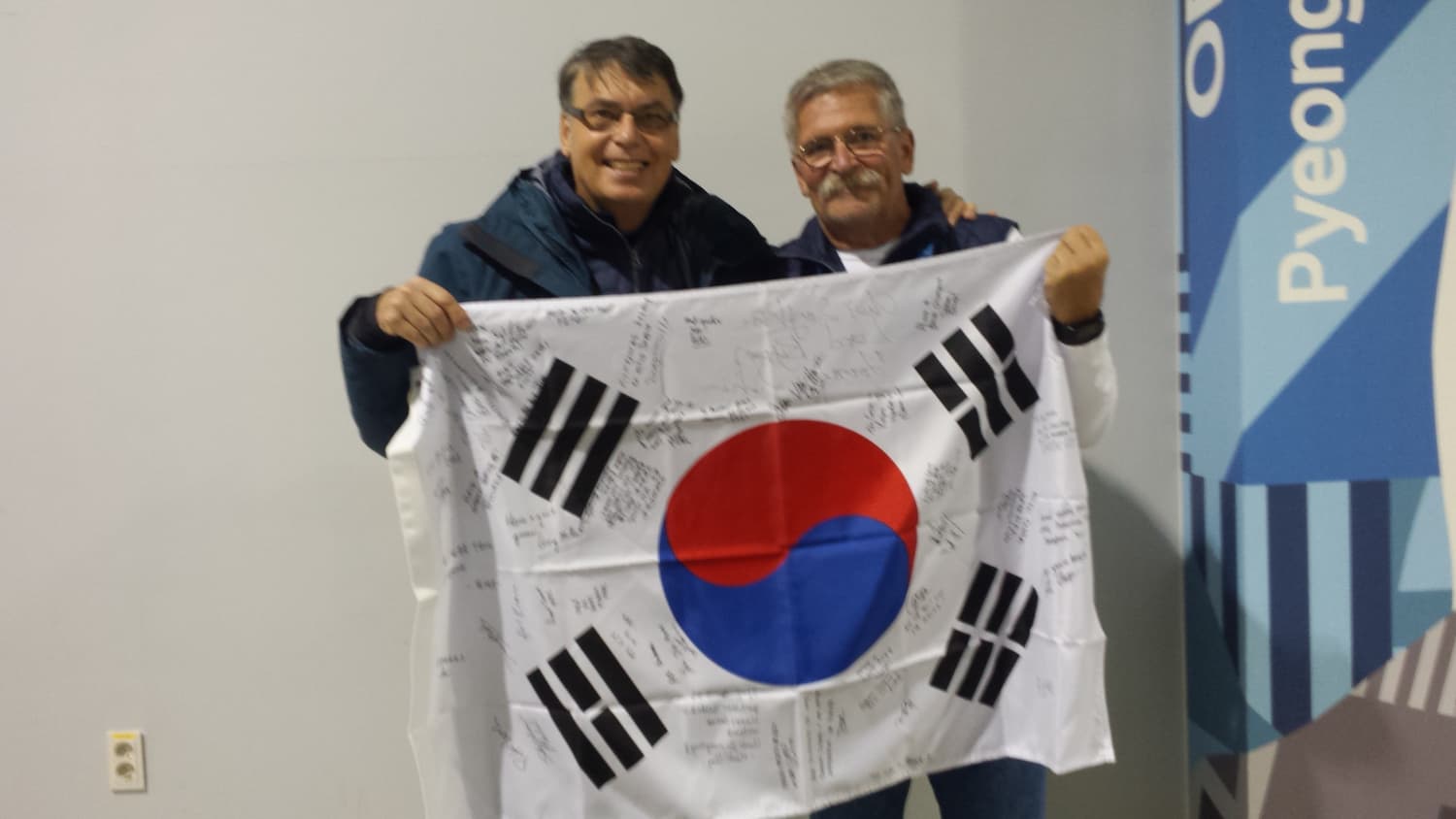 In the summer, we trained three times a day. There was only one day off — Sunday. That was the world I came from. So, when I arrived in Canada, I suddenly realized that I didn’t know how to do anything else. I didn’t have anybody. I was alone. I felt like an orphan that nobody wanted.
The First Job
— What was your first step?
The Canadian government helped me find my first job. They sent me to a factory that produced plastic coffee cups. I went there, they introduced me to the company, and I started working. They paid me $1.80 an hour. Inside, it was extremely hot because of the steam. The machines kept pressing and forming the cups nonstop.
For me, it was a completely different world — physically hard, repetitive work. But at that moment, I had no alternative.
— Did you receive any support to study?
I asked the Canadian government for help. I wanted to go to school, to study, to build a future beyond manual work. But they refused.
— Why was that refusal so difficult for you?
It was a hard moment. I had come from a system where everything was decided for you — where your path was fixed from childhood. And now, for the first time, I was trying to choose something for myself. I wanted education, a profession, a direction. I wanted a chance.
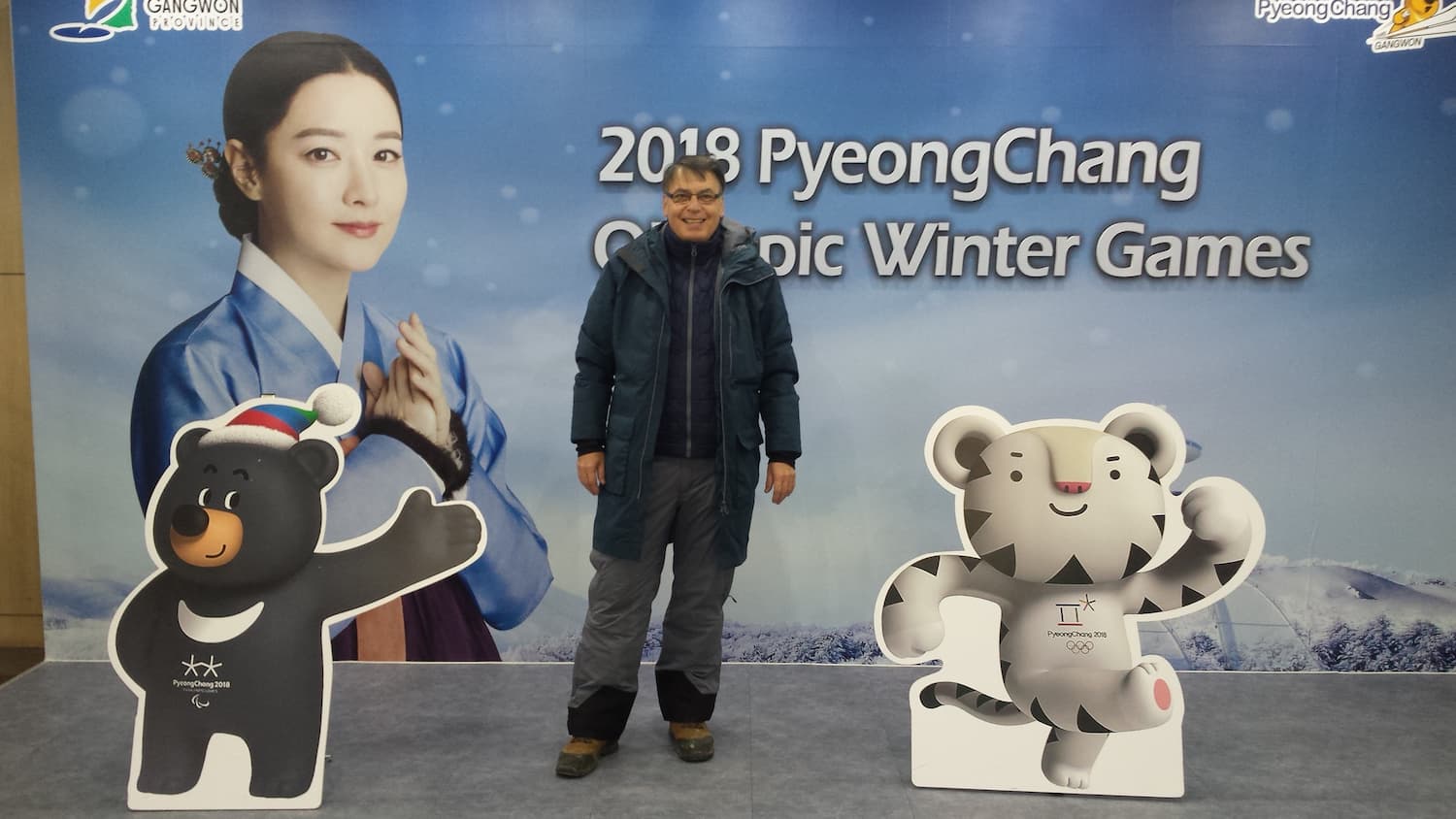 When they said no, it felt like the door to my future had closed before I even touched it. I didn’t have the language, I didn’t have connections, and I didn’t have a family to guide me. I was standing in a new country with nothing but the desire to build a life — and even that wasn’t enough.
— How did that rejection affect you later?
But that refusal also forced me to grow up quickly. It pushed me to find my own way, to survive, to adapt, and eventually to build a career with my own hands. At the time, it felt like rejection. Later, I understood it was the beginning of my independence.
— Why?
I was told by the Canadian government that I was Canadian, and because of that, they had no programs to help me. That was the explanation. It was strange to hear. I had just arrived from the Soviet Union with almost nothing — no language, no profession, no support — yet I was told that, as a Canadian, I didn’t qualify for any assistance.
— How do you look at that experience today?
When I look at new immigration today, I see how different it is. People arrive, and they have temporary housing, medical attention, some clothing, and even some financial support to help them start their lives. And I don’t begrudge them that — it’s the right thing for a country to do. But at that time, none of that existed for me. I was on my own from the first day.
 It was a difficult reality to accept that I was Canadian on paper, but in every practical way, I was starting from zero.
Evenings at School
— How did you move forward?
In the evenings, after work, I went to school to learn the language. That became my second life. During the day, I worked at the factory. In the evening, I studied. Step by step, I tried to rebuild everything — language, understanding, confidence. There was no shortcut. Only work.
It wasn’t glamorous. It wasn’t easy. But it was the beginning of building a new life with my own hands.
— So, you had to rebuild your life by yourself?
Those evenings were exhausting, because I worked between 12 and 14 hours a day. But they were also the only part of the day that felt like progress. I sat in a classroom surrounded by people from all over the world, each of us trying to find our place in a country that didn’t yet feel like ours. I listened, repeated, made mistakes, and tried again. Slowly, the words started to make sense. Slowly, I began to feel less invisible.
— When did you start thinking about your future?
Yes. I was left to hang on my own. I worked at the factory during the day and went to school in the evenings, trying to learn the language little by little. As my English improved, I began thinking seriously about where I could study and what kind of profession I could build for myself.
 — Were you still thinking about your parents?
At the same time, my thoughts were always with my parents. I was still trying to bring them back to Canada from the Soviet Union. Every day I wondered how they were doing, whether they were safe, whether they had enough. I wanted to help them financially, but it was almost impossible. There were no normal money transfers, no simple way to send anything. Everything was complicated, restricted, or simply blocked.
— What was the hardest part of that period?
So I lived with two battles at once: rebuilding my own life from zero, and trying to reach across an ocean and an iron curtain to support the people who had given me everything. It was a heavy weight for a young man who was still learning how to survive in a new country.
Jeans for Mariupol
— How did you help them?
At that time, one of the few things we could do was send goods. Jeans were extremely popular in the Soviet Union. I bought them in Montreal, on Saint Lawrence Street, in the Jewish stores. My parents knew many of those people very well from the years when they had lived in Montreal. My father and my mother had worked in a factory. People remembered them.
 They helped me choose the jeans, pack the parcels, and send everything to Zdanov. My parents could sell those things and have a little money to survive. It wasn’t much, but it was something — one of the only ways I could support them from across the ocean. Every parcel felt like a small lifeline, a way to stay connected, a way to help when everything else was blocked.
The Cook’s Path
— How did you choose your first profession?
My father always used to say, “If you do not want to be hungry, go study to be a cook.” So I followed that advice. I enrolled in cooking courses and studied for almost three years. I had only one semester left before receiving my chef’s diploma, but I had to stop. I simply didn’t have enough money to continue studying and working at the same time.
— Was it difficult to walk away from that path?
It was a difficult decision. I enjoyed the work, and I was good at it. Cooking gave me structure, discipline, and a sense of purpose. But survival came first. Rent, food, and basic living expenses left nothing for tuition. I had no family support, no savings, no safety net. So I had to walk away from something I was close to finishing.
I had to look for another way — another path that could give me a future, even if I didn’t yet know what that path would be.
— What did you do next?
As I told you, I was not always such a good son in my childhood. I was punished severely at home, and one of the few things left for me to do was help my father sew. That is how I learned to sew buttons on his suits and understand how fabric behaves. I learned a lot from him, even if at the time it didn’t feel like learning — it felt like duty.
— How did you start working in the clothing industry?
So, I went to the factory where my parents had once worked. The owner’s name was Sam. When I walked in, he was surprised to see me, but he accepted me right away. At first, they put me on the press machine. It was summer, and we were pressing winter coats — heavy, insulated, steaming hot. The work was exhausting. The heat from the press felt like standing inside an oven.
 — When did that work become more than factory labor?
After a while, they moved me to more serious sewing work because they saw that I could sew well. And once I was on the sewing floor, something changed. I wasn’t just doing repetitive tasks anymore. I began helping with patterns, adjustments, and small design decisions. I don’t know the perfect word for it, but I was moving from simple factory work toward design.
Eventually, I became a men’s clothing designer. I even had my first clothing show at LaSalle College in Montreal. But I always knew I would not follow my father’s path. At that time, it was simply a way for me to make a pretty good living.
Return and Loss
— When did your parents finally come back to Canada?
They came in 1977. But three weeks after their arrival, my mother died. She went to sleep and did not wake up. She was only fifty‑four years old. At that moment, I had only twenty dollars in my bank account. And suddenly I had to bury my mother.
Again, the people who had known my parents stepped in. They remembered them from the years my parents had lived and worked in Montreal. They understood the situation. They told me, “Pay back what you can — five dollars, ten dollars a week, ten dollars a month.” They helped me through it because they cared. Their kindness carried me through one of the hardest moments of my life.
Work, Marriage, and a New Direction
— How did your life continue after that?
I started working for another company and kept thinking about how I could study and get a better job. At one point, I even worked as a janitor. That was where I met my wife. She worked at the same company, and we began dating.
— When did electronics first enter your life?
I always had a curiosity about Timex watches. I wanted to understand how those crystals worked, how something so small could keep such precise time. That curiosity stayed with me. And then one day I thought: maybe I should take electronics courses. Maybe that was the direction I had been looking for?
From that idea came another. If I learned electronics, I could repair televisions, VTRs, and other equipment. That meant I could get a real job — a profession, not just survival work. It was the first time I saw a path that could take me somewhere beyond factories and manual labor. It was the beginning of a new chapter.
— When did you decide to go into electronics?
In 1982, I married my wife, and that became the moment when I made a clear decision. I told her that I wanted to go to college, and she supported me completely. I went to the college administration and asked whether it was possible to combine studies and work flexibly — to study in the mornings and work in the evenings. But the only way was to attend full‑time. The part‑time program was only available in the evenings, and it would take an extra year to finish.
 — How demanding was that period of your life?
So, I made a decision that defined those years of my life. I studied full‑time and worked full‑time in the evenings, from four in the afternoon until midnight. And I told my wife very clearly: “This program is three years. I will finish it in three years.” For me, it wasn’t just a plan — it was a promise.
And on top of that, on weekends, I worked part‑time in an arcade as a cashier. Every hour of my week was accounted for. There was no free time, no rest, no shortcuts. Just discipline, commitment, and the belief that this sacrifice would open the door to a better future.
Dawson College: Entering a Different World
— What was the experience like when you started?
I entered Dawson College in Montreal, in a technical diploma program in telecommunications. I was twenty-five years old. Most of the other students were seventeen or eighteen. The gap wasn’t just age — it was preparation. Many of them had been building radios since childhood. They already understood the basics. I had never even seen components like resistors or capacitors before.
— Did you feel prepared for that environment?
I remember sitting there and asking myself: Where did I end up? Everything was new. Everything was foreign. I felt like I had been dropped into the middle of a world where everyone else already spoke the language.
 — Did the teacher warn you how difficult the program would be?
There were forty-five students in the group. On the very first day, our teacher, Joe Amato, looked at us and said, “Look around. By the last semester, if five of you are still here, it will be a success.”
That one sentence told me everything I needed to know about the program. It was serious. It was demanding. And if I wanted to survive — let alone succeed — I would have to work harder than anyone else in that room.
Discipline Without Support
— How did you manage the pressure?
It was constant pressure. I worked every day, and on weekends I took additional jobs because I had to pay my bills. Sometimes I asked my wife to help me with coursework or paperwork, but she refused. She told me something very simple and very strong: “You said you would do it. Now prove it. Finish it yourself.”
— What kept you going during that period?
So, I pushed through. I survived on two to four hours of sleep. I think sports gave me that determination to never give up. From an early age, I learned that the phrase “I can’t do it” simply didn’t exist in my vocabulary.
 That approach shaped me. There was no external support, no safety net. Only discipline.
In one of the final summer semesters, I took four courses and failed three of them. The average grade in the program was around eighty-two percent. I had sixty-eight percent. But I didn’t see it as a failure. I was working full-time, studying full-time, and the passing grade was fifty percent. For me, sixty-eight percent meant I was still moving forward.
— When did electronics become your real path?
After the first semester, I found a job in an arcade. That was my entry point into electronics. I left the factory where I had been working as a designer, earning eighteen dollars an hour — very good money at the time. Instead, I chose to work in electronics for four dollars and fifty cents an hour.
 — Why did you accept such a big pay cut?
It wasn’t a rational financial decision. It was a decision of instinct. Something in me was drawn to it. I wanted to understand how things worked. I wanted to open a device, look inside, and make sense of the logic behind it. My thinking began to change. I stopped seeing machines as mysterious boxes and started seeing them as systems — components, signals, patterns.
— What did electronics teach you?
The more I studied, the more I realized that everything in electronics is built on fundamentals. If you understand the basics, you can solve almost anything. When something broke, I no longer saw a problem. I saw a structure. A puzzle. A logic that could be understood and repaired.
 That was the moment electronics stopped being a course I was taking and became the path I knew I wanted to follow.
Three Out of Forty-Five
— How did the program end?
Out of forty‑five students who started, only three finished the program. It happened exactly as the teacher had predicted on the very first day. In the last semester, I became close with one of the students. We supported each other through the final stretch. He stayed in Montreal, and later, I moved away, but we are still in contact today.
— What was your first real technical job after graduation?
When I graduated, I immediately started looking for a job. That was the next step — to turn everything I had gone through into a profession. At that time, I was still working in the arcade, but I had moved from cashier to technician. It was noisy, crowded, full of people and machines, but for me it was exciting. It was the first environment where electronics wasn’t just theory — it was real. Things broke, and I fixed them. Signals failed, and I traced them. Every day, I learned something new.
 It wasn’t glamorous, but it was the beginning of my life as a technician — the first step toward the career that would eventually take me around the world.
— When did you decide to leave the arcade business?
At some point, I understood that it was no longer the place for me. The environment began to change. There were people selling drugs there, and what I saw was something I don’t even want to describe in detail. It was no longer the exciting, noisy, energetic place where I had first learned electronics. It was becoming dangerous, and I knew I didn’t belong there anymore.
— What kind of job were you looking for then?
That was the moment I made the decision to leave and focus fully on electronics. I started looking for a proper job in the field. At that time, a normal starting salary was around sixteen to seventeen thousand dollars a year, and that was the level I was aiming for — a real technician’s salary, a real career.
 — What obstacle did you keep facing?
But everywhere I went, I heard the same answer: “You don’t have experience.” It didn’t matter that I had a diploma. It didn’t matter that I had worked full-time while studying full-time. It didn’t matter that I could repair arcade machines with my eyes closed. On paper, I had no “real” experience. And in Quebec, that was the wall every new technician hit.
It was frustrating, but it was also the moment that pushed you toward the next chapter — the one where you refused to accept “no” as the final answer.
Sport in Canada
— At the same time, were you still connected to sport?
Yes, very much. When I arrived in Canada, I met a coach and continued training. I worked during the day and then went to the Claude‑Robillard Centre in Montreal to train in the evenings. Even members of the Canadian national team had to pay for access to the facility — the government didn’t cover those costs. And I wasn’t even on the team yet. I was just trying to get there.
 But I kept going. Sport was the one part of my life that still felt familiar, still felt like home. It gave me structure, discipline, and a sense of identity at a time when everything else was uncertain.
That’s where I met Rosie Edeh. She was a 400‑meter hurdler and later competed in three Olympic Games. Years later, we met again in Toronto and even worked together at Shaw Media. She was one of the reporters starting in the new Morning Show, and I was the Sr. Broadcast Engineer. Life has a strange way of circling back — the people you meet in one chapter often return in another.
— Did you try to qualify for the 1976 Olympics?
Yes, I tried. I even asked the government for a loan — about seven thousand dollars — so I could focus fully on training. They refused. They told me very directly: either you finance yourself, or you make it onto the national team. There was no middle ground.
 So, I worked long hours and trained after work. I pushed myself as hard as I could. I had to go to Edmonton for the qualification trials for the Montreal Olympics in 1976. My results were good. I was in shape. I had a real chance. But then I got injured — I tore a muscle. And that was the end of it. My Olympic dream ended not because of a lack of effort, but because of one moment, one step, one injury.
— You arrived in 1975. How could you already aim for the Olympic team?
It was a very short window, but I tried. By the end of 1975, I had already started making contacts and getting into the system. I was training seriously, meeting coaches, and positioning myself for the trials. In 1976, I truly had a chance to qualify. But the injury stopped everything.
 Collapse and Reset
— How did you deal with that?
It was very difficult. I had no real support system. I had some acquaintances in the United States — a Ukrainian man and his German wife. They had their own complicated history with the Soviet Union. We had met years earlier in Zhdanov, and when everything collapsed for me after the injury, I went to stay with them for a while in Bay Village, Ohio. I needed to get away, to reset, to breathe. It was a moment when I felt completely lost, and being with people who understood my background helped me steady myself.
 But eventually, the Canadian government contacted me to say my parents were coming to Canada.
Still, sport stayed in my mind. I learned from sports that stayed with me.
Looking for a First Real Job
— So you returned to looking for work in electronics?
Yes. I started sending applications, filling out forms, and going to interviews. But again and again, I heard the same answer: “You don’t have experience.” It didn’t matter that I had a diploma or that I had worked full‑time while studying full‑time. On paper, I was still “new.”
 At that time, my wife was working in the computer science department at Concordia University. I went to her and asked if she had access to a directory with contacts. She brought me the directory, and I started going through its pages page by page. I wasn’t looking for HR or administrators — I was looking for someone technical, someone who might understand what I could offer.
I found an engineer in the audiovisual department and called him to ask for a meeting. He agreed.
— What happened at that meeting?
I came and asked him directly if there was any opportunity to work there. He said no. So, I told him honestly: I didn’t have experience, but I needed to gain it. I was ready to learn. I wasn’t asking for a job — I was asking for a chance. That conversation made me realize something important. It wasn’t enough to have a diploma. I needed practical skills, real hands‑on training. I needed to understand equipment, not just theory. That’s when I discovered that Sony in Toronto was offering courses. For me, that became the next step — the bridge between school and the real world.
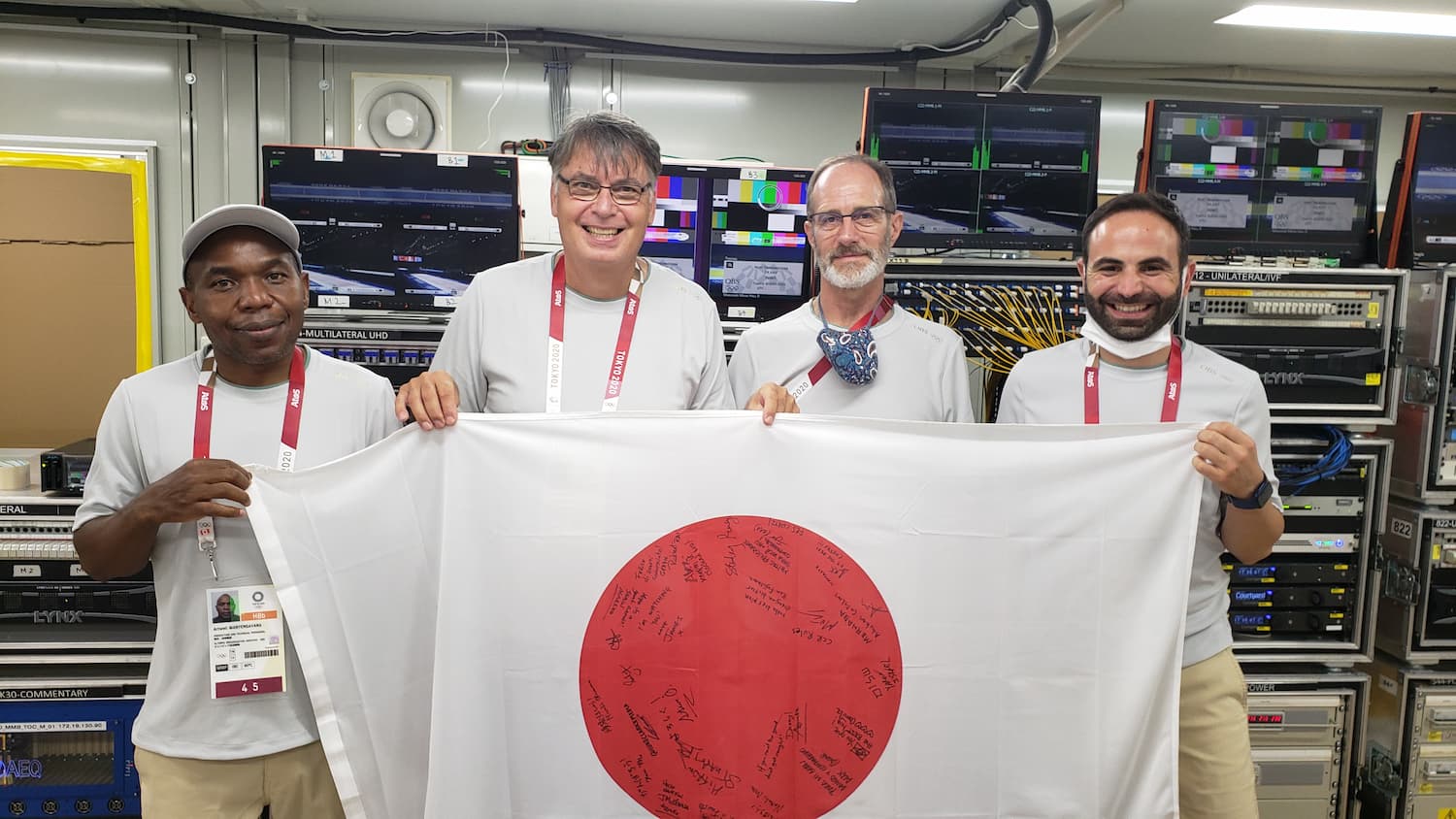 It was the moment I understood that if no one would give me experience, I had to create it myself.
Learning Without a Salary
— How did you get into Sony training?
I called Sony and asked if I could take their courses. They told me I could only attend if my company had Sony equipment and gave me a recommendation. I didn’t have that. So, I went back to the engineer at Concordia University and proposed a simple solution.
I told him, “Let me work for you for free. I will learn how to repair your equipment, and in return, you give me a recommendation.” He agreed.
— What did your schedule look like then?
From that moment, my schedule became extreme. From eight in the morning until two in the afternoon, I worked at the university for free, learning on real equipment. From three in the afternoon until midnight, I went to my regular job at the arcade. There were no days off, no extra time — just work and learning.
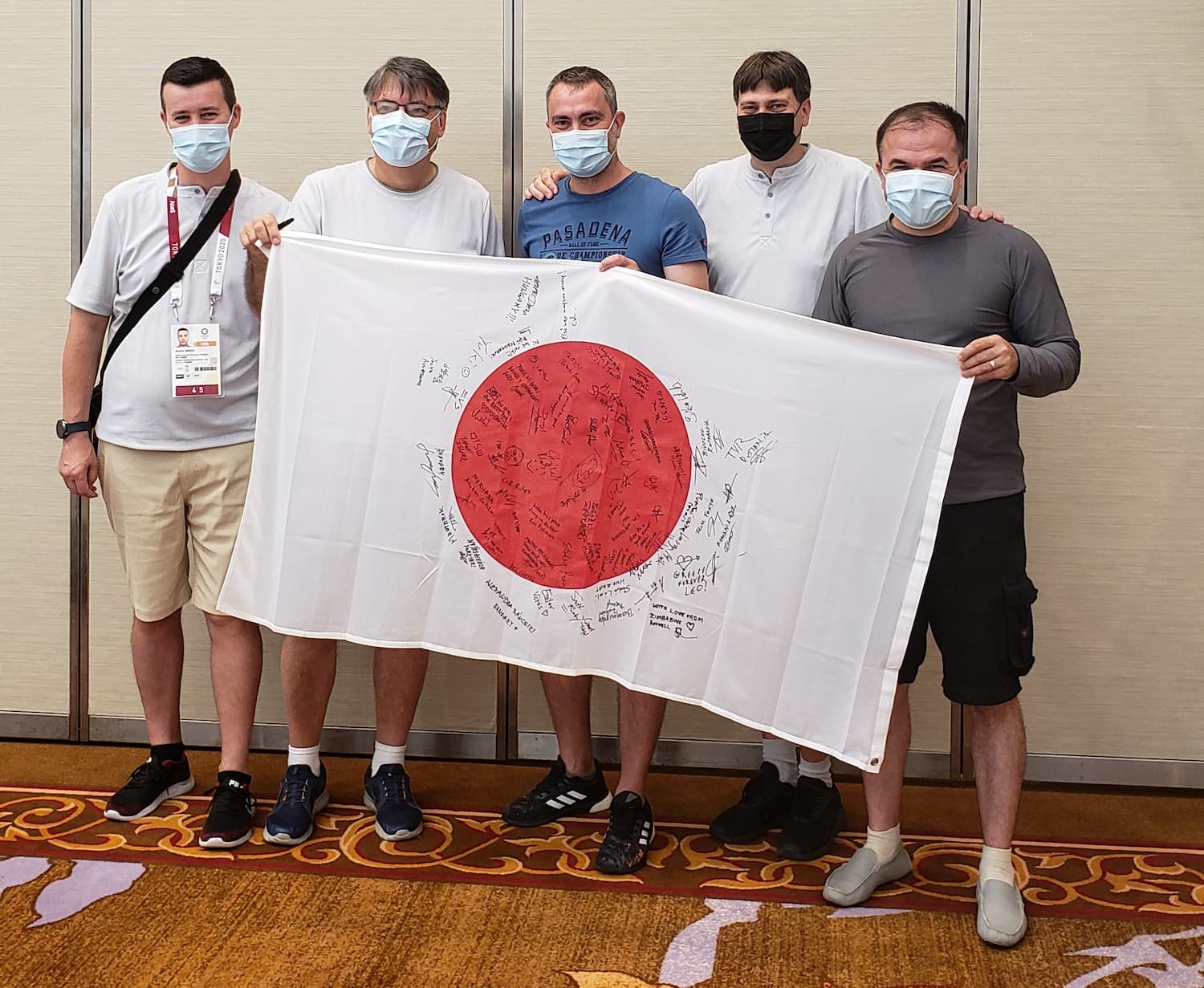 — What did you study first at Sony?
After some time, they gave me the recommendation, and I paid for the Sony courses myself. The first course was on the industrial equipment, VTR VO-5850 ¾ Tape machine. A few months later, I moved on to cameras — a color three-tube camera, DXM-3A. Step by step, I was building real, practical knowledge. That was the foundation that would eventually carry me into fixing electronic equipment. For me, it wasn’t yet broadcasting.
Knocking on the Same Door
— How did you enter the broadcast industry?
One day, I was sitting in a coffee bar reading Le Journal de Montréal when I saw a small article mentioning that a Sony Broadcast dealership, Cité Electronique Video, had opened in the city. I wrote down the address and went there immediately.
At first, nothing happened. The secretary told me to prepare a résumé. I went home, prepared it, came back — they lost it. I brought it again. I came back again. And again. In total, I went there seven times. Every time, the answer was the same: no engineer available, no manager available, nobody had time to see me. But I kept showing up.
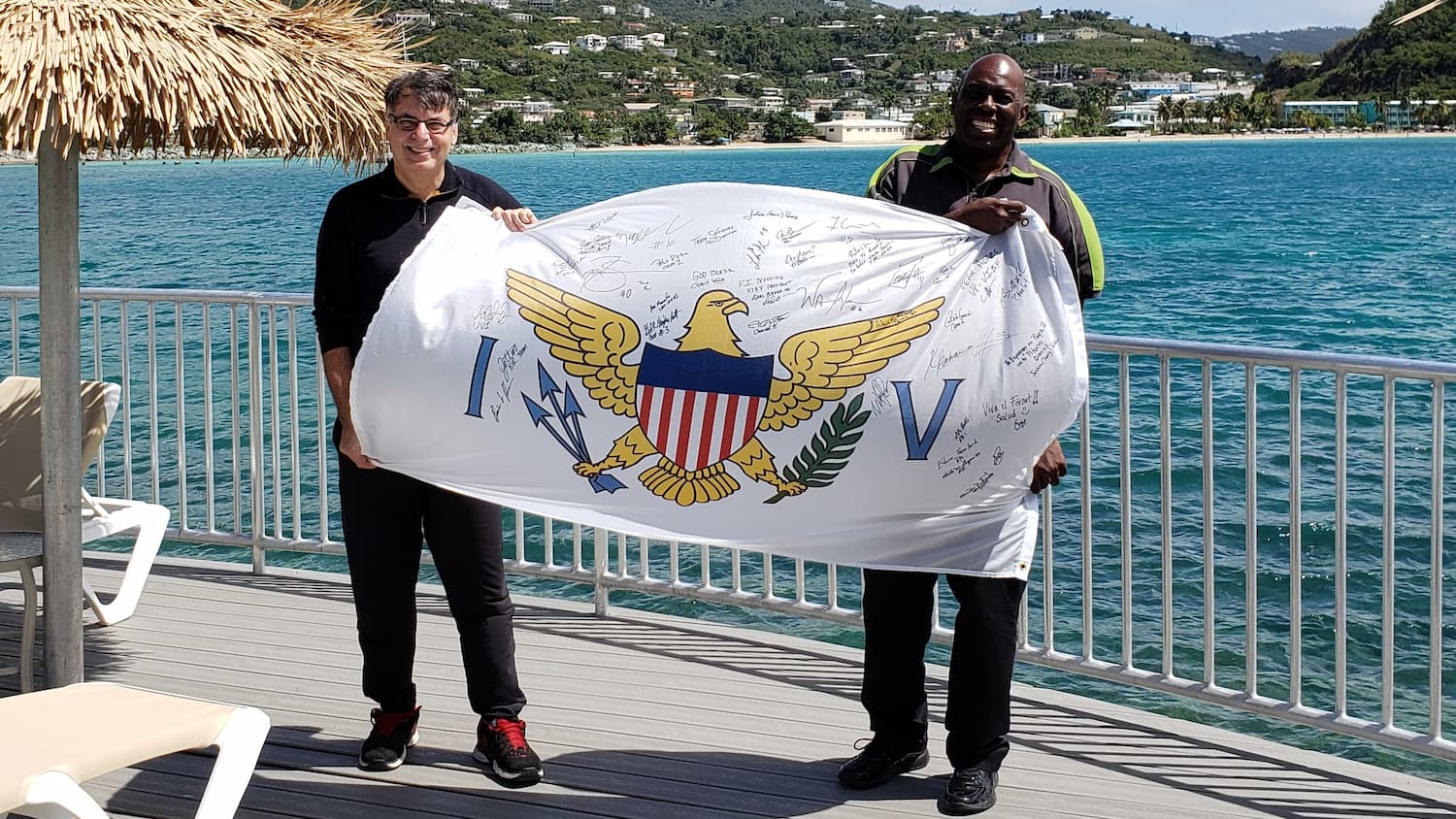 Then one day, the vice president, Pierre Trudel, happened to be there. He agreed to talk to me. That moment — after seven attempts, after being ignored, after being told to come back later — became the doorway into the broadcast world. It was persistence, not luck, that opened it.
“Let Me Work for Free”
– How did you convince them?
—They told me they had a position — around seventeen thousand dollars a year — but that I didn’t have enough experience. So, I proposed a deal. I said, “Let me work for you for free for three months. After three months, I will decide if I want to stay.”
The vice president looked at me and asked if I had a family. I said yes. He paused for a moment, thinking. And asked me how I plan to support my family. I told them not to worry, it’s my business. Instead of accepting my offer to work for free, they hired me immediately — and even gave me two thousand dollars more than the original salary. It was the first time someone in the industry recognized not just my skills, but my determination. That moment changed everything. It was the true beginning of your broadcast career.
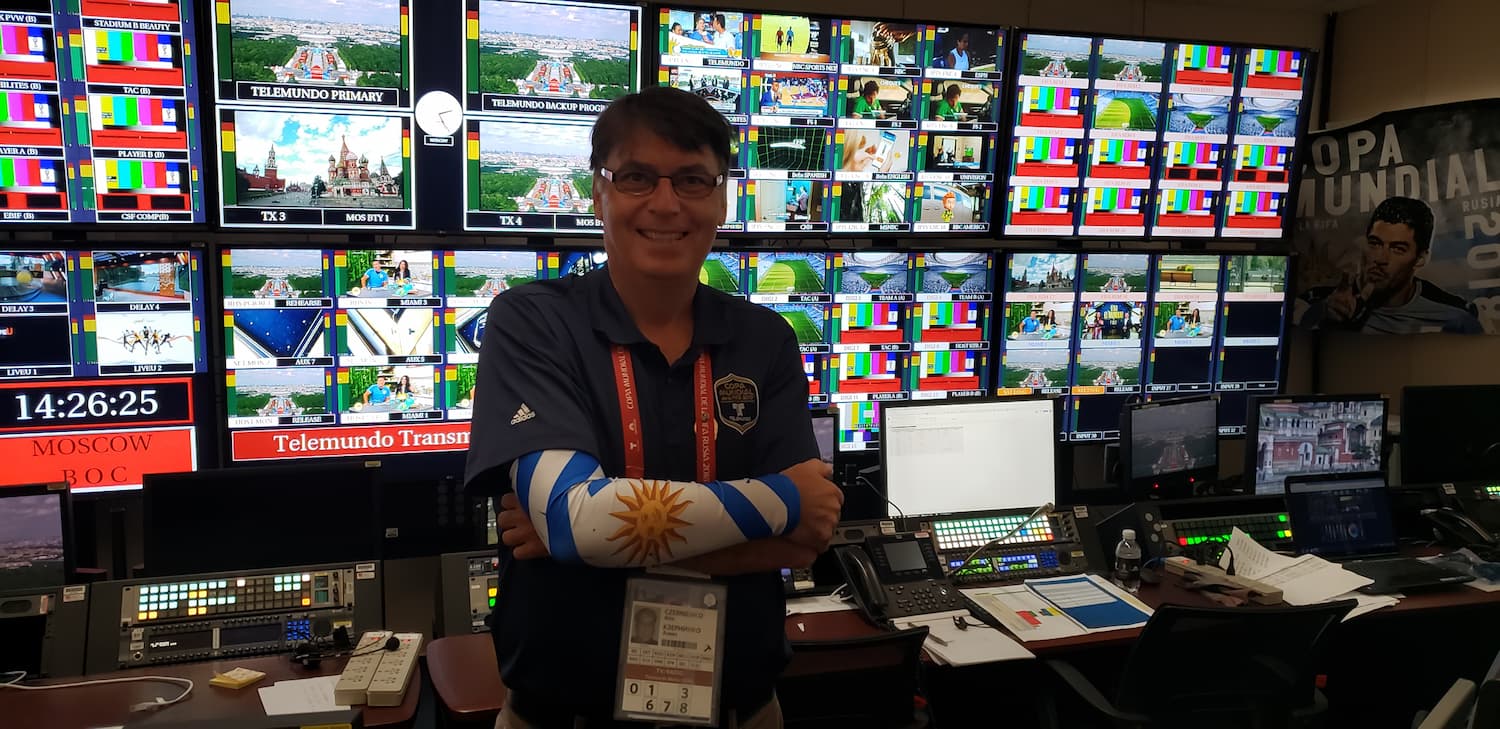 Becoming a Specialist
— What did that job give you?
It opened everything. I continued studying, worked weekends, and spent as much time as possible inside the company. I treated every machine like a textbook. I disassembled equipment completely, rebuilt cameras from scratch, learned every board, every connector, every adjustment. That’s how I became a specialist — not by theory, but by touching, testing, breaking, fixing, and understanding.
— How long did you stay there?
I stayed there for almost nine years. Those years gave me the foundation for everything that came later: the discipline, the confidence, the reputation, and the deep technical knowledge that eventually carried me into international broadcasting. It was the place where I stopped being a student and became a real engineer.
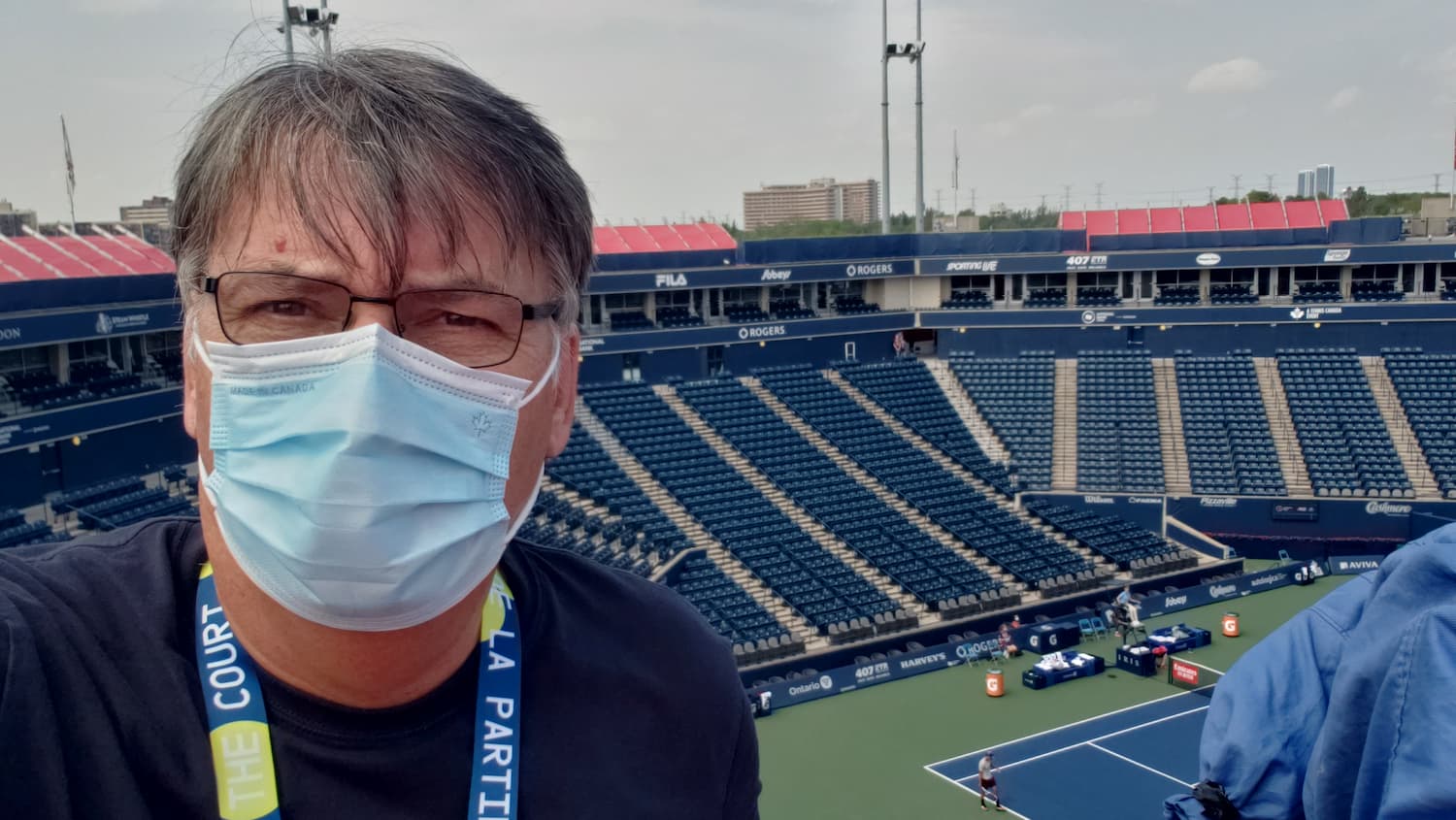 — What did access to Sony give you?
Working for a Sony dealer gave me access to the main Sony offices in Montreal and Toronto. My very first visit to Sony Montreal was unforgettable. I met Jocelyn Richard — he was the same age as me, twenty‑nine. But the moment he started talking, I realized he was already ten years ahead of me in experience. He understood every circuit, every adjustment, every system.
I stood there listening and said to myself: How much do I still have to learn to catch up?
Discovering Broadcasting
— When did you understand broadcasting itself?
At the beginning, I didn’t understand it at all. In college, we studied telecommunications — satellites, radio frequencies, and power systems. But broadcasting is a different world. Sync signals, color bars, timing pulses, signal chains — all of that was completely new to me. When I joined the company, they started asking me to “check sync levels.” I didn’t even understand what they meant. I learned about Genlock keys in a joking way.
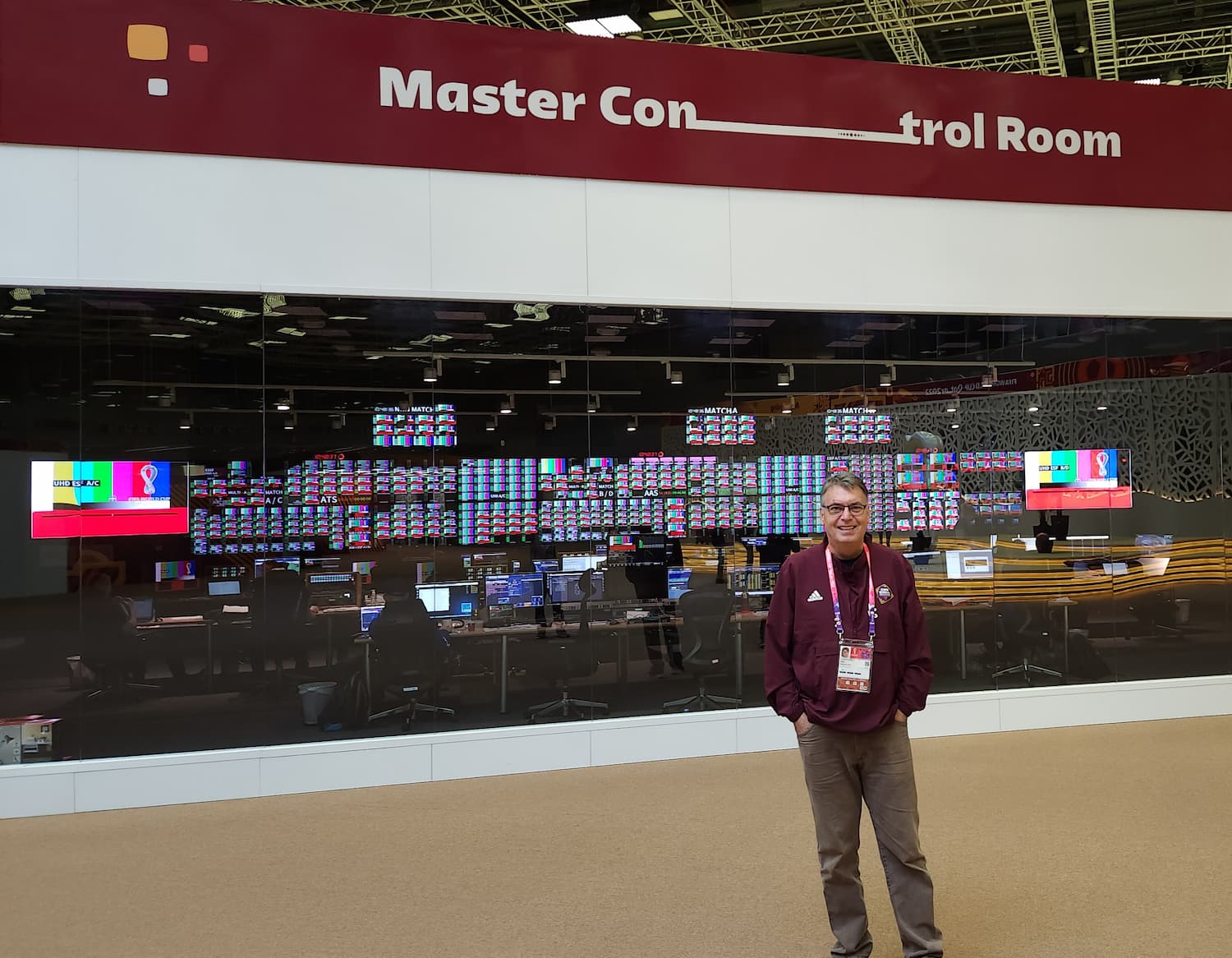 took machines apart. I traced every signal path. I wrote notes, diagrams, and explanations for myself. I built my own documentation, my own reference library. It was like going to a second school — except this time, I was the teacher and the student at the same time.
That’s how broadcasting finally started to make sense to me. Not from textbooks, but from touching the equipment, breaking it, fixing it, and understanding how every piece fits into the larger systems.
Moving to Television
— Why did you decide to leave after nine years?
Because I realized something important: I was working only with equipment. I wanted to understand the full system — how television really works in practice. After nine years, a TV company, CFCF‑12, was looking for engineers. I went to the vice president and told him honestly that I liked the team, but I needed to move forward. He offered me eight thousand dollars more per year to stay. But I refused.
 I didn’t want to spend my whole life repairing equipment in a workshop. I wanted to be inside a television station — to see studios, cameras, control rooms, routing, signal flow, the entire system in operation. I wanted to understand broadcasting not just from the bench, but from the inside. So, I left and joined the TV station.
— What was that transition like?
It was a completely different environment. For the first time, I was inside a real broadcast system — not just boards and components, but the entire chain of television: production, operations, timing, people, pressure. Everything was alive, moving, interconnected.
And we had a manager there — Denise Monpetit. People like her do not exist anymore. She had a way of leading that you rarely see today: calm, respectful, protective of her team, and deeply professional. She understood people, not just schedules. She knew how to guide, how to support, how to bring out the best in everyone. That level of management is almost impossible to find now. Working under her was the moment I understood what a real broadcast environment feels like — not just technically, but humanly. It was the beginning of watching television as a living system, not just a collection of machines.
 — What was different about that TV company?
They believed that engineers should keep learning. It was in their interest that people studied, improved, and grew. The stronger the engineers, the stronger the company. That was their philosophy. They invested in people because they understood that knowledge was not a cost — it was an asset.
Today, when I speak with technical directors, I often hear the opposite. They are afraid to invest in people because once employees start learning, they leave. But the real approach is different. You teach them, you support them, you respect them — and then they don’t want to leave. Loyalty comes from being valued, not from being controlled. It shaped how I worked, how I led, and how I treated people for the rest of my career.
 — What was your role inside the station?
I had my own office in the basement. It was actually a very good engineering space, and I organized it exactly the way I needed. I set up workflows for repairing equipment, cameras, and systems. I even built a test room myself — a place where I could isolate problems, trace signals, and understand how everything connected.
Step by step, I created an environment where I could see not just individual devices, but the entire broadcast chain. It was the first time I could study a system from end to end: cameras, CCUs, routing, sync, intercom, control rooms, studios. That’s where I began to understand how television really works as a living organism.
 — What years are we talking about?
Around 1990, and then more actively from 1995 onward. That period was the beginning of the digital transition in broadcasting — when analog workflows were still dominant, but digital systems were starting to appear. It was a unique moment in the industry, and being inside a station during that transition gave me a perspective that shaped the rest of my career.
Learning on Your Own Terms
— Did the company support your external training?
They supported me, but in a specific way. They didn’t pay for the Sony courses themselves. If I wanted to take them, I paid. But they gave me something equally important — time. If I needed a week to go and study, they allowed it. They paid me for the days I was away, and in return, I brought the knowledge back to the station. Whenever I returned from a course, I organized training sessions at the company facility so more people could learn. It created a culture of sharing, and it built a very strong relationship between the engineering team and the management team.
 — How did your relationship with the Sony dealer develop?
I also kept a very good relationship with the Sony dealer, Pierre Trudell, the vice president. I called him, wrote letters, and asked to be included in courses. Sometimes they helped me get access when the classes were full or restricted. And in return, whenever they needed support — with studios, installations, or troubleshooting — I helped them, often for free. It was a two-way relationship, built on respect and trust. This even continued when I moved to Toronto and CEV opened an office there. I helped them with surveys and installations.
— What did that combination give you?
That combination — the freedom from the TV station and the partnership with Sony — allowed me to grow faster than I ever could have on my own. It was not just training; it was a network, a community, and a shared commitment to learning.
 Language and Belonging
— You were working in a bilingual environment. Was that difficult?
Not really. By that point, I already had some knowledge of French. When I was working at the Sony dealer, they were very supportive of my learning French. They were even a little confused about why I wasn’t spending more time studying. What they didn’t know was the reality of my life at that time: after my main job, I had an evening job, and on weekends, I had a third job. I had a mortgage at 14% interest — I had no choice. My time was not my own.
At CFCF‑12, it was an English‑language TV station, but most of the staff were French‑speaking. They all spoke both languages fluently. One day, my manager, Denise Monpetit, came to me and said, “Don’t be offended, but your French is weak. You should take courses — not just for work, but so you feel part of the team. “She was right. It wasn’t about obligation. It was about belonging. So, I took the courses on my own.
 — Did the company ever invest directly in your education?
Yes — but in a very interesting way. One day, Denise came to me and asked, “Would you like to take AutoCAD courses? “I said yes immediately. That was AutoCAD 10. The courses were expensive, and they were only on weekends. I wouldn’t be able to pay for that course on my own. I told her that wasn’t a problem. I would go, I would study, I would learn.
After I finished, I brought her the documents. She looked at them, smiled, and said: “I forgot to tell you — on Saturdays we pay you double for your time, and on Sundays triple. And we also pay for your lunch.”
— What did that attitude from management mean to you?
That was their philosophy. They didn’t just allow you to learn — they respected the effort. They understood that when someone invests their own time, their own weekends, their own energy, you don’t punish them for it. You support them. You reward them. You show appreciation. That was the old school. A culture where learning was encouraged, where managers cared, where people were treated like professionals — not resources. And it made a big difference in how you grew, how you worked, and how loyal you felt to the team.
 — When did you feel the industry was about to change?
We were already moving from analog to digital, and you could feel it everywhere. The systems were changing, the logic was changing, and suddenly, everything we had learned before had to be rethought. The familiar rules no longer applied. SX format was taking markets by storm. Panasonic was pushing its 4:2:2 format. You could see it in the equipment coming in, in the conversations with engineers, and in the new terminology appearing in manuals.
The industry was shifting from a world of waveforms, timing pulses, and analog adjustments to a world of data, packets, and digital processing. It wasn’t just a technical change — it was a cultural one. A different way of thinking. That was the moment when another transition began. And I understood that if I wanted to stay relevant, I had to evolve with it.
 Sony, SX, and Atlanta
— When did you enter the Olympic broadcast environment?
It began when Sony started pushing the SX format into broadcasting. That was a major shift — a new generation of equipment, new workflows, and a need for people who understood both the old analog world and the new digital one.
One day, Denise Montpetit came to my office and said, “Télé‑France is looking for Sony specialists for the Olympic Games in Atlanta. “She told me to apply. “If they accept you, we will let you go for three months.”
 That was a big statement. Not every company would release an engineer for that long, especially during a transition period. But they believed in development, and they believed in giving people opportunities. I filled out the papers, went through Sony, and waited. Then one day, I received a message — they wanted to meet me in the studio. That was the moment everything changed. It was the first step toward the Olympic world, the first door that opened because of years of learning, persistence, and relationships. And it was only the beginning. It was a centennial Olympics
The Interview in French
— Why were they looking in Montreal?
Because Télé‑France worked in PAL, while we were in NTSC, and the Host Broadcasting system was in the NTSC system. But Montreal had something unique: we spoke both English and French, and we worked in the NTSC. That combination didn’t exist in many places. So, when they needed engineers who could bridge technical formats and communicate across cultures, Montreal was the logical place to look.
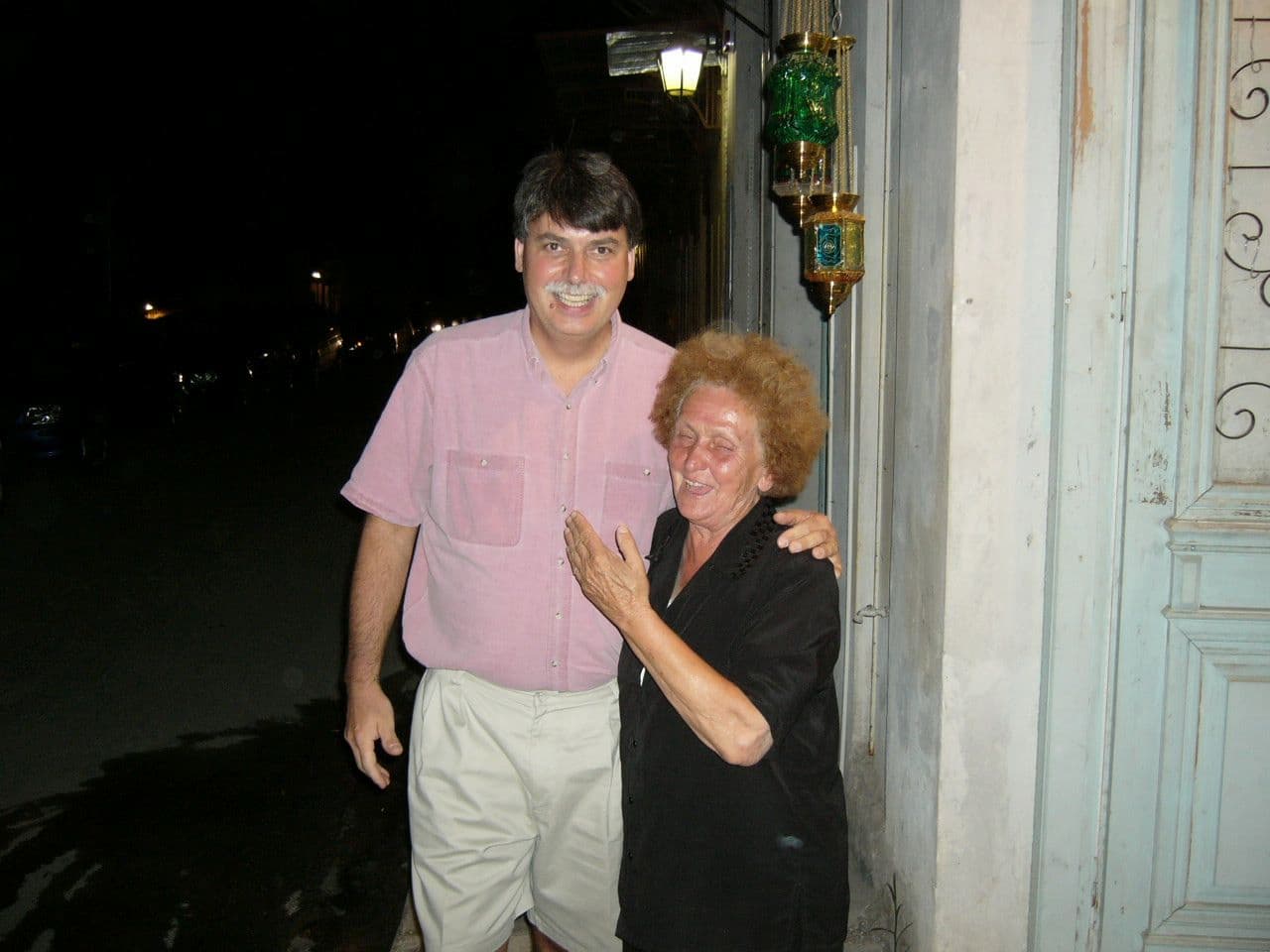 At the interview, they immediately started speaking to me in French — but not Quebec French. It was proper French from France. I was sitting there, almost frozen. They asked me: “Do you speak French? “I said: “I thought I did. “Quebec French and French from France are very different — the accent, the rhythm, the vocabulary. It took me about a week to adjust to their accent. But once I did, everything started working. The communication opened, the work became smooth, and I realized that being bilingual — even imperfectly — was one of the reasons I was there in the first place.
First Olympic Assignment
— What was your role in Atlanta?
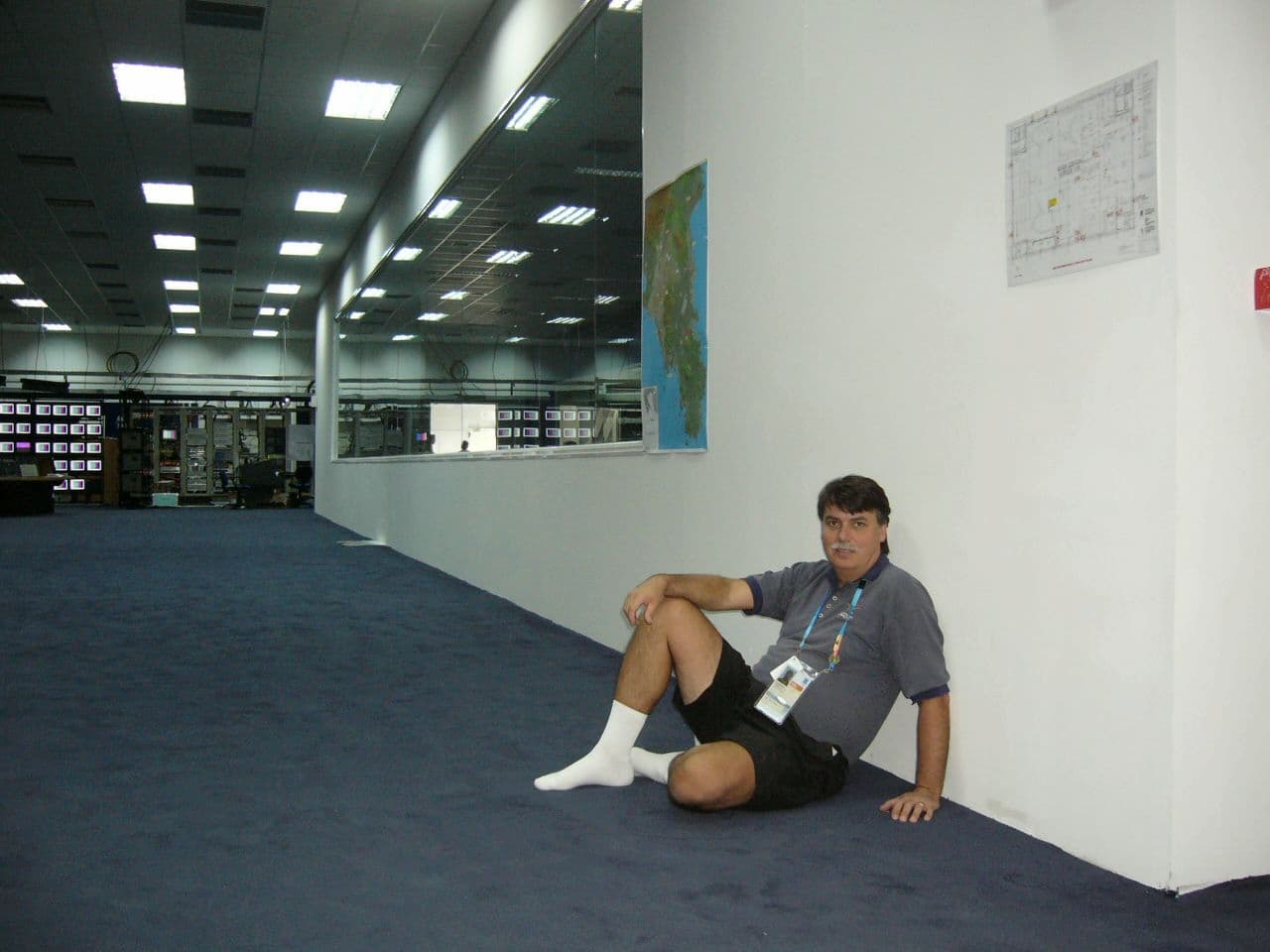
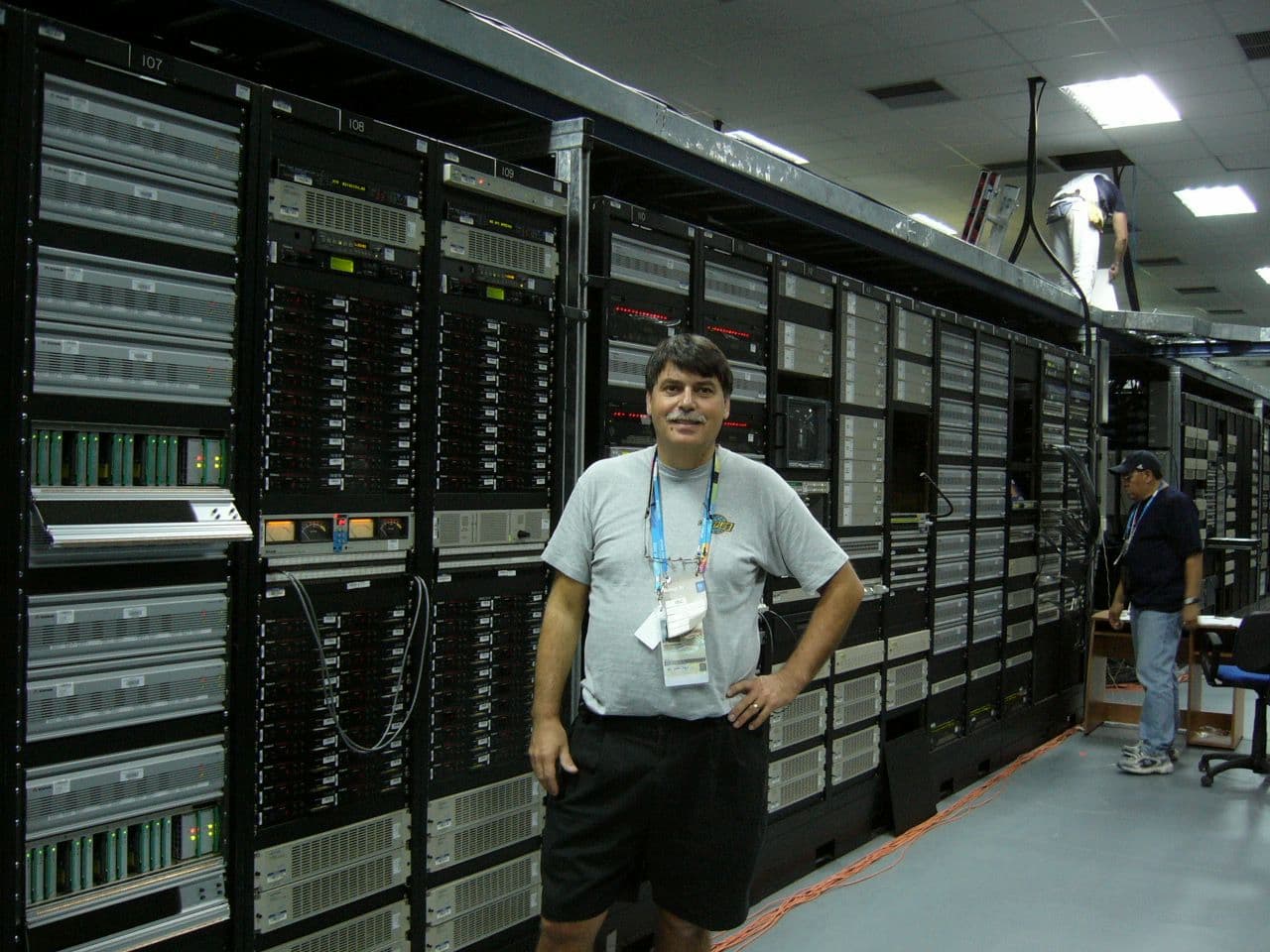
They were looking for a Sony specialist for the SX format. Tele-France 1, at that time, was a Sony house. My job was to help build and configure the systems — VTR setups, studio integration, and the entire signal workflow. These were not simple installations. We had complex configurations where two VTRs were serving multiple stations at the same time.
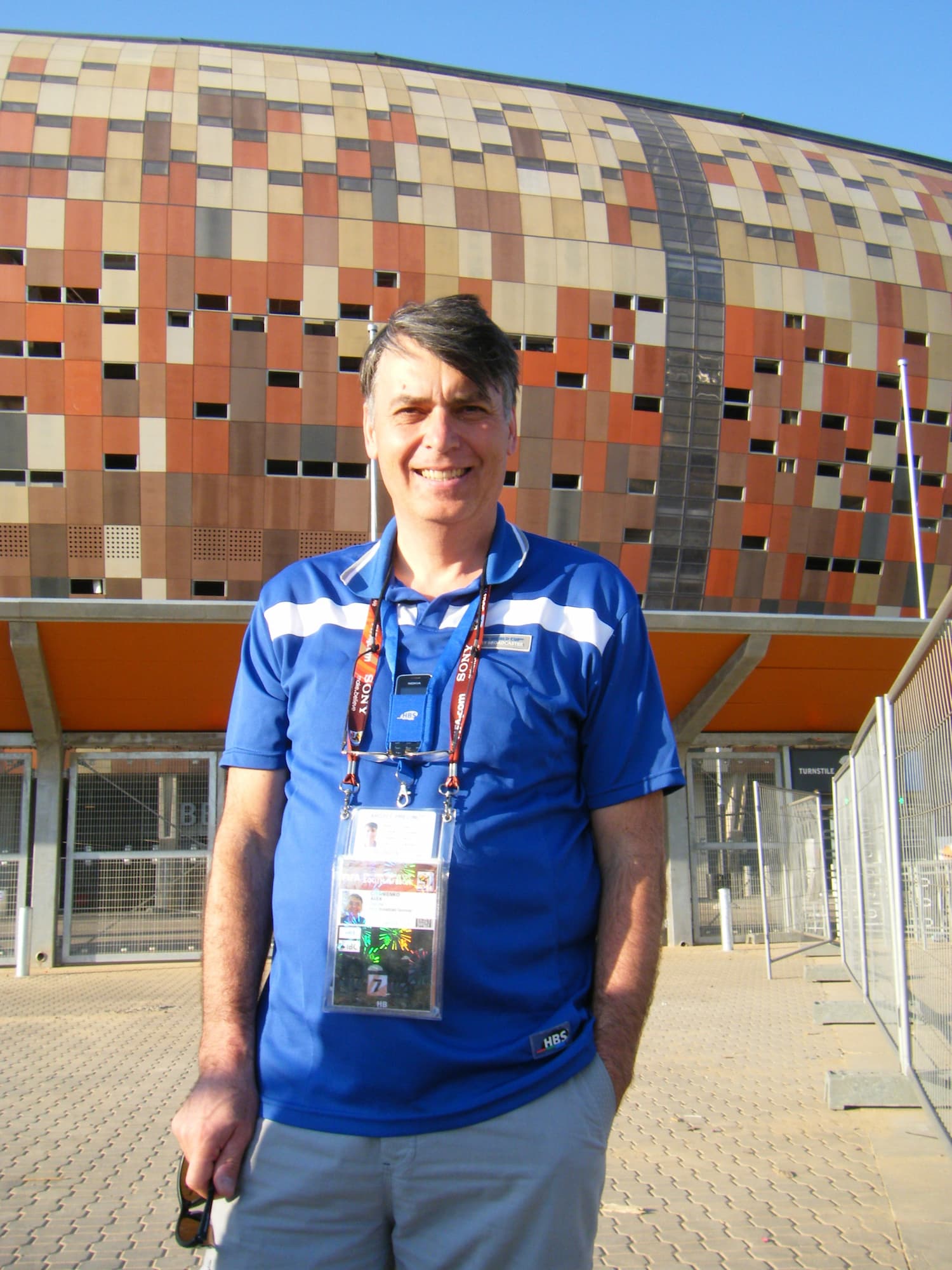 With the new digital systems, we worked in overlap: one tape recording, another standing by, ready to switch after a few minutes. Everything had to be timed perfectly. It required precision, discipline, and a deep understanding of how the new SX format behaved under pressure.
At the same time, I handled repairs, maintenance, and anything else needed to keep the system running. If something failed, you didn’t have the luxury of time. You had seconds. The Olympics don’t wait for anyone. That environment taught me speed, accuracy, and calm under pressure. Atlanta was the first time I saw broadcasting at that scale — hundreds of people, dozens of countries, all depending on the technology working flawlessly. And I was part of the team making it happen.
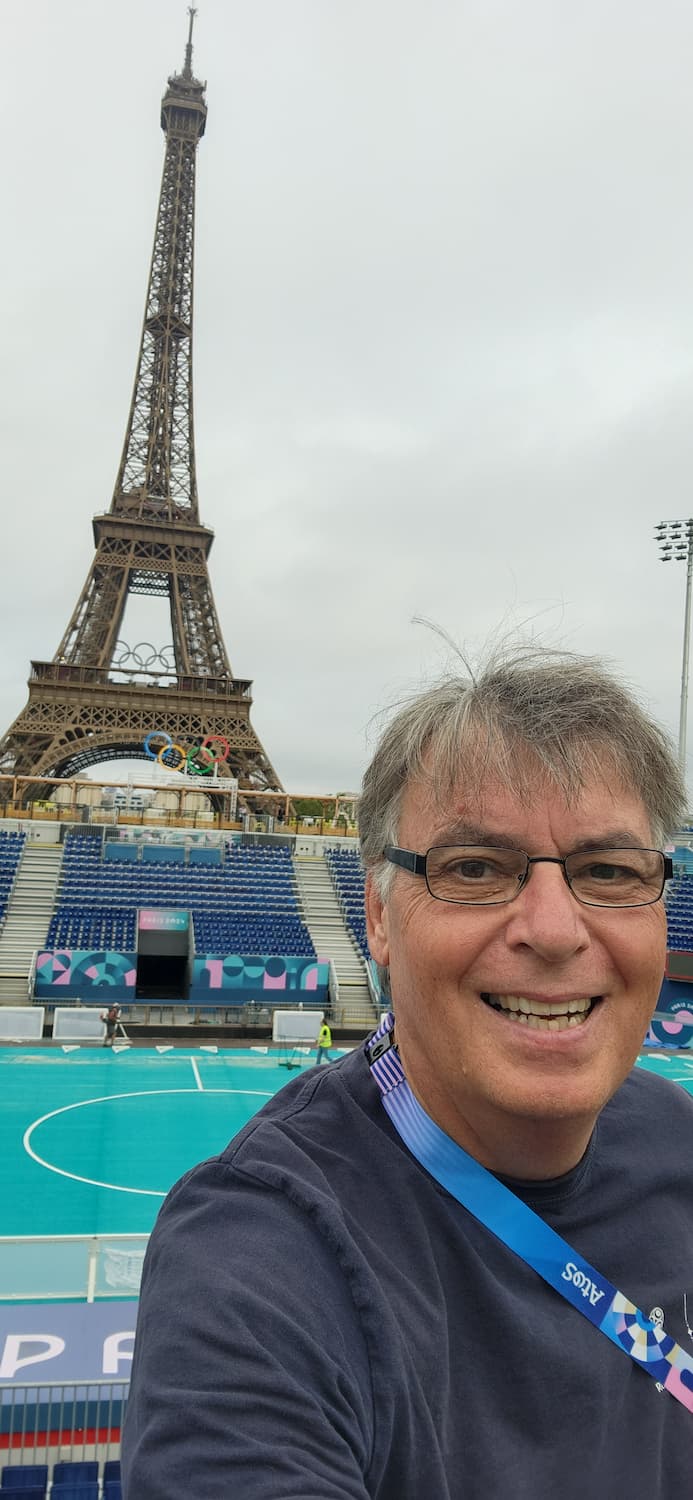 — You mentioned something that happened during the Games?
Yes. There was an explosion — a bomb in the Olympic Park. I was working the night shift in the basement. Suddenly, a message appeared on the screen: “Bomb in the park.” At first, we didn’t understand what we were seeing. The park was only about 500 meters from us. Through Olympic channels, you can only see the Right Holders’ programming.
I started to tune the VHS machine for the NBC channel. NBC was the main broadcaster, so we tried to find their signal to lock onto anything that could tell us what was happening. Everyone was searching for information, trying to understand the scale of the situation. It was a strange moment. You’re inside one of the most advanced broadcast operations in the world, surrounded by technology, and yet in that instant, you feel almost blind.
 You realize how fragile everything is — how quickly a peaceful celebration can turn into chaos. That night stayed with me. It was the first time I understood that at the Olympics, you’re not just dealing with sports and technology. You’re dealing with the world — with real events, real danger, real history unfolding in front of you.
— What did you do?
I understood immediately: France needed a live signal. There was no time to wait for instructions. I ran straight to the European Broadcasting Union and asked for six VHSs. They looked at me, surprised — they didn’t understand why I was rushing or what was happening on our side. But I didn’t stop. I started connecting everything.
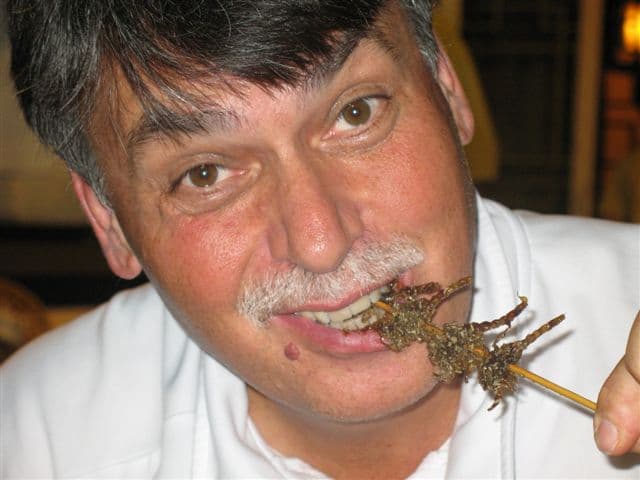 We pulled cables, patched signals, and tuned every VHS to a different American channel into the system. I was literally running through the studio, tearing cables out, crawling under racks, and even ripping my pants in the process. There was no elegance — only speed. We woke up the director and told him: “We have 12 American channels. The bomb exploded. We can transmit live to France.”
— What did that moment make possible?
And that is exactly what we did. In a moment when the world was confused and information was scarce, we managed to give France a live window into what was happening. It was pure instinct, pure engineering, pure urgency. And in that chaos, something became very clear to me: broadcasting is not just about machines, formats, or signal paths. It is a responsibility.
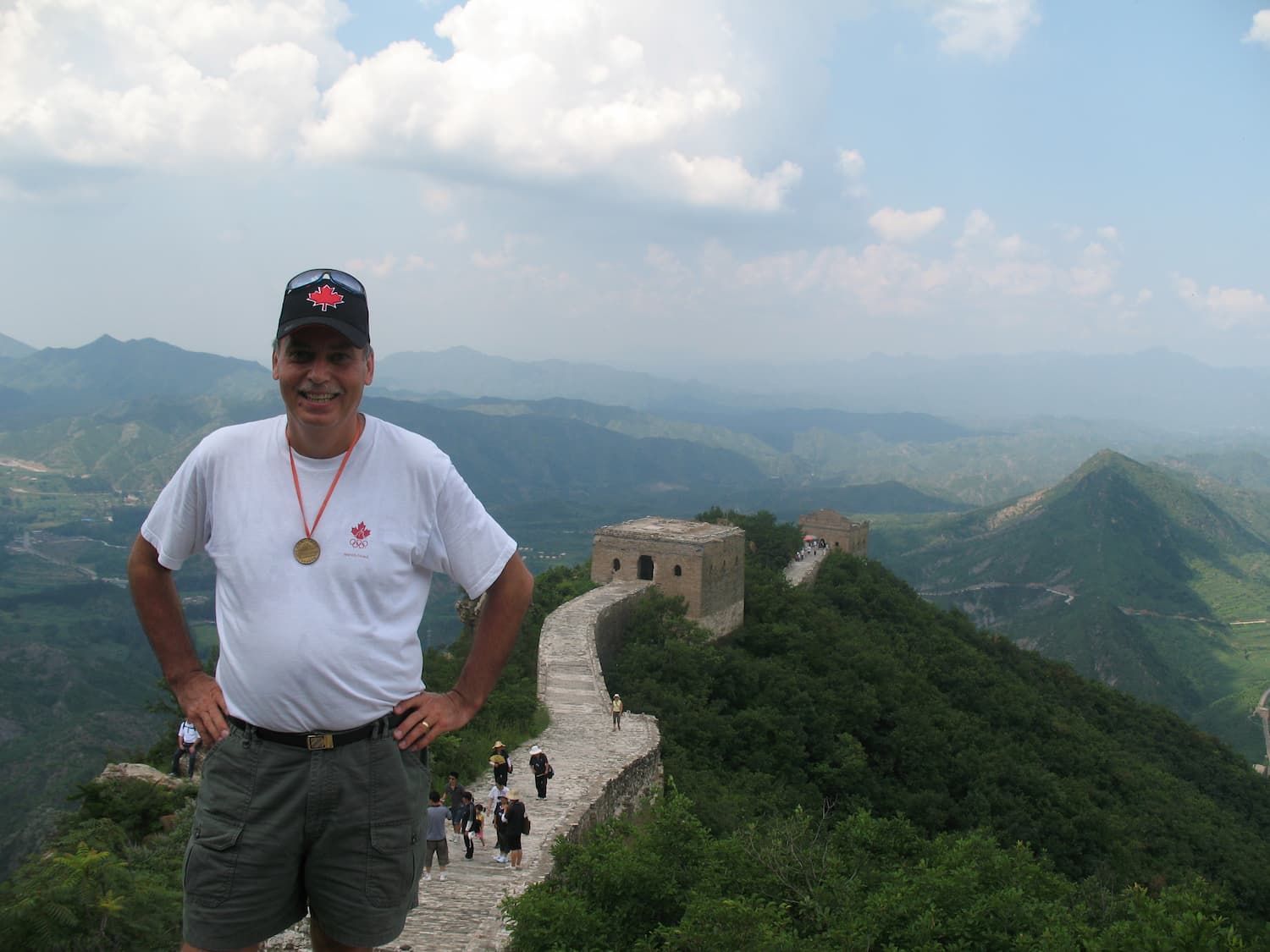 When something happens in the world — good or bad — people depend on us to see it, to understand it, to stay connected. That night, in the middle of torn cables, rushing engineers, and a city in shock, I understood the true meaning of our work. We were not just technicians. We were the link between events and the people who needed to know.
— How did that experience affect the rest of your career?
That realization stayed with me for the rest of my career. It changed how I worked, how I trained others, and how I approached every Olympic Games afterward. Because once you experience a moment like that, you never look at broadcasting the same way again.
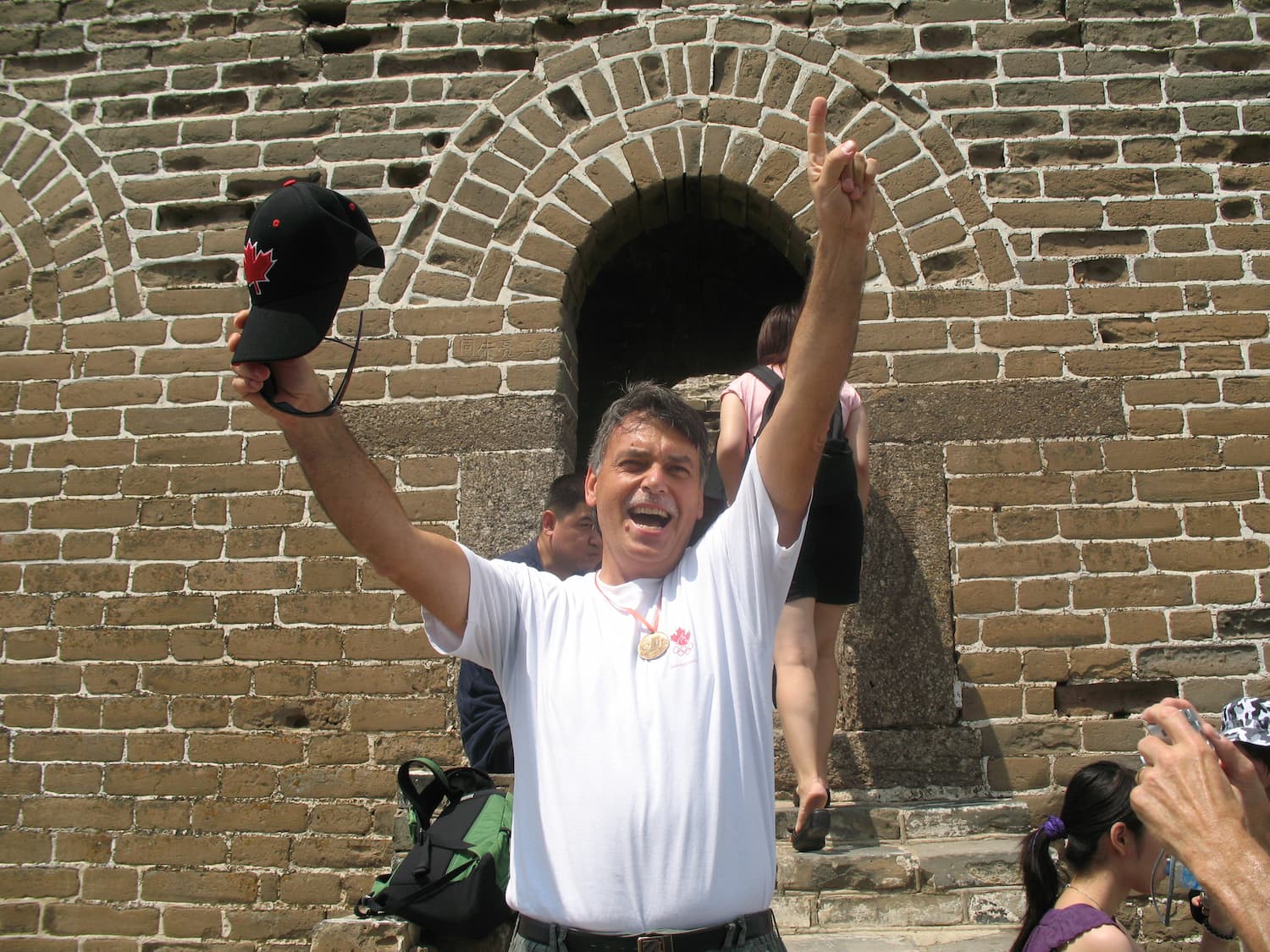 — Did that moment change something for you?
Yes. Later, I received a personal letter from the President of Tele France 1, thanking me for the work and for being part of that operation. It was an extraordinary gesture — something you don’t expect, something that makes you stop for a moment and realize the scale of what you were involved in. But more importantly, something changed inside me.
— How would you describe it?
When I came back home, I understood that I had found my direction. I cut the Olympic “Bug.” Until then, I was moving step by step — learning, improving, taking opportunities as they came. But after Atlanta, it became clear: this was my world. International broadcasting, large‑scale events, the pressure, the responsibility, the teamwork, the feeling that what you do matters beyond the walls of a studio.
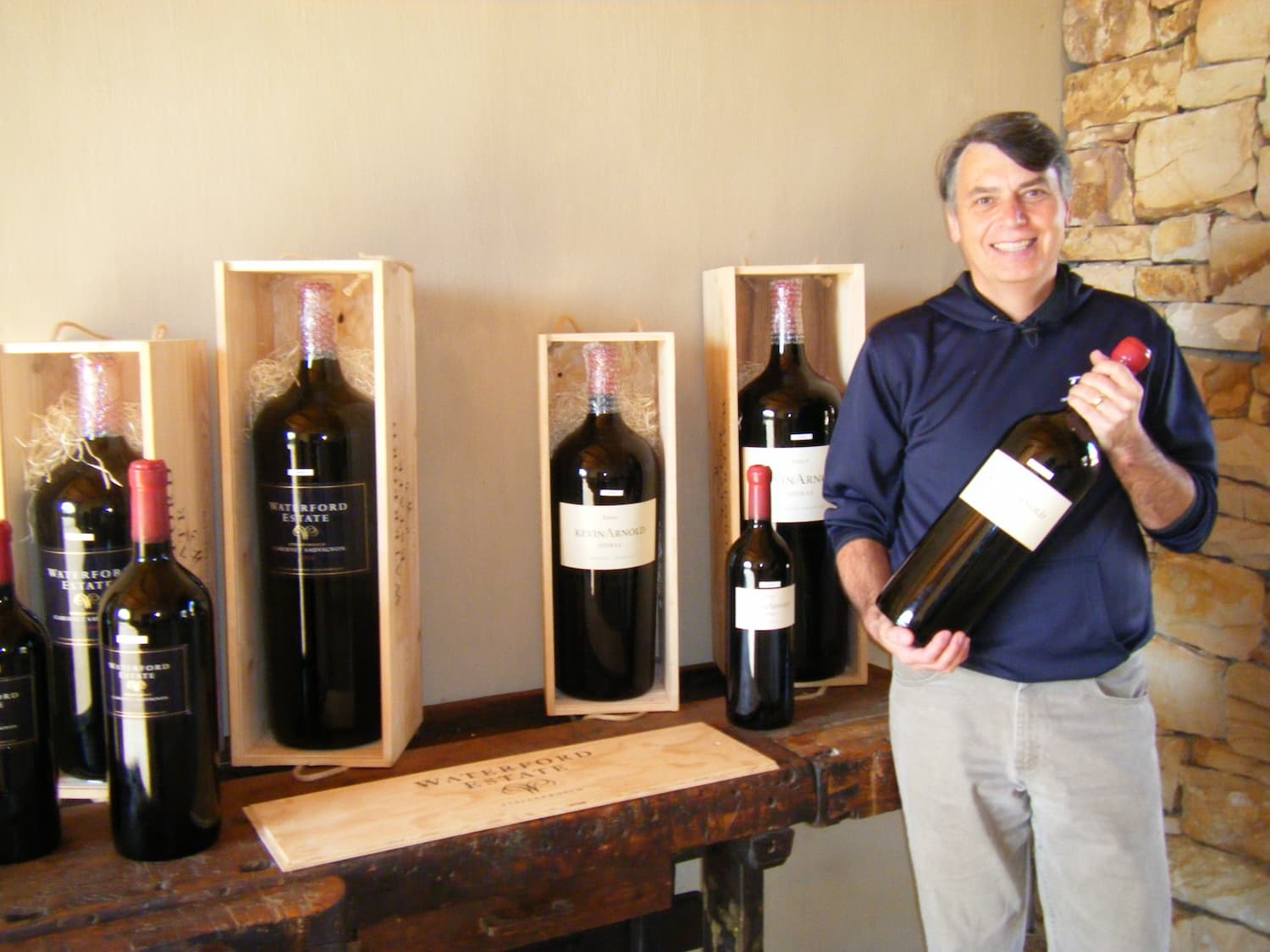 It wasn’t just a job anymore. It was a path with passion. That moment —I knew where I belonged, and I knew what I wanted to pursue for the rest of my career.
The Next Step
— What did you do after that?
After Atlanta, something changed in me. I didn’t want the Olympic experience to be a one‑time event. I wanted to work in that environment regularly — the scale, the pressure, the teamwork, the responsibility. So, I started writing letters to host broadcasters. This was 1996. No email, no LinkedIn, no easy way to reach anyone. You wrote letters, you waited, you followed up, you built contacts one by one.
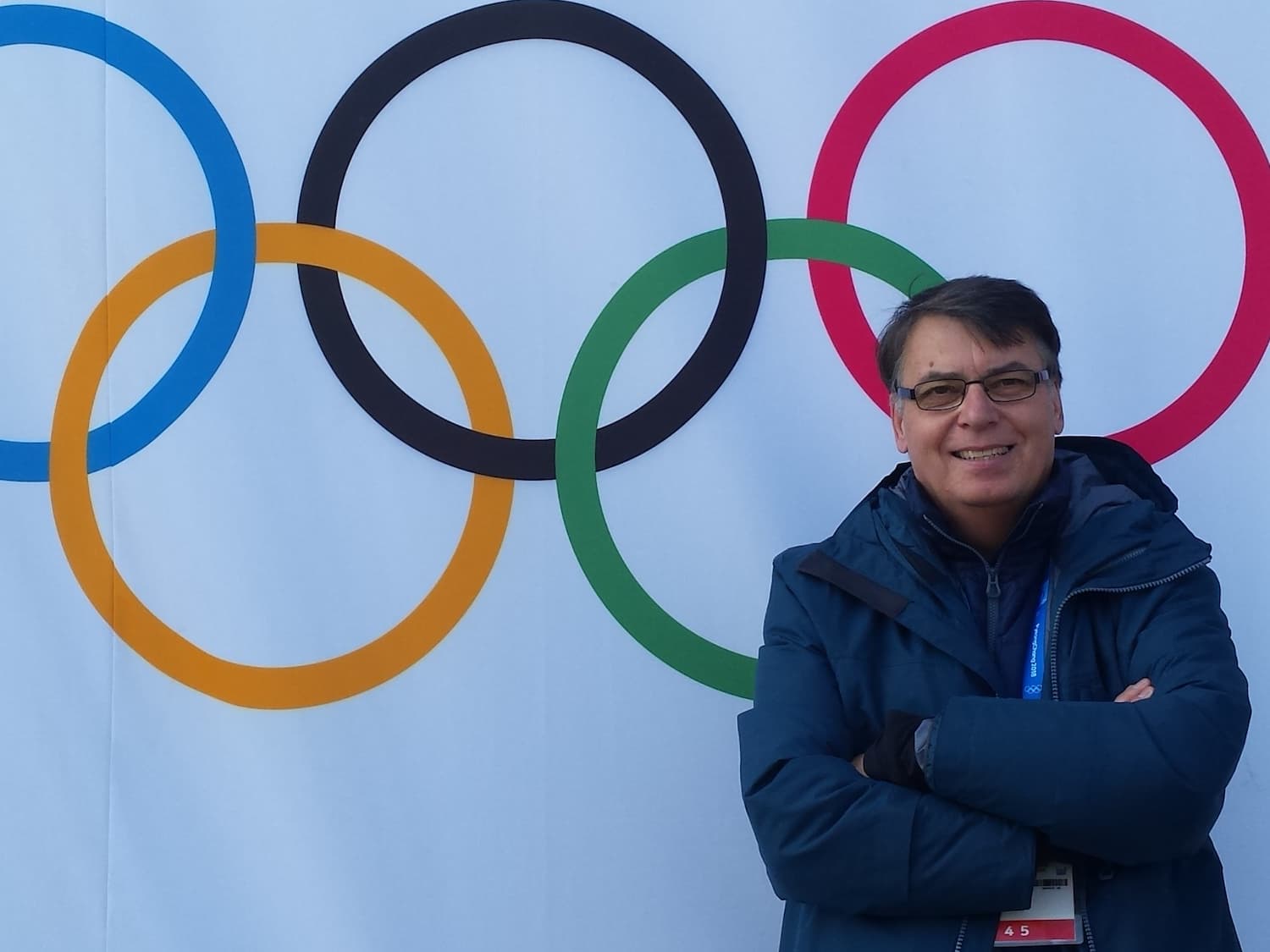
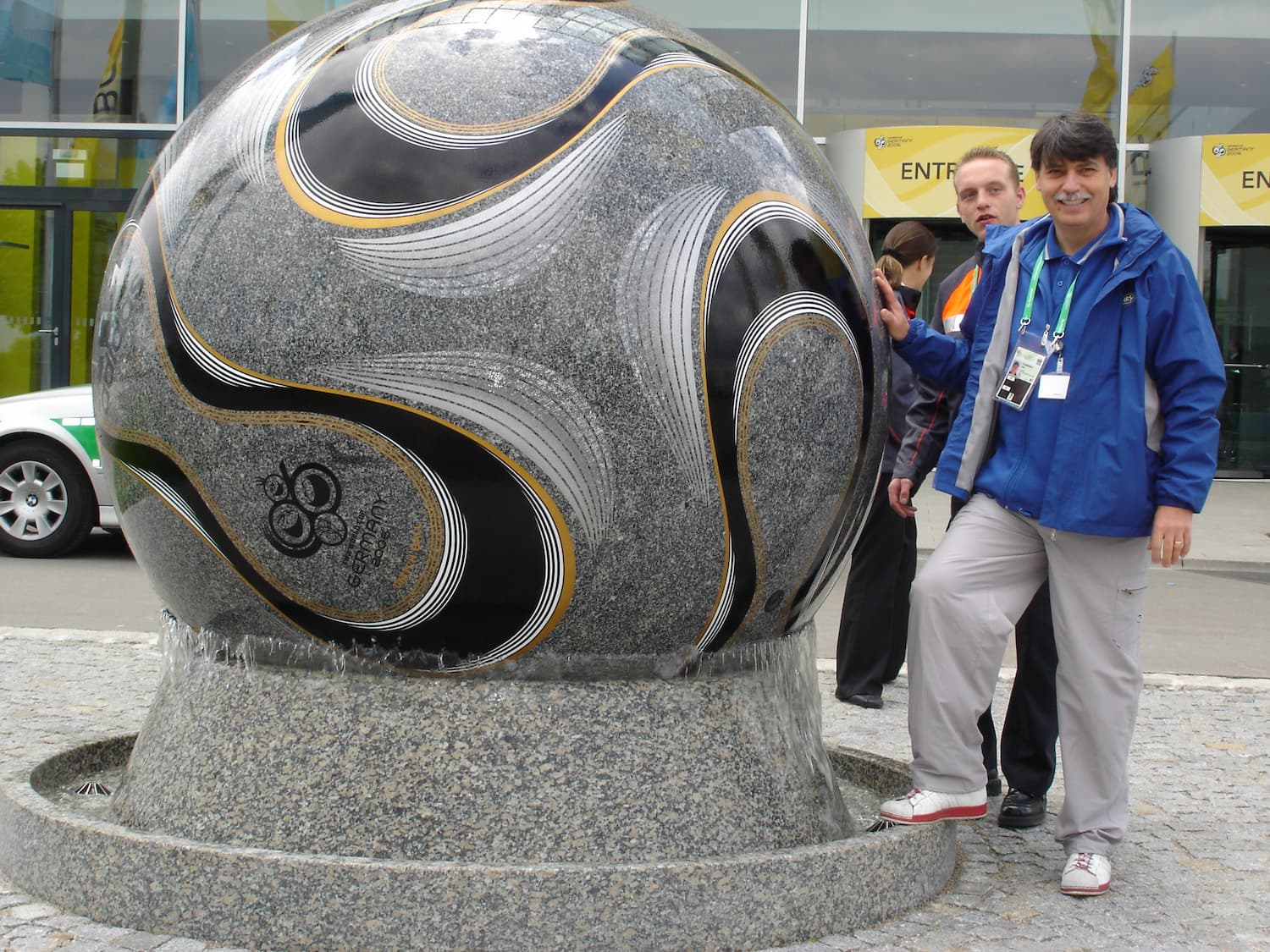 I kept sending letters, building relationships, and staying in touch with the people I had met in Atlanta. And then, in 1998, I received an invitation via phone call from TF1 to work at the Winter Olympics in Nagano. That was the moment I realized that Atlanta wasn’t luck — it was the beginning of a path. Nagano confirmed it. From that point on, the Olympic world became part of my life.
— What happened after Atlanta?
In 1998, I went to Japan for the Winter Olympics in Nagano. The work was very similar to Atlanta — the same responsibilities, the same type of systems, the same pressure to keep everything running flawlessly. Technically, it was even a bit closer to what I knew, because Japan was already working with NTSC. But in terms of relationships, I was still at the beginning.
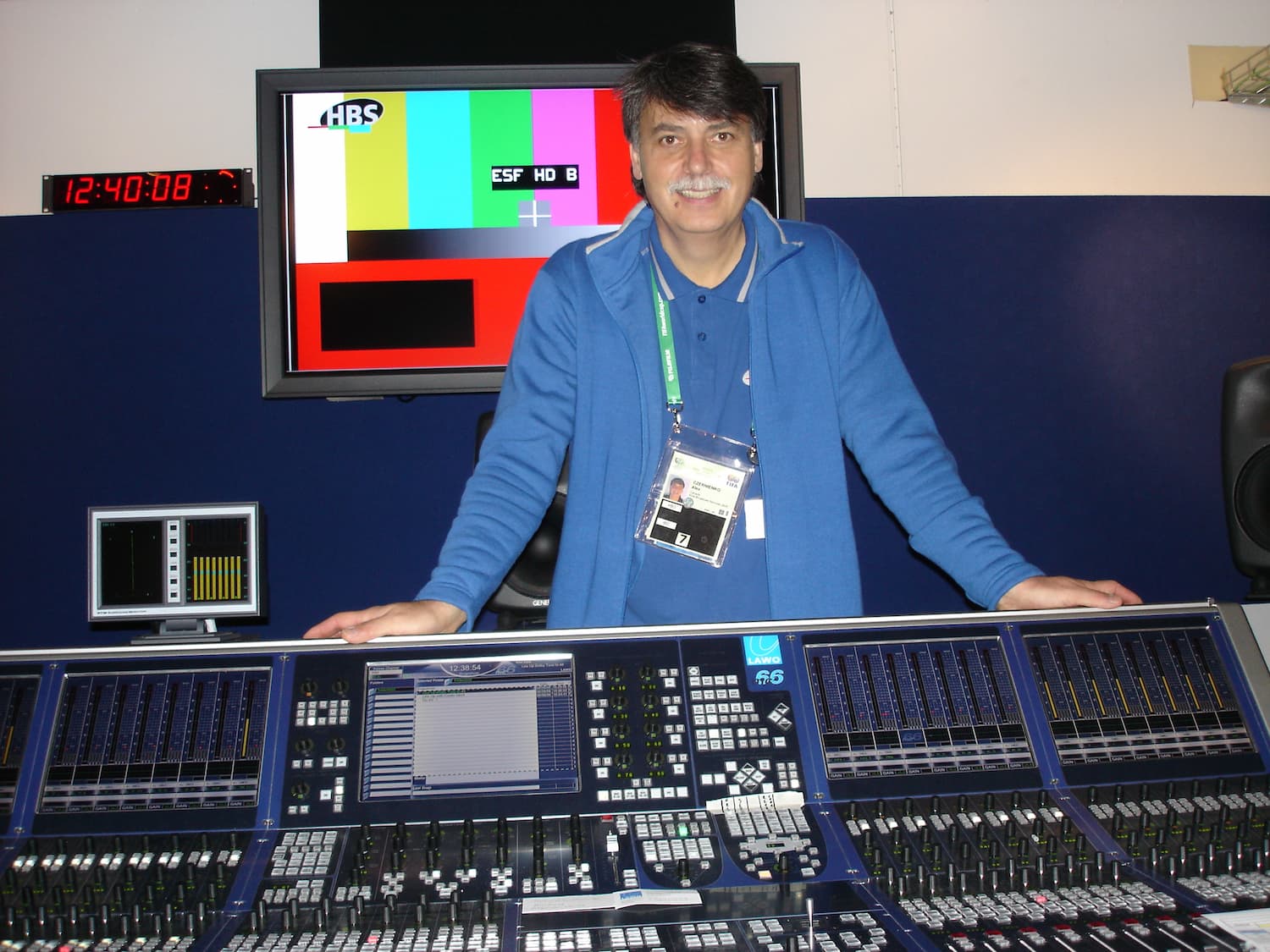 I didn’t have any real connections in Japan yet. I was still building everything step by step, project by project — arriving, doing the work, proving myself, and slowly becoming part of that international broadcast circle that would later define so much of my career. At this time, I was already working for Sony Canada.
— And the next Olympic cycle?
In 2000, I tried to go to Sydney, but I didn’t make it. At that time, I was already working for TSN/DISCOVERY Canada. I applied to work with the Canadian broadcaster, CBC, and for a moment, it looked possible. CBC was hiring because they had a labour dispute, and I had full support from TSN upper management to work for CBC at the Sydney Olympics.
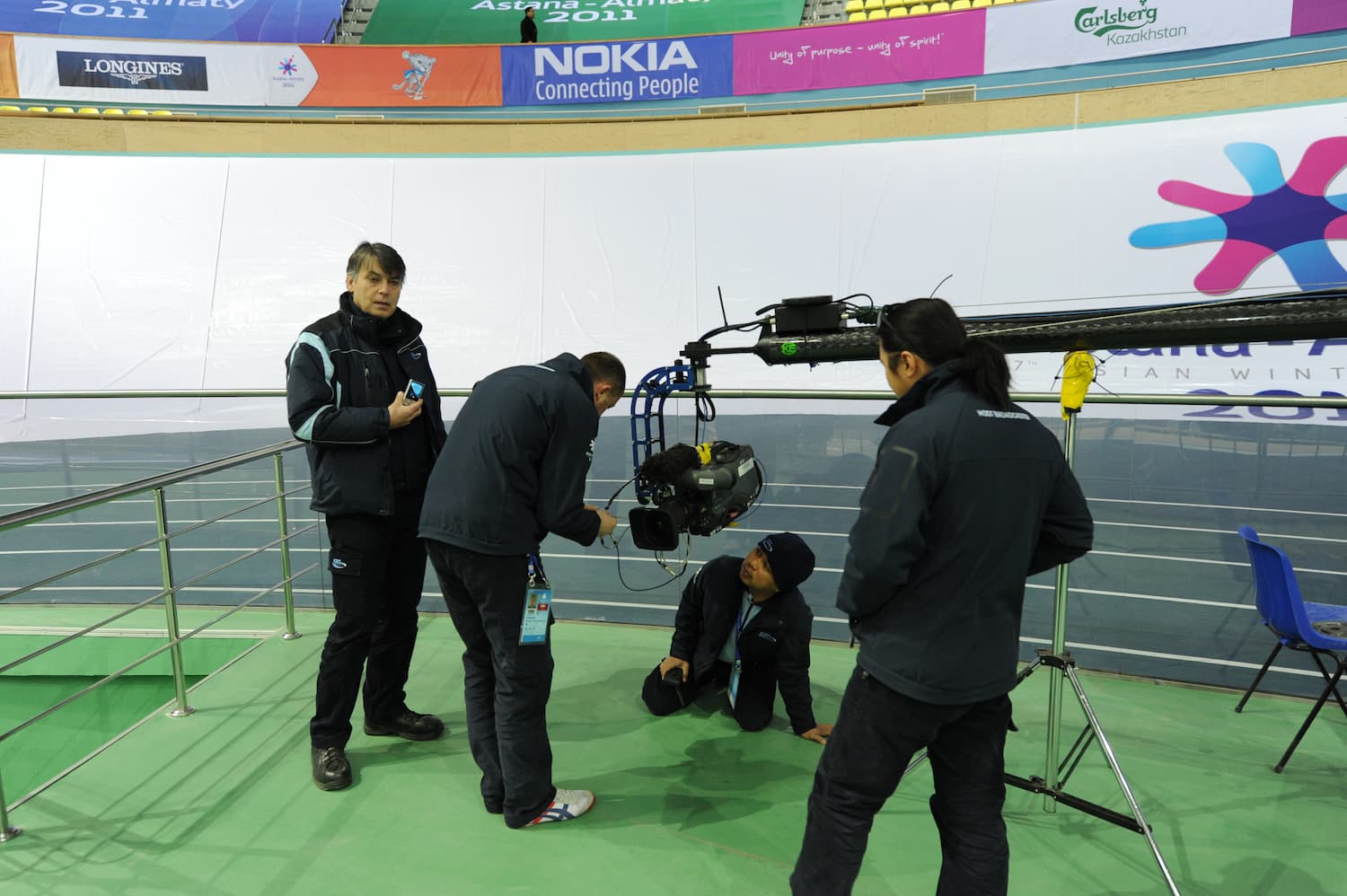 But then one manager at TSN got involved. He contacted CBC and asked why they were hiring a unionized employee for the Games. I told them clearly: I am a freelancer. What I learned later was that this manager himself was working at the Sydney 2000. And that interference ended my opportunity.
— So, you were fired?
No. I wasn’t fired. My contract was terminated at the eleventh hour.
Back Through CBC
— How did you return?
In 2002, I came back through CBC — specifically through the French network, Radio‑Canada. They brought me in for the Salt Lake City Olympics, and that’s how I re‑entered the Olympic environment.
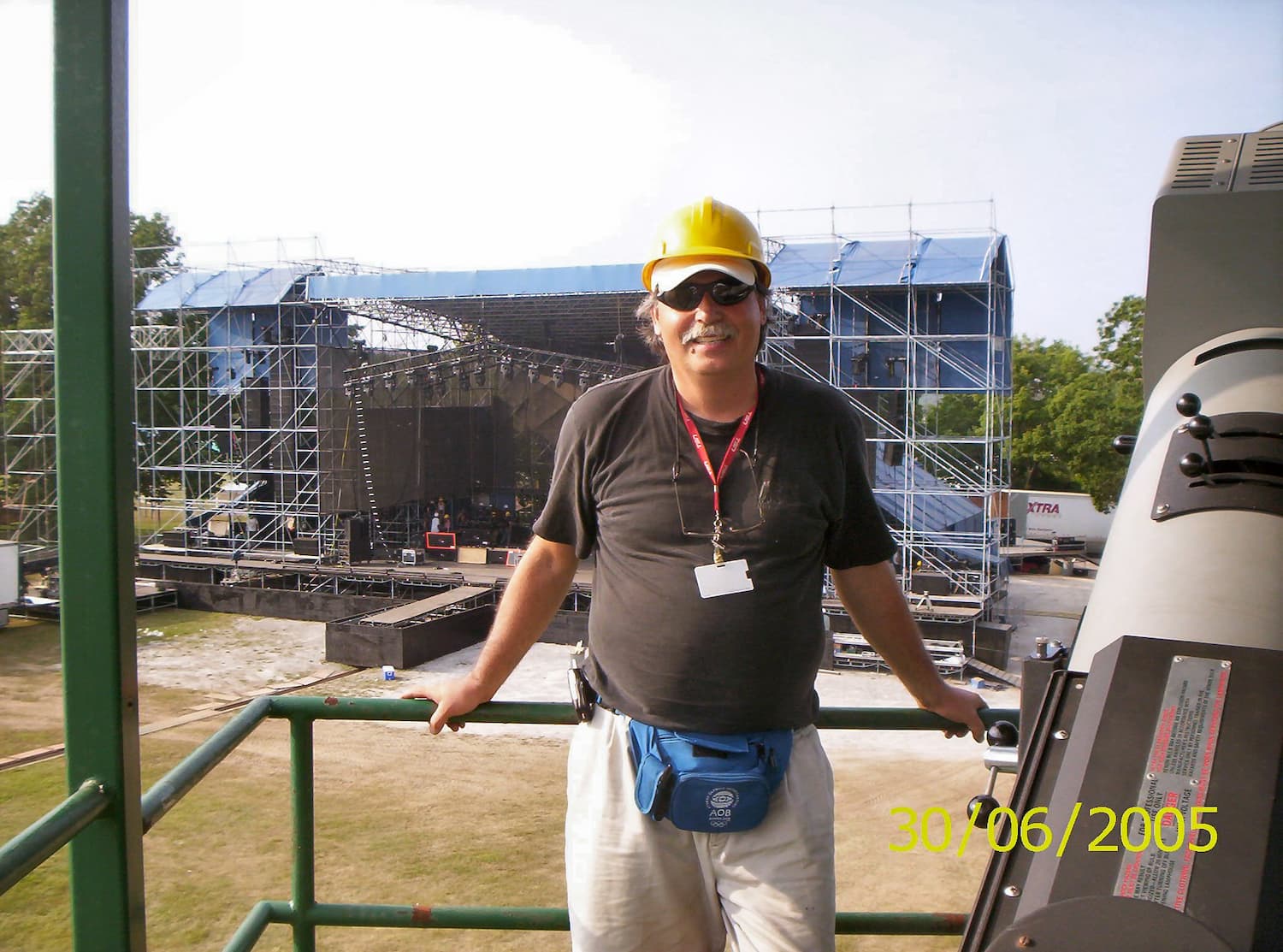 — Did you have a permanent position at that time?
I was still formally connected to a company — TSN/Discovery Canada, which later became part of CTV — but they allowed me to take time for these international projects. So, I moved between roles. When I came back, I always shared what I had learned. By then, I had already seen systems in Atlanta and Japan that were ahead of what many people were using in Canada. That experience helped me bring new ideas, new workflows, and a different level of understanding back into the station.
Early High Definition
— When did you first encounter high definition?
Japan was already using analog high‑definition systems. There were several formats — 1250, 1150, 1125 lines. They were far ahead of most of the world. But my first real encounter with the idea of HD came much earlier.
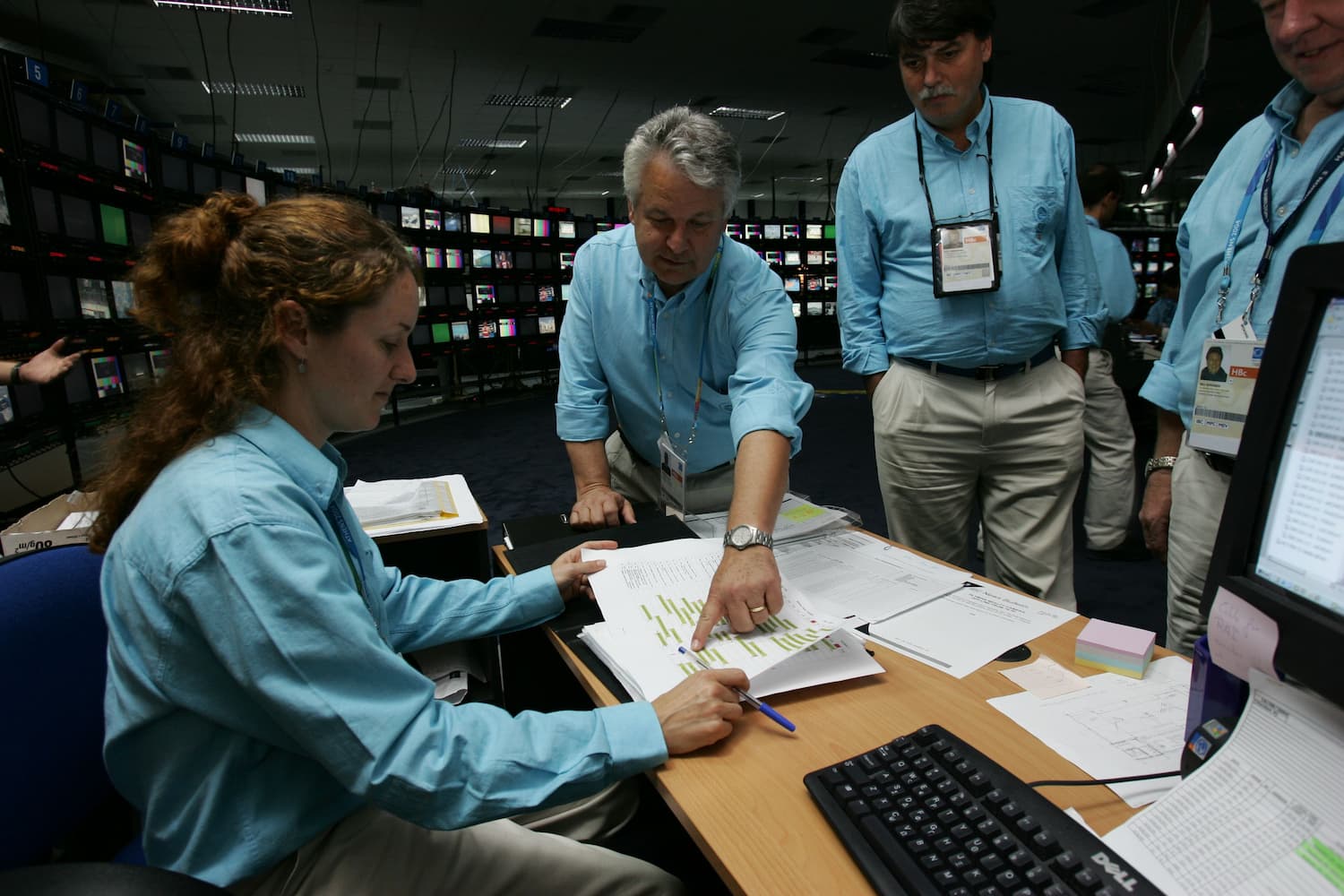 In 1986, when I first came to Sony, they showed us CCD sensors. At that time, we were still working with tube cameras. And during that training, they were already talking about high definition. I didn’t understand it. I remember thinking: Why do we need this? So much detail, so much complexity. I even said, “I will never see this in my lifetime.”
But Sony was already preparing for it. Quietly, steadily, they were building the future. And I didn’t realize then that I was standing at the very beginning of a revolution that would define the next decades of my career.
A Turning Point
— What changed your direction after that?
While I was working at CFCF‑12, the company was sold. It became part of the French cable group Videotron, and everything started to change — the structure, the priorities, the entire approach to engineering. The environment I had known for years was suddenly different. At that moment, I had to decide whether to stay or move on. I realized something important: the place that had once felt like a family was becoming something else.
 So, I made the decision to leave. It wasn’t easy, but it was the right moment to take a step forward. And that decision opened the door to one of the most formative chapters of my career — commissioning new studios, building editing suites, launching a new channel, and eventually catching the attention of Sony Canada.
Building a New Station
— What was your next step?
That’s when a friend from Musique Plus reached out. The company was moving into a brand‑new facility and looking to expand. They needed people who understood Sony systems — people who could build, commission, and guide a modern broadcast environment from the ground up. It was exactly the kind of challenge I had been waiting for.
 — What was your role?
I came in as a senior engineer. There was already a technical director who had done the design. My role was to commission everything, service VTRs, and Cameras. Make it work and correct what didn’t work on paper. I built the database for the parts department. I was the person who took the drawings and turned them into a functioning facility — wiring, signal flow, cables run, equipment integration, testing, troubleshooting, and making sure the entire four‑story operation worked the way it was supposed to.
— What did that involve?
Everything.
I had to review the design, fix errors, update drawings in AutoCAD, and adjust the system in real time. When you move from design to reality, many things change — equipment doesn’t fit the way it does on paper, cable routes shift, rooms get modified, and suddenly you’re redesigning on the fly. We were under heavy time pressure.
 The launch date was fixed, construction was still ongoing, there was dust everywhere, and cables were everywhere. It was chaotic. The philosophy was simple: launch first, organize later. And in that environment, you learn very quickly how to prioritize, how to improvise, and how to keep the entire system moving forward even when the building around you is still being finished.
“It’s Falling Apart”
— How did the project go?
At some point, the CTO came to me and asked: “How is it going? “I didn’t sugar‑coat it. I told him exactly what I was seeing: “I said, It’s like a MIR Station. Everything is falling apart but still flying.”
 That was the turning point. No excuses, no politics, no long meetings — just a clear mandate. From that moment, I took full ownership. I reorganized the workflow, re‑prioritized the installation, corrected the design issues, and rebuilt the system piece by piece. It was intense, but it was also liberating. When someone gives you that level of trust, you rise to it.
— How did that chaotic build-out end?
At the beginning, everything was literally hanging — cables everywhere, temporary fixes, constant pressure. That was our daily reality. Nothing was elegant, but everything had to function. At some point, I wrote a sign for the technical room: “Station Mir.”
It was a joke, but it was also the truth — a space station held together by improvisation, tape, and determination. And the name stuck. Everyone in the company started using it. Our Technical room became “Station Mir.”
 The CTO even gave me a nickname: “Sputnik.” He would walk in, look around at the chaos, and say, “Sputnik, how are things?” It was his way of acknowledging that I was the one keeping this orbiting mess from falling out of the sky. But gradually, piece by piece, we stabilized everything. The temporary fixes became permanent solutions. The hanging cables were routed properly. The systems aligned, the workflows settled, and the station finally took shape.
Building MU-SI-MAX
— What happened after launch?
There was no pause. As soon as the first station went live, they started building another one on the second floor — MU-SI-MAX. The momentum never stopped. One project ended, and the next one was already waiting upstairs. I stayed involved and helped build that system as well.
 By then, I understood the architecture, the workflow, the weak points, and the shortcuts we had taken during the first build. So MU-SI-MAX became an opportunity to do things better — cleaner wiring, more organized signal flow, fewer “hanging but working” solutions.
At the same time, I had arranged with the company that I could continue to be connected to Sony Canada and take courses on the new equipment.
From Mistakes to Ideas
— When did you start thinking about automation?
That came directly from mistakes and pressure in real work.
 When I worked with Télé‑France in Atlanta, we used VTR systems where timing was critical. You had to switch tapes and start recording manually at the exact second. If someone distracted you — an editor asking a question, a producer shouting instructions — you could miss the moment. And missing that moment meant losing an important part of a sporting event. It wasn’t theoretical.
We were relying on reflexes in situations where precision mattered more than anything. At some point, I realized that the system itself should be responsible for timing, not the operator. There had to be a way to automate it — to build logic, triggers, and controls that removed the risk of human error.
 And that thinking eventually shaped the way I approached engineering — not just fixing problems but designing systems that prevented them.
— How did you move from idea to practice?
I understood that if I wanted to automate anything, I needed programming knowledge. So, I enrolled in Champlain College in Montreal, in a computer science program with evening classes. We studied C++, and many people warned me it would be too difficult. One friend — a mechanical engineer — even told me: “After eighteen years of age, your brain does not adapt to this kind of thinking.”
 I wanted to understand enough to build small systems — tools that could solve real engineering problems. I wanted to know how to control devices, how to trigger actions, and how to make machines do the timing instead of relying on human reflexes. I wanted to take the ideas that came from real‑world pressure — missed cues, tight timing, repetitive tasks — and turn them into something reliable.
Musimax and Sony
— How did your work evolve at that stage?
In 1997, everything shifted. Sony offered me a position as a Technical Instructor in the Broadcast Division. It was a major step — not just a new job, but a recognition of everything I had built up to that point: the hands‑on engineering, the crisis management, the system builds, the problem‑solving under pressure. I didn’t continue my computer science courses.
 — When did Sony start to notice your work?
In early 1997, while I was working at MusiquePlus/MU‑SI‑MAX, I went to Toronto to take more Sony courses. During that trip, the Sony director asked me to come to his office. I didn’t know why — I thought maybe it was just a routine conversation. Instead, he told me something unexpected.
Sony had been receiving strong feedback from Montreal — from clients, from engineers, from people who had worked with me on installations and troubleshooting. They were impressed by the way I combined mechanical skills with electronics, cameras, and system integration. They noticed that I didn’t just fix equipment — I understood how everything fit together.
 Then he said something that stayed with me: “You have a way of seeing the whole system, not just the parts. “And right there, he offered me a new role — Technical Instructor for Broadcast Systems.
A Difficult Decision
— Did you accept the offer?
There was one condition — I had to move to another province. So, I went home and thought about it seriously. It wasn’t a simple career decision. At that time, Quebec was going through a tense period. It was around the second Quebec referendum, and the question of separation was very real. Businesses were nervous, people were divided, and nobody knew what the future would look like.
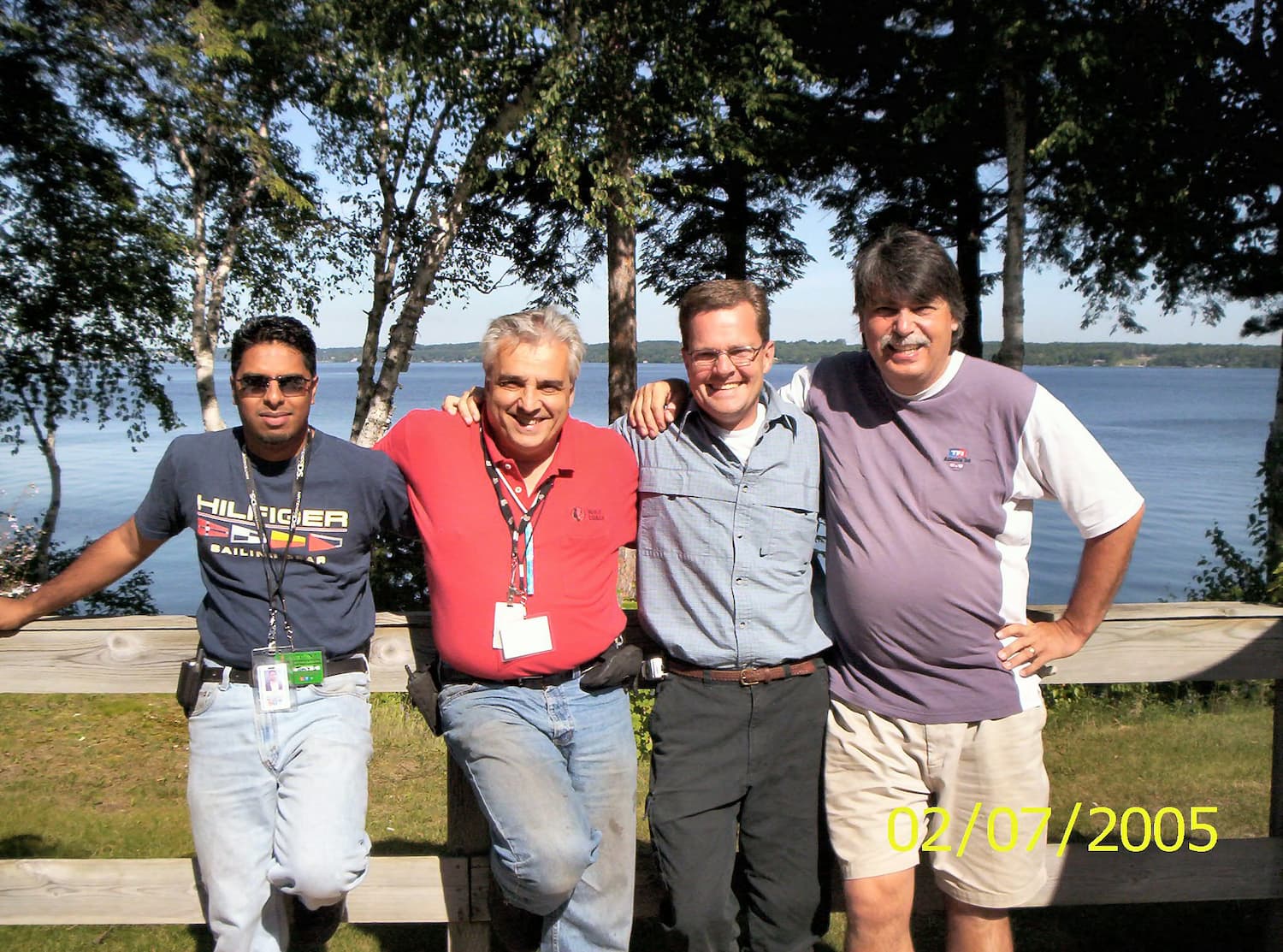 So, the decision wasn’t only about the job. It was about where to build the next stage of my life. Do I stay in Quebec, where everything felt uncertain? Or do I take the opportunity, move to Ontario, and start a completely new chapter? Did my family want to move? It was a crossroads — professional and personal at the same time.
— How did you decide to relocate?
It wasn’t an easy decision. My wife and I talked a lot. We both understood that moving to another province meant starting over — new city, new routines, new uncertainties. It wasn’t just a job change; it was a life change. It meant that our kids would loose theirs friends, routine….
I told her honestly, “If I fail, it won’t be because I didn’t try. It will mean I wasn’t good enough as a teacher.”
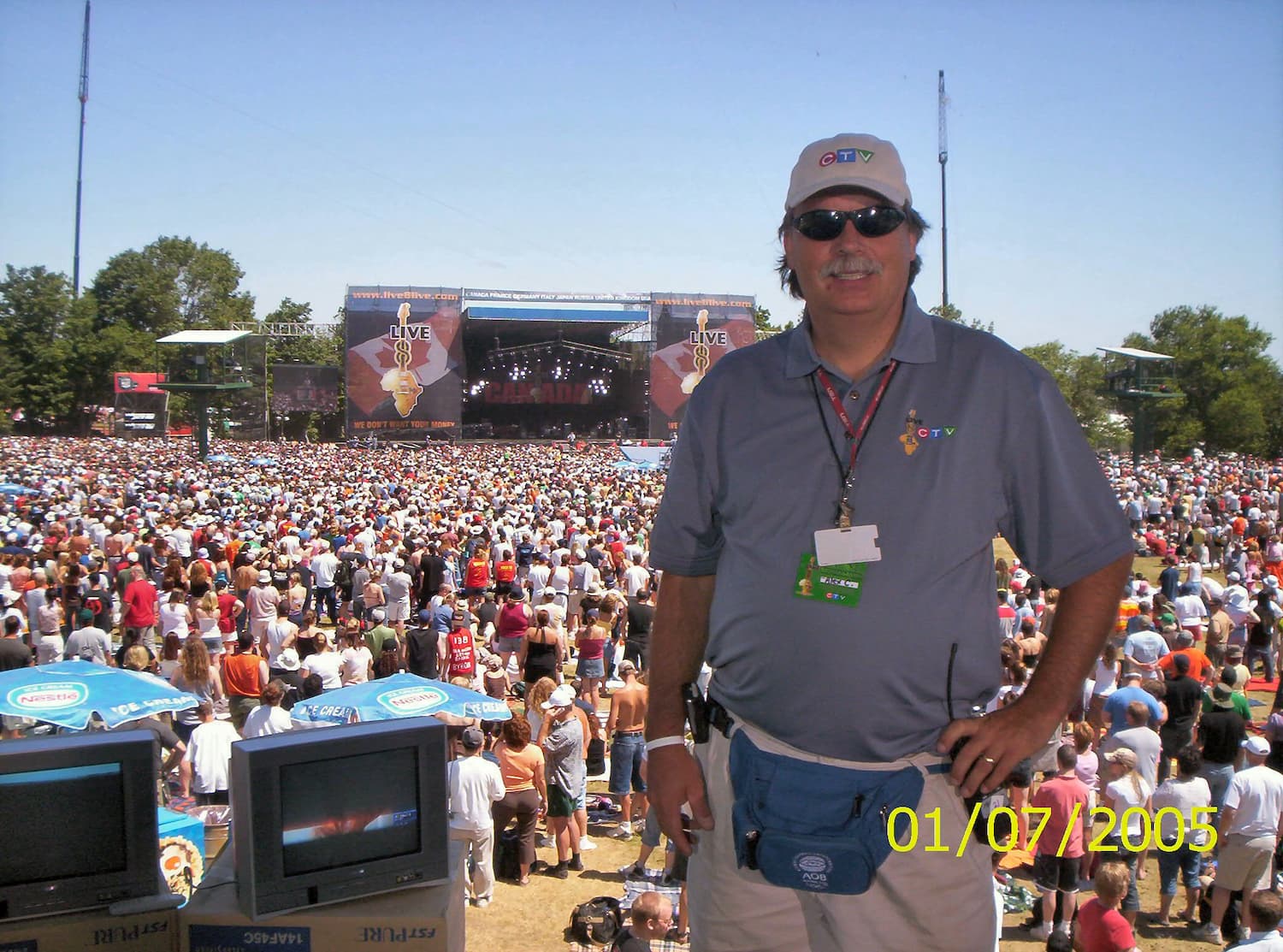 Loss Before the Move
— Did everything go as planned?
No. Life had its own timing. At the end of 1997, just before we were ready to move, my father died. He was shoveling snow when he had a heart attack. He fell and died near my children. Everything happened so quickly that there was no time to process anything. I had to bury him — and immediately continue with the move.
I moved first. I had a few people I knew, but they didn’t have much space. For the first few months, I slept on the floor. I had to find a place for myself, settle in, and keep going. There was no pause, no moment to breathe.
 Then came Nagano — the 1998 Winter Olympic Games. I left for Japan, worked through the event, and when I returned to Sony, the very next day, they sent me to San Diego for more courses. There was no time to stop. No time to grieve. No time to adjust. It was one of the hardest periods of my life. I had to prepare courses and find a place for my family. Traveling to the Sony manufacturing site, Atsugi.
Selling and Starting Again
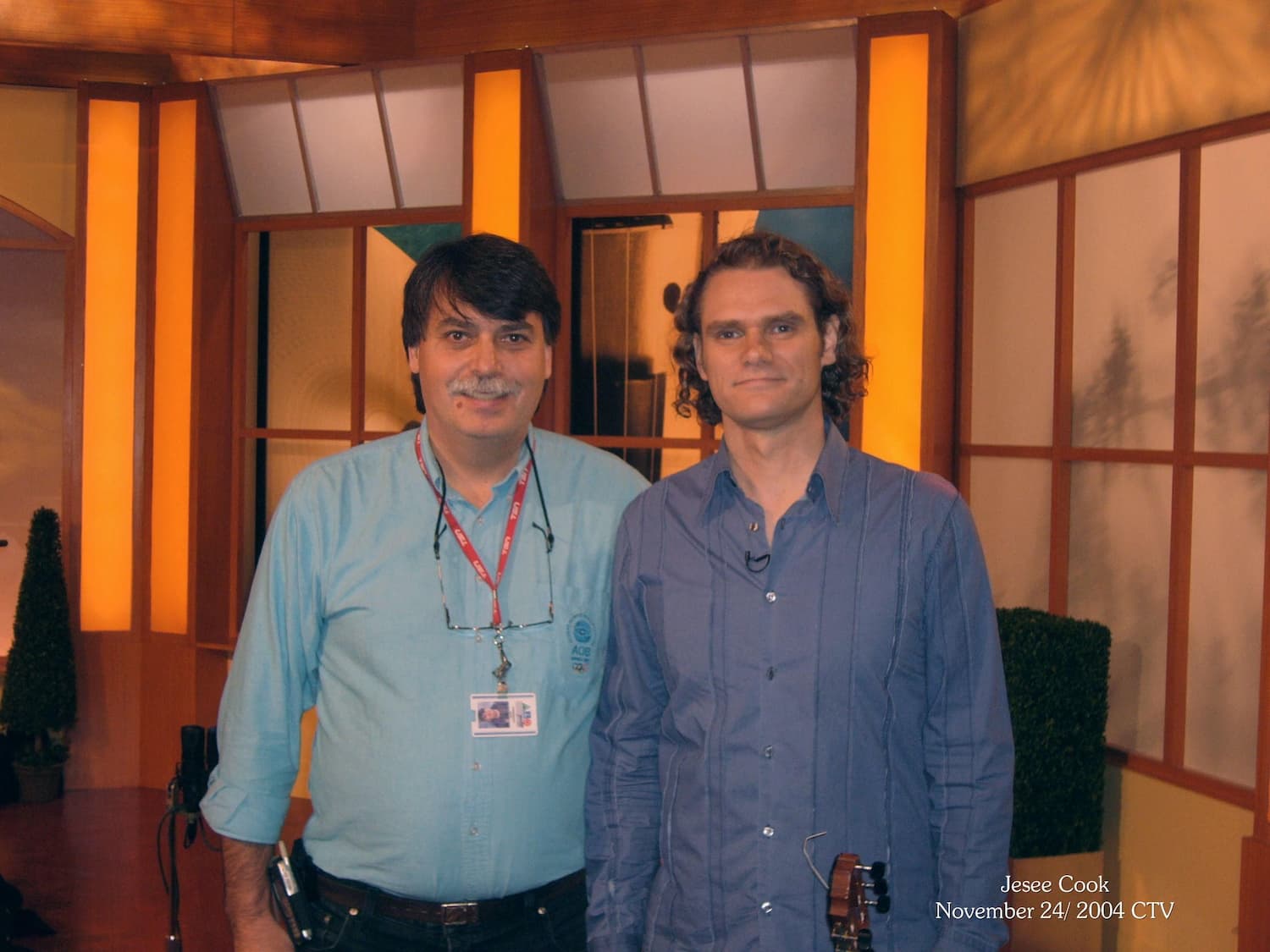 We had bought the house for $109,000 and invested another $37,000 into renovations and improvements — the basement, the pool, and upgrades throughout the house. Over 85% of the work I did myself. In the end, we sold it for $99,000. It was a significant loss, and it hurt. But we didn’t have the luxury of waiting. The move had already begun.
 So, in the meantime, we had to live in a rented apartment in a difficult neighborhood. It wasn’t ideal — far from it — but we had no choice. We were in transition, between two provinces, two homes, and two chapters of life. Everything felt temporary, unstable, and expensive.
 But we kept going. One step at a time.
Between Work and Family
— What was your situation at that moment?
It was an extremely intense period. I had just started working with Sony, learning a completely new role, new expectations, and new systems. At the same time, I still had commitments with Télé-France. We had agreed that I would continue working at the Olympic Games.
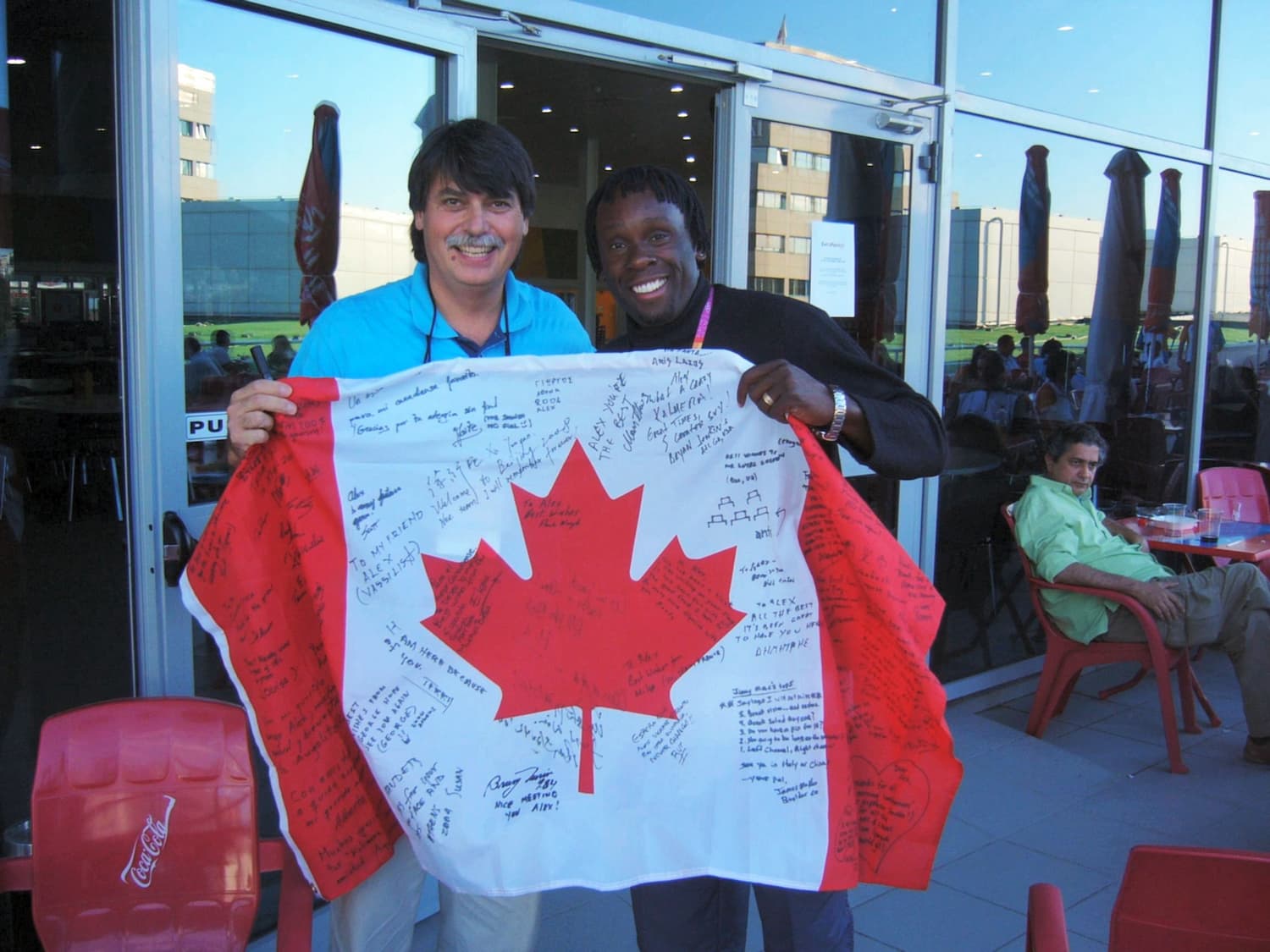 And on top of that, I had to organize everything for my family. Finding a place to live. Preparing the move. Managing finances after taking a loss on the house. Trying to settle in a new province while still living out of a suitcase.
— Did the problems with the new house become another battle?
During construction of the house, I noticed many deficiencies. I hired a house inspector. I also took house inspection courses, so I could argue not only with the builder, but also with the Town of Whitby house inspectors who protected the builder’s interests. The house had 93 building code deficiencies. The builder tried to sue me so I would go away. Many neighbours had similar issues.
 I organized a neighborhood committee. But over time, all the neighbours stopped fighting. For me, it took four and a half years. In the end, the builder agreed to fix all the deficiencies. In the Town of Whitby, the head of home inspection resigned, and the next two assistants quit. Eventually, the builder sold the remaining lots to another, very respected local builder.
— How were you handling all of this pressure personally?
It felt like everything was happening at once — new job, relocation, financial pressure, family responsibilities, and Olympic commitments. There was no room for mistakes, no time to slow down. Every day was a combination of learning, traveling, planning, and trying to keep everything from falling apart.
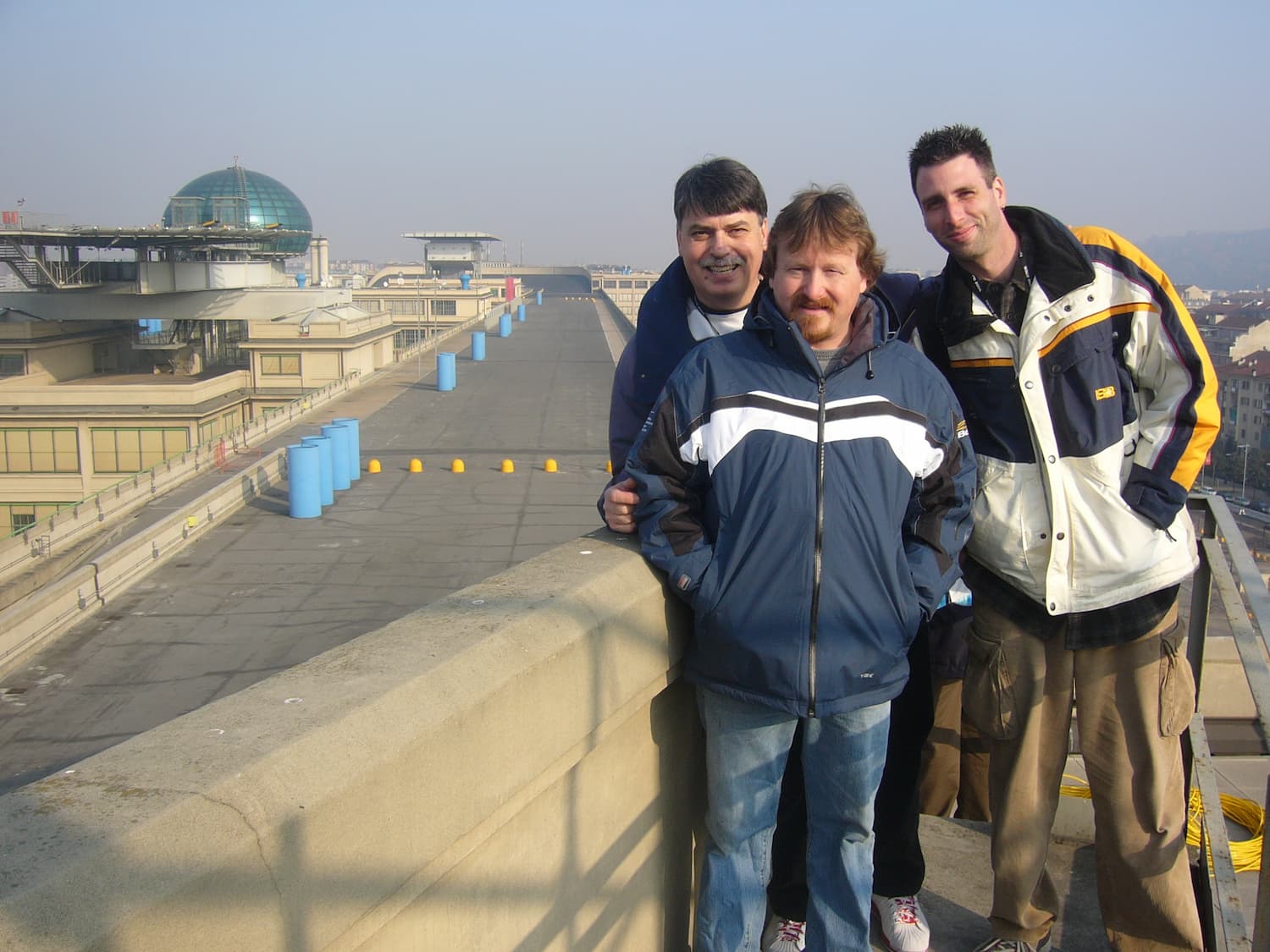 — And then even more problems arrived?
And GOD didn’t stop testing me. I received a letter from my father’s bank. It said my father had 37 credit cards, and every single one of them was maxed out. That made no sense — my father was not that kind of man. Someone very close to us had been using his signature fraudulently, and because he was already gone, we had no way to prove otherwise. Sony Canada was hit with massive layoffs — 450 people lost their jobs, and I was one of them.
My car engine seized. Completely dead. Another expense, another problem, another reminder that life wasn’t giving me a break.
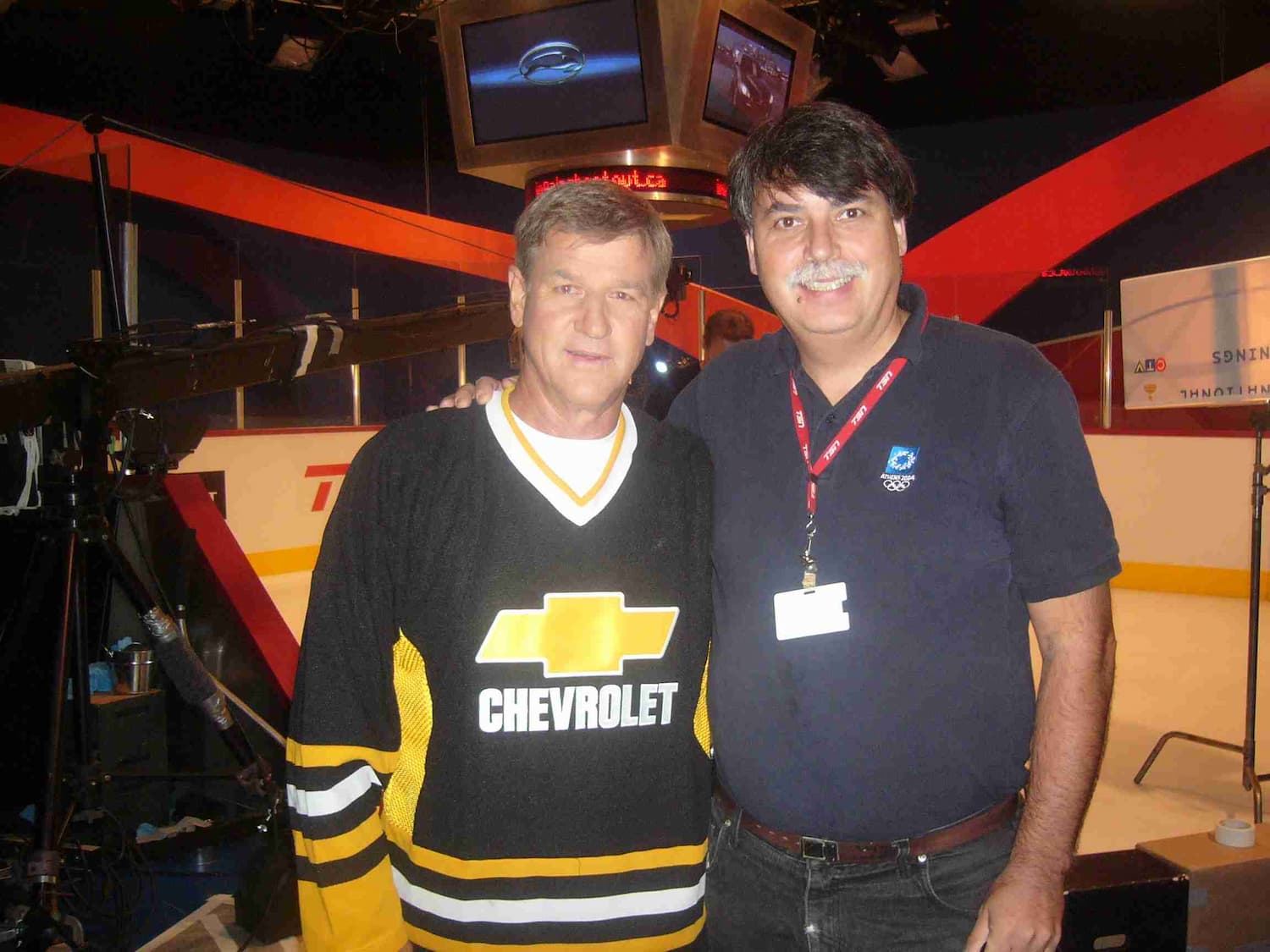 — What happens to a person during a period like that?
It was one of those periods in life where you don’t think — you just keep moving forward.
SX Format and Training
— What were you working on at Sony?
They introduced me to a completely new system built on FlexiCard technology. At that time, almost no documentation existed. It was a brand-new platform, still evolving, and even inside Sony very few people understood it fully. For me, it was both exciting and intimidating — a chance to learn something at the cutting edge, but with almost no roadmap.
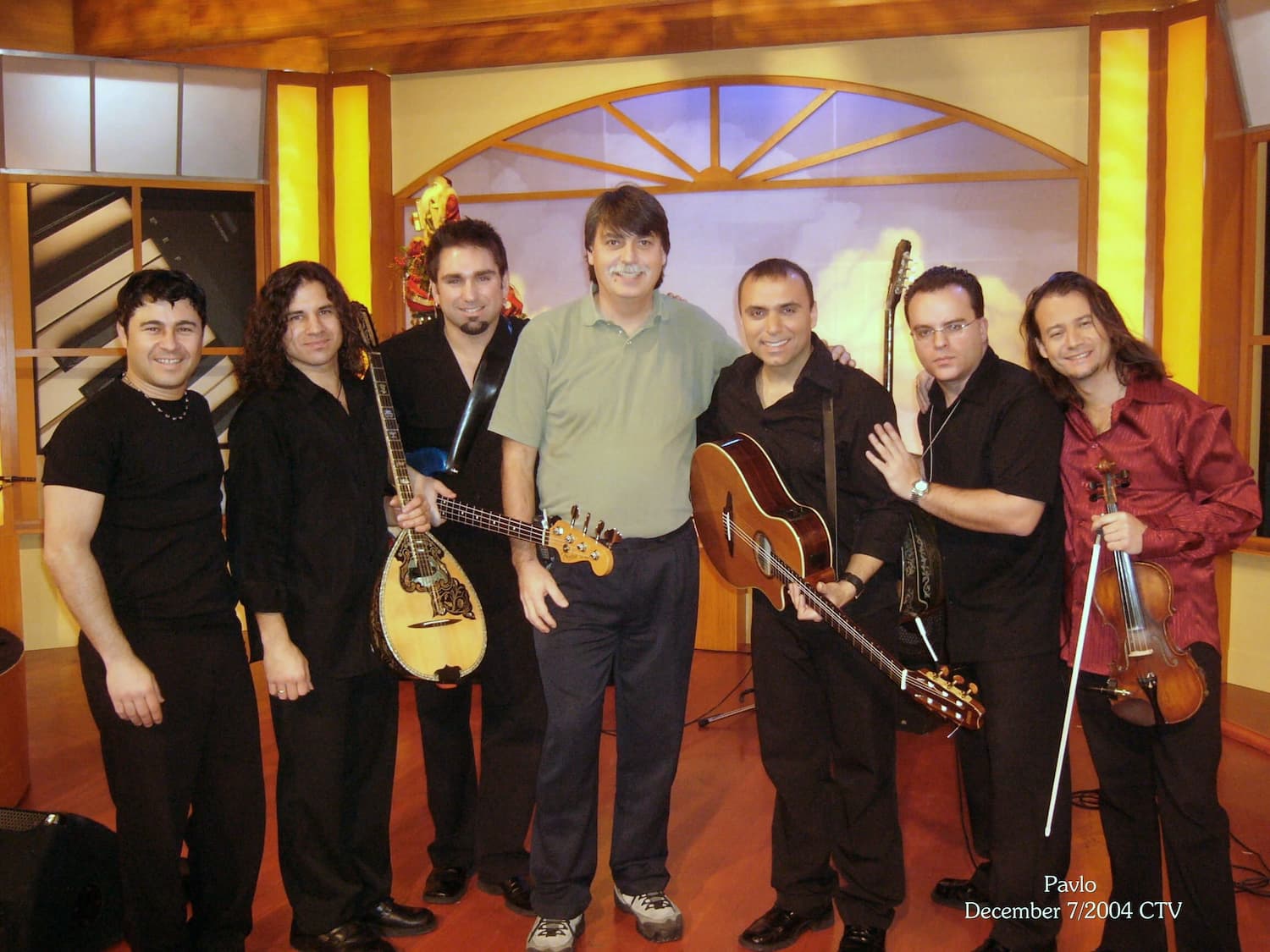 — What was the training environment like in San Diego?
Sony sent me to San Diego for training. The instructor there was a former military officer — very strict, very structured, very direct. At first, he didn’t react well to me. Maybe it was my accent, maybe my background, maybe the fact that I asked too many questions. He kept his distance and treated me like someone who wouldn’t keep up.
— When did the relationship with the instructor begin to change?
But after a few days, something changed. He started to understand my way of thinking — the mix of mechanical logic, electronics, and practical problem-solving. He saw that I wasn’t just memorizing information; I was trying to understand how the system behaved, how the signals moved, and how the architecture worked. He also appreciated my sense of humor, which helped break the ice.
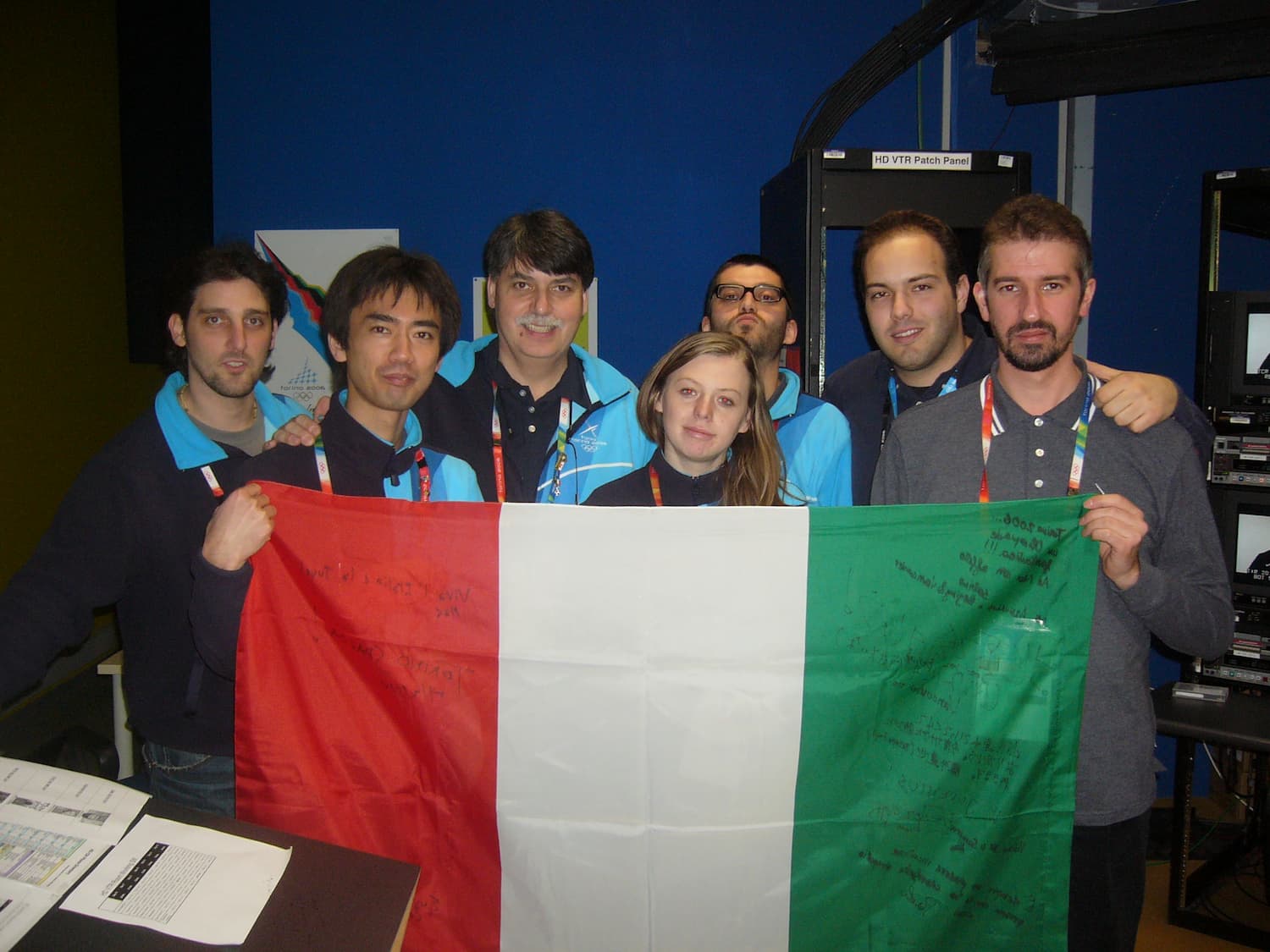 — What did he begin sharing with you after that?
Once that barrier fell, he opened up. He started sharing much deeper technical knowledge — the kind of insights that weren’t in any manual. Internal logic, hidden functions, undocumented behaviors, the “why” behind the design. It was the kind of training you only get when someone respects your curiosity and sees your potential.
— Why did that trip become so important for you?
That trip to San Diego became a turning point. It gave me the foundation I needed to step into my role at Sony with confidence — not just as someone learning a new system, but as someone who could eventually teach it and put his own mark on it.
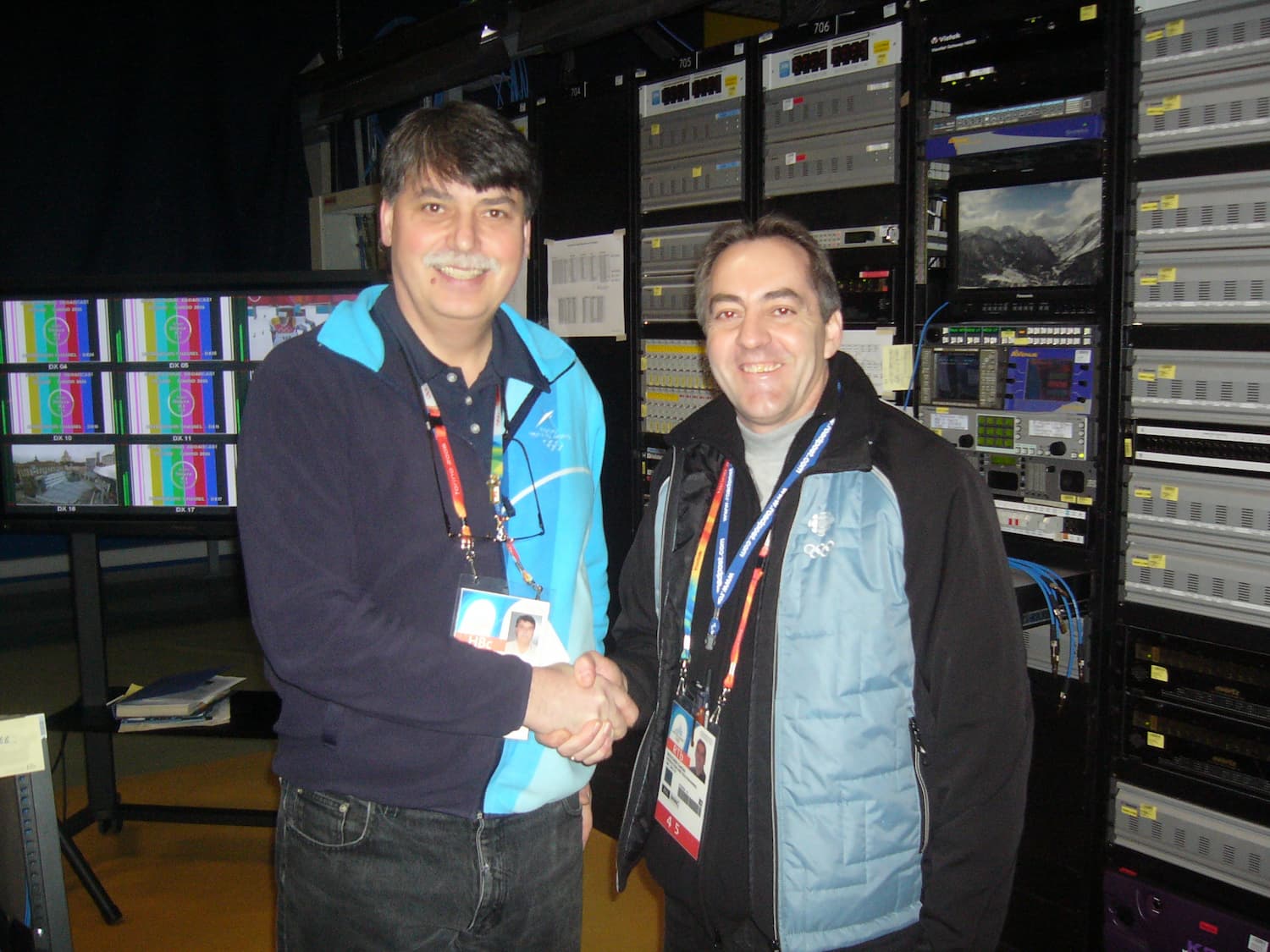 Learning Under Pressure
— How did you prepare for that system?
I had to learn everything from scratch. The FlexiCard system, which was given to me, was a very old, unstable, and unpredictable unit. The serial number was #1. Power supplies failed, components behaved inconsistently, and nothing worked the same way twice.
It was supposed to be Sony’s next-generation platform, but at that stage, it felt more like a prototype than a product. Sony taught courses just on the operations. I was asked to put in a new Engineering course.
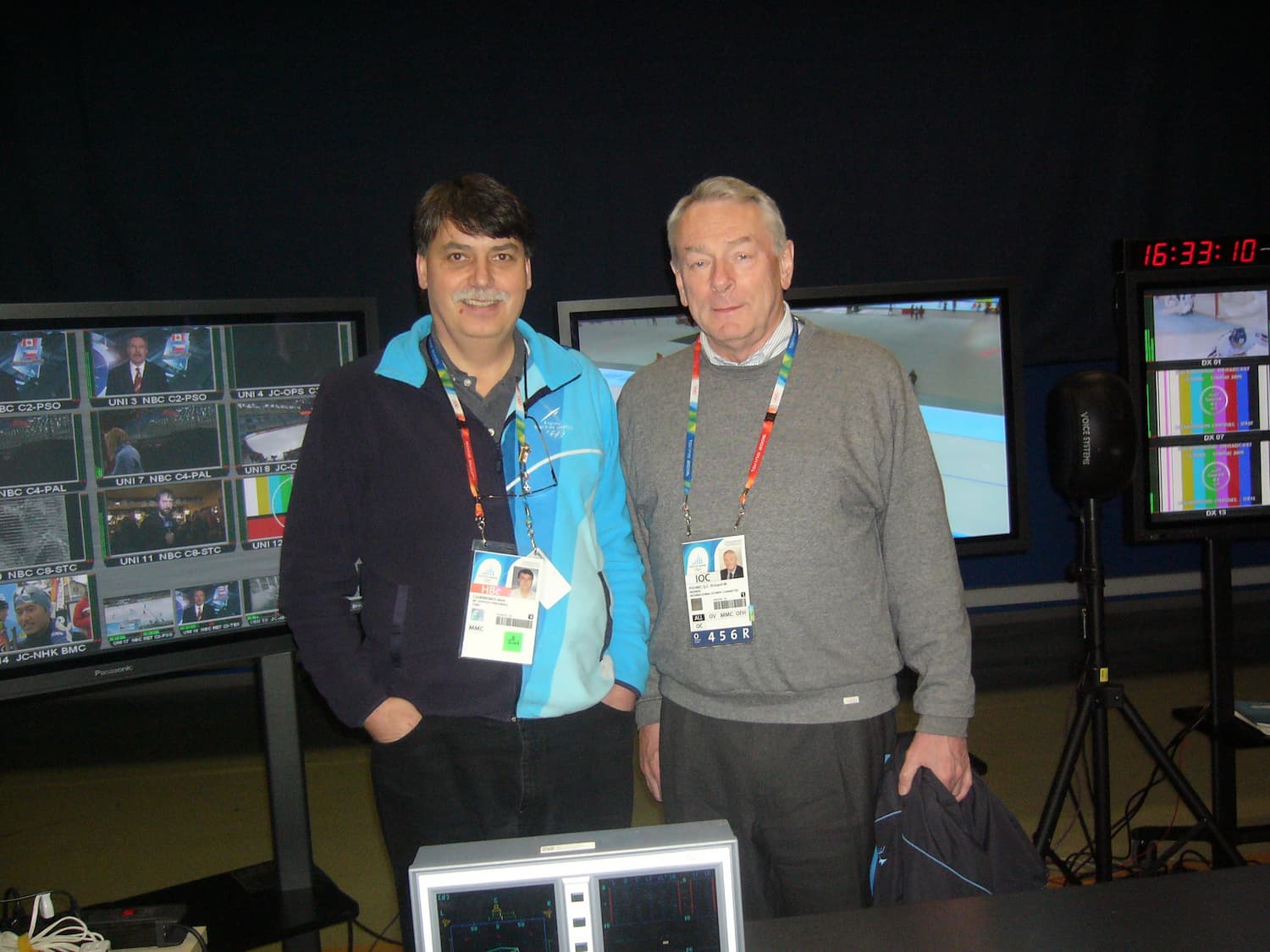 We had a sales manager, Angelo Ccicci. He asked me what I needed, and I told him directly: “The system does not work as it should.” I need a power supply board Interface board, which were completely missing. He brought replacement units — power supplies, cards, and modules. I had to recalibrate sensors, adjust components, rebuild parts of the logic, and essentially reverse‑engineer the platform to understand how it was supposed to behave.
At the same time, I was preparing training materials. Studying the system. Documenting everything. Trying to make it operational while also learning how to teach it.
Breaking Point
— How did you handle that workload?
It was too much. I was working full-time, studying, preparing courses, dealing with unstable equipment, and at the same time trying to find a home for my family. Going to Japan. Every responsibility pulled in a different direction, and there was no space to rest.
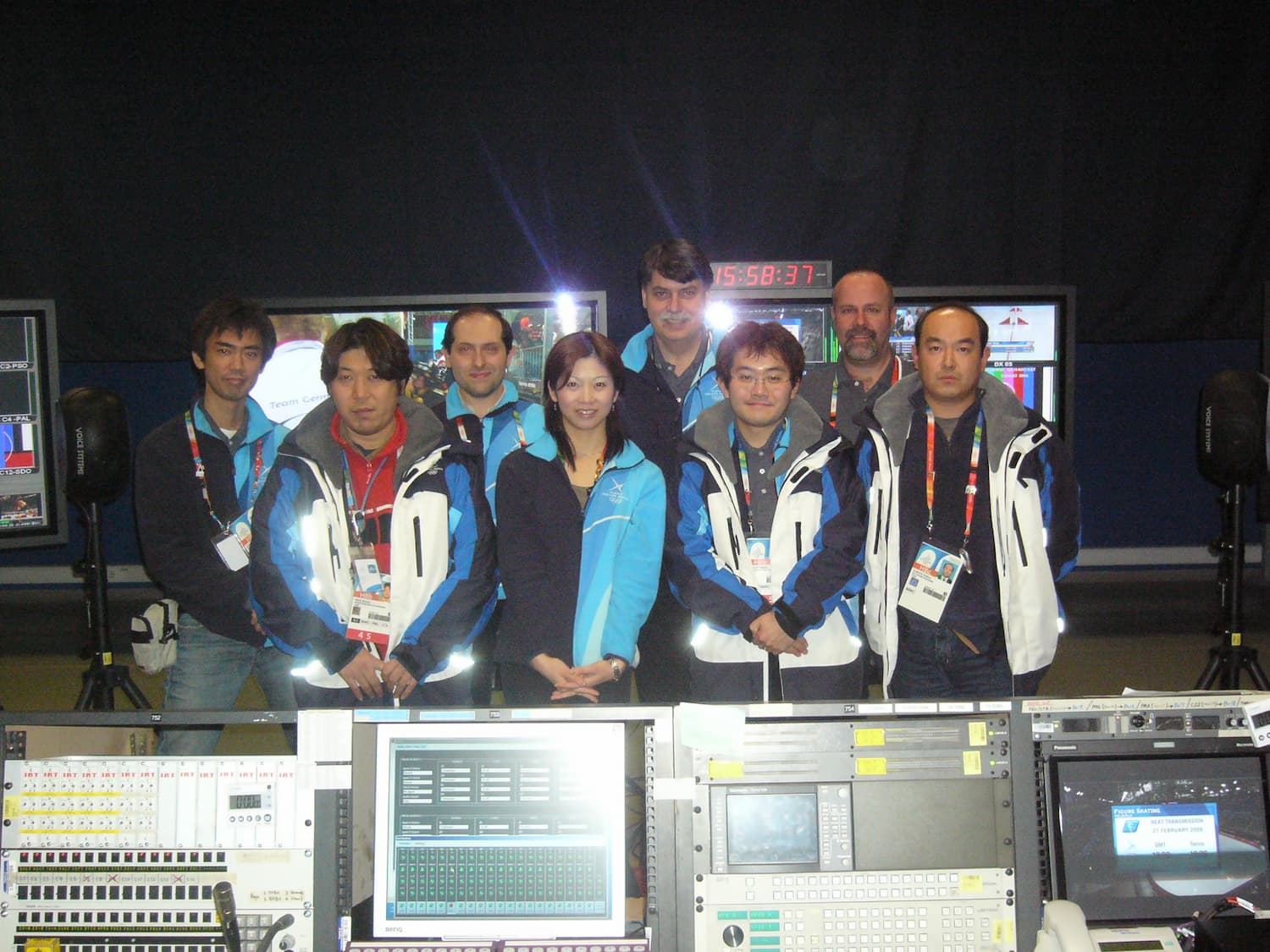 On weekends, I went to Sony just to get access to the test equipment so I could continue working and writing documentation. I was trying to stabilize a system that wasn’t ready, learn it deeply enough to teach it, and build training materials from scratch — all while living in a temporary apartment and managing a relocation.
— When did you realize your body had reached its limit?
At some point, my body simply stopped. I fainted from exhaustion. It was the moment that showed me the cost of everything I was carrying: the move, the financial pressure, the new job, the expectations, the travel, the grief, the responsibility to my family, and the pressure to prove myself at Sony.
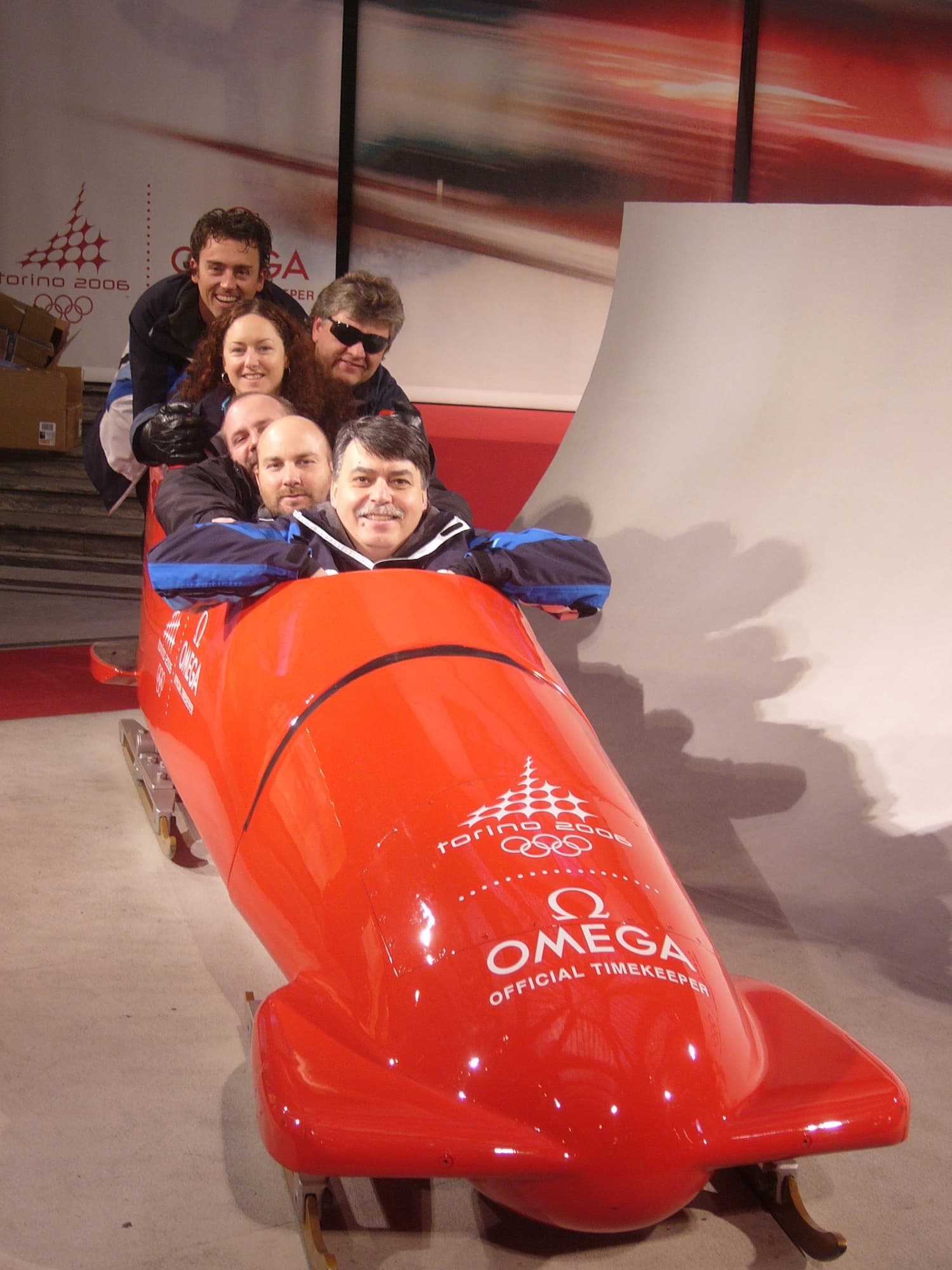 — What happened after you fainted?
I lost consciousness right there in the office. Sony had a silent alarm system, so in the evening, after 6 pm, the alarm was triggered. The police arrived, spoke to me, checked the situation, and filed a report. HR, the next morning, told me that I couldn’t come and be by myself. But I explained the reality: I had a course to prepare. There was no one else who could do it. If I didn’t finish the material, the training would fail.
— What were you preparing for at that moment?
I had to prepare for the SX training course. Sony sent me to Winnipeg — it was for CBC, and at that time, there was real competition between Sony and Panasonic. Sony was pushing the SX format, Panasonic was promoting 4:2:2, and broadcasters had to choose which direction to take. CBC was evaluating both systems very seriously.
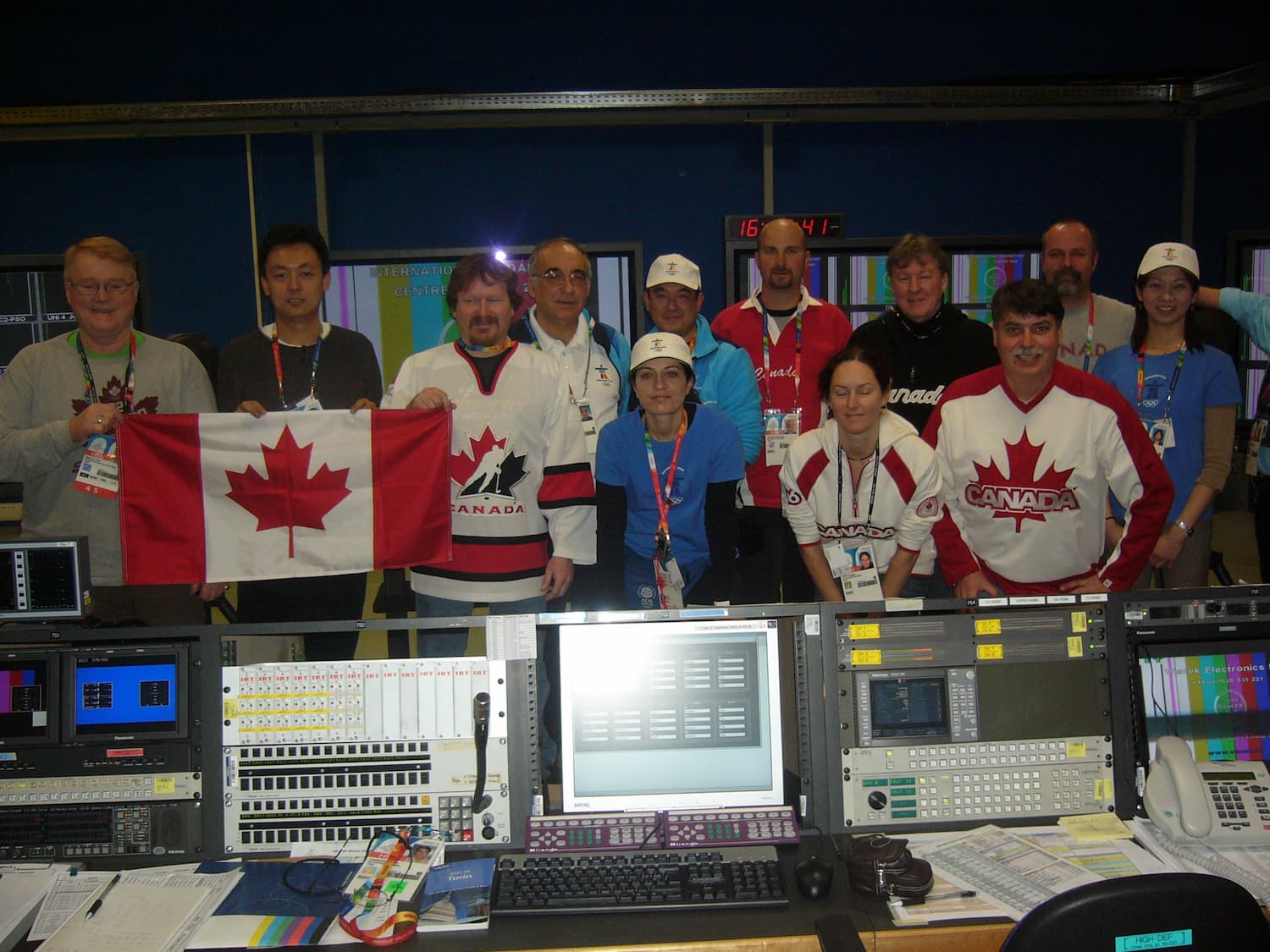 — Why was that training so important?
So, the training wasn’t just technical. It influenced major purchasing decisions. That added a lot of pressure.
— What other courses were you developing at the same time?
Alongside the SX and FlexiCard work, I was also preparing courses for the HDW-500 VTR and the HDW-900 camcorders — the early HD systems that were just entering the market. I created two new courses from scratch: Fundamentals of VTRs and Fundamentals of Cameras.
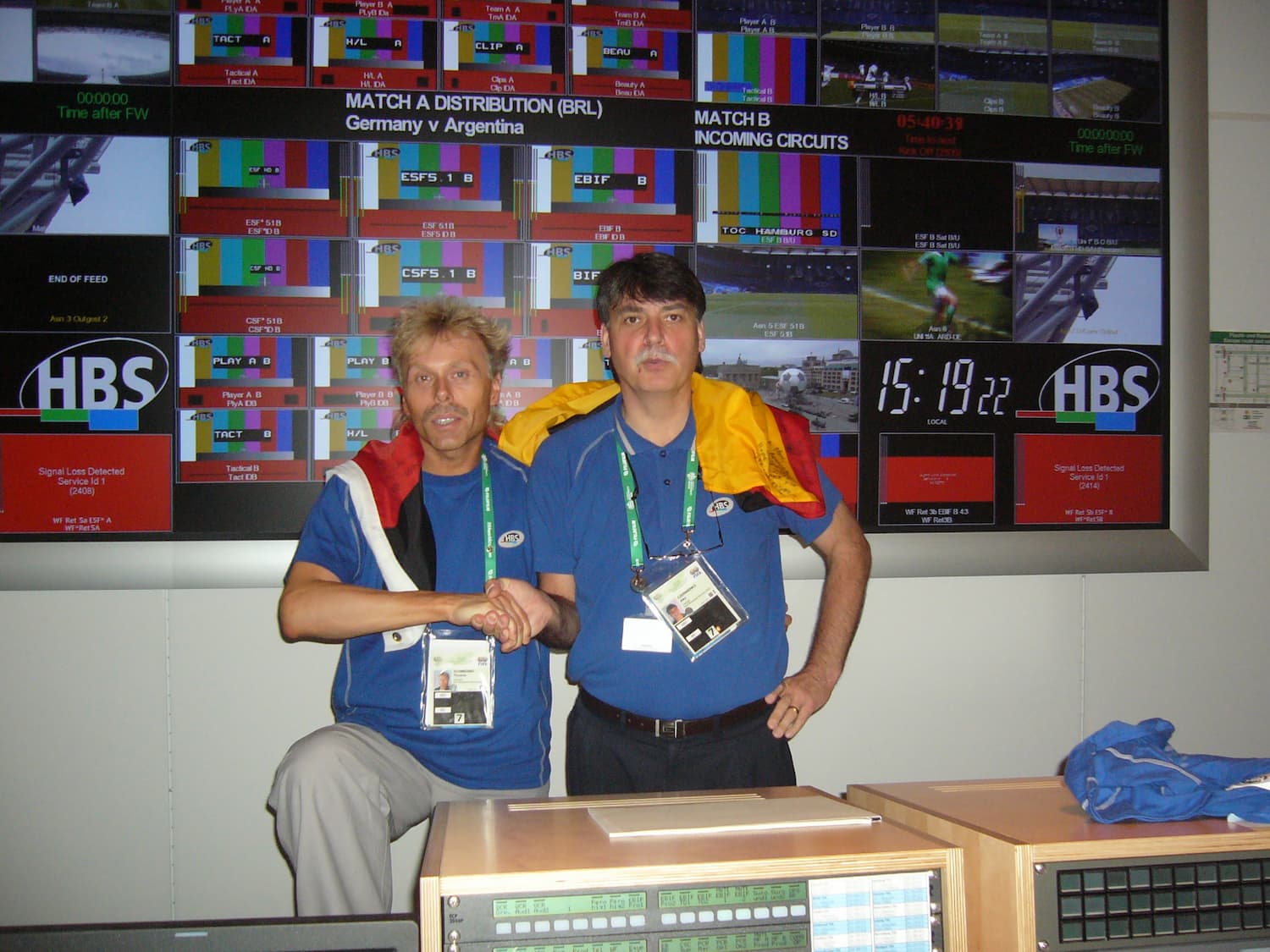 — Who were those courses designed for?
These courses were designed specifically for new broadcast engineers entering the industry — people who needed a solid foundation before touching high-end equipment. I wanted to give them the basics that I never had when I started: signal flow, timing, alignment, colorimetry, mechanical understanding, and the logic behind how the systems worked.
— How did management react to your work?
When I presented the courses to my boss, he was pleasantly surprised. He didn’t expect that level of structure, clarity, or initiative. He approved them immediately.
Learning While It Didn’t Exist Yet
— How did you keep up with that pace of change?
Sony began producing new cameras — like the BVW-300 — and I was sent to Japan, to Atsugi, for training. They had only five cameras there, serial numbers 1 through 5, and each one was physically different. They were still finalizing the design. One unit had a different board layout; another had a different mechanical assembly.
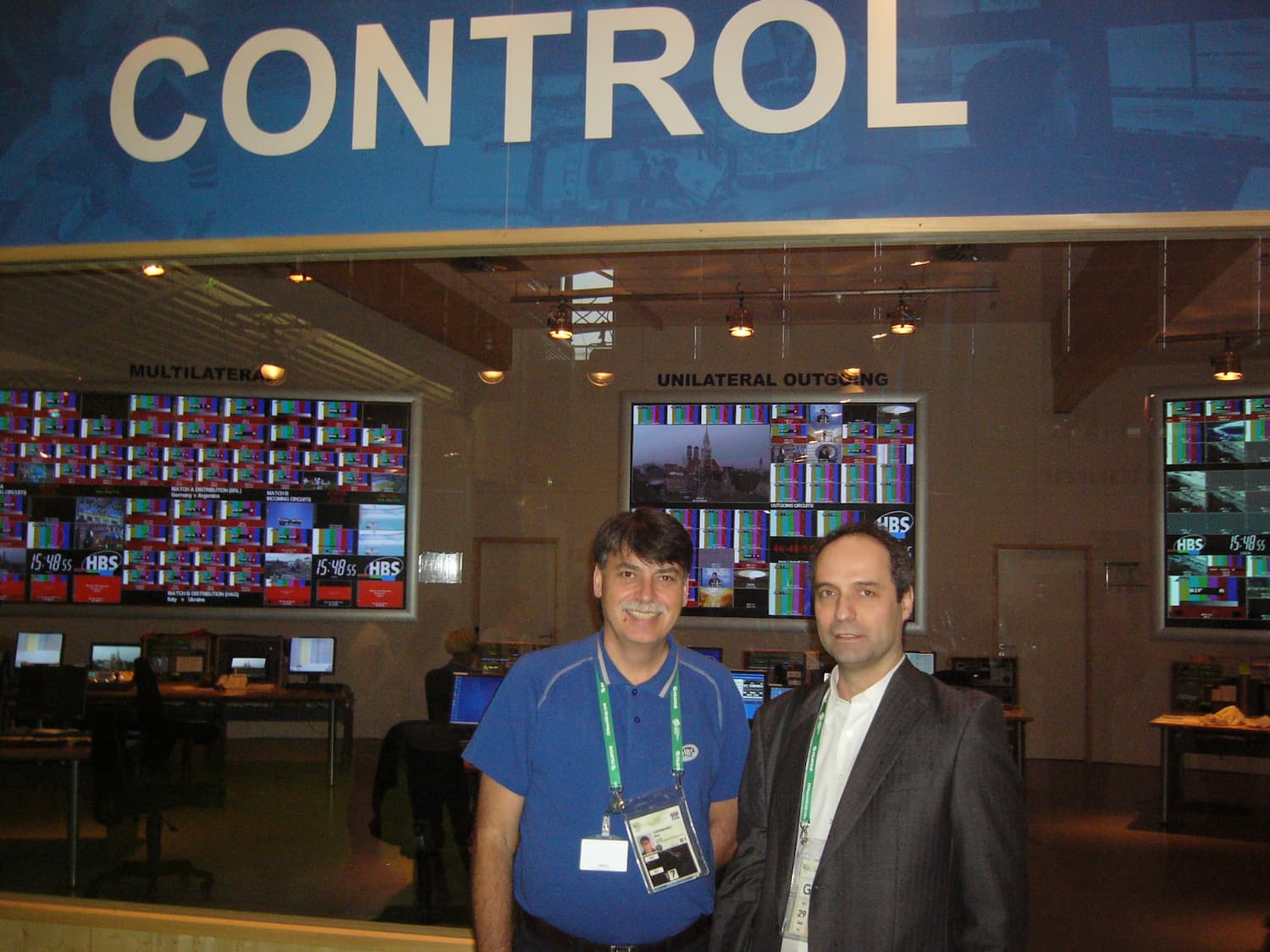 — What made that training so unusual?
At the same time, Sony needed to release the product within six months — and they needed full training programs ready for the global market. So, we were learning, testing, documenting, and troubleshooting all at once.
— Why did you still enjoy that pressure?
It wasn’t easy — it was challenging, unpredictable, and sometimes chaotic — but I liked it. I don’t know why, but I was always comfortable under pressure. Maybe it came from my sports background, where you learn to stay focused when everything around you is moving fast.
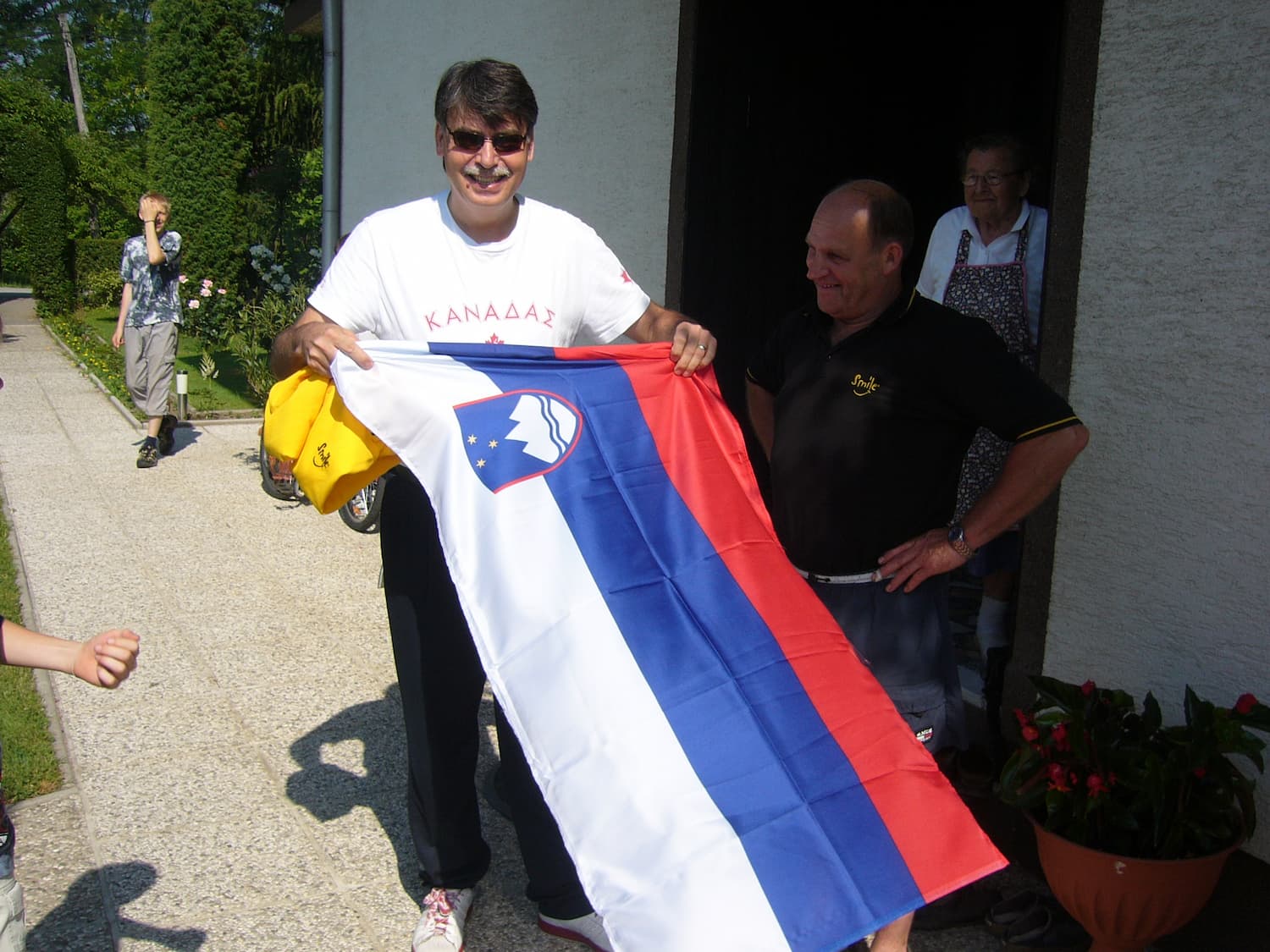 — Did you feel lucky to be part of that process?
And honestly, I considered myself one of the luckiest people in the industry. I was among the first to see these new systems, the first to touch the prototypes, and the first to understand how the technology was evolving. I wasn’t just learning equipment — I was witnessing innovation in real time.
— What did that experience mean to you?
Being part of that process — testing, discovering, helping shape the final product — felt like a privilege. It was the kind of experience that stays with you for life.
 The Olympic Track
— How did your Olympic work continue?
At some point, things slowly started to come together. I never stopped writing letters to host broadcasters. Every Olympic cycle, I tried to understand who would be responsible, who was building the team, and how I could be part of it. There was no central system, no database, no easy way to connect with the right people. You had to dig, ask questions, follow rumors, and hope your letter landed on the right desk. Sometimes people responded. Sometimes they disappeared. It was a cycle — contacts appeared, vanished, reappeared years later.
But I kept going. I stayed persistent. I kept building relationships, even when they seemed to lead nowhere. And slowly, piece by piece, the doors began to open. Olympic work is not something you “apply” for. It’s something you build toward, step by step, through trust, consistency, and timing. And eventually, those efforts started to align.
 Family and Risk
— What was happening in your personal life at that time?
My wife made a big decision. She quit her job. She had been working in the computer science department, preparing materials for professors who were publishing their work. It was a stable position, but the move required both of us to take risks. We had already bought the house in Ontario, even though construction kept getting delayed. Eventually, we moved in. It was a period of uncertainty for both of us — we were building a new life, and everything depended on work that wasn’t always stable.
— And then?
Then everything stopped. Sony went through a major restructuring and laid off around 450 employees. I was one of them. Just like that, I lost my job.
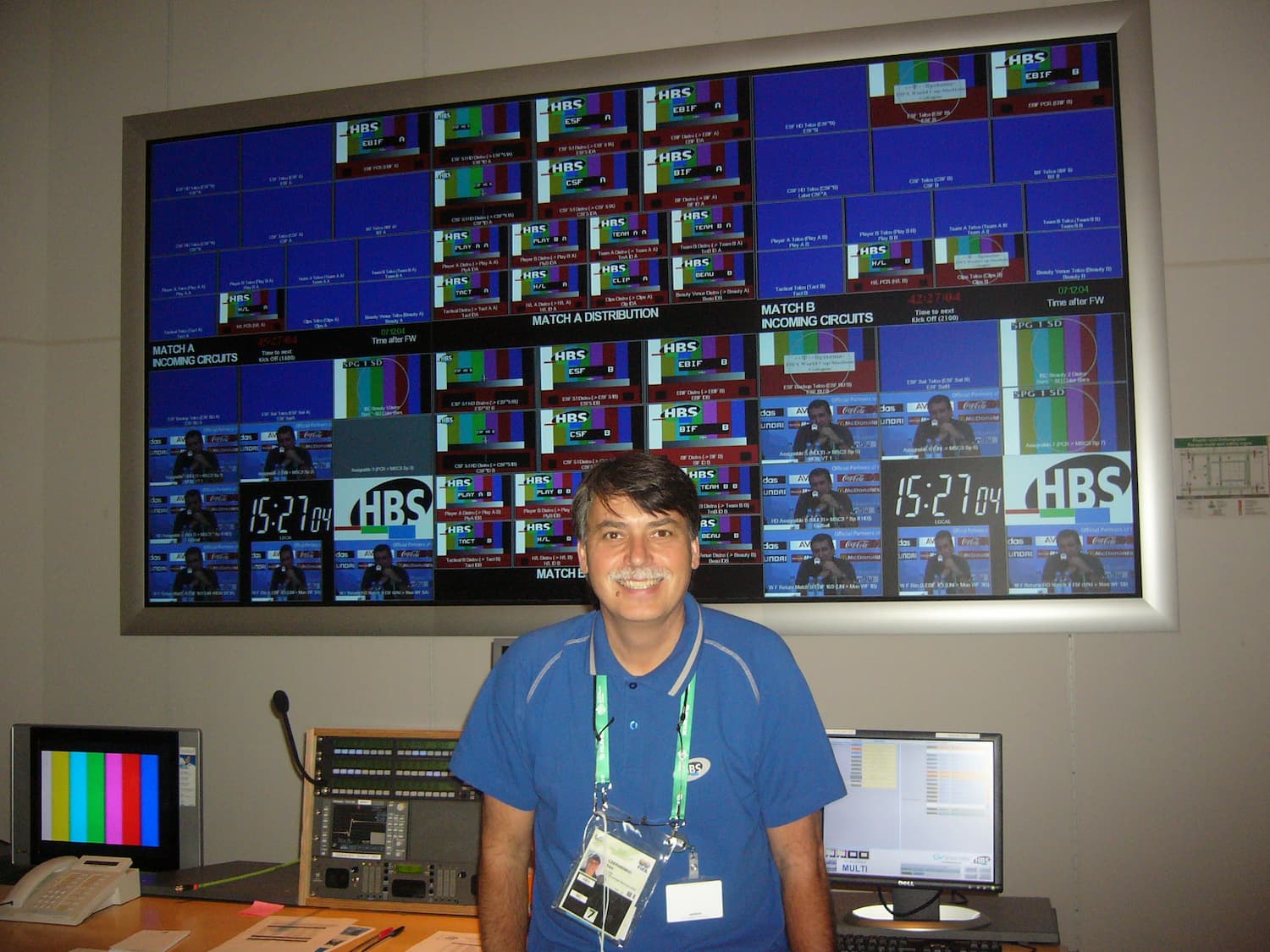 It was a shock. After all the effort, the move, the financial loss, the training, the pressure, the long hours — suddenly the ground disappeared under my feet. It was one of those moments in life where everything becomes very quiet. You look around and realize that the plan you were following no longer exists. And you must decide what comes next.
No Job, New Decision
— What did you do after losing your job?
I lost my job, my wife had already left hers, and we had just bought a house. We sat there asking ourselves the obvious question: Do we go back to Montreal, or do we stay in Ontario? Going back would have meant starting over again. Staying meant facing the uncertainty head‑on. So, we stayed.
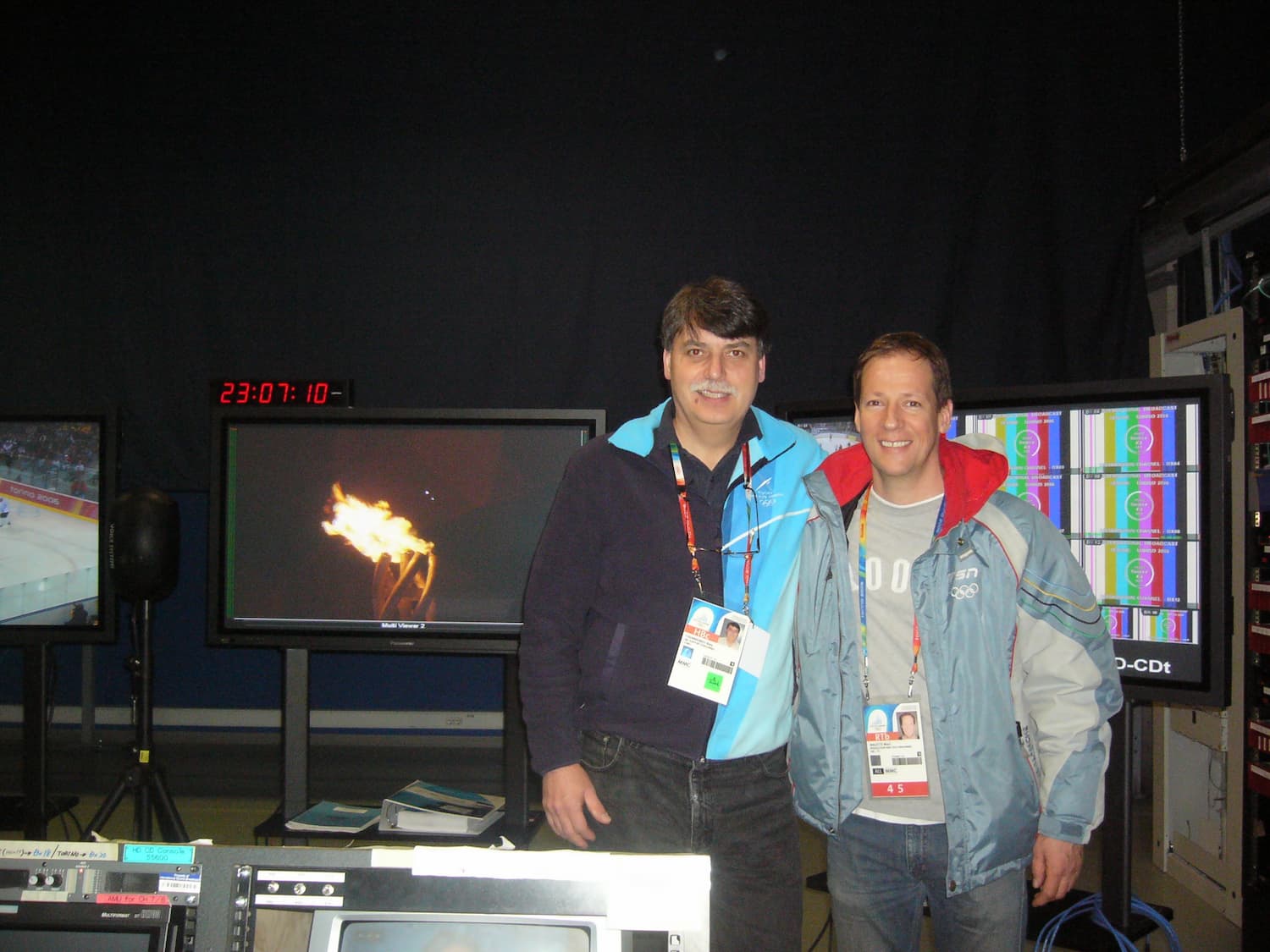 At that point, I focused on upgrading my skills. I treated it like training for competition — you don’t wait for the opportunity; you prepare for it. I studied high‑definition systems:
• HDW‑F500 VTRs
• HDW‑F900 cameras
• Sony’s new compression technologies
• The transition from analog to HD and SDI.
I took additional courses, read everything I could find, and kept building my knowledge. I didn’t know when the next opportunity would come, but I wanted to be ready when it did.
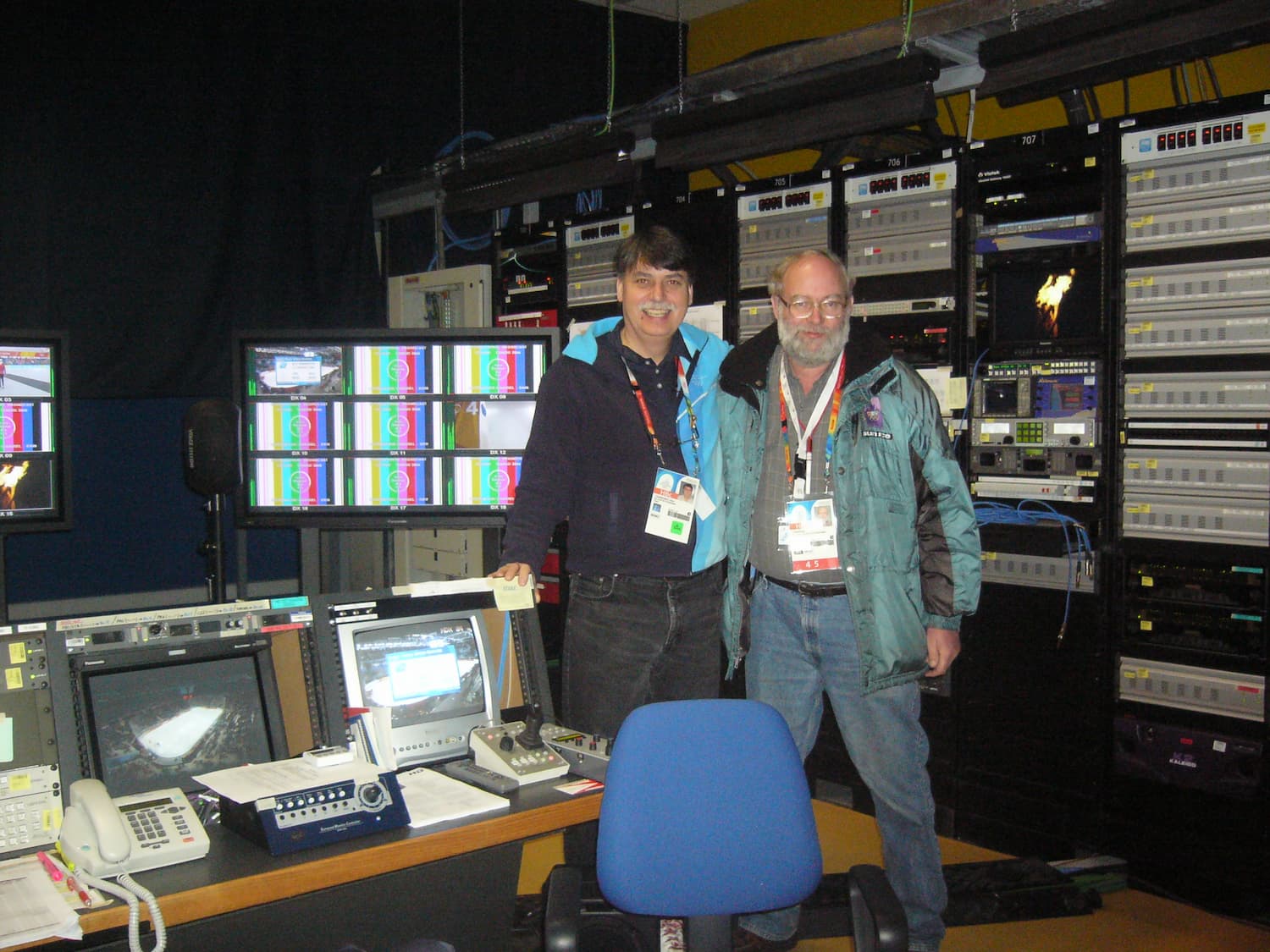 A Lead from Angelo Ccicci
— How did you get back to work?
Angelo Ccicci called me the Sony sales manager. He told me about a high‑end rental house in Toronto, Sim Video, that was moving into high‑definition cameras. He said something that stayed with me: “Go meet him. He’s looking for strong people. He’s tough, but fair.”
So, I went.
— And?
He was exactly as described — difficult, demanding, and very direct. He didn’t care about titles or past achievements. He wanted results, competence, and people who could handle pressure. But he also recognized skill when he saw it.
 Sim Video
— Was that your next job?
Yes. The company was Sim Video. It wasn’t a comfortable interview. It wasn’t friendly. But it was honest. He pushed, I pushed back, and somewhere in that exchange he saw that I knew what I was doing — and that I wasn’t afraid of hard work. They accepted me immediately. They offered me exactly the salary I asked for, without negotiation. I started working there and preparing for the next stage.
Sony Calls Again
— And then Sony contacted you again?
Yes. After some time, Sony reached out to me. They told me they were building the first high‑definition post‑production facility in Toronto Stone Henge and needed a specialist who understood the new HD systems. They asked if I would join them on a contract. For me, it was very clear — this was business.
 Building the First HD Facility
— What was your role in that project?
To do that work, I had to quit Sim Video. I had to work through a Sony dealer. They held the contract, and I joined them as an engineer. But the role was much bigger than the title suggested.
— What made the project technically important?
Together, we built the first high-definition post-production house in Toronto, around 1999. It was a completely new level — new formats, new workflows, new expectations. Nothing was standard yet. Every piece of equipment had to be tested, aligned, integrated, and sometimes re-engineered to work together.
 — Why was there no easy model to follow?
We were building something that had never existed in Canada before. There was no template, no previous installation to copy. Every decision mattered — from reference timing to router configuration to VTR alignment to HD monitoring standards.
It was the kind of project where you learn fast, adapt constantly, and solve problems no one has solved before. And I loved it. It was the perfect combination of engineering, innovation, and pressure.
Next Opportunities
— What came after that?
Through my contacts at Sony, I started hearing whispers about new opportunities. They told me that TSN and Discovery Canada were looking for engineers. TSN, especially, caught my attention immediately. It was one of the major sports broadcasters in the country — a place where sport and technology came together in a way that felt like home to me.
 — When did you move toward broadcasting companies like TSN?
Honestly, my heart was already there. I always wanted to be inside that world — the place where sport and television come together. That environment felt like home long before I ever walked through their doors. In the late 1999 early 2000s, I went for an interview with TSN. The conversation flowed easily. We talked about systems, about my experience in the field, about the shift toward high‑definition
Everything I had done up to that point — Atlanta, Japan, Sony, the training, the problem‑solving — it all aligned with what TSN needed. And for me, it wasn’t just a job interview. It was a step toward the place I had always imagined myself working.
— What was the decisive moment?
At the very end of the interview, they asked me one last question. And it wasn’t technical at all. TSN was a unionized company — a very structured environment with clear rules, seniority systems, and a strong trade‑union culture. Everything inside the organization flowed through that framework.
 So, their final question wasn’t about whether I could operate a system or troubleshoot a failure. They already knew I could do that. What they really wanted to understand was whether I could fit into that environment — whether I could work within their rules, respect the union structure, and be part of the culture that held the place together. It was a moment where they weren’t evaluating my skills anymore. They were evaluating my adaptability and my character. And for me, that was the decisive moment
Joining TSN and Discovery
— How did you move into TSN and Discovery?
At that time, TSN and Discovery Canada were expanding. They had taken over parts of CTV — where I had worked years earlier in Montreal — and they were moving into a brand‑new building. The president of TSN, Wayne Scrivens, introduced me to the engineering team. They had a big OB‑van operation and were already starting the transition to high‑definition. They asked me to help with the move and the rebuild — to take the systems they had and redesign everything for the new space.
 — What did that project involve?
It was a major build. Design was done by Peter Zablocki and Bill Hoskins, and I was in charge of commissioning and install the new studios, edit suites, and the full technical infrastructure. At one point, I was leading a team of 14 people. We built six studios, eight master control rooms, and 37 edit suites, including several 5.1 audio rooms. It was a complete broadcast facility from the ground up — exactly the kind of work I loved, because it meant creating systems, not just maintaining them.
Recognition and Leadership
— Did they offer you a permanent role?
Yes. As the project was wrapping up, the new VIP of Engineering, Allan Morris, asked me to stay. He told me they had long‑term plans across Canada and wanted me to be part of it. They offered me a senior role — supervising manager. From there, I kept developing the technical side: building camera‑testing systems, designing rack‑mounted setups, and creating structured training programs for the team. Integrated and centralized TSM/Discovery data base to the new platform.
 — What did you focus on in that phase?
Training became a big part of my work. Discovery was moving into high‑definition, so I developed courses for freelancers and staff — camera operators, engineers, technicians. At the same time, I built a full equipment‑tracking database. We had hundreds of units: VTRs, cameras, components. It helped us manage the entire operation efficiently.
I was allowed to evaluate new HD cameras for our studios. I was naturally partial to Sony, so to keep the process fair, I set up five evaluation groups — one for Sony, Hitachi, Ikegami, and Panasonic. Each group had five people from different backgrounds: an engineer, an editor, a reporter, an operations manager from one of the specialty channels, and, of course, a camera operator. The idea was simple: I didn’t want the decision to reflect my bias. We had excellent discussions, and everyone brought a different perspective to the table.
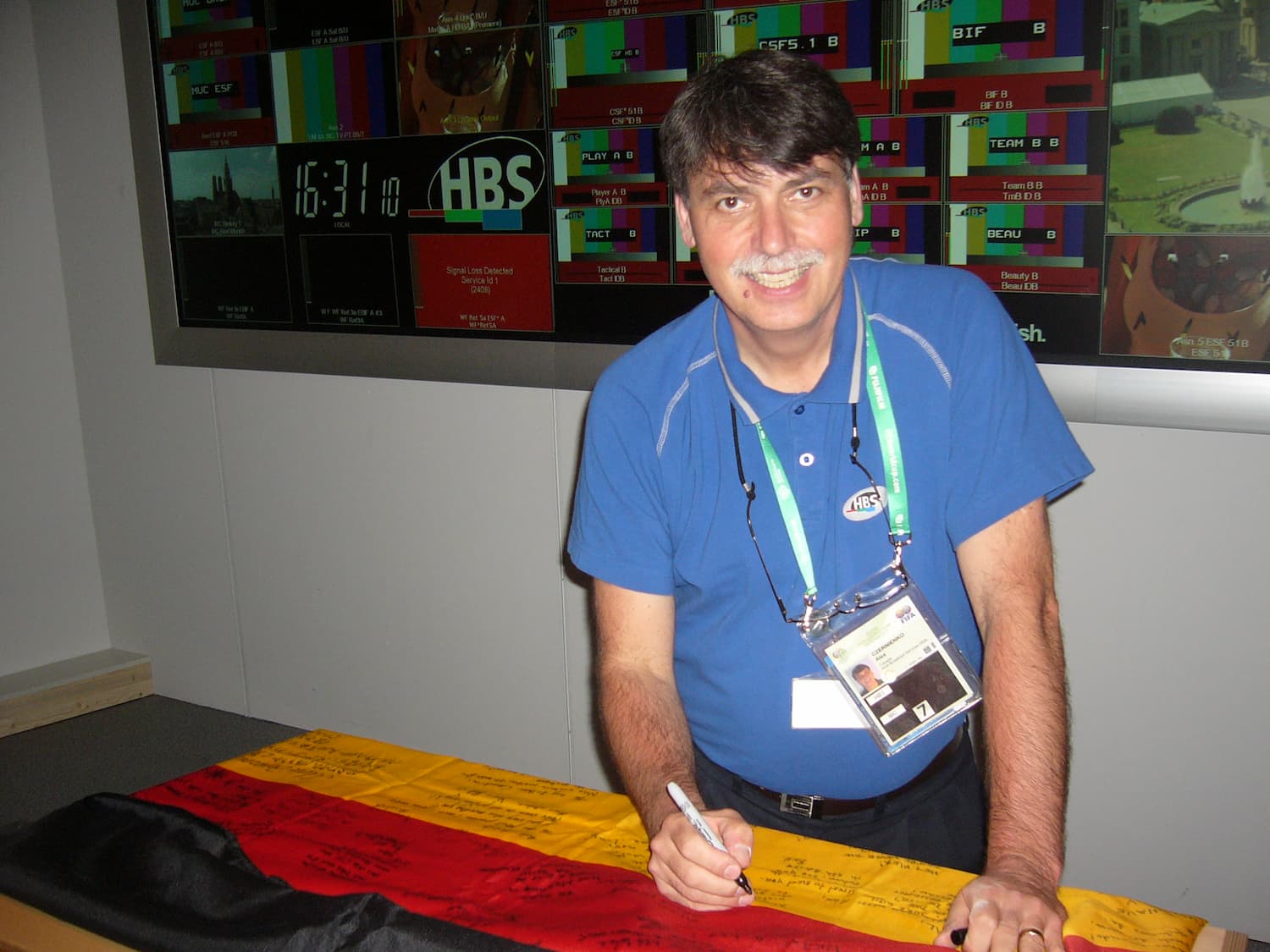 Still Chasing the Olympics
— Did you continue pursuing Olympic work?
Yes. I told them from the beginning that if I ever had the chance to work at the Olympic Games, I wanted to take it — and they agreed to support that. So, I kept writing letters to host broadcasters, searching for contacts, sending resumes, trying to get into the system. I didn’t make it to Sydney; internal management issues blocked me. But I didn’t stop. I kept pushing forward.
— How did you manage working across competing broadcasters?
At one point, I had an opportunity to work with Radio‑Canada. That created a conflict, because CBC and CTV were direct competitors — one public, one private. I explained to my VP that the contract was with Radio‑Canada, the French‑language division, which had a different structure and audience. After discussing it, they agreed and allowed me to go.
 First Real Break
— When did things finally start to change?
In 2004, my family and I took a vacation to Cuba — my first real break in 14 years. Before leaving, I had reached out to a contact in Calgary, Hank Seibergen, asking if he knew any host broadcasters I could send my resume to. He replied with the name and email of Jim Eady, a Canadian who had been working with NBC on the Olympics since 1976. When I came back from Cuba, there was a message waiting for me. Someone had called from Greece. That was the moment everything started to move.
— What happened next?
I wrote to Jim Eady. He was Canadian, worked with NBC, and ran his own company — and later I ended up working through him on major events, including the World Cup. The strange part is that I had met him once before, years earlier, without realizing it at the time, who he is.
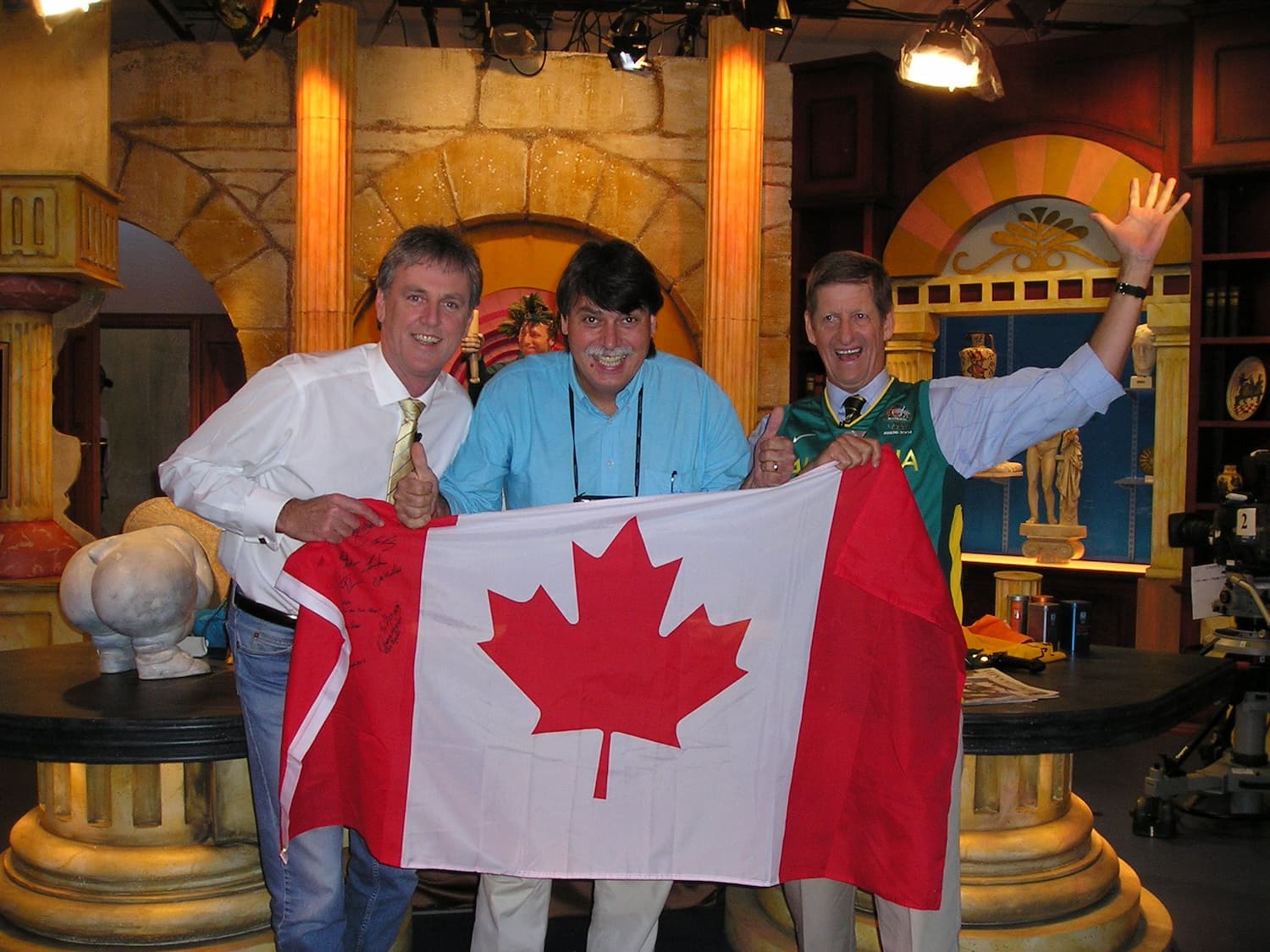 When I contacted him again, neither of us immediately connected the dots. He simply replied, “Send me your resume. I will give it to the right people.” I sent it, and then everything went quiet.
“How Do We Stop You Harassing Us?”
— When did they finally respond?
After we came back from Cuba, I returned to work at CTV. One day, the phone rang — a call from Greece. I called back and left a message. The next day, the phone rang again. A voice said, “Hi, Alex. This is David Warnock. I understand you’ve been harassing our company for a long time. What can we do to stop you harassing us?”
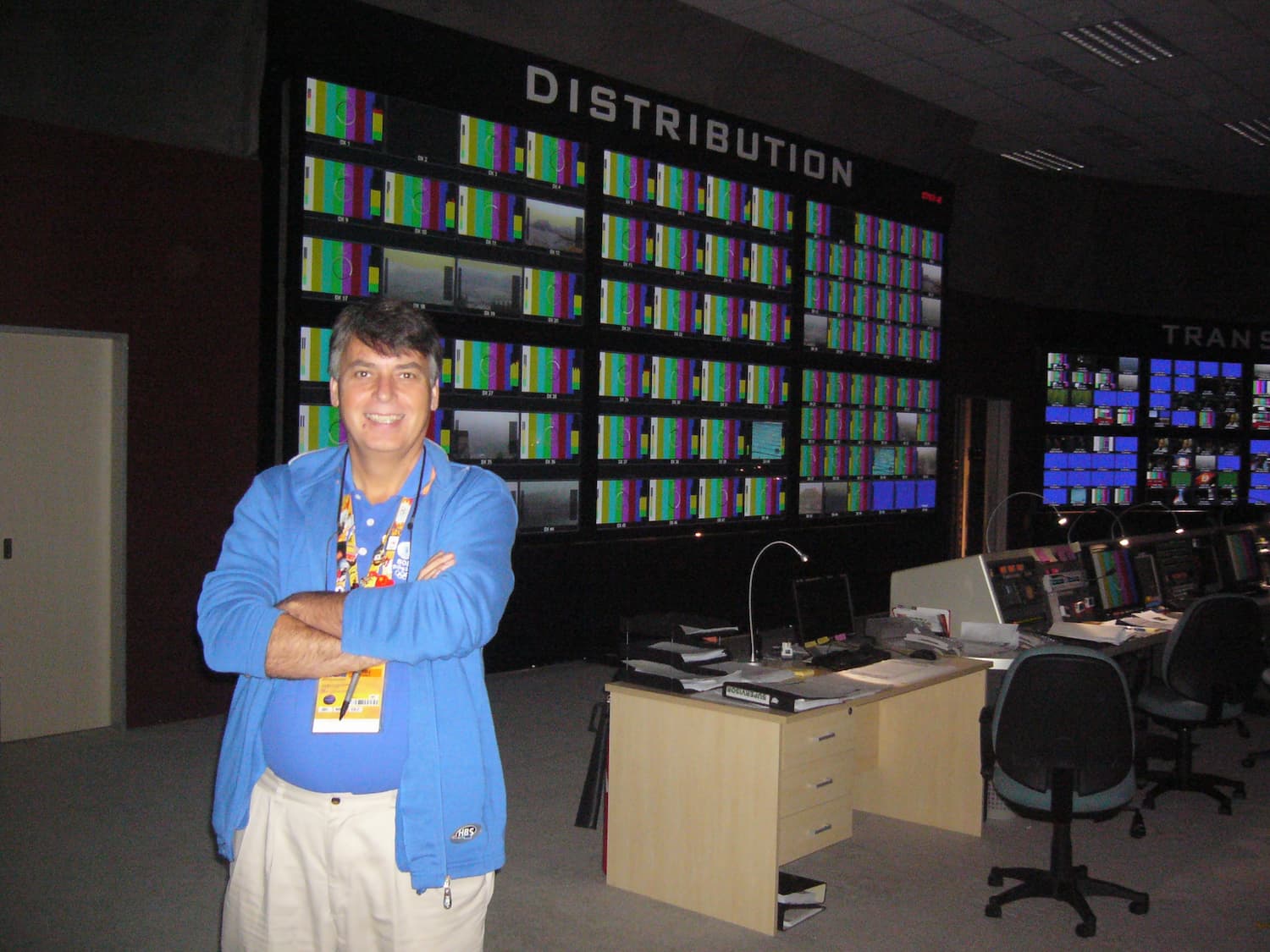 I answered: “Hire me.” He said: “Okay. Come to Greece for a meeting.”
The Meeting in Athens
— Who officially invited you?
My first contact was Isidoro Moreno, who was just starting his first role in the Olympics as Manager at the IBC Engineering. He is now a Director of IBC Engineering. He forwarded my letter to his manager from Greece, Aris Lazos. Aris wrote back saying all positions were filled, but they might have one opening in Transmission. I assumed it was satellite work — something I had studied in college but never practiced.
I told him, “I’m happy to accept the position if you can provide the training.” After that, all was silent. A phone call came in the beginning of March, as I described earlier.
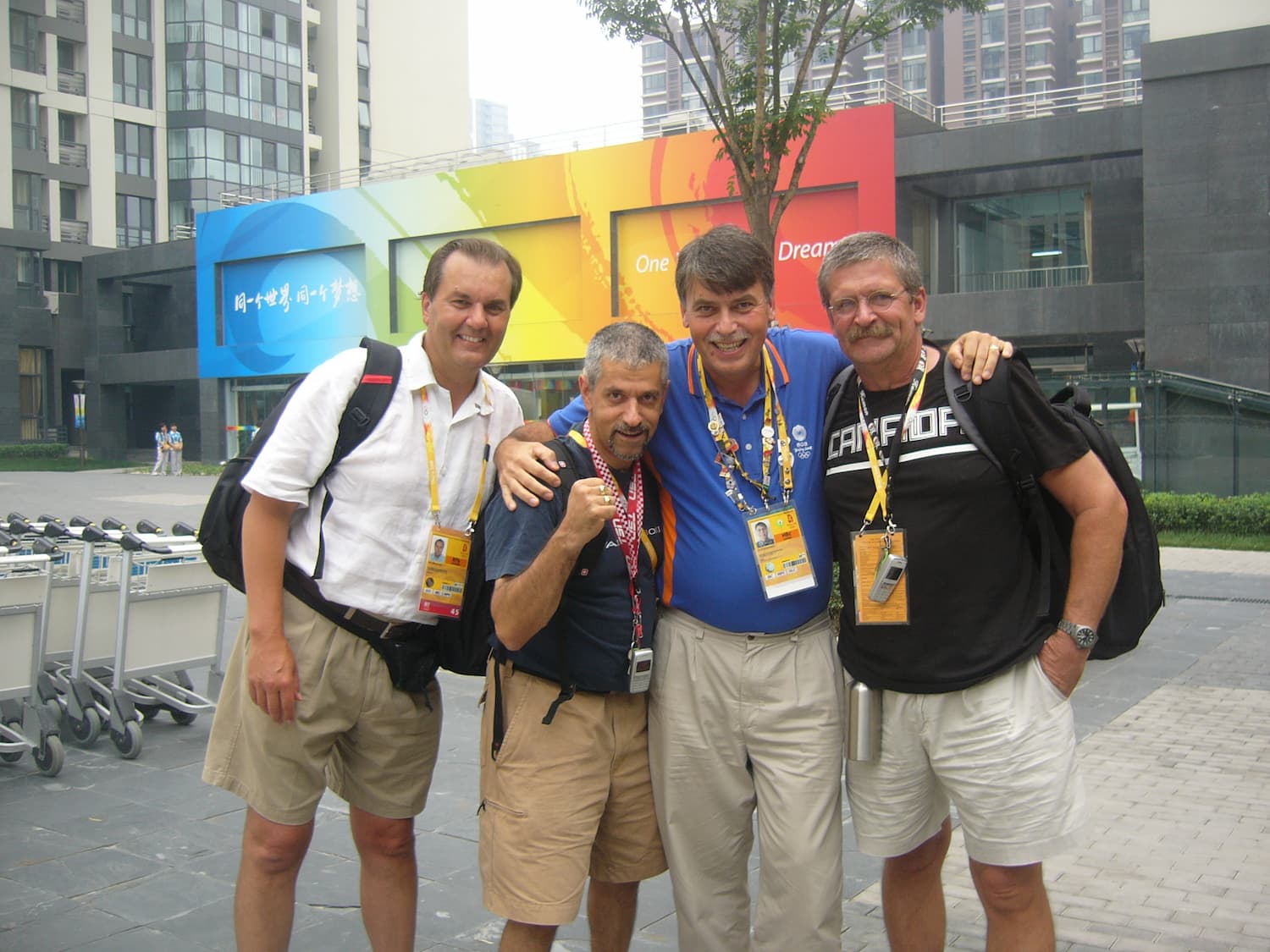 When I arrived for the meeting, I walked into a room with about 350 people. German engineers in suits, French engineers in jackets, everyone looking formal and experienced. I remember thinking, ” What am I doing here? How did I end up in this room? I was scared.
Then I saw Mr. Aris Lazos. He smiled at me from a few rows behind me. In that small moment, my heart was pounding.
— What was the meeting about?
The meeting opened with Steve Mitchell, the Australian head engineer. He explained how the entire Olympic broadcast operation was being prepared. I listened, but inside I was still thinking, ” What am I doing here among all these people? I said to myself, ” This is the biggest mistake I made in my life.
 The next day, we started working at the International Broadcast Centre — CDT-Contribution, Distribution and Transmission, that’s where I was assigned. Another broadcaster calls it the MCR-Master Control Room. They placed me in the transmission operation position. I originally thought it would be satellite work, based on my studies, but it was line transmission — the backbone of moving signals across the IBC to the Right Holders and to the World.
— How did your role change?
Because preparation in Greece was behind schedule, they needed people who could solve problems fast. After a day or two, they saw I was a strong engineer, so they moved me out of basic transmission and into an engineering role to help prepare the teams.
 Many people came from analog backgrounds, but the Olympic systems were being built around SDI. Monitoring was CRT analog, while the core signal flow was digital, and that created a lot of confusion. So, I started teaching people how to read signals, how 5.1 audio was distributed, how the new workflows operated, and how to prepare for live transmission.
A group of people was created, including Production Teams, on how to prepare and implement signal alignment from the venues. That’s how I began working as an engineer at the Olympic Games in Greece.
Turin and High Definition
— How did things develop after Athens?
Athens went well. I returned to CTV, and soon after, I received an invitation to Turin for the Winter Olympics. By then, I already had strong relationships with Japanese engineers from my earlier training in Atsugi and NHK, and there was mutual respect.
 In Turin, working with Olympic Broadcasting Services at the IBC, the Japanese team — led by Masato Moe-san, Takashi Suzuki‑san, and Izumoto‑san — built a separate master control for high‑definition. It was a completely new environment. Different rights holders — RAI, NBC, NHK, Japanese consortium, and Korean broadcasters — were all receiving HD signals, and nothing was fully standardized yet.
We were essentially inventing the workflows as we went: defining how signals should be delivered, how audio should be aligned, and how systems should communicate between the IBC and the mobile units.
— Was it difficult working in such a new system?
Very. At one point, I was working with OB Van, an audio engineer, on audio alignment, and he became extremely vulgar and frustrated. He told me I didn’t understand anything. But I stayed calm. I knew the problem wasn’t personal — it was the system. Everything was new, and nobody had full clarity or proper training. In my mind, there are no problems, only solutions.
 I suggested we take a break, have lunch, and come back. After that, we worked through it step by step, and the system finally came together. He thanked me later. What he didn’t know was that behind me were several Japanese audio engineers quietly supporting me, passing notes and guidance. That was the atmosphere — pressure, but also real cooperation.
After Turin
— How did you feel after that project?
Turin was complicated. Technically, it was strong, but the atmosphere was heavy. People were under pressure, and many even got sick. I loved Italy — the culture, the people — but the working environment felt tough.
After that, I moved into football. I was accepted to work on the FIFA World Cup with Host Broadcast Services. I returned to the IBC, this time in a different structure. I liked HBS — they were organized, clear, and very precise in how they built their systems. It is good to experience a different working culture.
 — What came next after the World Cup?
After Italy, I went to Spain, met with OBS people, and had just friendly conversations, not about work or even future projects. I started questioning whether I wanted to continue with the Olympic cycle. Even though I had strong technical roles, something still didn’t feel fully right. My heart was always with the Olympics, and my loyalty was to the company that took a chance on me and opened the door to so many opportunities.
Then my former manager, Aris Lazos, contacted me. He told me that China was preparing a major high‑definition project and asked if I would consider a supervising position. Around the same time, during the World Cup, I met an audio engineer from England, Ian Ross.
 That was the moment when new directions started to open again.
Bringing People Into the Olympic System
— How did you bring Ian Ross into the Olympic project?
I liked the way Ian worked. He was free in his thinking, calm, professional, and very strong technically. I like how he was mixing his audio. After the World Cup, I wrote to him and said, “We have a place for you at the Olympic Games in China.” It will be HD, 5.1 Audio. He sent me the salary level he had been offered and said it was too low. I said it is beyond my pay grade. I told him that Olympic salaries depend heavily on the position and on where the person comes from. He was working in England, in pounds, so his expectations were different. I advised him to write directly to the company and explain his level. He did that, and they gave him a higher salary.
That is how he joined the Olympic system, and once he started working there, people respected him. I saw him in Brazil, and he told me, “Alex, it is your fault. I am still here,” with a big smile on his face. I always liked people who enjoyed this environment. That was Ian’s passion, and he showed it to all of us.
 Leaving CTV
— Why did you eventually leave CTV?
It’s a complex question, and not an easy one to answer. People who know me understand one thing: I am not a quitter. Leaving was one of the hardest decisions of my career. But I left with my head high — and I left on my terms.
— Looking back, where do you think the situation changed?
My biggest mistake was trusting my manager completely and believing he would speak on my behalf. CTV had secured the rights for the Olympic Games, and I assumed it would be natural for me to be part of that project. I had spent my entire life around sport. I had already worked on many Olympic projects, and sport was still in my blood.
— How did management see your future inside the company?
But my vice president wanted to move me into news. He told me they wanted me to become a director there. I answered honestly: “I have been doing sports all my life. I love sports. How can I leave sport and go into news?” It simply didn’t make sense for me.
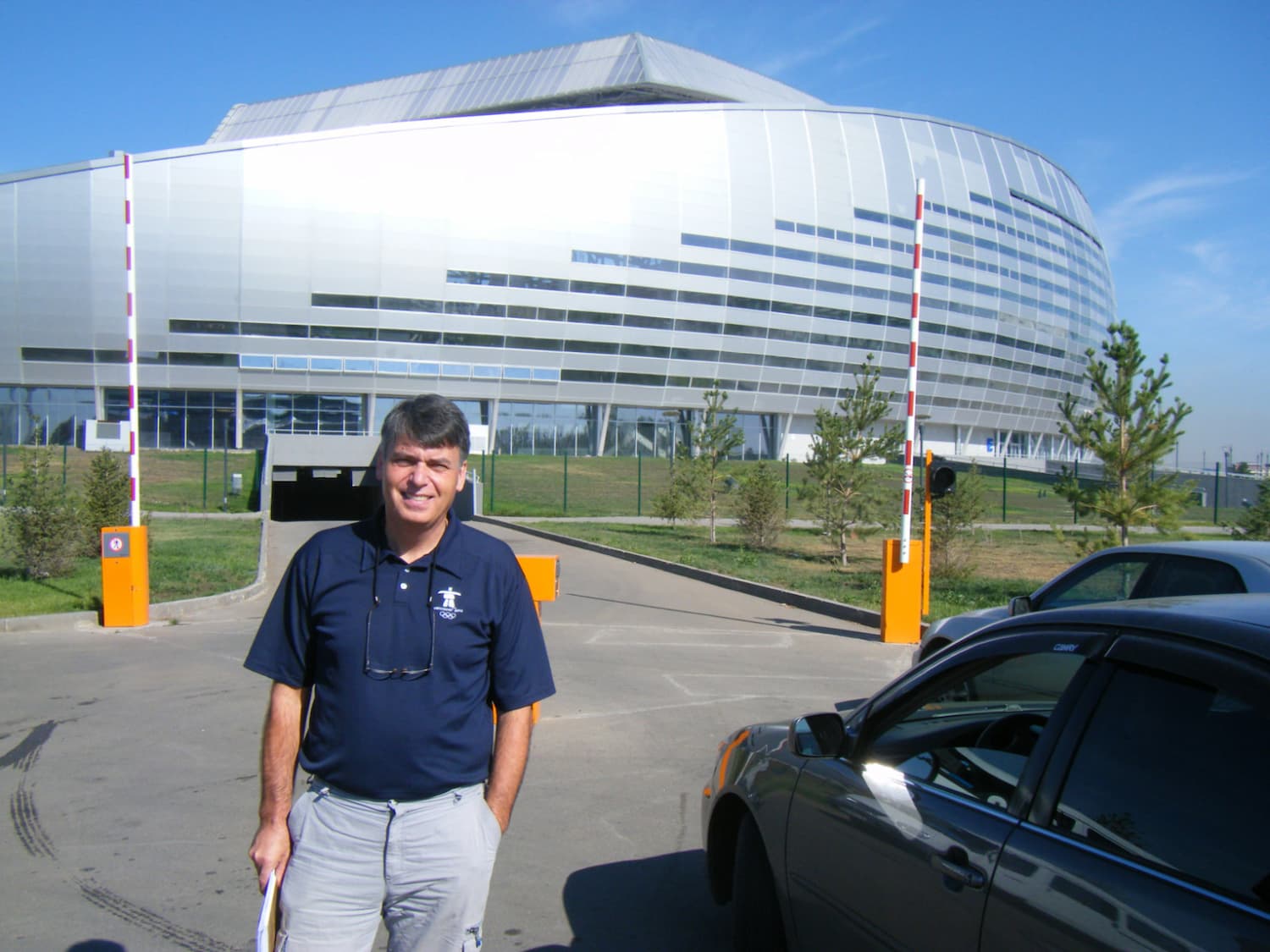 — Why did that situation affect you so deeply?
At the same time, I watched people with far less Olympic experience being promoted into Olympic-related roles. By then, I had worked at nine Olympic Games — nine — yet they didn’t give me that path. They didn’t even open the door.
— How did you finally respond to that disappointment?
So, I wrote a resignation letter and left the company. I had a good salary, but I walked away. Because sometimes you must choose your identity and pride instead of accepting humiliation.
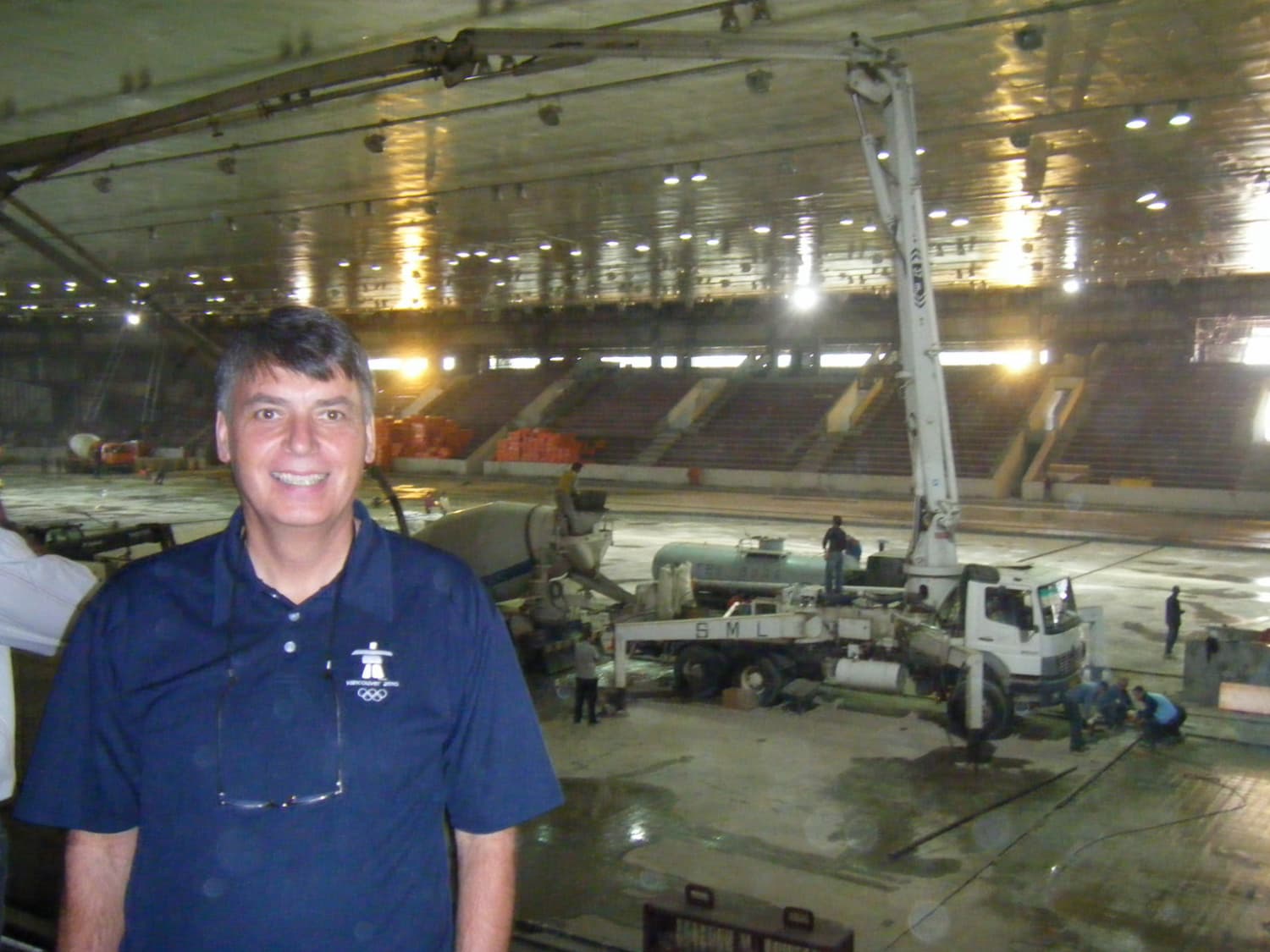 Freelancer
— What did you do after leaving?
I went back to OBS for the 2010 Winter Olympic Games. They hired me again as a Supervisor at the IBC. In fact, between 2003 and 2005, OBS offered me a full-time position in the Engineering department twice. But life got in the way, and I couldn’t commit to a permanent move at that time.
— When did you move fully into freelancing?
In 2009, I shifted fully into freelancing. Locally, I couldn’t engage myself because when I left TSN, the vice president took it very personally — and I was essentially blacklisted in Canada. So, I focused internationally, where my experience and reputation still mattered.
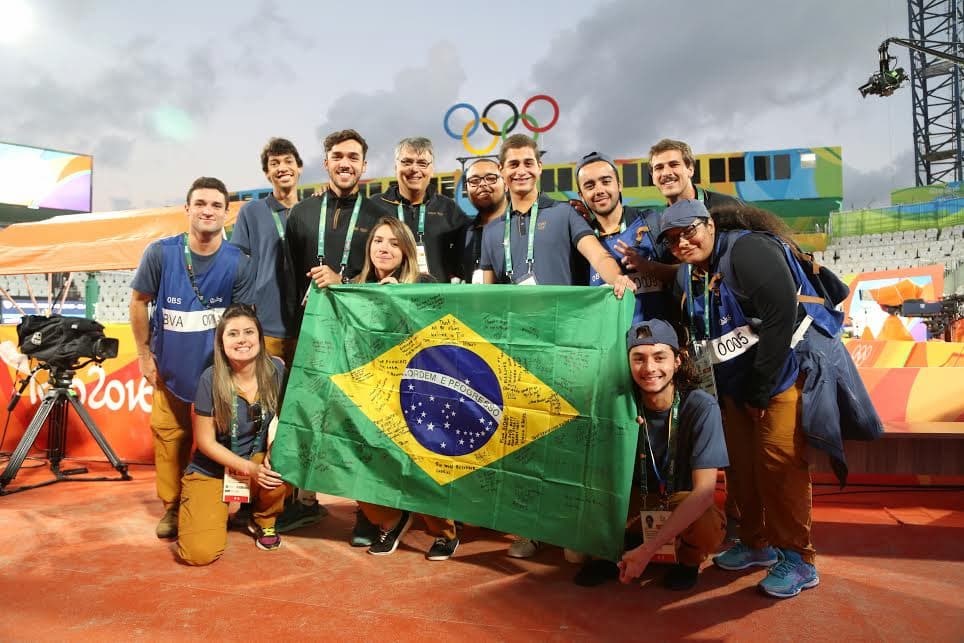 — How did your international career develop after that?
From there, my career expanded even more. I worked on major global events: Olympic Games, FIFA World Cups, Pan-American Games, Asian Games, FIBA, DAZN, ISBTV, and many other international productions. With HBS in Germany, I worked as an engineer. In South Africa, I served as a Liaison Manager, staying in constant contact with all the rights holders, helping them build their spaces, and testing every single setup one by one.
— Where did that path lead you next?
Later, I joined Telemundo via the Canadian company BSI for the World Cups in Moscow and Qatar. And now, I’m heading to Miami to work with them again. After all these years, I’m still doing what I love — delivering world-class broadcasts and staying connected to the global sports community.
“Your Problem Is My Problem”
Kazakhstan and Baku
— How did you manage that level of pressure?
Kazakhstan was one of the most interesting, but also one of the hardest projects of my career. I spent almost 10 or 12 months there. The Organizing Committee included many people from the army, so everything had to go through formal requests and permissions. If you needed something — even something simple — you had to write a request, wait for approval, and only then could you move forward with the official process. It required patience, diplomacy, and a lot of discipline.
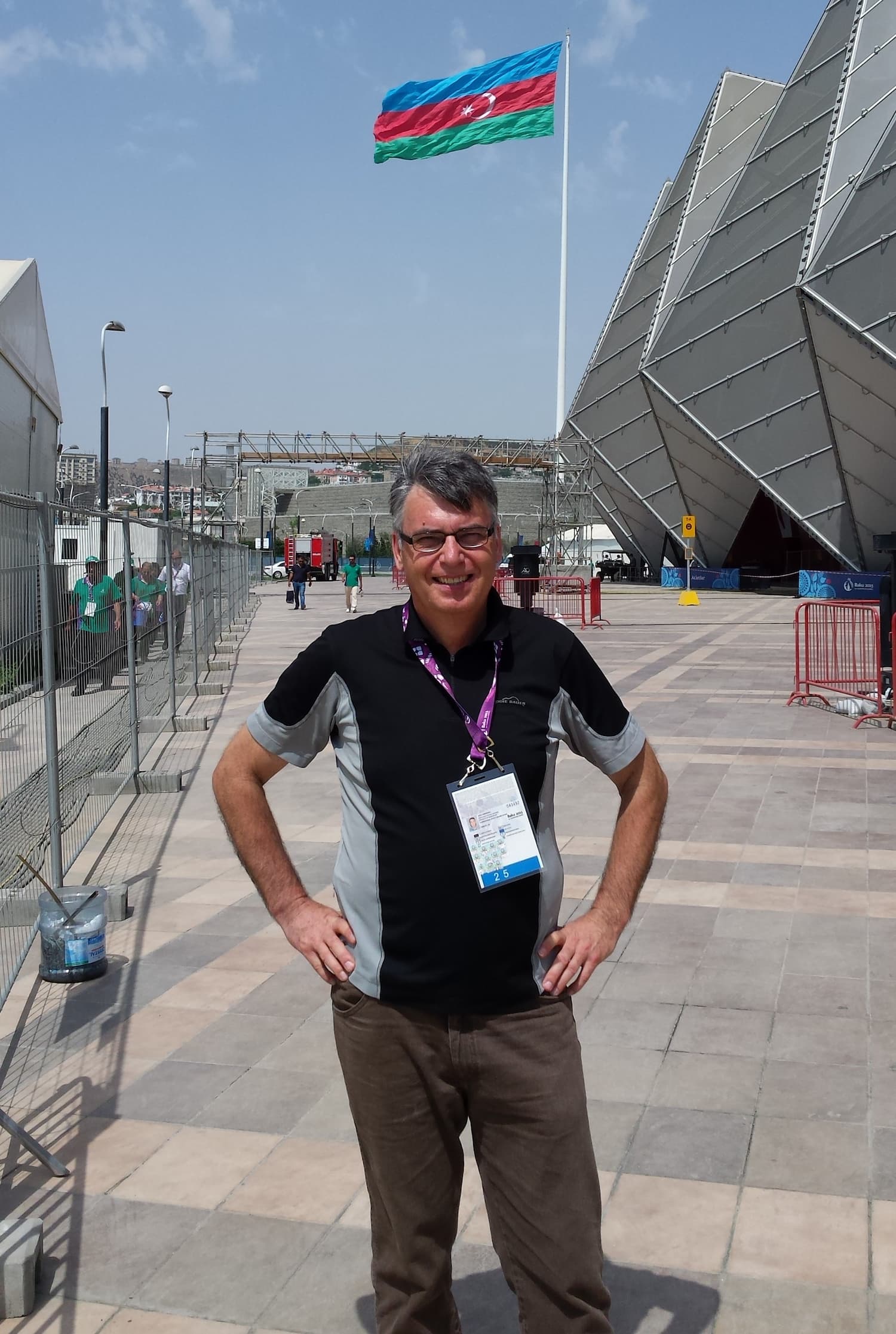 — What made the Kazakhstan project so complex technically?
As Telecom Manager, I had to work with a third-party construction company from Turkey, an ice rink, and an Italian company converting a bicycle track into a short-track speed skating venue. I supervised the installation of fibre-optic cables from Almaty to Astana and across the venues. I also dealt with local companies building platforms at the venues and helped convert a disco club on the top floor into an IBC facility built to our standards.
— Was Baku difficult in the same way?
Baku was intense in a completely different way. I worked as VTM for Ursula Romero and her father, Manolo Romero from ISB, and I was responsible for five venues. The workload was extreme — my shifts were about 37 hours straight for several days in a row. I barely slept.
Ursula Romero Takes Over Global Sports Broadcasting Company After Her Father’s Death
— What did a normal day in Baku look like?
After things became a little quieter, my shift would start at 6:00 a.m., three hours before the volleyball competition. Ideally, it would stop around midnight, but we had many overtime matches. So, I would go to the hotel around 1:00 or 2:00 a.m. I would take a shower, sleep for an hour and a half in a chair, and go straight back to work. It was nonstop pressure, but the team delivered, and the project launched on time. In the end, that’s what mattered — we got it done.
— Did people outside the project notice how extreme it was?
I didn’t even have Facebook, but someone was posting about me because of the hours I was working. One day, I received an email from my former OBS boss, Steve Mitchell, asking me, “What is going on over there?” That’s how tough it was — people outside the project were hearing about it.
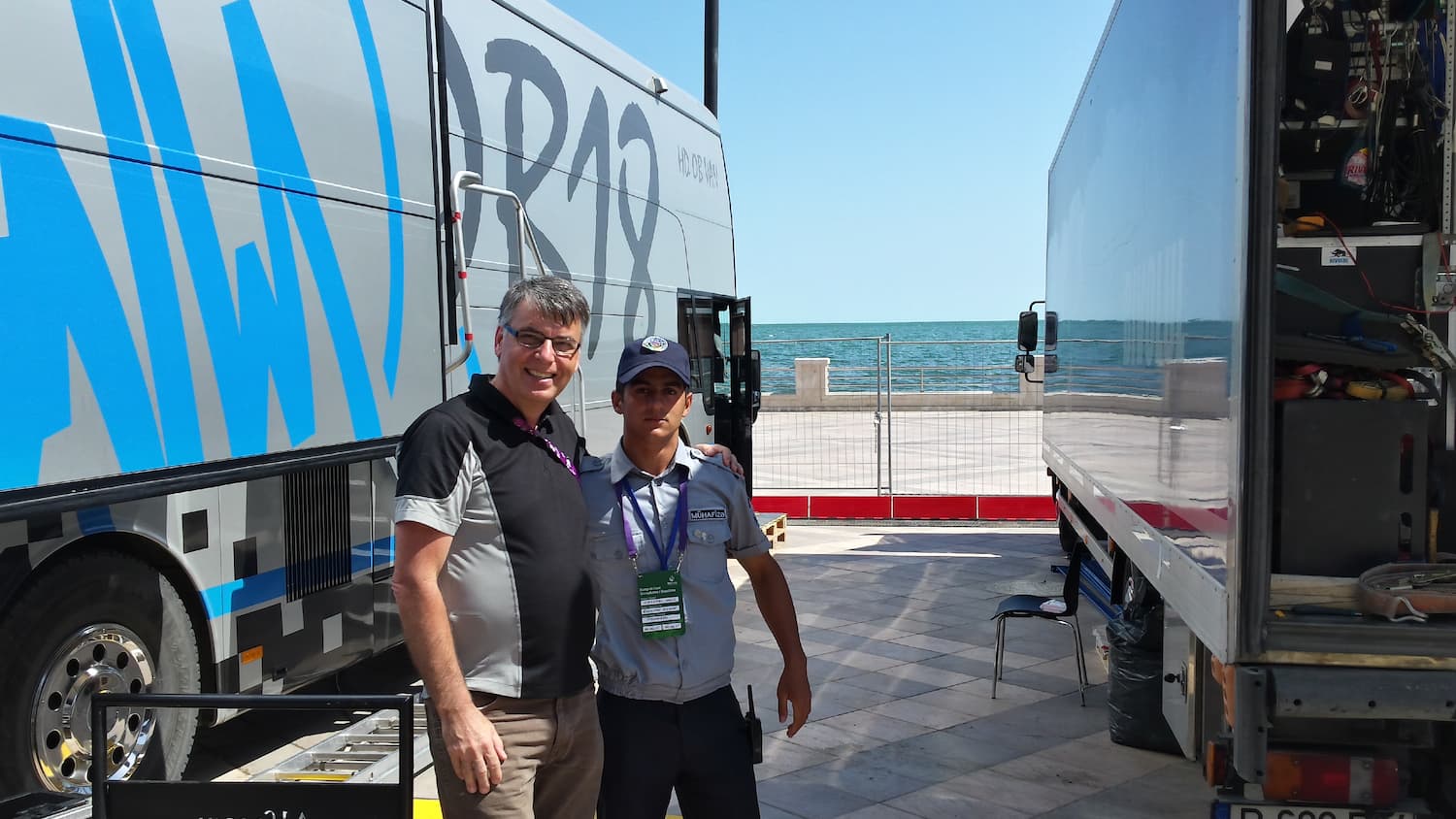 — What was your philosophy when managing teams under pressure?
I always told the teams: “If you have a problem, you don’t need to worry. Your problem is my problem.” That was my philosophy everywhere I worked. For me, service was the key. When an event finished, I wanted people to go home with a smile — not because they were simply happy to leave, but because we had given them good service and solved their problems.
— What kind of problems did you face with the OB vans?
In Baku, we faced a serious issue with the OB vans. The first OB van never arrived because it broke down on the way. The others were coming from different countries — Belgium, Turkey, Spain, and Switzerland — each with different equipment, crews, and expectations. It was complicated, but that is live production. You solve the problem in front of you, and then you move to the next one.
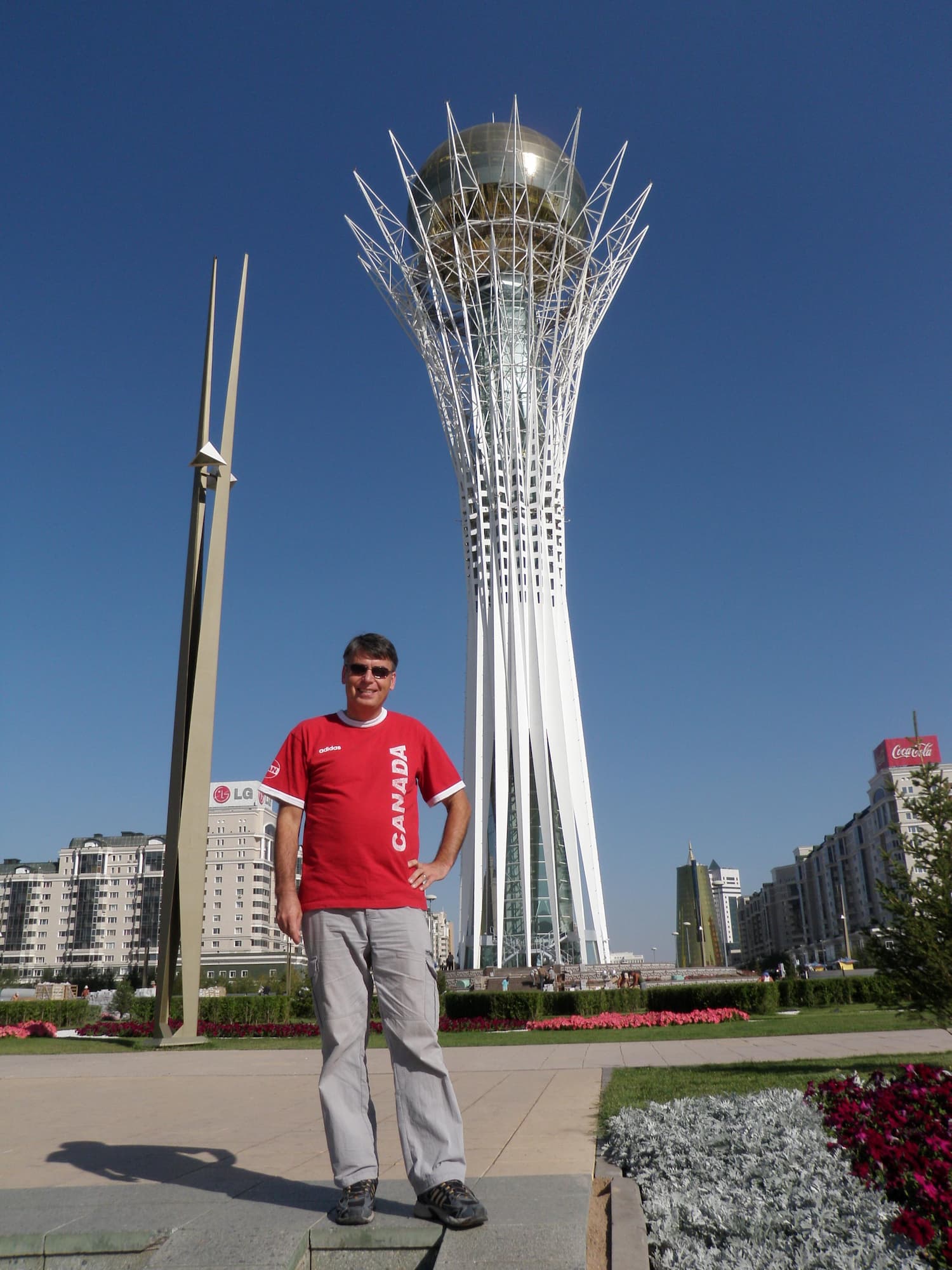 — How did you try to keep the operation under control?
That’s how I always worked: stay calm, take responsibility, and make sure the teams feel supported. When people know you’re there for them, they can focus on doing their job. And in the end, that’s how you deliver a successful event. At the end, I don’t think ISBTV left me satisfied, because I applied for a few events after that and was never called back.
Baku: OB Vans and Constant Rebuilding
— Who finally helped you stabilize the situation in Baku?
Later, Boviol came in — a Romanian production group, very hard‑working, very disciplined. You know they are a good team, you saw their excitement, their passion for sports. They were a good team, and their arrival helped us regain control of the situation. The original OB van didn’t make it.
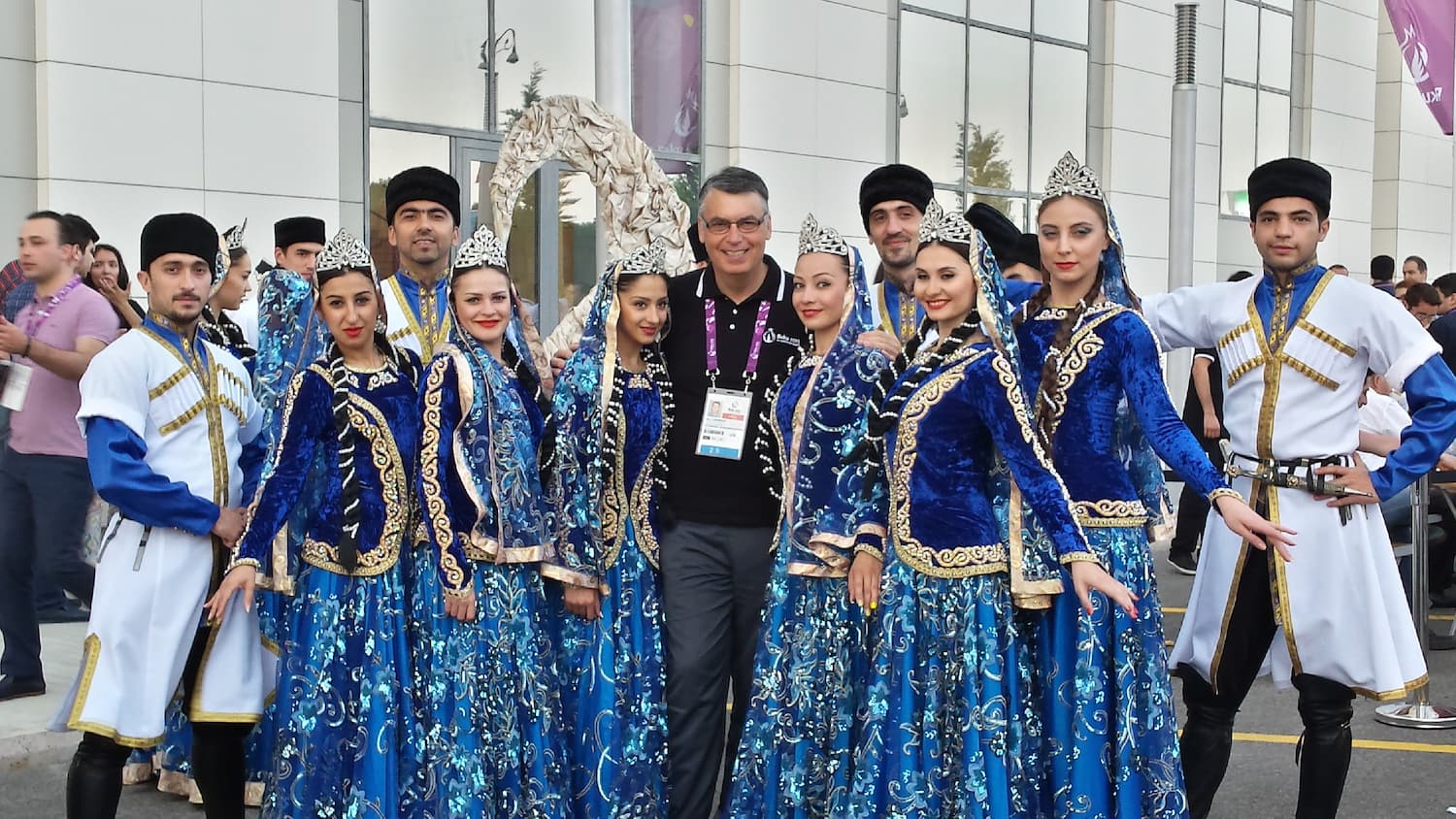 At one point, Manolo Romero called me and said, “Alex, we will take the temporary OB Van from the opening ceremony.” The ceremony finished a little after midnight. So, after the match, we worked through the night. By three or four in the morning, the team was fixing fiber, setting cameras, rebuilding positions, and preparing the system again from scratch.
In the morning, Manolo Romero called me again and said, “If you miss the opening matches today or tomorrow, it’s okay. It’s only preliminary games,” I told him: “Mr. Romero, we will miss the first game, but the second game is at noon — we go live on air.”
— What made that project so difficult?
The OB van we took from the opening ceremony was only a temporary solution. It was scheduled for a different venue just a few days later. We were setting it up for volleyball, but at the same time, I also had to prepare the boxing venue in the same building. And it didn’t stop there — we had other sports coming in one after another: taekwondo, karate, fencing.
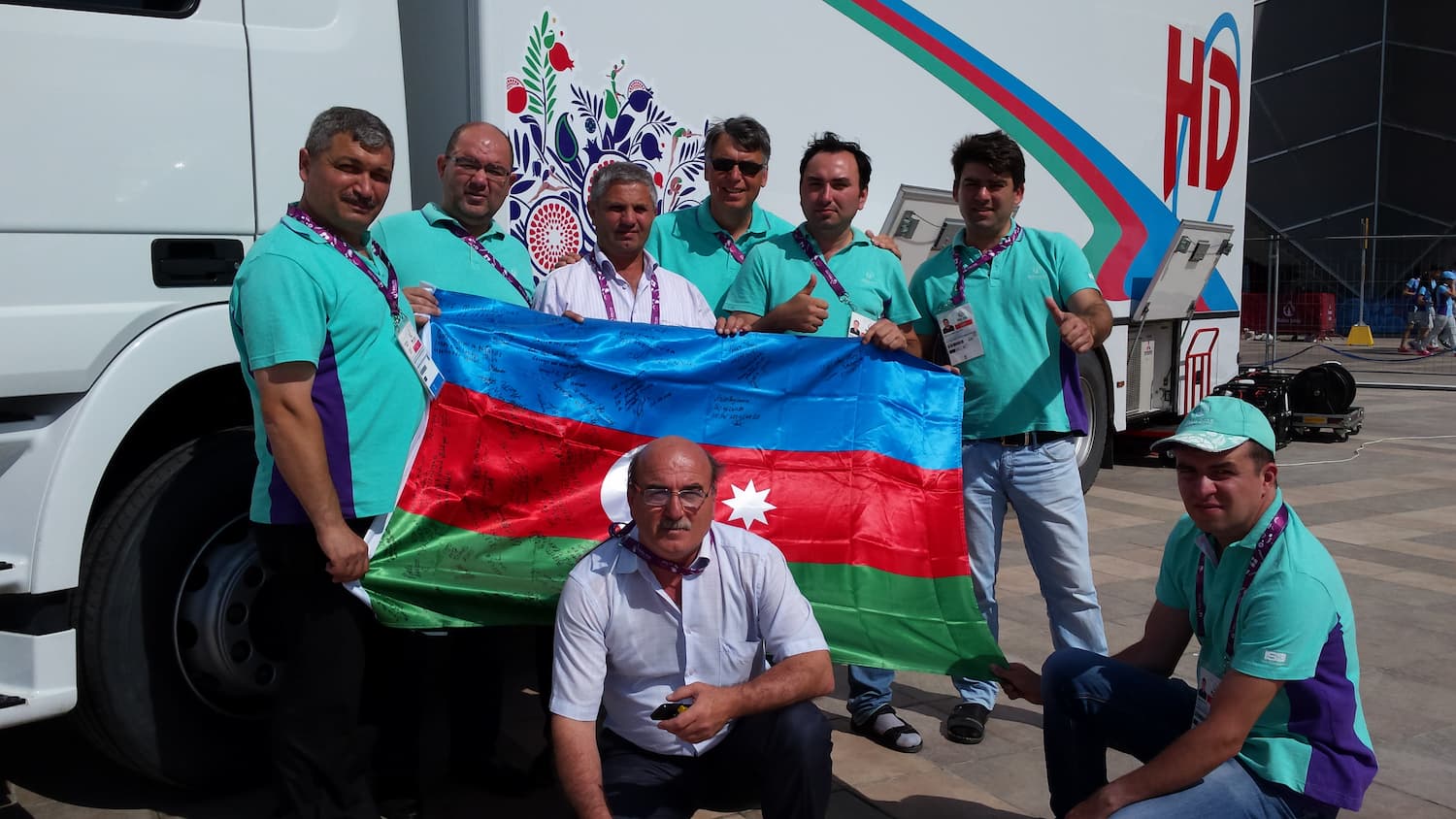 Every time one sport finished, the entire floor had to be changed. Camera positions had to move. Cabling had to be rerouted. After karate, we had to rebuild everything for fencing. Then came taekwondo. Each sport had different requirements, different angles, different lighting, and different camera plans. You had to rebuild the venue again — but the broadcast still had to work, without excuses. That’s what made it so difficult: constant change, constant pressure, and no margin for error. But that’s live production. You solve the problem in front of you, and then you move to the next one. Don’t you just Love IT?
When the Engineer Says, “It’s Not My Problem”
— Did all vendors work at the same level?
No, not at all. We received an OB van from Switzerland to replace our temporary unit, but the head engineer refused to take responsibility for anything. He kept saying, “It’s not my OB van. It’s rental.” I told him, “But you are the chief engineer.” According to my requisitions, he was supposed to provide specific cables and equipment — none of it was prepared.
From Paris 2024 to the Saudi Pro League: The Global Broadcast Journey of Filipe Sobral Santos
— Did you have to solve even basic working conditions yourself?
The air conditioning didn’t work, and he said it wasn’t his problem. The chairs were plastic, and the crew had to work 15 hours a day in that heat. So, I went to the Organizing Committee myself and negotiated proper chairs and airflow for the team. Someone had to take care of the people doing the work.
— Were the technical preparations completed before arrival?
There were also no cables prepared. I asked them, “Did you go to Madrid for the meeting? Did you make a list of what you needed to bring?” They said yes — but when we arrived, almost nothing was ready. We had to build everything from scratch under pressure, with a team that wasn’t fully prepared.
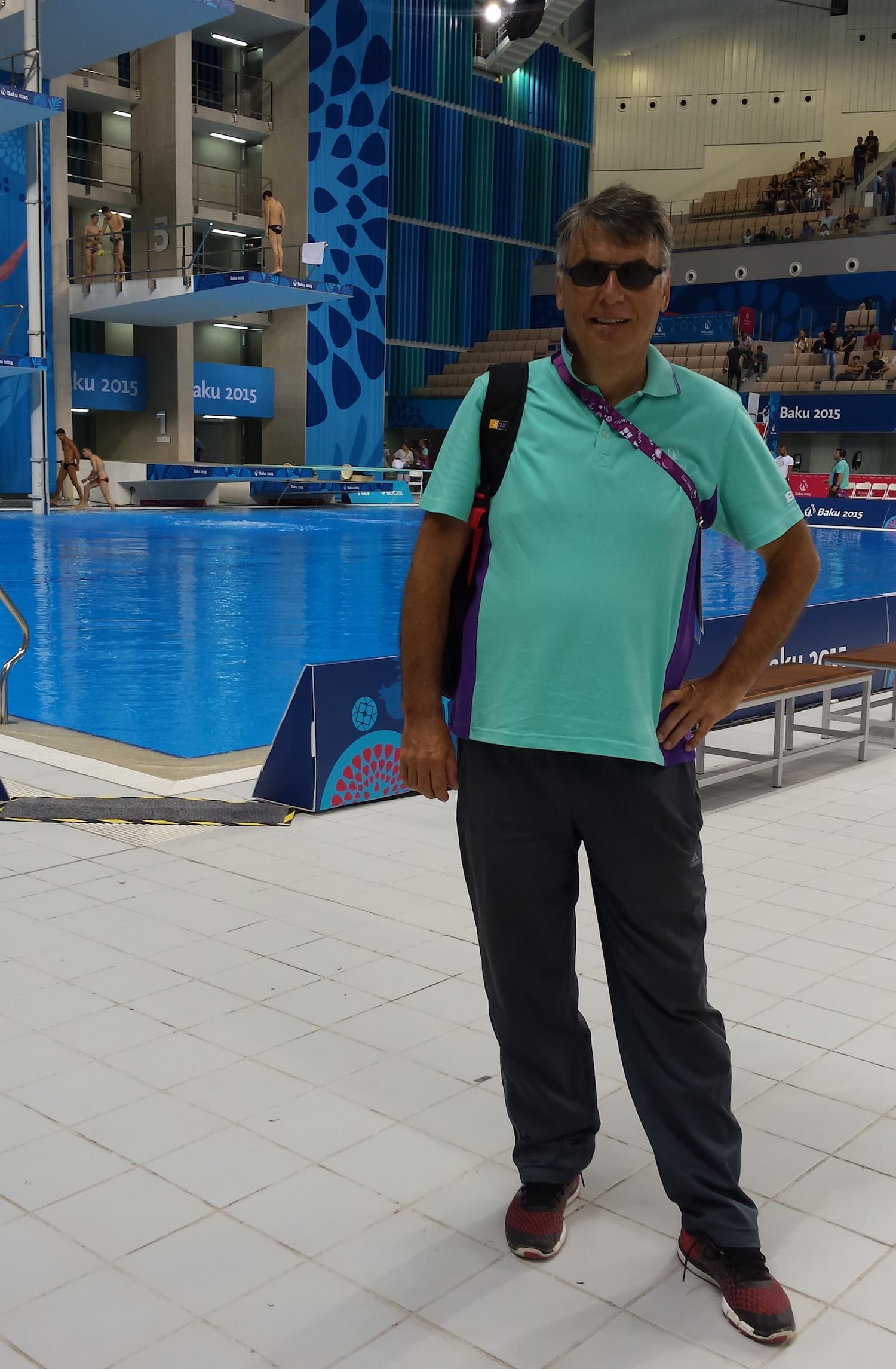 — Who helped you?
The Romanian team helped me far more than the Swiss engineer ever did. For the boxing venue, we had an OB van from Finland. The head engineer — I called him Mr. Tarzan because he walked everywhere barefoot — never wore shoes. But he and the Finnish crew were excellent. They helped. They worked. They took responsibility.
— What does that say about these projects?
That’s how these projects work. Sometimes the official structure doesn’t help you, but the right people do. The ones who care, the ones who show up, the ones who don’t hide behind excuses.
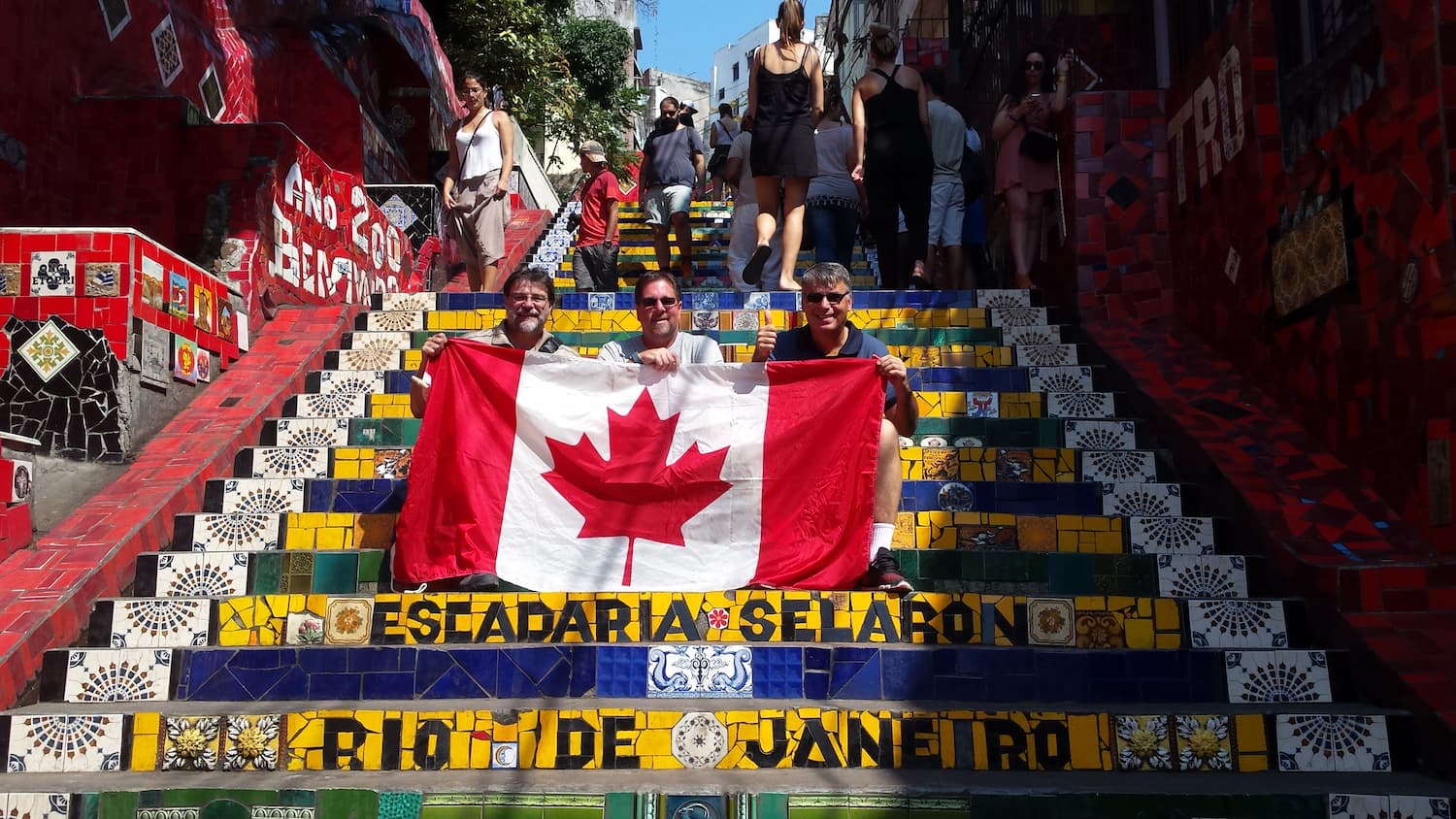 — Did you have any chance to see Baku itself?
I was in Baku, but I barely saw the city. On the first day, I went out for dinner. After that, it was work, problem-solving, and more work. Then I left. That was my entire Baku experience — the venues, the teams, the pressure, and the people who stood beside me when it mattered.
Telemundo and the World Cup Operation
— And now, with Telemundo, what will your role be?
I will be working in the Broadcast Operations Center as an operator. I already worked with Telemundo as a manager in the BOC in Moscow, and again in Qatar in operations, so Miami will be a similar setup. The BOC — Broadcast Operations Center — is the heart of the entire network. It is where all signals are received, monitored, tested, and distributed across the full Telemundo network.
— How does the BOC workflow begin before transmission?
As a Rights Holder, we receive the signals from the IBC — the International Broadcast Center — from the Host Broadcaster, HBS. Before the first transmission day, we test and retest every circuit with the Host Broadcaster to make sure everything is clean and stable. After the final testing, I created my own spreadsheet with each channel signal. I come to work about three hours before the match and verify each channel, comparing it with the previously tested signal.
Tahir Aliyev, International Sport Broadcasting: I Visualize a Story as a Shot
— What happens if you see a problem in the signal?
If I see a big discrepancy, I notify the HBS Master Control Room politely and ask them to double-check the signal. It is not always the Host Broadcaster’s fault; it could be on our end, from the technical room. Then you deal with your engineering team. Daily, after the shift, I compile a full report, and it goes to different groups of people.
— How many live elements does Telemundo have to coordinate?
Telemundo will have production teams in every host city. They will have scheduled live transmissions, and we must be ready for each one — testing whenever possible before going on air. They will also have reporters in the stadiums and in a studio. If you’ve never worked in this kind of environment, it can be overwhelming. You have the intercom system with many channels, many voices coming at once. You must know who to listen to, who to mute temporarily, and when to react.
 — How do operators communicate in that environment?
Sometimes the channel is muted, and behind you, there are people performing different functions. If you need to unmute, they give you a hand signal. As you can see, this is not an individual sport — it is a team sport. And what keeps you alert, awake, and sharp… is Cuban coffee.
— Why does your contract end before the final match?
For the first time, my contract ends before the final match, on July 9. At first, that felt unusual for me, but the schedule changes near the end. With 48 teams, there are fewer matches in the final stage and more days off. Telemundo’s internal team — with fewer games to cover — can complete the last part.
 From Miami to Glasgow
— What comes after that?
The timing worked out very well for me. A colleague I met during the World Cup in 2006, Pascal Fabre, who is the CEO. He contacted me and said they were looking for an engineer for the Commonwealth Games in Glasgow, Scotland. He asked if I would take the role of engineer for the swimming venue, and I agreed. From Miami, I come home for a couple of days and fly to Glasgow.
Thinking About the End
— Do you think about stopping?
Yes and no. I am 69 years old now, but I maintain a healthy lifestyle. I go to the gym 3–5 times a week, mainly so I can continue enjoying skiing during our long Canadian winters. I was hoping to work at two more Olympic Games.
He Built Global Sports Television Across Four Continents — Then Started Again at 46
— Why did not being selected for Italy affect you so much?
Not being accepted for Italy was painful — painful in many ways. OBS explained my non-selection by saying that the Winter Olympics are much smaller than the Summer Games and that there are fewer positions. I understand that. But at the same time, I have worked within this system since 2004. I was there when we moved from analog to digital high definition, and later to ultra-high definition. Naturally, I ask myself: why am I being pushed aside?
— What makes that situation emotionally difficult?
One of the hardest parts is the lack of honesty. When you sign a contract with a company, you give them your loyalty. You defend their logo, their brand, and you proudly explain to younger generations why things are done a certain way. OBS doesn’t seem to realize that we build real connections with the people we work with. We build relationships.
— Do younger engineers still come to you for advice?
Many younger colleagues contact me for advice, and I am always happy to help those who truly love sports, not just working in sports. I want them to succeed, to be promoted, to grow from operator to deputy, and eventually to VTM if that is their goal.
— Did you try to discuss the hiring process directly?
I had several conversations — in person and by email — about the hiring process. I was told many different things. “Alex, you have to understand, OBS has new policies. You must apply for the position.” Meanwhile, many people who worked only one or two Games were invited directly, without going through these so-called new policies.
Experience and Culture
— What disappointed you most?
I do not want to say anything negative about OBS. But I do feel that the culture has changed. In the past, there was more respect for people who understood the work deeply, who knew the position, and who gave their soul to the company and to the project.
— How do you see the situation today?
In recent years, I have seen people being hired without fully understanding what they are responsible for. At the same time, people with long experience are sometimes left aside. That is difficult to accept, especially when you have spent decades building systems, teaching others, solving problems, and protecting the operation.
— Did you ever raise those management concerns?
I had several conversations — in person and by email — about the hiring process. I was told many different things. “Alex, you have to understand, OBS has new policies. You must apply for the position.” Meanwhile, many people who worked only one or two Games were invited directly, without going through these so-called new policies. I contacted upper management at OBS and wanted to have a discreet, open conversation. But I was scolded and told it was not my business who they hire and how they hire.
Japan During COVID
— Was Japan different?
Japan was a special case because of COVID. It was extremely difficult for OBS to hire people at that time. Many could not travel, some failed the required tests, and others simply refused to work under those conditions. A large number of people did not meet the COVID requirements, and many quit even before the events began.
Why the Venue Mattered
— Why did you want to work at a venue rather than at the IBC?
They asked me that as well. Yannis Exarchos, the CEO, once asked why I wanted to move from the IBC environment to a venue. I told him that, as a former athlete, I wanted to feel the atmosphere of sport directly. I had spent so many years inside the technical system, but I also wanted to be closer to the competition itself — to the energy, the pressure, and the emotion.
— Did one particular event confirm that feeling for you?
I was given Beach Volleyball at the 2016 Summer Olympic Games in Rio de Janeiro, Brazil, in the TOC — Technical Operation Center — and that experience confirmed it for me. Being at a venue allowed me to combine my technical knowledge with my passion for sport. It felt natural, and it felt right.
IBC as a Political Position
— How different is IBC management from venue work?
The IBC Manager’s role is very political. You must be extremely focused because everyone comes to you: venues, rights holders, production teams, and technical teams. You are dealing not only with technology, but also with clients, pressure, expectations, and sometimes emotions.
— What made that role so demanding during the Games?
In Greece, for example, we had 204 rights holders. Every major broadcaster had questions, and every one of them expected answers. In China, high definition was new for many workflows, so there were many technical questions. The Koreans had questions, the Japanese had questions — everyone had their own requirements. You had to solve the problem and explain it in a way that kept people calm. In Greece, I was moved from operations to an engineering position. These assignments came directly from supervisors or managers who trusted me to deal with rights holders.
— Do you remember a moment that captured the pressure of that responsibility?
On the day of the Opening Ceremony, I was selected to work that shift. About ten minutes before the ceremony began, I stepped back from the equipment racks and stood by the display window with my arms crossed. Manolo came beside me and said, “Alex, it is good you are staying here.”
I looked at him, smiled, and said, “Mr. Manolo, if you see my hairy legs going up and down behind the rack, that means we have a problem. Me staying here is a good thing.”
He smiled, said “Good,” and walked away.
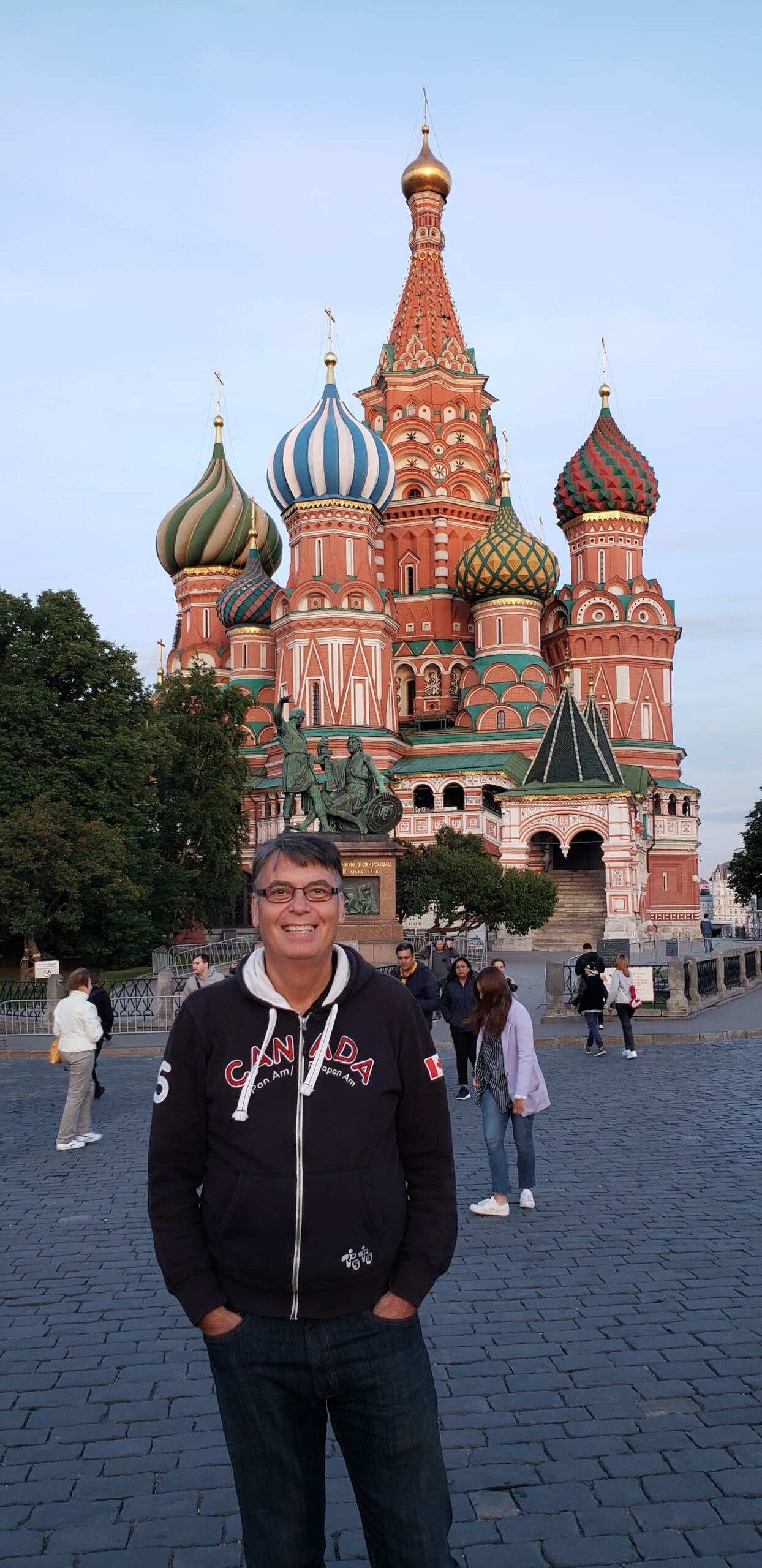 Respect for Engineering Preparation
— Were some countries better prepared technically?
Yes, of course. NBC is always extremely well‑financed, well‑prepared, and highly organized. The Japanese consortium is also very strong technically, and the South Koreans are consistently well prepared.
In 2010, during the World Cup in South Africa, Brazil’s Globo surprised me in a very positive way. At that time, the World Cup was already in high definition, and their engineering team was exceptionally well prepared. They understood the signals, the technical chain, and the issues that needed to be solved. Their level of preparation and technical knowledge was impressive.
Richard Pound and Montreal Memory
— You mentioned Richard Pound. What happened there?
In 2006, Richard Pound was one of the most influential people in the Olympic movement. He was deeply involved in anti‑doping and continued to play a major role in that world. I invited him to the high‑definition site and began explaining the technology to him.
Then we started talking about Montreal. I told him how we trained as athletes, how we had to share passes because there was no government money, no sponsors, and no support. He looked at my accreditation and said, “I do not remember you, but I remember your accent.” That stayed with me.
Not Wanting to Be Humiliated
— Did you think about appealing when Italy did not accept you?
I thought about it. I wanted to return to Italy twenty years after Turin. I even considered writing a letter to Mr. Pound and explaining my situation. After all, he was still on the Board of Directors for Broadcast at OBS. But in the end, I wanted to be accepted on my own merits. I simply wished that OBS would give an honest answer. For me, it showed that a new layer of middle management has appeared, with a different culture. Or someone is keeping a long grudge.
David Ross, Ross Videо: Not many fathers tell you not to go back to school
Freelance: Money, Freedom, and the Price of Learning
— When you switched to freelancing, did it become more profitable financially?
It’s fifty–fifty. Financially, it can be better, but as a freelancer, you also carry more taxes and much more responsibility. The advantage is that you work fewer months in the year and, if you manage your money properly, you end up with more time for your family.
The challenge is learning. When you work inside a company, they may send you to courses, or you have direct access to the newer equipment. As a freelancer, nobody invests in you — you have to find the training yourself and pay for it yourself. In Canada, one of the rare exceptions is Ross Video. If you want to learn about their equipment, you can go to Ottawa, and they will spend a day or two with you at no cost. I know David Ross. He is a very smart businessman, and he built a very friendly company.
— Are there other companies you respect in that way?
Yes. Another example is Riedel Communications. Thomas Riedel started back in the Lillehammer days, and today the company has grown into a major global player. Their culture is different. People genuinely enjoy working with companies like that because they combine cutting‑edge technology with real respect for the people who use it.
I met Thomas Riedel in Kazakhstan during the 7th Asian Winter Games. At the time, I was working as the Telecom Manager, responsible for coordination with Kazakh Telecom, fiber connections, testing, reporting, and providing technical guidance. The Games were split between Almaty and Astana, so I was constantly flying back and forth between the two cities. It was a demanding role, but it showed me again how much leadership and culture matter — and how companies like Riedel succeed because they value relationships as much as technology.
“Kazakhstan: Minus 52 and Still Working”
— What was the situation with Riedel equipment there?
We had the opening ceremony at the stadium, and all the Riedel equipment was installed in one technical room. The conditions were extreme. Outside it was around –44°C, and inside that room it dropped to –52°C. Even the BNC cables became brittle — they were so frozen that if you touched them the wrong way, they could snap. We had to use special tools and handle everything with extreme care.
 I told Thomas, “Your specifications are wrong.” He looked at me and asked why. I said, “Your equipment is rated to –40C, but here it has been running for more than a week at –52C, and it still works without a single problem.” He came with me to the stadium to see it himself. I even took a photo.
The Main Achievement
— You have had a long and very bright career. What do you consider your main achievement?
I never chased a specific title or a grand destination. When I started in electronics and broadcasting, I didn’t have a master plan. I just wanted to learn how to fix equipment. I didn’t even know where the road would lead. In many ways, broadcasting found me — and once it did, it carried me farther than I ever imagined.
If I look back at everything, the moment that stands out as my biggest professional achievement was being offered a full‑time engineering position with Olympic Broadcasting — what is now OBS. I had two opportunities to work for OBS full-time as an Engineer. Technically, it was a very serious opportunity, the kind of role that shapes the direction of a global broadcast organization.
For someone who started without a roadmap, being trusted at that level — by the people who define the standards of world broadcasting — felt like a recognition of everything. And maybe that’s the real achievement.
Family First
— Why did you refuse?
Because of my family situation. I will not go into every detail, but around 2005, things were very difficult at home. My wife had ovarian cancer, and there were also serious concerns connected with my daughter and the family.
After Germany, the World Cup 2006, I was in Madrid, but I did not go there to promote myself. I went to see colleagues and friends. I remember Isidoro Moreno came to me and wanted to talk about China. I told him: “Isidoro, I am sorry. I came here as a friend. If you want to talk about work, let’s meet separately.” I learned from Japanese culture how to separate friendships from business.
The “What If” Question
— Do you ever think: what if you had accepted?
Many times. I’ve asked myself that question over and over — what if? What if my family situation had been different? Maybe I would have taken that job. Maybe my career would have gone in another direction. But when I look back, from 1961 onward, everything in my life was already almost impossible. After Zhdanov, after the Soviet Union, after Canada, after all those turns — the whole story is one long “what if.” If I had not left the Soviet Union, my life would have been completely different.
Children and Grandchildren
— How many children and grandchildren do you have?
I have two daughters. My eldest is almost 40. She’s a tattoo artist and is now actively building her own company. For many years, she underestimated herself and thought she wasn’t smart enough — but life pushed her forward. She created a special cream for tattoo care, both before and after the process. She registered the company and launched the product entirely on her own.
 My younger daughter went to college but decided not to continue. She’s small and thin, but she works with a big truck for UPS, and she enjoys it. That’s her path.
Forty-Four Years Together
— How is your wife now?
She is good. Next week, we will celebrate our 44th wedding anniversary. We met in 1978.
I have always considered myself a very lucky person because I had strong support from my wife. Many freelancers don’t have that. Some are divorced, some couldn’t continue working this way, because the lifestyle is difficult. You travel, you disappear into projects, you come home late — and not every family can live with that.
My wife supported me. If I came home not at six, but at nine or ten at night, she understood. Sometimes I stayed with clients until the problem was solved. She knew that when I was home, I would spend time with the family, often in the kitchen, cooking something good for them.
Slovenia, Austria, and Japan
— Is your wife Ukrainian?
No. She was born in Linz, Austria, but her parents are from the former Yugoslavia, Slovenia. She came to Canada when she was three months old, so German isn’t really her native language. I like Slovenia very much. The first time I visited Slovenia with my wife was in 1986. In the Soviet Union, in schools, Yugoslavia was described as a very poor country…. I was surprised to see how different life was in Slovenia compared to Ukraine. At one point, I even thought about moving there. We traveled a lot, and after the Commonwealth Games in Glasgow, we wanted to go to Slovenia for a month or a month and a half. It is a beautiful country.
People often ask me: What is your favorite country? I love Japan. My first visit was for the Winter Olympic Games in Nagano in 1998, where I worked for TF‑1, Télé France 1. After that, I started my new position at Sony Canada. I visited the Sony manufacturing site in Atsugi several times.
In 2008, I was invited by NHK management to visit their facilities in Tokyo and Kyoto. Why do we love Japan so much? Is it the politeness, the kindness, the respect? Maybe it’s the food, the cleanliness of the cities, the temples and shrines, the old traditions and culture, the safety, the electronic district in Akihabara, or the bullet trains. For different people, it’s different things. For me, the list can go on and on.