
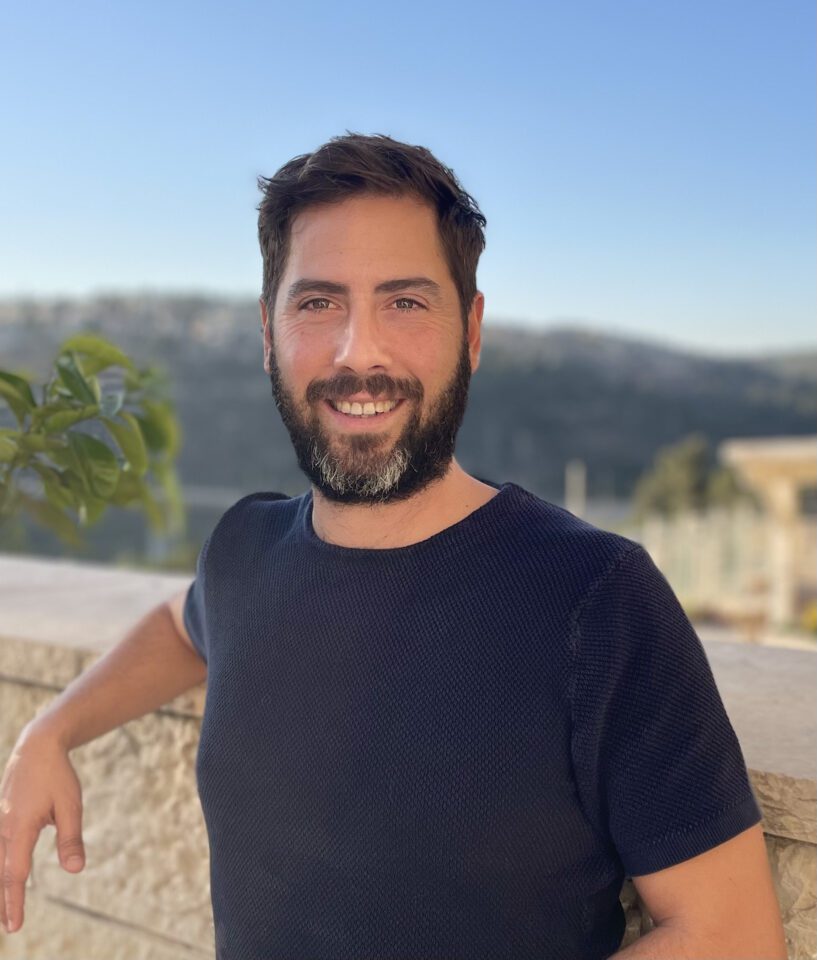
Tom Bar Nachum, Broadcast Producer at Sport 5 and Technical Supervisor at Ariel University, shares insights into remote production, university-level tech integration, and the evolution of live sports broadcasting in Israel.
Early Life and Family Background
– When and where were you born? What did your parents do?
My father was a freelance producer who also collaborated with some major companies. My mother worked at the University of Jerusalem in one of the libraries.
 – What companies did your father work with?
He worked with Israeli Broadcast, HaRutz HaRishon, and did some nature films. I don’t recall all the specific channels, but he spent about 40 years in the industry. I can check the details if needed. He’s now 78. My mother, as I mentioned, worked at the university library.
Childhood Memories in Jerusalem
– What’s your first memory with your father?
I remember living in French Hill, a neighborhood in Jerusalem near the border with Arab areas. It was a borderline zone — a bit complicated politically, but I have good, warm memories from that time. My father was a bit strict, while my mother was more gentle and caring.
We had simple routines — things like weekend outings. It was a pretty standard childhood, nothing extraordinary.
First Encounters with Broadcasting
– What’s your first memory of your dad’s work?
I remember visiting his workplace when I was very young. There were Israeli talents around, and it felt exciting. He always had a large van full of gear. I had no clue what any of it was, but it looked cool — video equipment, audio tools, that kind of thing. Maybe that’s what sparked something in me. He worked hard, which I remember clearly.
– Your dad brought you to productions?
Yes, I think whenever he didn’t have a babysitter, I’d tag along. I remember going with him five, six, maybe seven times to different productions. Most of them weren’t in the field — more like shows done from the office space he rented.
 Choosing Audio Over Video
– Why didn’t you follow in his footsteps and become a cameraman?
I actually went the opposite way. In analog broadcast, the field usually splits into video and audio. I chose audio because I’ve always loved music and working with sound. I started as a failed musician and eventually became a decent audio engineer. I helped camera guys on occasion, but I never filmed anything myself.
From Music to Audio Engineering
– What kind of music did you make?
It was mostly world electronic, some experimental stuff. I played around with techno and house, but mainly I liked improvising and blending instruments with electronic elements. I got into music production, studied it, and really focused on both composition and technical sound work.
I was fascinated by acoustics and the production process. I was always somewhere between being a musician and a technician. That mix is what got me into producing.
School Life and Early Interests
– Were you a good student in school?
I was okay — probably around the 85th percentile. I was always more interested in other things. I didn’t do much homework, but managed well on tests. I studied just enough to pass exams, not much more.
– Did you get into trouble at school?
Not really. I was curious and maybe caused a little mischief here and there, but nothing serious. More playful than problematic, I’d say.
Discovering a Passion for Technology
– When did you become interested in technology or professional work?
I’ve always loved technical stuff. Even when I played in bands, I was fascinated by the mixers, pedal boards, anything I could tinker with — even if I had no clue how it worked.
But it got serious when I studied at the Rimon School of Music in Israel. I started focusing on composition and arrangements, which gradually led me toward electronic music and the technical side of sound. Then a friend took me to a recording studio — it is called keoss, one of the big ones in Israel.
I didn’t know much at the time, but the studio owner liked me — he wasn’t a close friend, but he gave me a shot. He started teaching me more, and that’s when I really got into it.
First Steps in Television: From Audio to Field Production
– How did your television career begin?
After we wrapped up work at the recording studio, my friend moved to a small sports TV channel in Israel called One (Sport One), and he took me with him. That’s where I began working as an audio technician for television.
I did that for two or three years, and then my friend moved on to a larger company. Around the same time, I joined Israel’s biggest sports broadcaster — Channel 5. They didn’t need an audio technician but were looking for a field producer. I stepped into that role and handled other tasks when needed — occasionally helping with audio when they were short-staffed.
Eventually, I also worked as a director and technical assistant. But my main role there wasn’t audio; I had moved beyond that.
 Military Service and Lessons in Discipline
– Did you serve in the military? If so, what was your role?
Yes, I did. I served in what you’d call a general logistics corps — nothing combat-related. Originally, I was set to be a gunner, but my brother, who was an officer in the Golani Brigade, strongly advised me against it. He knew I wasn’t truly drawn to military life and told me, “If you’re not fully into combat, don’t go.” Looking back, it was good advice.
I ended up in a unit responsible for delivering equipment to bases in southern Israel. Not a glamorous role, but it served its purpose.
– What did the military give you?
Structure, above all. You quickly learn that you can’t act like a kid anymore. It’s not optional — either follow the rules or face detention or military jail. Sure, once you figure out how the system works, you can bend it a little, but it still matures you fast.
Of course, combat service matures you ten times faster, but even in logistics, you’re accountable. No mom and dad. Just discipline.
 Post-Army Life: Travel, Work, and a Shift Toward Music
– What did you do right after your military service?
Like most Israelis, I took a “preferred job” — a short-term role in sectors like tourism or fuel stations that comes with a government bonus after six months. I worked at a hotel in Jerusalem for a while and then went backpacking in South America for six months.
– Where did you travel?
All over — Argentina, Chile, Peru, Bolivia, Brazil, Colombia. It was a long time ago, so the memories are fading. Maybe it’s time to go again.
Returning Home: Music School and a Realization
– What came after your travels?
I returned and enrolled at Rimon School of Music, where I focused on composition. That’s when I started seriously diving into music — both creatively and technically. I learned a bit about sound engineering, too, though the school focused more on musicianship than tech.
Over time, I gravitated toward the technical side. But eventually, I realized I wasn’t taking myself seriously enough. I wanted to do something more structured.
 Choosing Academia: A New Direction
– What did you do next?
I decided to enroll in university for a proper degree. Being true to myself, I chose to study subjects I genuinely enjoyed — geography and the human sciences. I’ve always been driven by passion for what I learn.
Working in Academia: A Technical Manager’s Role in a Communication School
– What does it mean to be a CTO at the university? What exactly do you do?
Well, I’m a technical manager at a communication school. It’s a small corner of the world, but the work is more complex than it might seem — especially for a communication program.
If you compare us to bigger institutions like Reichman University in Herzliya or Tel Aviv University — both of which are much larger and more recognized in media education — they actually operate with simpler technology. A few cameras, a small team, nothing too elaborate.
But here, things are different. I’m not sure how it ended up this way, but I believe it’s largely due to the head of our department. He’s been here for 20 years and is very driven — he always wants to stay ahead of the curve in Israeli media education. He brings in a lot of new technology, often based on his vision rather than a deep technical understanding.
– Do you mean he’s more focused on ideas than execution?
Exactly. He’ll say, “I have a vision for this, and that, and that too,” and then it’s up to the technical director to make it happen. The previous technical director worked here for ten years but left about four years ago. There was a one-year gap with no one in the position, and then I came in.
So yes, in theory, it’s a simple job — but it’s incredibly engaging. This place feels like a microcosm of the wider media world.
 Doing It All: From Channel 5 to Full-Spectrum Management
– How is your work different from what you did at Channel 5?
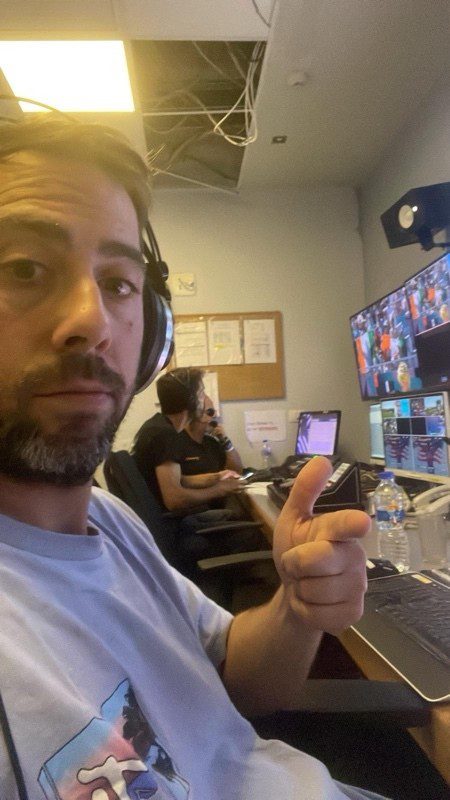
At Channel 5, things were massive and specialized. You’d only be responsible for one thing — not just one task, but you were definitely in one department or domain. Here, I handle everything. Every piece of technical infrastructure, every setup — it’s all on me.
That kind of full-spectrum responsibility is interesting. It’s letting me learn new things I never had a chance to touch on in broadcast television.
Technical Scope and Structure of the Media School
– Are you responsible for developing the media complex at the college?
I wouldn’t say I’m responsible for “developing” in the larger sense — not trying to make fun of myself, but I manage the technical operations of the media school.
– How is the technical team structured?
We actually have two technical directors. One of them handles the film department — he’s an old-school guy, around 55, a really nice person, very experienced — but his thinking is more analog-oriented. He only works within the film section.
– And what’s under your responsibility specifically?
The communication school here includes four main disciplines, and I handle everything outside the film area. That means radio, television, video frameworks, networking — the whole broadcast-style infrastructure. It’s a very different mindset from film.
Ten years ago, there was only one guy running everything — the person who eventually left. But as the school became more complex, they needed more hands. Someone came in before me, then left, and now I’m in the role. For now, at least. We’ll see.
Student Interaction and External Partnerships
– Do you enjoy working with students? Are there any third-party companies that use your facilities and equipment?
Yes, in terms of equipment — especially lighting — there’s one company that partners with us. There’s a fair amount of outsourcing for gear.
As for teaching and mentorship, there’s less of that coming from outside. One company we do work with is called Sentronics — they come in when I need help with something special or advanced. But in general, the teaching side and hands-on guidance are still handled in-house.
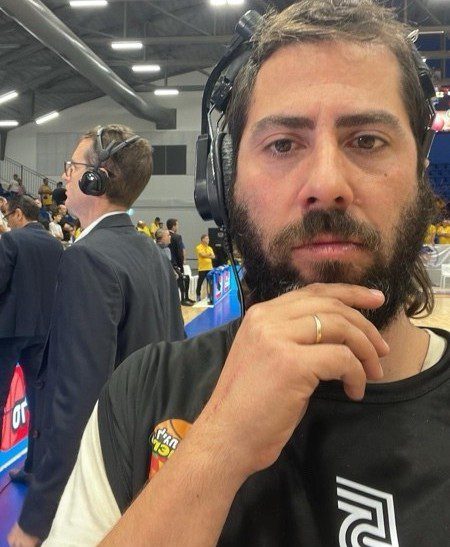 Learning on the Job: Taking Over Without a Transition
– Who helps you manage the technical side when something goes wrong?
There’s a company that actually helped build the facility together with the head of the school. So when I run into serious issues, I call them — they know more about the infrastructure than I do. When I joined, there wasn’t a technical director in place, and I had to figure things out quickly.
– Did you get any kind of onboarding?
Not really. I hit the ground running. I didn’t have time to truly get to know the setup or the equipment thoroughly at first. It was more like: here’s the system — go.
– And what about lighting?
Last year, we upgraded the lighting system, and another company came in to support that project. They still assist when I need something more specialized.
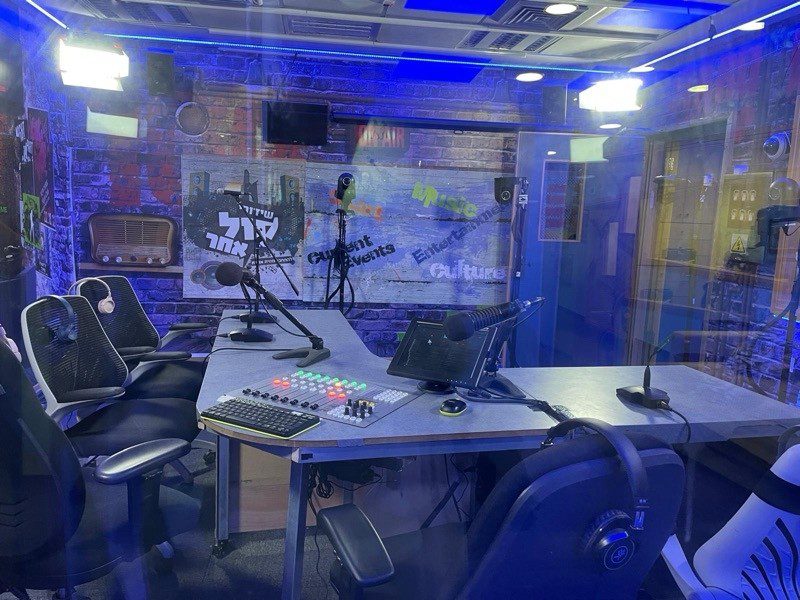 Inside Israel’s Channel 5: Innovation Born from Necessity
– Can you tell me more about your experience at Channel 5? What was it like technologically?
Sure. I still freelance there. It’s actually a fascinating company. Channel 5 is responsible for about 90% of all live sports broadcasts in Israel.
There’s another company, Charlton, that owns most of the broadcasting rights in the country, but Channel 5 buys a large portion of those rights and handles the live production. So it’s a massive operation with lots of live content.
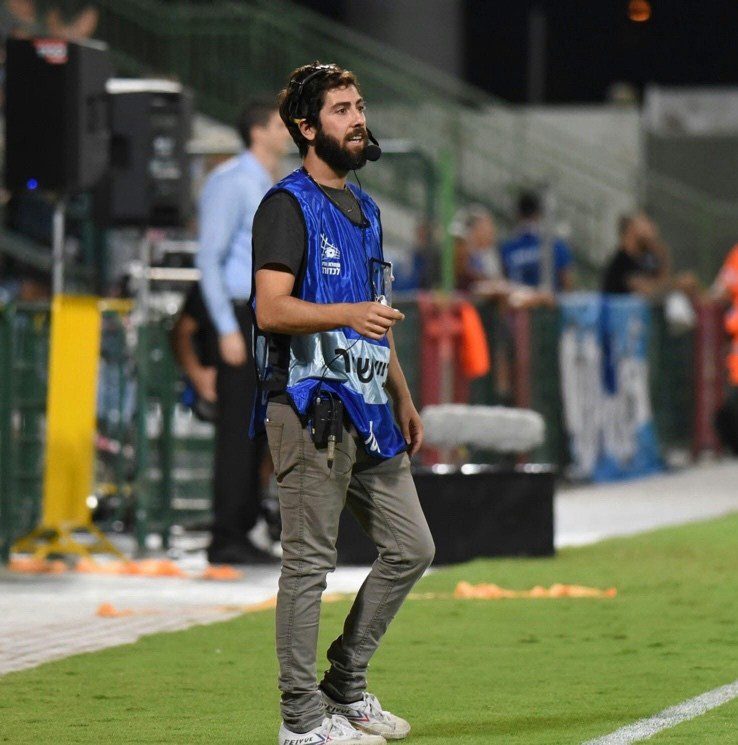
I started there as a producer, then moved into directing. Occasionally, I do technical management — although it’s more stressful and pays the same, so I prefer to avoid it unless necessary.
– What kind of changes has Channel 5 made in its broadcast model?
They did something quite innovative. For years, they relied on OB vans for every live event — football, tennis, basketball, you name it. But then they had a major dispute with one of the country’s largest OB van companies. There was even a lawsuit that prohibited Channel 5 from using its own OB vans.
– Wait, they were banned from using their own OB vans?
Exactly. It forced them to rethink everything. They didn’t want to pay high fees for external OB services, so they developed a new model — a kind of OB van setup without the actual van. They call it multi, though I don’t recall the exact internal term.
They basically assemble everything on site. Two of their technical directors manage the operation. It started with four cameras per setup — now they can scale to 15. They bring all the necessary gear, lay the cables, and transmit the feed via fiber optics using Bezeq, Israel’s biggest internet provider.
The signals are routed back to Channel 5’s MCR in Herzliya, where all the final production work happens. It’s a hybrid model that works well for them.
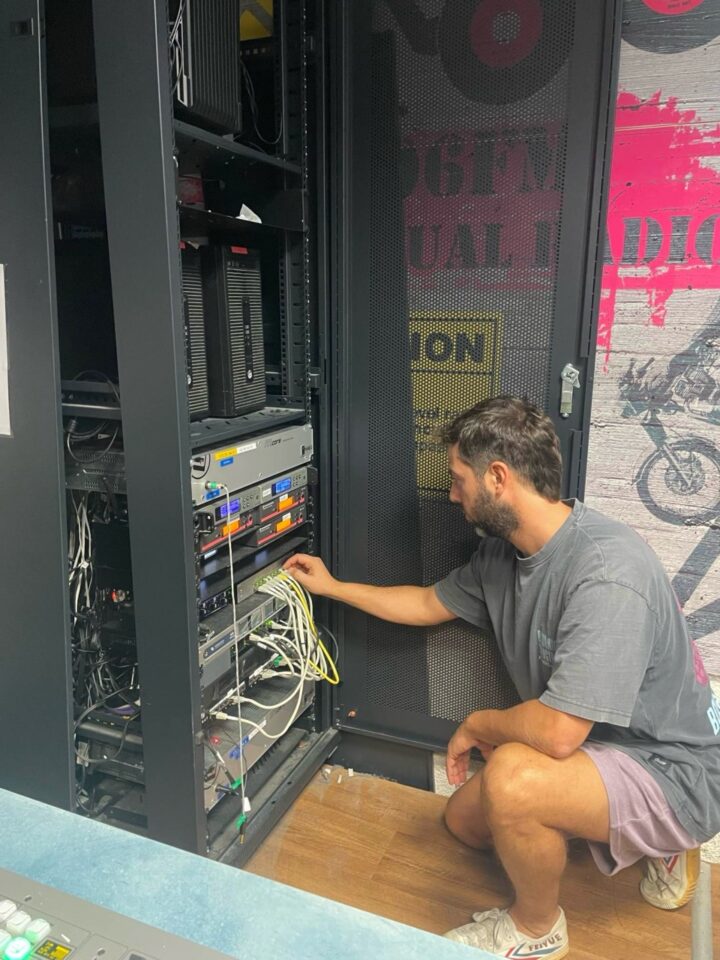 Technical Formats and Live View Integration
– Do they use 4K, or is it mostly HD?
It’s 90% HD. They do have two 4K control rooms and around eight HD ones. They’re contractually obligated to deliver one 4K football match and one 4K basketball match per week. But beyond that, everything is HD.
– Do they use LiveU?
Yes, but only for smaller productions. For example, if there’s a 10-camera setup and they want to include a special angle — like a goal net cam — they’ll use LiveU.
Also, in remote locations like Eilat, where Bezeq can’t provide fiber, LiveU is the go-to. They use it for press conferences, quick reports, and a lot of things. But not for major productions.
 Media Asset Management and Platform Questions
– Do you know what MAM platform Channel 5 uses?
Honestly, I don’t know. Either I didn’t understand the question, or I just never had to deal with that side of operations.
– Do you know what software the company runs operationally?
Not really — again, not part of my domain. If you’d like, I can check with someone there and get back to you.
Career Milestones and Ongoing Learning
– What’s been your biggest professional achievement so far?
That’s a tough one. I always feel like I’m moving between two worlds — content production and technical execution.
Producing or directing a major game, like a UEFA Champions League match, is definitely up there. It’s a huge deal in Israel and something I’m proud of — even though it’s not a “technical” achievement in the traditional sense.
– Are you still learning new skills?
Absolutely. Right now, I’m teaching myself how to operate replay systems, like PlayMaker. Ten years ago, I would’ve said my biggest achievement was working as an audio tech. But today, it’s more fluid — I’m constantly evolving and picking up new capabilities.
 Adapting in a Changing Industry: Always Learning, Always Moving
– You’re also involved with football broadcast supervision for the Spanish League, right?
Yes — though it keeps changing. The sports industry is always in motion, and somehow I’ve become very immersed in it. I think my greatest professional achievement is that I’ve managed to adapt to all aspects of it — gradually, seriously, and with a willingness to grow.
That’s what I’m proud of — not staying stuck, not saying, “I’m just a replay guy, I’m good here for the next 30 years.” That’s never been my mindset.
– Do you see that kind of thinking often?
I know a lot of people like that — especially in sound. They’re passionate about their work but stuck in their niche. I think it’s also a generational thing. In my father’s time — the old school here in Israel — people mastered one role and stuck with it for life.
For better or worse, that was the way. You knew your task and didn’t touch anything outside it.
– Can you give an example?
There’s this classic joke about the old Israeli broadcasting corporation, which shut down around ten years ago. If you needed to move a monitor, you didn’t do it yourself — you called the technical director. Literally. You wouldn’t even nudge it slightly, because “that’s not my job.”
It’s funny, but that’s how things really worked 20–30 years ago. Today, everyone’s expected to do everything — and I’m proud to be part of that shift. That adaptability, that evolution — that’s what defines me professionally.
 Channel 5 Infrastructure: Storage, IP Transition, and Avid Workflow
– What kind of ADT systems and storage is Channel 5 using?
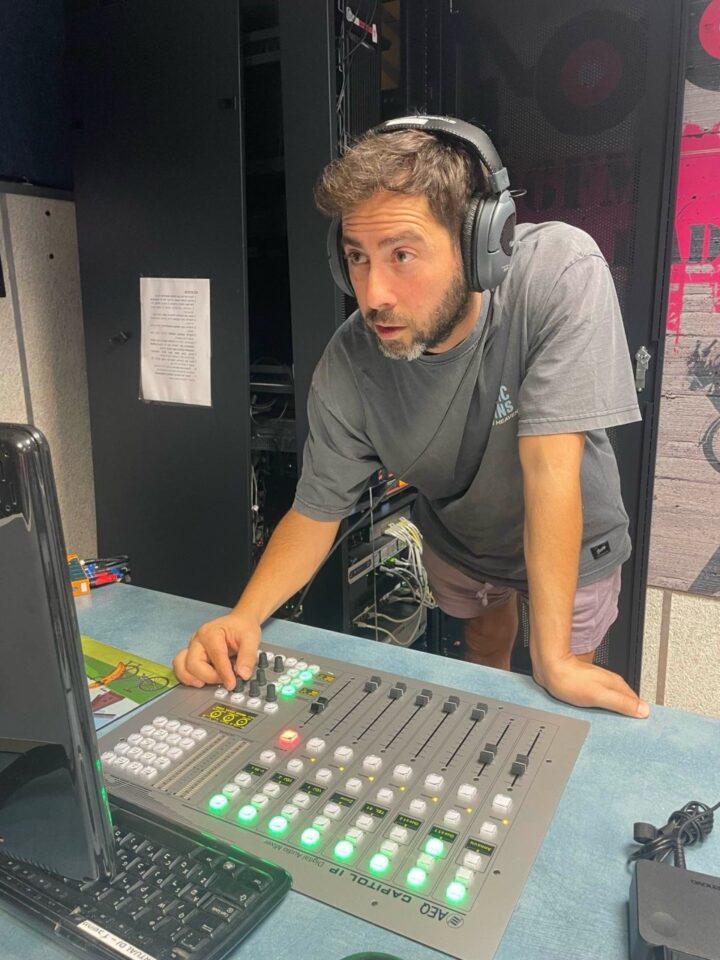
They use Avid for everything storage-related. From what I’ve heard — I’m not directly involved with internal operations there — they have the full Avid suite. I know they edit on Avid, and as far as I know, their storage and cloud infrastructure is also Avid-based, likely using the Avid Nexis systems.
– Are they planning any updates with the recent move to a new facility?
Yes, Channel 5 recently relocated to a new building after 20 years, so everything’s been refreshed. I spoke with the IT manager about their infrastructure — whether they’re moving to SMPTE 2110 or other IP-based systems. He told me that, for now, only the video matrix is shifting to IP. The rest of the infrastructure remains traditional: SDI, fiber, LEMO — the standard legacy broadcast tools.
– And for audio and protocols?
They still use Dante and some IP-based protocols for final outputs, but core infrastructure is still mostly SDI. The shift to IP is happening slowly and selectively.
 Equipment at Ariel University: Building Smart Broadcast on a Budget
– What equipment are you using at Ariel University — PTZs, mixing consoles, networks?
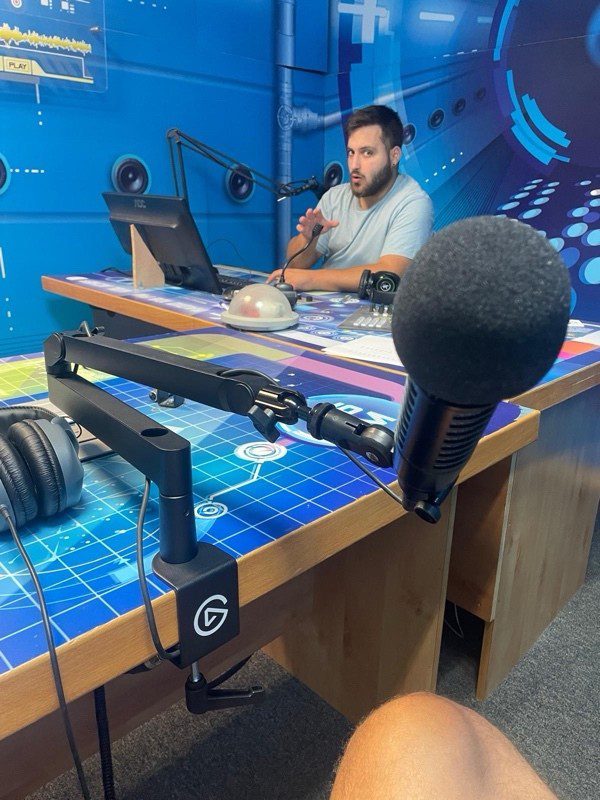
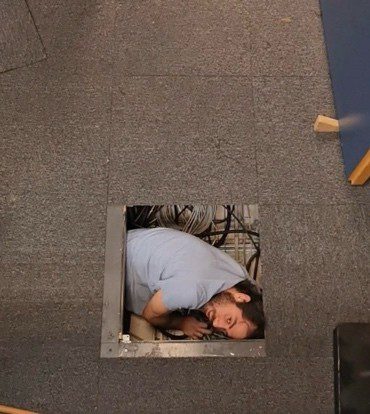
At Ariel University, I manage all technical aspects of the communication school. The audio system is based on AEQ consoles — a Spanish company mostly known for intercoms. I hadn’t heard of them before working here, but they’ve been solid and always professional with us. We have five AEQ audio consoles across four rooms: two in the main control and studio, two in smaller rooms, and one in a large classroom.
Everything runs on Dante. We can communicate between rooms and create flexible scenarios for different productions.
– And what about cameras?
When I arrived, they were using no-brand PTZ cameras. I pushed to upgrade and, six months ago, we bought five BirdDog PTZs — an acclaimed Australian company — along with their KBD controller. All of it runs on NDI. I also purchased a new switch to manage the signal flow.
– Sounds like a complex system — how do you manage the networks?
It is. And keep in mind — this is a university, so the budget is tight. Everything requires justification and negotiation. I’ve set up three completely separate LAN’s: one for Dante audio, one for NDI video, and a third for general PC/server traffic. They all run on different subnets and are fully isolated from one another.
As for the remaining no-brand PTZs, they’re Chinese-made — not recognizable brands, but they’re actually adequate for our needs.
Channel 5 Broadcast Setup: Field Production, vMix, and NDI Workflows
– And at Channel 5 — what equipment are you using there?
PTZs are mainly used in smaller studio setups or for video-enabled radio. Channel 5 uses Sony cameras — I don’t remember the model number, but they have swappable lenses and are high quality. They have about eight of them.
– And how do you handle graphics and live production?
Graphics in the studios is VIZ, handled by an outsourced company called Segev. They work primarily with NDI. If the production control is in the building, their operator imbedding the NDI feed directly into the central video matrix.
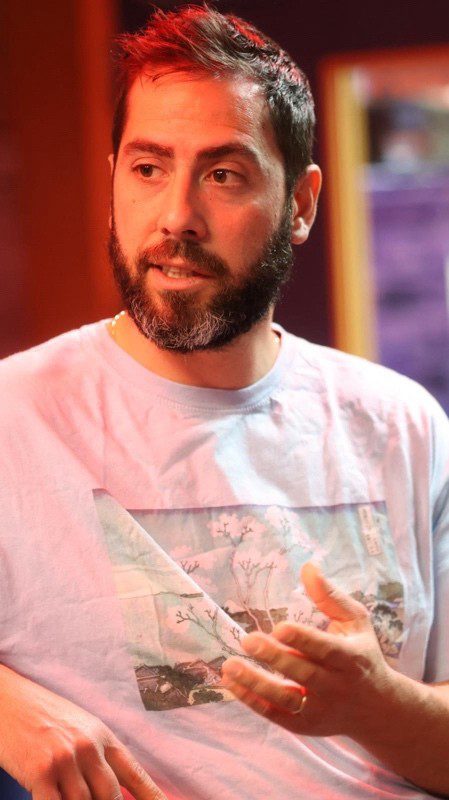
For field productions — which is about 70% of their broadcasts — Segev operators goes on-site. I work as the producer or director, and we handle everything on-premise.
– Really? What tools do you use on-site?
Believe it or not, most of the field broadcasts use vMix. Yes — major sports events in Israel are being produced and switched via vMix. I’ve had a few blue-screen crashes myself and had to quickly restore the feed to MCR. But overall, it works.
The graphics are overlaid in vMix via NDI. Sometimes we use SDI-to-IP converters to feed everything into the network. It’s a lot of workarounds — all designed to make the workflow more affordable — but most of the time, it works well. The audience doesn’t notice.
– So only the major games use traditional SDI infrastructure?
Exactly. Big matches — Premier League, Euro qualifiers, etc. — are broadcast the old-school way: SDI, LEMO, 4K, fiber, full-scale OB vans. But second-tier matches and smaller leagues are mostly handled through vMix and IP workflows.
vMix in Practice: Second Division, Tennis, Volleyball, and More
– Do you also use vMix for lower thirds and overlays?
Yes, absolutely. Everything — from two to four cameras — for smaller matches is run through vMix. First division basketball (non-premier games), second division football, volleyball, tennis — all of it.
We handle overlays, graphics, switching, replay — everything — inside vMix. It’s become the norm for medium-scale sports productions in Israel.
Camera Setups: From Second Division to Top-Tier Matches
– How many cameras do you typically use during football matches — for second division or higher?
In second division football, most games are covered with just two cameras:
– One main camera positioned on the halfway line (on the gantry)
– One secondary camera near the commentator booth
However, the main game of the week in the second division uses six cameras.
– And in first division matches?
For standard first division games, it’s typically eight cameras. But for top-tier matches — the main game of the week — it can go up to 12 cameras, plus additional angles like hallway cameras, tunnel cams, and others. Sometimes the count goes up to 18 cameras total, depending on the production needs.
Basketball Broadcasts: Fewer Cameras, Variable Setups
– How does it work for basketball coverage?
It depends on the teams and the match’s importance. For high-profile games involving the top three clubs, it’s always four cameras, which I personally think is a bit minimal.
Smaller basketball games usually use three cameras:
– One fixed wide shot from above.
– Two handheld shoulder cameras on the floor.
 Microphone and Audio Setup: Football and Basketball Differences
– What about audio setups? What types of microphones are typically used?
In second division football, it’s very basic. You have:
– A commentator mic in the booth
– Two shotgun field mics (one high, one low), positioned with the two cameras
All audio runs via SDI into a portable interface — we call it the “pizza” — that converts everything to fiber and sends the signal to Bezeq (Israel’s main telecom) or through LiveU, depending on the connection.
– And for first division football?
Much more complex. You usually have:
– 6–7 shotgun mics around the field
– Two commentators
– Two field reporters with wireless handheld Sennheiser mics (with cubes)
– On-camera microphones for nearly every camera — about 12 separate audio feeds
All of this is fed into a Yamaha Rio interface, converted into Dante, and sent over IP into the mobile production unit — not a traditional OB truck, but a multi-cam hybrid solution, as I described earlier.
Basketball Audio: Smaller Crew, Smart Routing
– What does the basketball mic setup look like?
Basketball is a learner. You typically have:
– Four shotgun mics around the court.
– Additional mics near the main cameras in the stands.
– Two wireless neck mics for court-level sound.
– A referee mic, usually Sennheiser wireless as well.
The entire Dante network is routed through Yamaha Rio or Tio interfaces. From there, it’s converted via fiber and connected back into the broadcast system.
– The system is fully Dante-based?
On the field, it’s analog-to-Dante, then fiber. In the control room or remote booth (off-tube), they use Yamaha QL1 or other Yamaha consoles. It’s all well-integrated.
Remote Mixing and Virtual Control: Making It Work on a Budget
– Are you also using virtual mixers like Behringer X32?
Yes, especially for remote setups. They’ve started using the Behringer X32 for smaller games. The audio is routed to a PC, and then controlled remotely using AnyDesk. That way, the sound engineer can mix from the main Channel 5 building — even if the match is being played miles away.
– You’re saying a lot of this is workaround-based?
Exactly. A lot of workarounds — smart solutions to cut costs and streamline workflow. It’s the reality of modern sports production: you adapt, you optimize, and you make it work. And most of the time, it does.
 Replay Systems: From PlayMaker to vMix
– What kind of replay servers are you using?
Replay — that’s something I’ve just started getting into recently. I wanted to take on a bit less pressure, so I shifted toward learning the replay operation, traditionally known as a VTR role. So, right now, I’m essentially apprenticing — learning how to operate Replay.
– How did you get into replay in the first place? Was it something you planned or more of a natural shift?
It kind of evolved naturally. I’ve done producing, directing, and technical managing — and replay felt like the next piece of the puzzle. I wanted to add another skillset and reduce some of the stress from my other roles. So now I’m learning from scratch.
At Channel 5, they’ve recently adopted a system called PlayMaker. I wasn’t familiar with it at first, but now I’m getting my hands on it. It’s based on an older version of EVS, and it’s been developed over the past 20 years. Originally, there was an Israeli company called Orad, which worked extensively with Avid. Avid eventually acquired Orad, and now there are still about 18 working setups of PlayMaker — complete with jog wheels, T-Bar, and everything.
That’s what we use now. I’m still in the early stages, but I’ll know a lot more in a couple of weeks once I get more hands-on time with it.
– What’s been the biggest challenge for you so far learning replay?
Understanding the mental shift — especially between systems like vMix and traditional replay setups. In vMix, when it’s live, it’s live. You don’t get the luxury of queuing something in the background. That forces you to multitask at a very intense level.
And of course, there’s also vMix, which handles replay as well — up to eight channels with the Pro license. But I’ll be honest: vMix Replay is not easy to use. It’s complicated, especially when you’re expected to do it all — operate, direct, switch cameras — sometimes all from the same machine. It’s not like traditional replay, where you cue in and out; in vMix, when it’s on, it’s on air immediately. That takes a mental shift to manage properly.
I’m learning PlayMaker now the “old-school” way, and it’s giving me a clearer understanding of what replay work really involves.
The Future of AI in Live Sports Broadcast
– Last tech question — how do you think AI will affect this industry?
Great question. I’m only starting to understand its full scope. Right now, I’m also studying for my CCNA, so I’m diving deeper into IT infrastructure alongside everything else.
From what I see, AI is going to take over much of the workflow — maybe not fully in the next five years, but definitely within ten to fifteen. The pace of change is fast. If you look back 15 years, we only had things like Midas stage boxes appearing at front-of-house. Now, AI and automation are embedded almost everywhere.
The main obstacle in Israel is still cost. Moving to full IP, full city-wide broadcast infrastructure, or AI-supported control is very expensive upfront. Long-term it might be cheaper, but not everyone is ready to make that leap — especially without enough run-time data to prove it’s safe and stable.
In live sports, reliability is everything. One second off the mark and you’ve missed the goal, the replay, the moment. Israel’s not quite there yet, but it’s coming.
Personal Life: Family and Balance
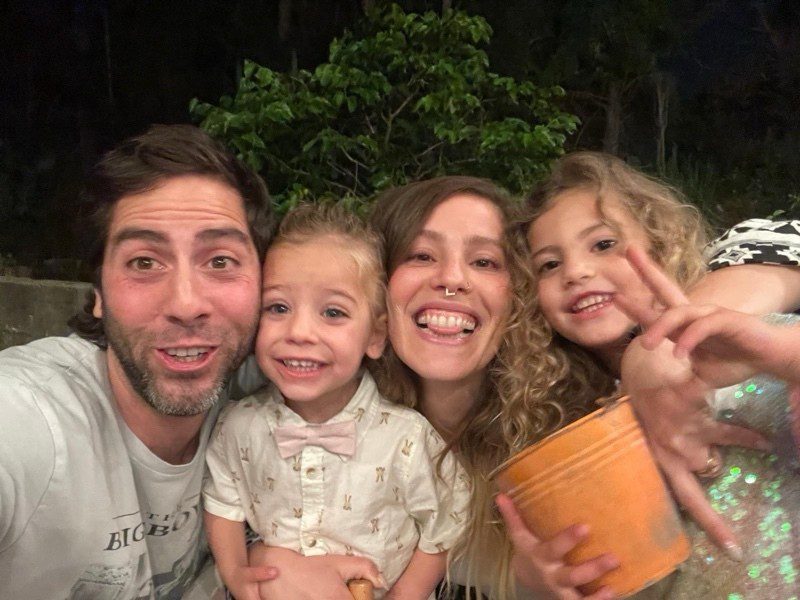
– And finally — a few personal questions. How many kids do you have? How did you meet your wife? And what does she do?
Ah, the big three. I’d better not mess these up — could get me in trouble after the interview. But don’t worry — my wife doesn’t spend much time on LinkedIn, so she probably won’t see this.
I met her on a dating app here in Israel — yes, even tech guys need dating apps. She’s a naturopath — she works with herbs, natural supplements, and wellness practices. It’s becoming more important these days, especially with the pace of modern life.
We have two beautiful children, ages four and six, and one more on the way in about two months. So yes, life is full — but I love it.