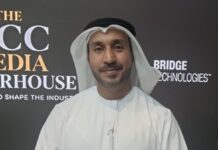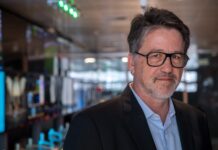
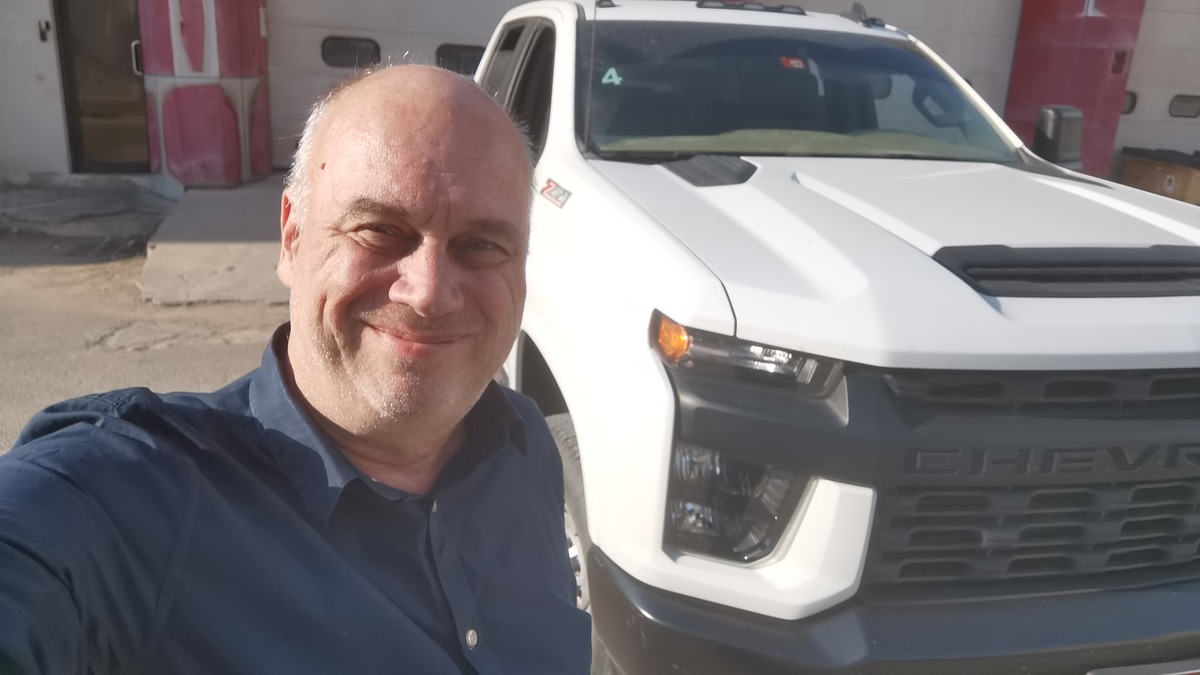
From programming at five and building more than 40 OB vans to the Olympic opening in Athens, the Rolling Stones at Twickenham, Saudi football, Abu Dhabi Media, IP, AI, and a return to freelance life, Melchior Busschers reflects on more than 40 years in broadcast engineering.
Inaugural Gulf & MENA Decision-Makers Forum 2026 Concludes in Dubai
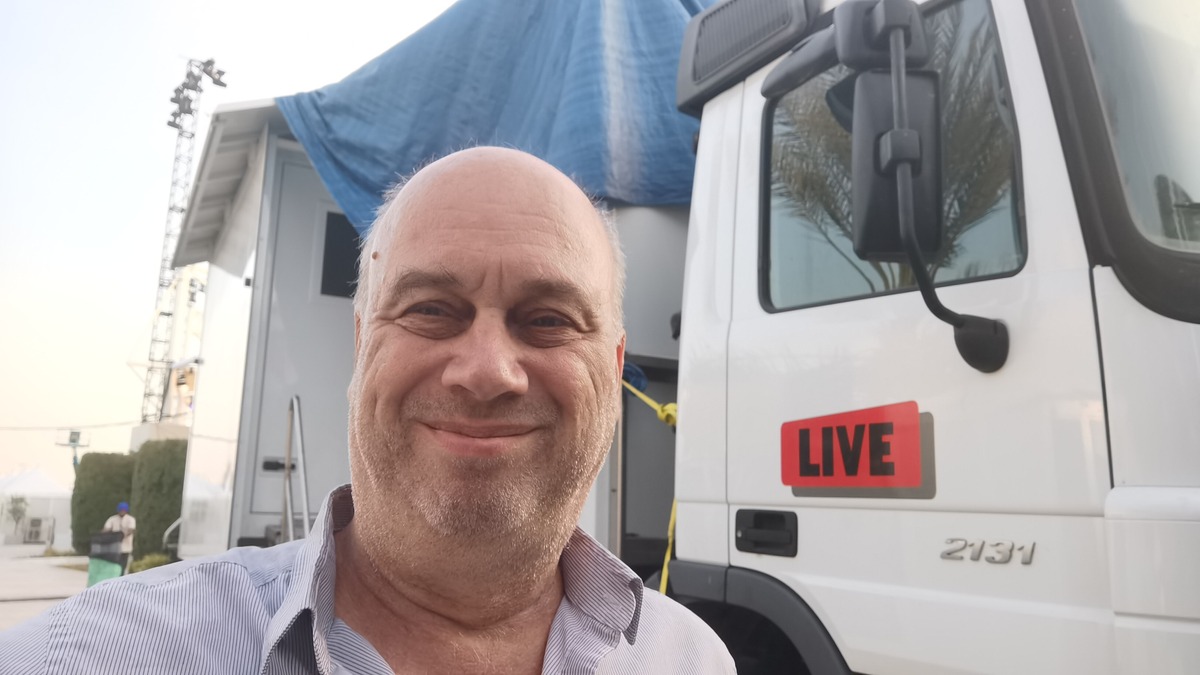
Melchior Busschers, Head of Engineering at Abu Dhabi Media / LIVE Productions and Owner of Mel Broadcast Solutions GCV, has spent more than 40 years behind live television productions around the world. Born in Amsterdam and introduced to programming by his father at the age of five, he moved from theater engineering to Cinevideogroep, where he built and designed more than 40 OB vans and worked on major productions across Europe, the Middle East, Asia, Africa, and South America.
His career has included the Olympic opening in Athens, the Rolling Stones at Twickenham Stadium, the Euro finals in Kyiv, football production in Saudi Arabia, and more than a decade at Abu Dhabi Media. Now based in Jakarta and returning to freelance work, Busschers reflects on a life in which the technology kept changing, but the responsibility remained the same: deliver the show.
Fifteen Years as a Freelancer
— How long were you a freelancer?
Until 2015. Around 15 years. As a freelancer, I had my own company, Melbroadcast Solutions.
I did a mix of things. I did operational work because I loved it. I did design. I did a lot of projects. I built more than 40 OB vans, worked on studios and playout systems for the European Commission, and on installations for the European Parliament and the Dutch playout system. I also wrote software. So it was a bit of everything.
— Why did you close your company?
It was for family reasons. I had to leave Europe. I guess we needed something more political. But the company had been doing well. I had good clients and a wide range of work. Through Melbroadcast Solutions, I did operational work, design, project work, and software development.
— What was your role with AlphaCam Group?
As a freelancer, I was the director of technology. I designed all the OB vans and trained the team. When I came, they had one OB van. When I left, they had 15.
Sadly enough, the company went bankrupt in the end. That was sad, because it had been an amazing time. We worked all over the world: Brazil, South Africa, Russia, China, Korea. We traveled everywhere to make television.
— How did you find the job with Alpha Cam Group?
As usual, a friend introduced me to Gabriel. Gabriel was just starting. He had one OB van at that time. We liked each other, and from there we worked together for a long time.
At first, I was just an engineer and designer. I designed all the OB vans. Later, I was director of technology for a few years. After four or five years, I handed that role off to Antony and focused on my own work. I stayed busy in the Middle East, especially in Saudi Arabia, running the Saudi League and football productions there.
TFT1957 | TV & Film Technology Magazine October 2026, Issue 797
— Why did you leave that company?
The company went bankrupt, sadly enough. We really enjoyed working there.
Today, many jobs are very over-organized. In our time, you got the contract, you got the customer’s name, and the instruction was simple: please make the customer happy. The company didn’t interfere much. We were very free. We traveled around the world and made it happen.
— Looking back, what was the most difficult part of that freelance period?
I always had too much work. I never had to look for work. It was always the opposite: too many projects. People think that, as a freelancer, you control your days off and holidays. That is not always true. If your big customers say, “I need you now, you are the only one,” you do it. You do not want to disappoint them. In the end, I could work 29 days and be home for two.
“People think that, as a freelancer, you are in control of your days off and holidays. That is not always true.”
— Why was it so hard to stop?
From today’s point of view, it may make no sense. But at that time, the jobs were amazing. You went from the MTV Awards to music awards in France, then flew to China. They were all amazing projects.
So to stop was not easy.
Saudi Arabia and Abu Dhabi
— Did your life in the Gulf countries begin in 2015?
No. We went to Saudi Arabia with Alpha Cam in 2006. That was the first time. In 2006, we started Alpha Cam Saudi and began working on the Saudi football league. It was a mixed life. We spent a lot of time in Saudi, starting up the football league and training people there in high definition and on how to produce football.
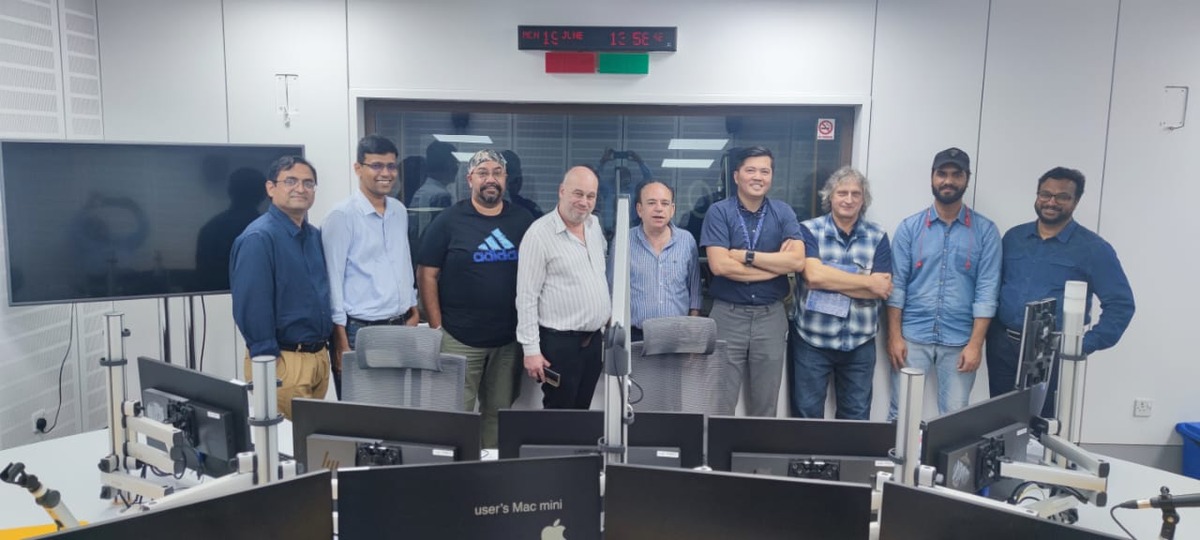
— You were invited to Abu Dhabi Media in 2015. What was your role?
I came for technical support, and I did that for quite a long time. I worked on the studio side, playout, the news center, and MAM. I managed technical operations on campus.
— What do you consider the main achievements of your professional life?
I still love the Olympic opening in Athens. The Rolling Stones was also a big achievement for us. For a little boy from Amsterdam to be the engineer in charge of the Rolling Stones at Twickenham Stadium was amazing.
But we did a huge number of major jobs. I did the opening in Milano. I did the Euro finals in Kyiv. I did many amazing projects. At the end, it is work. It is my job. I do not go there to be proud. I go there to deliver.
From Analog to Digital, and Then to IP
— At that time, broadcast was still analog?
In the 1990s, the industry moved from analog to component, then to digital. We went through all of those phases. Many of the first big shows we did were still analog. By around 2000, digital was already becoming normal.
— How did you learn digital broadcast technology?
In practice. At that time, nobody really knew everything. You learned because the industry was changing and because you had to solve problems on real productions.
The move from analog component to SDI was not as difficult as the later move to IP. It was still one cable, one BNC. There were some early issues, including short SDI cables that didn’t work properly, but conceptually it was still close to the old world.
— Why is IP different?
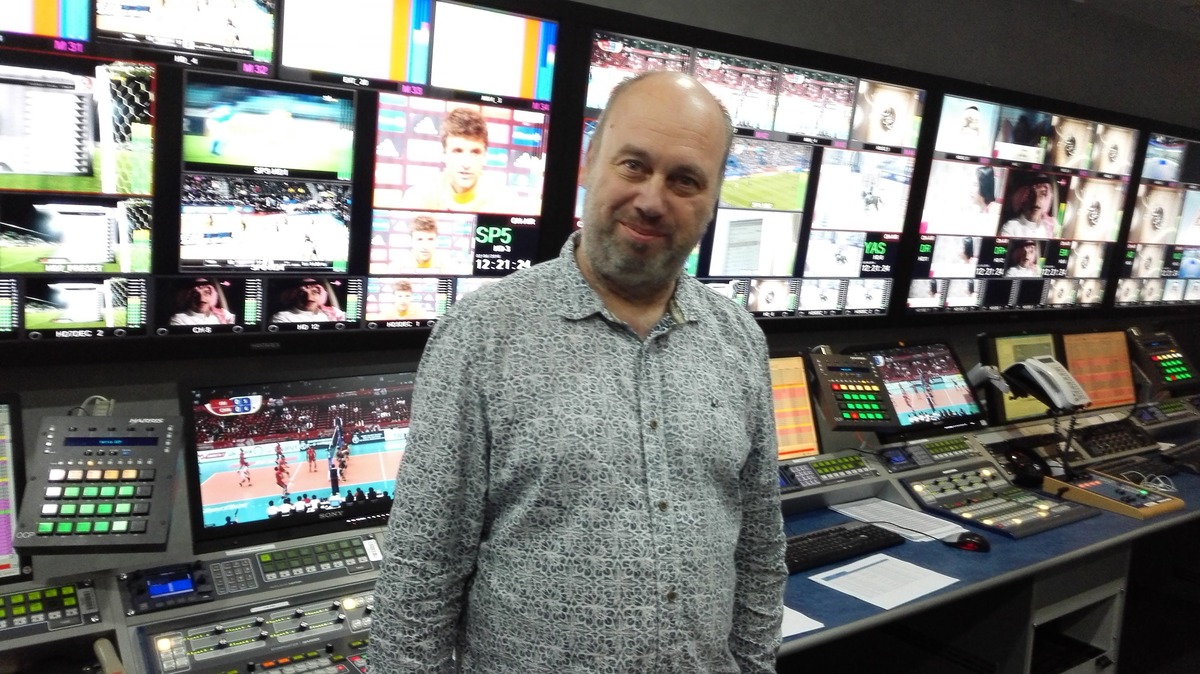
IP is a completely different world. It is not just another signal format. It changes the way you think about the system, engineering, operations, and even the business.
Moving to IP is the next stage in broadcast evolution. The change from analog to digital was important, but the move to IP is far more complex and fundamental.
ProAV, iPhones, and Storytelling
— How will ProAV change the broadcast industry in the next five years?
I have many discussions with my engineering colleagues about this. For me, it is about content and storytelling. The camera and technology aren’t the goal. The goal is to tell the story, and people really don’t care whether you have an expensive camera or an iPhone. Maybe for us engineers, it is not the best feeling, but in the end it is about stories, not about technology.
“It is about content. It is about storytelling. The camera and the technology are not the goal.”
— Is that difficult for engineers to accept?
Until now, they still need us. But if they can do it with an iPhone, the world moves forward. You cannot go backward. I am not afraid of that. We will adapt and find new ways, new jobs, and new things for ourselves.
— You have worked in this industry for more than 40 years. Do you feel there is still more to tell?
Yes. So much happened in 40 years. I could write a book. There are so many stories.
AI and the Future of Broadcast
— How do you think AI will change the broadcast industry in the next five years?
A lot. So far, I haven’t seen much AI in live broadcasts, but replacing camera operators is the first step. Replacing directors is next, of course. I discussed this yesterday with a live TV director, and he said he was sure people would still do his job. But companies were already replacing directors before replacing camera people, and they did a pretty good job with the basic work.
— Why do you think directors could be next?
Because automation is needed. One of my friends from the Olympics said he wanted to move from 350 jobs to 1,000 jobs, and he needed automation because there aren’t enough people to do everything manually. Many people fear AI will take their jobs, but I don’t see it that way. Much more content will be produced, including sports that are not currently on TV. It is not only football.
— What do you think about the future of broadcast engineers?
The engineering part will always stay complex. First, we still have the move to IP, and many broadcast engineers struggle with it. My background is software development and industrial electronics, so it is more natural for me to think in bits and bytes. But most broadcast engineers aren’t IP engineers, and they will not easily pick up the new world and way of working. Sadly, we will lose many of them.
AI and Multiplatform Sports Broadcasting: Hamad Abdelrazaq on New Workflows
— Can IT engineers replace broadcast engineers?
It is not easy, because IT engineers don’t understand the operation. Then comes AI, and great things become possible. In graphics, major changes are already underway; India fired more than 2,000 graphics operators. In drama, huge things are happening too. I met a friend last week who is working on this: they record 5 minutes from each person in the drama, then the AI learns the people, and after that, the complete drama series is created with AI.
— Does this make you optimistic or worried?
I’m not sure whether it is very optimistic for the people working there. This is a huge difference for the industry. But I do not like drama. I like live broadcasts. A live broadcast is really live.
From Theater to Live Television
— Where did you study after school?
I studied communications, focusing on engineering and telecommunications. It was in Leiden, although it was a long time ago. Like many people in this industry, I didn’t start directly in television. My first professional experience came from a different but very useful world: live events.
— What was your first job?
I started working at a café that later became a theater. For the first few years, I worked on theater shows, concerts, congresses, opera, and various other live events. My role was engineering. In small theaters, you do everything: audio, lighting, technical setup. That was in Amsterdam, and it gave me a very broad practical foundation.
— Why did you leave the theater?
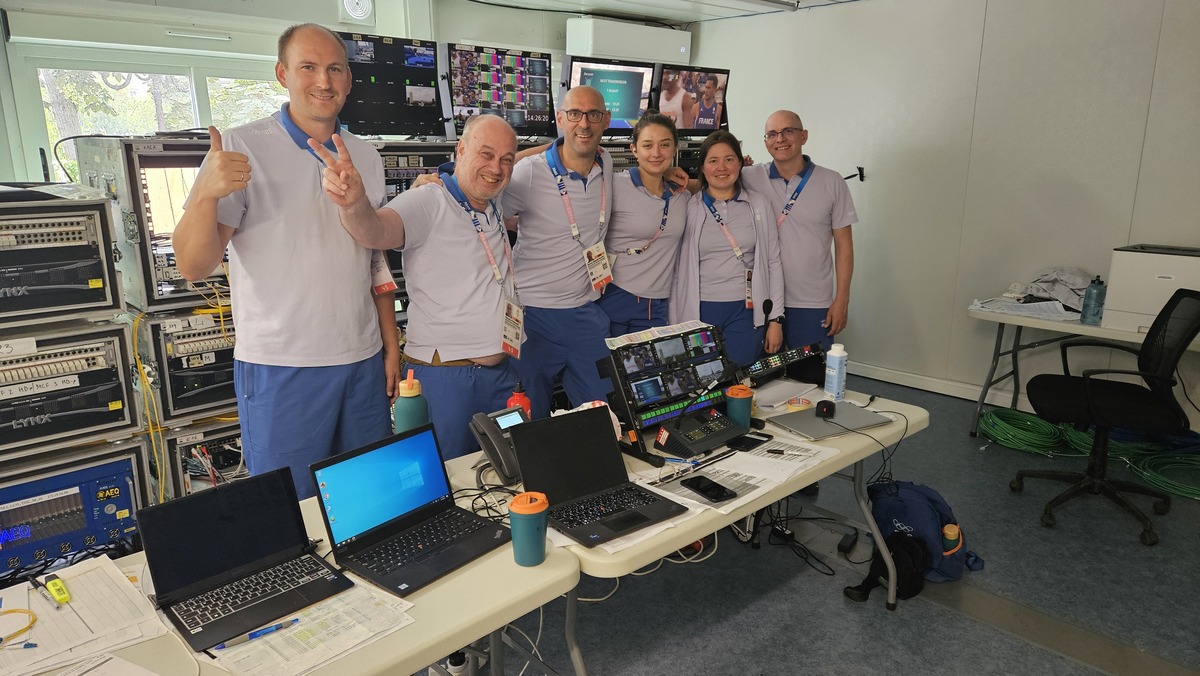
A friend called and said there was a job in Almere on the support team at a video company. I decided to go. That company was Cinevideogroep. I stayed there for twelve years, and it became a very important part of my professional life.
— What kind of company was Cinevideogroep?
Cinevideogroep was an amazing company. It was privately owned and, at the time, the only private company of its kind in the Netherlands, while NOB, the state broadcasting organization, handled most of the rest.
We had a very strong team. Many key engineers and broadcast people in the Netherlands came from that environment. It was a place where you could really learn, grow, and take responsibility.
AI Will Push More Sports Production Offsite, but Crews Still Matter: Elie Roukoz
— What projects did you work on there?
We did a lot of live music and big events. We also worked on American football, NFL Europe. It never became extremely popular in Europe because Europeans think differently about sport, but it was a great technical experience.
Of course, in Amsterdam, Ajax was much more natural than American football. But from an engineering perspective, those productions were highly valuable.
— How did your career grow inside Cinevideogroep?
For the last eight or nine years, I was the main engineer. I did all the big jobs. At first, that sounds great, because you want to be involved in the most important productions. But later you understand the other side of it: you are always working. I saw the same thing later as a freelancer. You try to get the big jobs, but then you almost never have time off.
“You try to do all the big jobs. But then you never have off. You always work.”
— When did you leave Cinevideogroep?
I left around 1998. I had joined when I was young, around 22, so it was roughly twelve years later. After Cinevideogroep, I went into technical services and project management, building OB trucks for Cinevideogroep after NOB had bought the company.
— How did you feel about that acquisition?
For us, it was difficult. For many years, NOB was our competitor, almost our “enemy” in a professional sense. They were the organization we wanted to beat.
Then, they bought us. I stayed in technical services for about two years. I learned a lot about project management and how to structure projects, but then I decided to go freelance and started Mel Broadcast Solutions.
Amsterdam, Engineering, and a Father Who Taught Him to Build
— When and where were you born?
I was born in Amsterdam, in the Netherlands, in 1964.
— Who were your parents?
My parents were Peter Busschers and Thea Koehof. My father was a software developer and system architect, while my mother stayed at home. My father was also my first and most important teacher.
— Did your father influence your career choice?
Very much. I started programming when I was five, so although my professional life became closely connected to broadcasting, I’ve always been a software developer. I like combining those two worlds: software and engineering.
At one point, my father offered me the chance to take over his company, but it was a bookkeeping software business, and I didn’t want to spend my life working on bookkeeping systems. From a business standpoint, it may not have been the wisest decision, but it was one I pursued with passion.
Later, I found my own direction in broadcast.
— What subjects did you like at school?
School was not my favorite thing. I became much more interested later, when electronics and software development came into the picture. That’s where my real passion began.
I have always been passionate about engineering. I was interested in how things work and how different systems fit together.
— Did you play sports when you were young?
Yes. First, I did judo. Later, I dove and swam almost every day. We also played underwater football. That was part of my life then: sports, normal boyhood things, playing football, and growing up in Amsterdam.
Family, Jakarta, and a New Freelance Chapter
— When and how did you meet your wife?
My current wife? I was doing reality TV all over the world. I went to Jakarta to support them as they launched Big Brother. I spent almost three months there.
My current wife is the executive producer. It took some time, so it did not happen immediately. But yes, for many people in the broadcast industry, meeting your spouse at work is quite common.
— Is anyone in your family also in the TV business?
We are always busy in our own scene, with people from the broadcast industry, but my children are sure they never want to be in the TV business. I have two children from my first marriage, and both are deaf. My daughter works with VTM in Belgium, mostly on the software side, so that is my closest connection to this industry.
— Where do you live now?
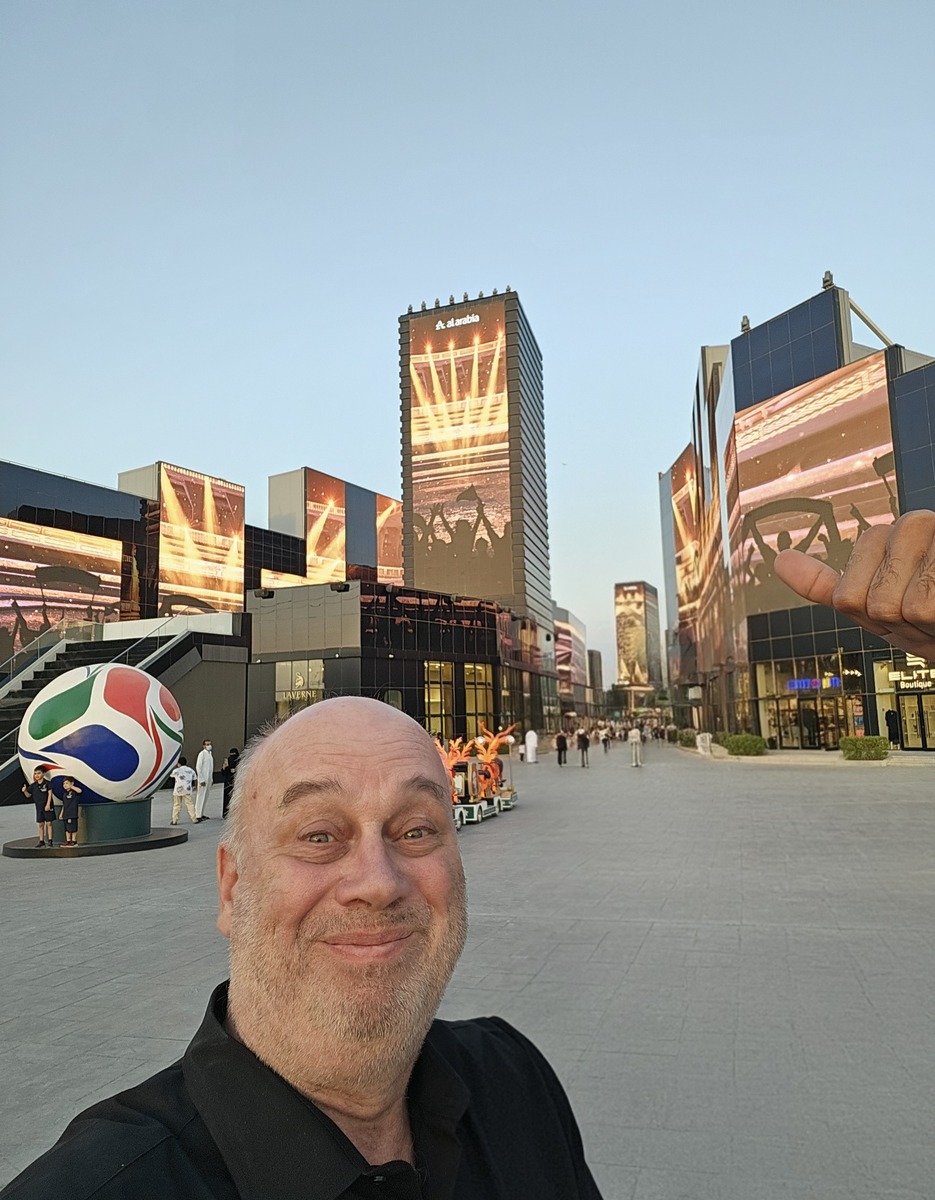
I live in Jakarta. I spent more than 10 years in Abu Dhabi, but we have now left the UAE and moved to Jakarta. In general, you have to leave the UAE after 60. You can work until 60 or 62, and then you have to leave. That is fine for us because we already have houses here and life is good.
— Are you still working?
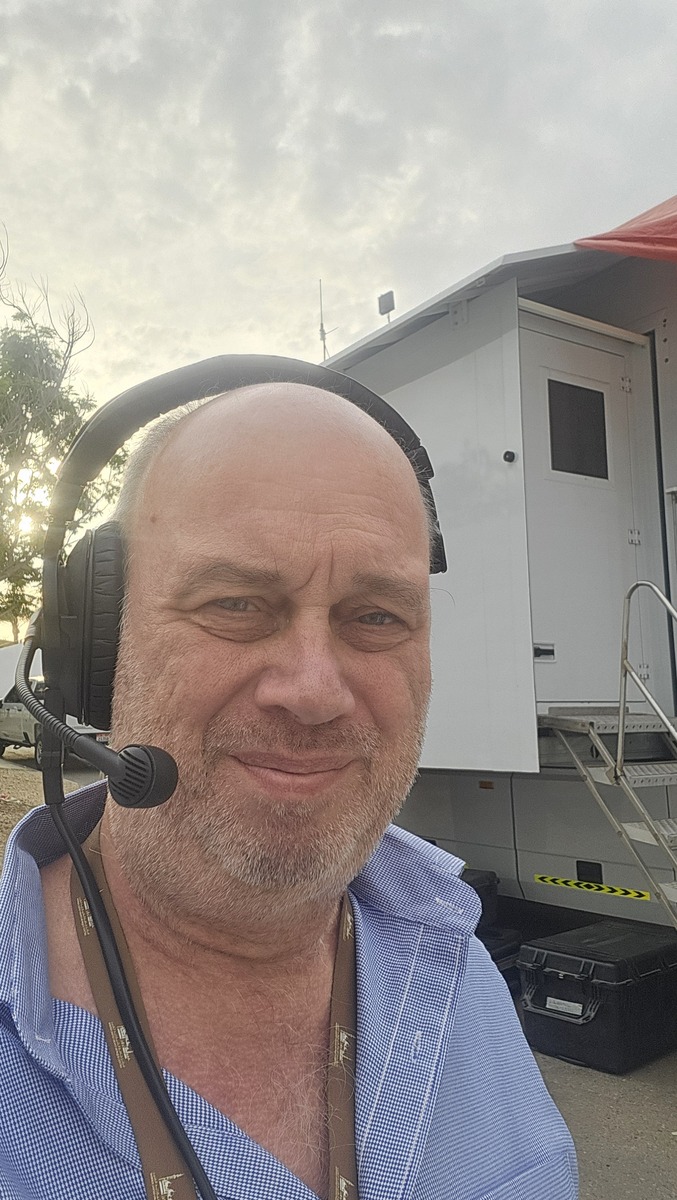
Yes, I will continue doing the same kind of work. Next week, I fly to Saudi Arabia, and in July I fly back to the UAE for CNN, where I do technical support. I have just started again as a freelancer; I have my freelance license now, and I am getting the machine up and running: finding my old colleagues, reconnecting with contacts, and getting things moving. They released me at the beginning of January, and I have had a good half-year.
Ammar Hina Appointed Strategic Chair of The Gulf & MENA Decision-Makers Forum 2026