

Riedel Communications said Eastern Kentucky University has deployed a MediorNet-based IP production and communications system designed and integrated by Bridge Digital.
The upgrade moves EKU from SDI to a SMPTE ST 2110 environment across a 100-gigabit campus fiber network. According to Riedel, the new setup links Alumni Coliseum, the Perkins Building, the Center for the Arts, and other athletic facilities in one production infrastructure.
The company says the new system supports scalable production, shared workflows, and a growing number of live events. At the same time, EKU is using the platform to give students hands-on experience with current broadcast technology.
Riedel and EKU build a hybrid ST 2110 workflow
Dwayne Bolin, Video Systems Engineer at EKU, said the university wanted more consistency and flexibility without discarding existing equipment. He said the hybrid ST 2110 approach allowed EKU to keep legacy gear in place while creating a single system in which everything works together.
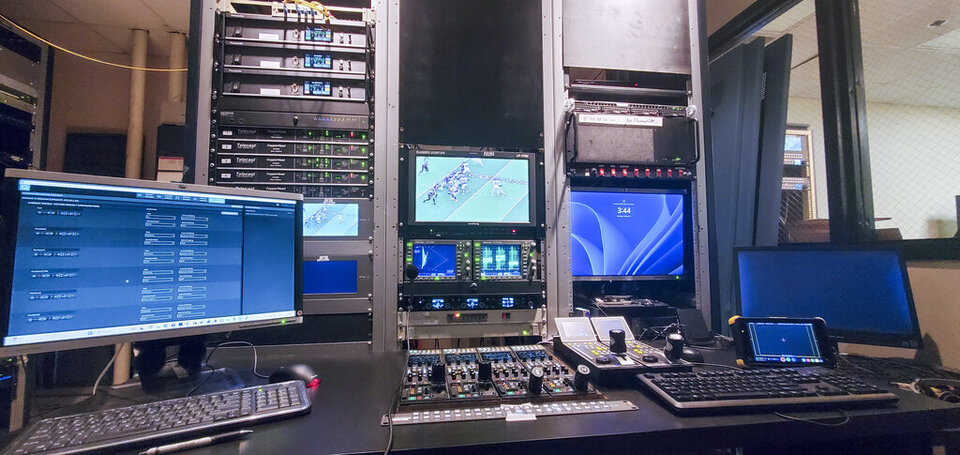 Bolin also said the new setup makes it easier for users to move between rooms without retraining. In addition, he said Bridge Digital played an important role by recommending systems and products that integrated smoothly.
EKU shifts from point-to-point SDI to campus-wide IP
Before the upgrade, EKU relied on point-to-point fiber runs and SDI paths. Riedel says that approach limited routing flexibility and often required repatching between events.
Working with Bridge Digital, the university moved to a campus-wide ST 2110 infrastructure built on its existing fiber backbone. The system uses COTS IP switches with Riedel MediorNet MuoN A processing SFPs. According to the company, these SFPs handle gateway conversion, frame synchronization, and HD-SDI processing. As a result, EKU can now route any source to any destination on the network.
Riedel and EKU connect venues through two production hubs
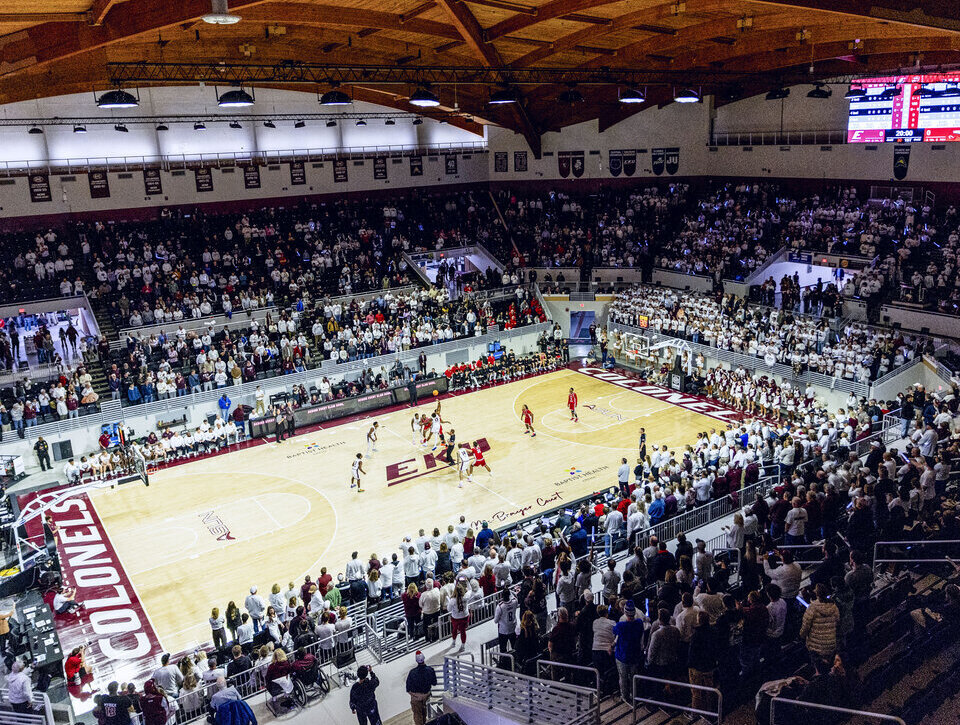
Riedel says EKU’s production operations now center on two main hubs: Perkins and Alumni Coliseum. A 100-gigabit network path connects the two sites.
The university routes football through Perkins, while basketball, baseball, and softball originate at Alumni Coliseum. Soccer also routes back to Perkins. Riedel says all venues now send signals over the existing fiber network into central control rooms. Because of that, EKU did not need to install additional fiber.
Center for the Arts joins the shared production network
Riedel says the Center for the Arts had previously been isolated from the control rooms. It is now fully connected to the campus-wide network.
The facility uses PTZ cameras, a Dante interface, and MediorNet FusioN frames for commencements, concerts, and other large events. According to Riedel, athletics and arts productions now share the same audio, video, and communications infrastructure.
FusioN and MuoN preserve SDI workflows at EKU
At each venue, EKU uses Riedel FusioN frames for local I/O, multiviewer feeds, and legacy SDI integration. Riedel says this allows the university to keep using SDI cameras without changing how students and volunteers operate the system.
The company also says the network’s multicast addressing structure and diagnostic tools make monitoring easier and simplify operation. Aubrey Shamel, Systems Design Engineer at Bridge Digital, said EKU already had a strong fiber backbone, but the university was not using it fully. He said the ST 2110 design with MediorNet FusioN and MuoN at the edge gave EKU the freedom to route anything anywhere without changing operator workflows.

Shamel added that the ability to avoid new fiber runs and bring SDI sources into the network from anywhere on campus made the transition faster, smoother, and more cost-effective.
Bolero and PunQtum support communications across campus
Riedel says EKU now uses Bolero wireless intercoms across its venues. Two antennas cover the football stadium, while one antenna covers the baseball facility. The university also tested the system around the soccer complex and confirmed strong performance beyond the field perimeter.
For wired communications, EKU uses PunQtum in control rooms and engineering spaces. According to the company, this gives crews a consistent partyline workflow and efficient program-audio distribution.
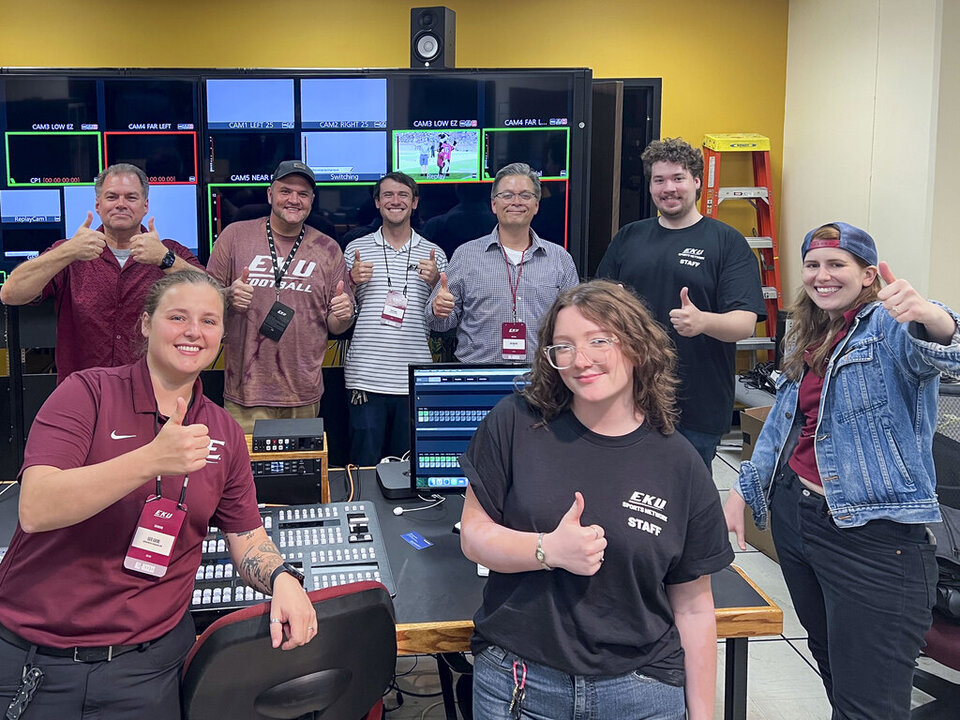
Katie Adkins, Assistant Director of Broadcasting and Video at EKU, said the combination of Bolero and PunQtum has improved day-to-day operations. She said clearer communication, less troubleshooting, and more training time have raised show quality and better prepared students for the industry.
EKU uses the new system for production and student training
Riedel says EKU produced its first football game on the new infrastructure shortly after installation. The company adds that the system has operated reliably since commissioning.
Adkins said students remain the university’s main priority. She said every investment is meant to improve their experience and prepare them for future careers, and she said this system supports that goal directly.
Riedel on the EKU deployment
Julia Rodgers, Southeast Regional Sales Manager at Riedel Communications, said the company is proud to support EKU alongside Bridge Digital. She said MediorNet FusioN with MuoN processing, together with Bolero and PunQtum, gives the university a flexible and scalable base for daily production.

Rodgers also said the new infrastructure adapts to different production needs, reduces setup time, and keeps compatibility with EKU’s existing SDI equipment.