How Clément Duval went from turntables and touring with a band to becoming a technical trainer in OTT streaming and media technologies.
Born in Paris and originally focused on music and audio engineering, Clement Duval spent nearly two decades inside the media technology industry before leaving a long corporate career to build his own training company. In this interview, he reflects on childhood, music, engineering, OTT technologies, the rise of AI, and why he believes human interaction still matters in technical education.
Ammar Hina Appointed Strategic Chair of The Gulf & MENA Decision-Makers Forum 2026
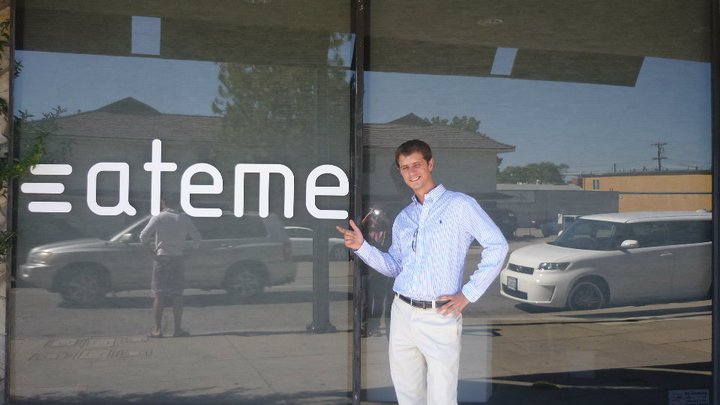
Leaving Ateme After 18 Years
— You left Ateme after nearly two decades. Why did you make that decision?
Leaving was not an easy decision because Ateme represented a very important part of my life and professional identity. But over time, I realized I was increasingly passionate about building courses, educational systems, and e-learning experiences.
«After 18 years, I felt I had reached a point where I needed a new challenge.»
— Was it about independence?
Yes, in part. I reached a point where I wanted to invest fully in ideas that I strongly believed in and move faster in developing them. Creating my own company gave me the freedom to build training experiences exactly the way I imagined them — more detailed, more dynamic, more practical, and more ambitious.
— After 18 years in one company, why did you feel it was the right moment to go independent?
Over the previous years, I had already touched almost every part of the ecosystem around training, technical education, customer relations, marketing, sales support, and product positioning. I felt I had enough experience to finally build something on my own.
At 45, it also felt like the right personal moment. I wanted more ownership of my work, more freedom to shape projects according to my vision, and hopefully, over time, greater professional and financial rewards.
To summarize honestly, I was becoming less motivated. I realized I needed a new challenge.
— Did people inside Ateme understand the value of training?
Interestingly, many colleagues believed training was extremely valuable because it helped introduce products to new customers, educate prospects, and create trust before sales conversations even started.
 Many people internally told me the work was important and strategic. But from a management perspective, training didn’t seem to be a focus, which I understood.
Building a Business from Zero
— Do you already have customers for your freelance business?
Right now, I am still mostly in the development phase. Interestingly, shortly after leaving, I actually returned to Ateme as an external trainer and sold them a training session, which felt like an encouraging sign. I am also working with a reseller that helps connect me with potential opportunities, but so far, I have not actively promoted myself on LinkedIn or through marketing channels.
— Why not start the promotion immediately?
Because I first want the product to be fully ready. Right now, my focus is on building the curriculum — OTT Streaming Fundamentals, covering encoding, HLS, DASH, and related technologies.
Once the first wave of courses is completed and released, which should happen in the coming weeks, I will begin marketing more actively. My goal is to promote something solid rather than advertise ideas that are still unfinished.
“Right now, I am building first and promoting second.”
— What exactly are you doing now as a freelancer?
I recently launched my own company focused on teaching OTT and streaming technologies. The core idea is to build a complete Learning Management System, or LMS, where professionals can subscribe to online courses and progressively learn media and streaming workflows.
The platform covers topics such as OTT fundamentals, adaptive streaming, video encoding, HLS, MPEG-DASH, CMAF, fragmented MP4, and related technologies. Each course is designed as a structured training experience lasting roughly two to three hours.
— What makes your courses different from traditional online learning?
The key difference is practical experience. Alongside video lessons, students gain access to online labs where they can directly interact with streaming protocols and workflows.
For example, learners can receive an HLS stream on their own computer, analyze its components, and answer guided questions that help them understand how everything works in practice. I want the experience to be hands-on rather than purely theoretical.
— Is online learning the only direction for your company?
No. The online platform is only the first phase. In addition to self-paced courses, I plan to provide on-site training for customers anywhere in the world, traveling directly to organizations that need specialized OTT education.
Later, I also plan to expand into advanced topics such as low-latency OTT workflows, ad insertion, and more specialized streaming technologies.
Becoming a Technical Training Director
— You are the first Technical Training Director I have interviewed. Why did you choose this path instead of a more traditional engineering role?
I think the answer goes back to something very natural in my personality. Since I was young, I liked understanding things and then helping others understand them as well.
Very early in my career, I discovered that explaining technology gave me satisfaction. After my Video Services Forum presentation in 2012, I started giving more technical presentations internally at Ateme as part of team initiatives.
Over time, this became increasingly important to me.
— When did teaching become more than an internal activity?
A major turning point came in 2018, when I became Technical Team Leader for North America at Ateme. I began organizing monthly internal knowledge-sharing sessions where team members presented technical topics to each other.
I regularly prepared my own presentations, and through that process, I realized how much I enjoyed structuring information, simplifying complexity, and delivering technical content in a way people could easily understand.
“I enjoy taking a complex topic and dividing it into something clear and easy to understand.”
— How did teaching evolve into a full-time professional role?
I liked taking a difficult subject, breaking it into smaller sections, organizing it visually, and presenting it clearly. Even creating PowerPoint presentations became something I genuinely enjoyed because it helped me transform complexity into something understandable
Omar Pleite Guerra: “Technology Should Serve the Story, Not Replace It”
In 2020, Ateme was looking for a Technical Training Director. Initially, I was not particularly motivated because I imagined the role would mostly involve maintaining spreadsheets, organizing training materials, and administrative coordination.
Then I realized the position could become something much more meaningful: an opportunity to establish myself fully as a trainer and educator.
— Which topics did you begin teaching?
I started developing training programs around video technologies, including video encoding, packaging, ad insertion, SCTE-35, and broader media workflows. From that moment, training stopped being a side activity and became my full-time professional focus.
— How do you define that turning point today?
Looking back, 2020 was the moment when I understood something important about myself: I genuinely love learning difficult things, understanding them deeply, and then teaching them to others.
“In 2020, I realized that learning and teaching complex technologies was exactly what I wanted to do.”
— You started your training career in 2020, exactly when COVID disrupted the world. How did that moment affect your decision and your work?
Strangely, the timing was perfect. I was appointed Technical Training Director in January 2020, and by March, the pandemic had changed everything. Travel stopped, daily routines changed, and like many people, I suddenly found myself working almost entirely from home.
“COVID gave me the time and focus to fully commit to training.”
For me, that created a unique opportunity to focus. Living in Canada with my wife and children, I was no longer constantly traveling, so I could dedicate my full attention to building my first professional training programs from the ground up.
That period confirmed something important: I genuinely enjoyed creating educational experiences. Looking back, 2020 was when my passion for training truly started to accelerate.
— What did your first full-scale trainings look like?
At the beginning, I focused on building structured professional courses around video technologies and media workflows. I enjoyed the process of turning highly technical subjects into something understandable and practical.
 For me, the challenge was not simply delivering information but organizing it in a way people could actually absorb. That became one of the foundations of how I approach education today.
— At some point, PowerPoint stopped being enough. Why?
Around 2021 and 2022, I started questioning how I delivered training. Until then, almost everything was built in PowerPoint, but I felt presentations needed to become more dynamic, visual, and engaging. I explored different tools like Prezi, but eventually realized I wanted to go much further in terms of storytelling, motion, and visual explanation. That pushed me toward learning Adobe After Effects.
— What became your biggest creative experiment during that period?
One of the biggest projects I created was a highly animated educational video series about low-latency streaming using MPEG-DASH and CMAF. It became almost like a technical TV show — a half-hour educational production built around animations and visual explanations.
The process was intense and took nearly a year. I handled research, topic development, scripting, visual design, and animation before AI tools were available. I also worked with people who reviewed my English, corrected animations, and validated technical accuracy. Looking back, it was one of the most demanding and rewarding educational projects I ever created.
AI and the Explosion of Ideas
— How did AI change your work?
For me, AI changed almost everything because I have always had many ideas, but never considered myself a strong programmer. Before AI, implementation was often the biggest obstacle. Even if I could eventually build something, the process felt too slow and complicated.
AI changed that completely. It allowed me to start building online labs where students could interact with technologies directly — for example, receiving an HLS stream, analyzing it, and answering questions in a structured learning environment.
Since then, I have been using AI intensively to turn ideas into practical systems.
“AI allowed me to implement ideas I previously could only imagine.”
— In practical terms, where do you use AI most?
Mostly in scripting, automation, and programming educational tools. I use AI to help build systems that make learning easier to digest and more interactive. Usually, I have an idea that requires some coding, and AI helps me prototype and implement it much faster than before. In many ways, it has become an extension of my creativity.
— How do you think AI will change the industry over the next five years?
It is a difficult question because the impact will depend on the field. In education, for example, AI will dramatically improve the structure and personalization of learning. It can already help create highly optimized teaching plans and adaptive ways of explaining technical concepts.
However, I think there will still be important limits.
— Where do you believe humans will remain essential?
For effective learning, emotion still matters. Humor, empathy, imperfections, storytelling, and human interaction are incredibly important in education. AI may eventually create perfect lesson plans, but I am not convinced it will fully replace the emotional and human side of teaching — the subtle moments that make people truly engage and remember what they learn.
— Do you think AI can eventually replace teachers and instructors?
I do not think people ultimately want to learn only from machines. AI is excellent at delivering knowledge, organizing information, and generating raw material, but education is not only about transferring information.
“AI may build perfect lessons, but emotion and human connection still matter in teaching.”
For me, humans remain essential because we shape knowledge, interpret it, and communicate it emotionally. Humor, spontaneity, imperfections, energy, and personality matter. People expect to learn from other people.
From Bahrain to Building Media Cities: The Journey of Yusuf Mohammed Buti
That is why, in my current work, I try to focus on what makes me human as a trainer — creating courses that feel dynamic, alive, engaging, and emotionally memorable rather than flat or mechanical.
— How has AI changed the way you think about teaching?
Interestingly, AI has pushed me to focus even more on the human side of education. Instead of competing with automation, I try to emphasize energy, clarity, storytelling, and emotional connection. In a way, AI made me rethink my own value as a trainer and helped me better understand what learners still need from people.
Finding a Passion for Explaining Technology
— Looking back, which professional achievements are the most important to you?
During my years in North America, I was not only supporting customers in the United States but also helping teams in South America solve complex technical issues related to live video systems and infrastructure. Those years gave me practical exposure to real operational challenges.
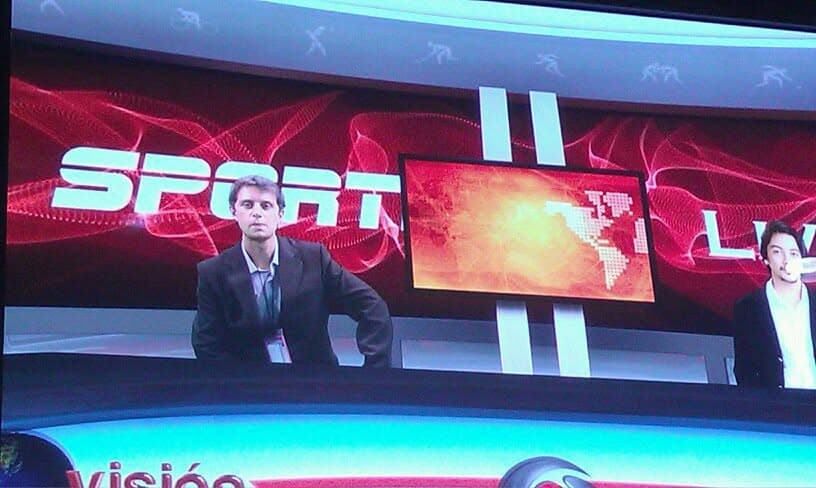 One of the earliest important moments came in 2011, when I delivered a presentation at the Video Services Forum in New Orleans on MPEG-DASH. The topic was still relatively new to me, so I had to prepare extremely carefully. The presentation went well and gave me confidence. It also helped me understand that I genuinely enjoyed speaking in front of people and explaining technical concepts.
— Which achievement became the most personal milestone?
Looking back now, I would probably say my greatest personal achievement was earning my CCIE certification in 2018 — Cisco Certified Internetwork Expert. It required roughly two years of intensive study and a very deep understanding of networking technologies. It demanded discipline, persistence, and the ability to master complex technical concepts at a high level.
“My CCIE certification was probably the greatest achievement of my career.”
At first, I thought the training platform I later developed at Ateme was my greatest accomplishment, but if I am honest with myself, achieving CCIE remains the milestone I am most proud of.
Los Angeles, Montreal, and an 18-Year Career
— How did your professional path evolve after Los Angeles?
The period in Los Angeles was a major turning point and a great experience overall. I spent two years there between 2010 and 2012, working in technical support and traveling extensively across North and South America.
After that, I relocated to Montreal, Canada, with the same company and continued working in technical support, although my responsibilities gradually expanded.
— At what point did your responsibilities begin to change?
Over time, my work evolved beyond technical troubleshooting and customer support. I transitioned into a completely different role and became Technical Training Director, where I began developing the training ecosystem and educational platform that later became a major part of my professional identity.
In total, I spent 18 years with Ateme before recently deciding to leave and start my own company.
“I spent 18 years at Ateme before deciding to build something of my own.”
Learning Media Technology from the Ground Up
— What were your first responsibilities at Ateme?
My first years were actually in Paris, where I worked not as an engineer but as a technician. I handled RMA processes — hardware returns, repairs, and logistics for damaged equipment. When customers experienced technical issues with file or live encoders, I provided basic technical support, mostly what would be considered first-level support today.
At that stage, I was learning the industry from the ground up: handling tickets, troubleshooting issues, and understanding products in practical environments.
— How did your role change when you moved to North America?
When I moved to Los Angeles, my role became broader. Technical support remained central, but I also became involved in pre-sales activities. That meant helping potential customers evaluate solutions through proof-of-concept deployments and technical demonstrations.
Because of that role, I traveled extensively with sales teams across the United States — New York, Florida, Denver, and many other cities — helping broadcasters and media organizations understand how the products worked and whether they fit their operational needs.
— Which lesson from that period stayed with you the most?
Those years gave me a practical understanding of media technology in real-world environments. I was no longer only supporting systems but also helping customers understand workflows, solve problems, and evaluate technology from an operational perspective.
The First Step into Media
— How did media eventually enter your professional life?
My first real step into media came through my previous company, Ateme, which found me while I was touring in Paris around 2008–2009. I joined as a technician while continuing to perform with my band.
You Either Stay, or You Go: The Director Behind Saudi Football’s Global Rise
At first, I did not view broadcasting or media technology as my long-term direction. Music remained my primary interest. But things began to change when Ateme sent me to Los Angeles in 2010. The company needed a French engineer on site to support technical operations for DirecTV, now part of AT&T, focused on file transcoding products known as Titan File.
“Los Angeles changed everything. That was my real first step into media.”
For two years, I worked in Los Angeles providing technical support and traveling extensively across the United States, Canada, and South America. Looking back, that period became the real starting point of my journey into media technology.
Building a Band and Chasing Music
— At what point did your professional direction begin to change?
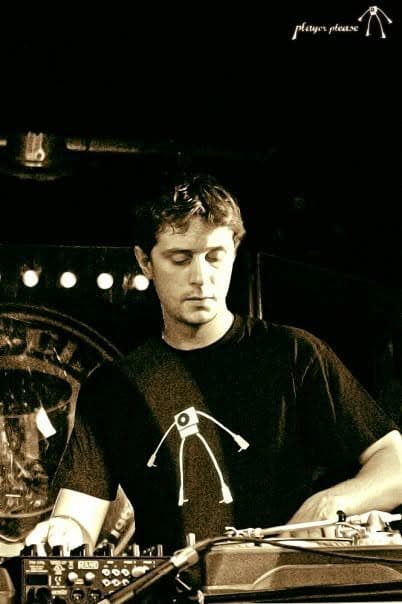
After university, my ambitions shifted. I moved away from wanting to become an audio engineer and decided to focus more seriously on music as a performer. I formed a band called Playerplease, which included myself working with turntables alongside a guitarist and bass player. We toured in England, particularly around Manchester, before I returned to Paris and continued performing.
— What kind of music did Playerplease perform?
Our music was difficult to categorize because it blended different genres. We described it as electro-rock — a mix of hip-hop, rock, turntablism, and electronic influences.
 My inspirations included artists such as Wax Tailor, Chinese Man, and Gorillaz. It was often low-tempo hip-hop with eclectic arrangements and strong instrumental textures. The turntables naturally played a major role in shaping our sound.
— Did you seriously try to build a professional music career?
Yes, absolutely. I pursued it seriously until around 2010. But gradually, I realized that something did not fully align with who I was. I discovered that I was naturally more analytical and technical than artistic. I genuinely enjoyed understanding systems, dissecting technologies, and figuring out how things worked more than promoting myself as an artist.
“I realized I enjoyed explaining technology more than promoting my own art.”
People appreciated what I was creating musically, but I eventually understood that performing itself was not giving me the level of satisfaction I expected. What I truly enjoyed was explaining, teaching, learning technical details, and breaking down complex systems and protocols.
— Do you remember your first encounter with media? Were you interested in it at the time?
Actually, I came to the media through music rather than broadcasting itself. My original ambition was to become an audio engineer. After high school, I enrolled in an audio engineering vocational program focused on recording studios, artist recording, mixing, mastering, and sound design.
After one year, I realized I wanted deeper technical and theoretical knowledge, so I moved into musicology and studied classical music at a university in Paris for two years. From there, I expanded into electronics, studying analog electronics and telecommunications for another two years. It was extremely demanding but also very rewarding.
To continue building my expertise, I moved to England and enrolled at the University of Huddersfield, where I completed a Bachelor of Science in Music Technology and Audio Systems. There, I studied electronics applied to music and sound, sound design, recording, mixing, and audio systems in much greater depth.
In many ways, it revisited what I had learned during vocational training, but from a much more advanced technical perspective.
Turntables, Curiosity, and the First Career Choices
— Did you play music as a child? When did music become part of your life?
Not really in childhood. I was more interested in dancing at first. Music became something much more serious when I was around 15 years old and discovered scratching on turntables. That quickly became my main focus and, eventually, my instrument.
Since then, turntables and turntablism — the art of manipulating records through scratching and performance techniques — have remained central to my musical identity. Even today, I still practice it.
— Why did you decide to study audio engineering after school?
After high school, I became deeply interested in sound and audio technology. My first vocational training experience triggered something important in me. I realized I genuinely enjoyed understanding how sound worked and wanted to go much deeper into it.
That curiosity shaped the next several years of my studies. Musicology helped me understand musical language and how musicians think and communicate. Electronics helped me understand how technology makes sound possible — how mixing consoles, synthesizers, microphones, headphones, and loudspeakers actually work.
He Built Global Sports Television Across Four Continents — Then Started Again at 46
I was fascinated by audio, particularly its relationship with music. For me, it was never only about creativity; it was also about understanding the mechanics behind it.
Science, Mathematics, and Solitary Sports
— When you were in school, what subjects interested you the most?
I was very much into science when I was young. Physics and mathematics were my favorite subjects, and I naturally developed a scientific profile. Mathematics, in particular, was something I genuinely enjoyed.
— Did you play sports?
Not really in the traditional sense. I preferred solitary sports rather than team activities. I enjoyed running and later completed marathons and half-marathons. I was always more attracted to individual effort and endurance than group competition.
Growing Up in Paris
— When and where were you born? Could you tell me a little bit about your family, your parents, and your grandparents?
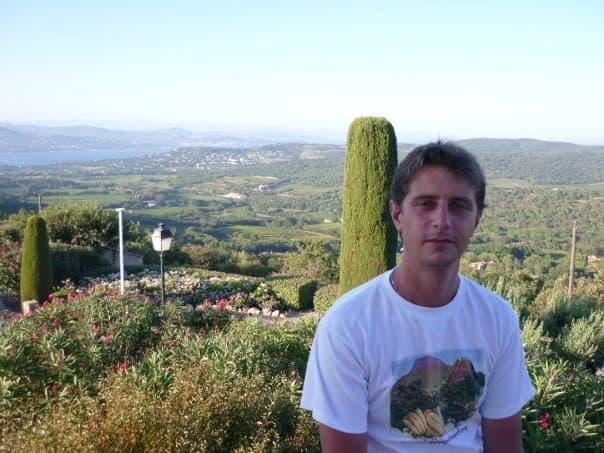
I was born in France, in Paris, in the early 1980s. Both of my parents were born and raised in Paris as well. My family had no connection to media or entertainment. It was not a scientific family in the strict sense, but education, structure, and analytical thinking were naturally part of the environment I grew up in.
— Do you remember your first childhood memories?
That is an unexpected question because I usually think about career milestones rather than childhood memories. But if I go back to being five or six years old, I remember Carnaval celebrations in Palaiseau, a small town in the southern suburbs of Paris, where I spent part of my childhood.
Those moments stayed with me: local celebrations, community life, and simple memories from growing up outside the center of Paris.
— You mentioned your family.
I have two children, who are five and seven years old. Family became one of the important factors behind many decisions we made over the years.
— How did you meet your wife?
We met in the United States in 2012. My ex-wife is from Chile, and over time, we built our life together while moving between countries because of work and family priorities.
 — Why did you eventually leave Canada and move to Spain?
Montreal had many advantages, but the climate eventually became difficult for us as a family. Winters felt extremely long, summers became very hot, and with young children, daily life became harder than we wanted.
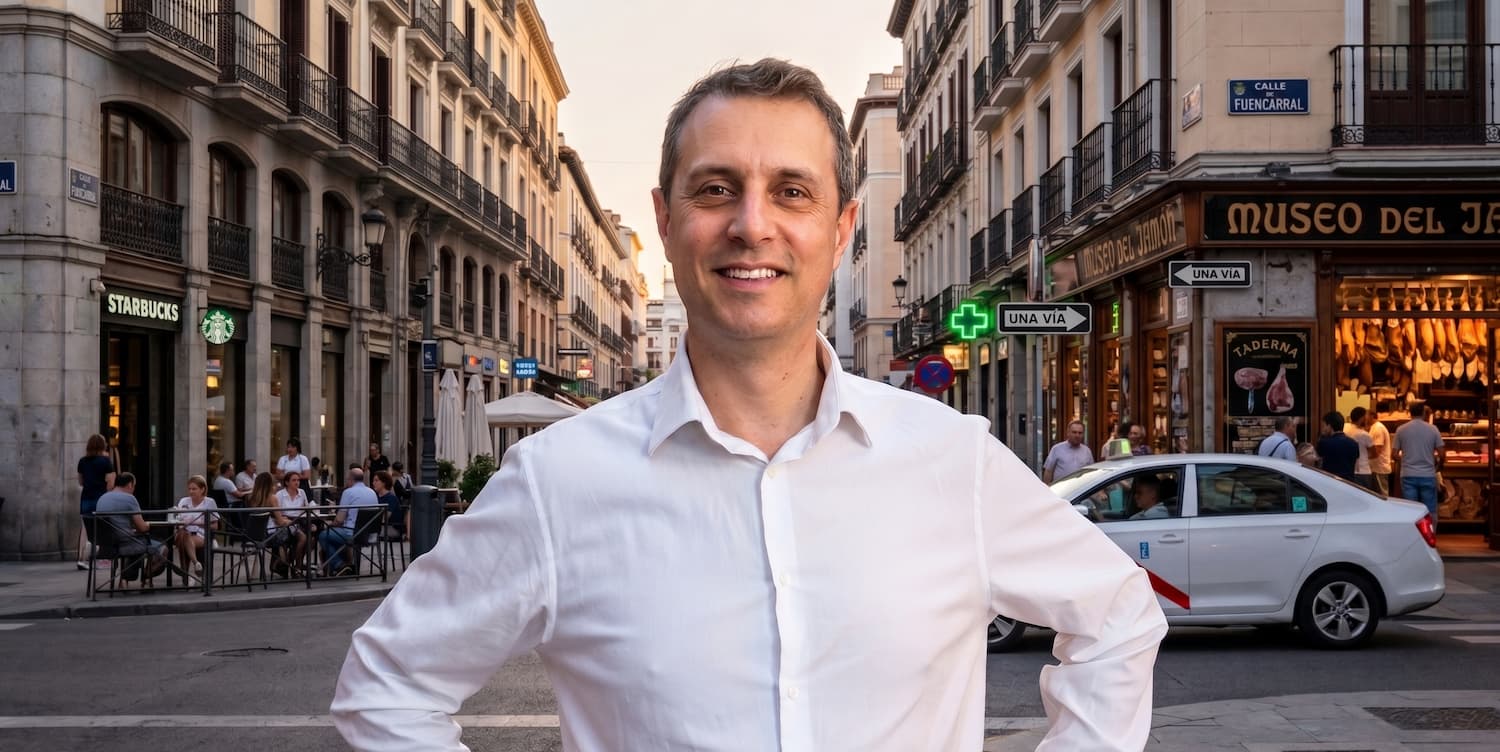
Since my ex-wife speaks Spanish, Spain felt like a natural choice culturally and linguistically. We eventually settled in Madrid, which offered a better quality of life and a more comfortable environment for raising children.
A Dream Built Around Teaching
— What is your biggest dream today?
Professionally, my dream is very clear: I want to succeed as a full-time trainer in OTT streaming technologies and build training programs that are genuinely useful, visually engaging, and technically strong.
I want to continue designing beautiful educational experiences, travel regularly, meet new people, and keep learning through interaction. Questions, discussions, and feedback are incredibly important to me because they constantly push me to grow.
At this point in my life, I feel I know what I am built for. I genuinely enjoy teaching, explaining, and making difficult concepts accessible. That is why I feel optimistic — because I truly enjoy doing it.
“I feel I finally know what I am made for: teaching OTT technologies.”