
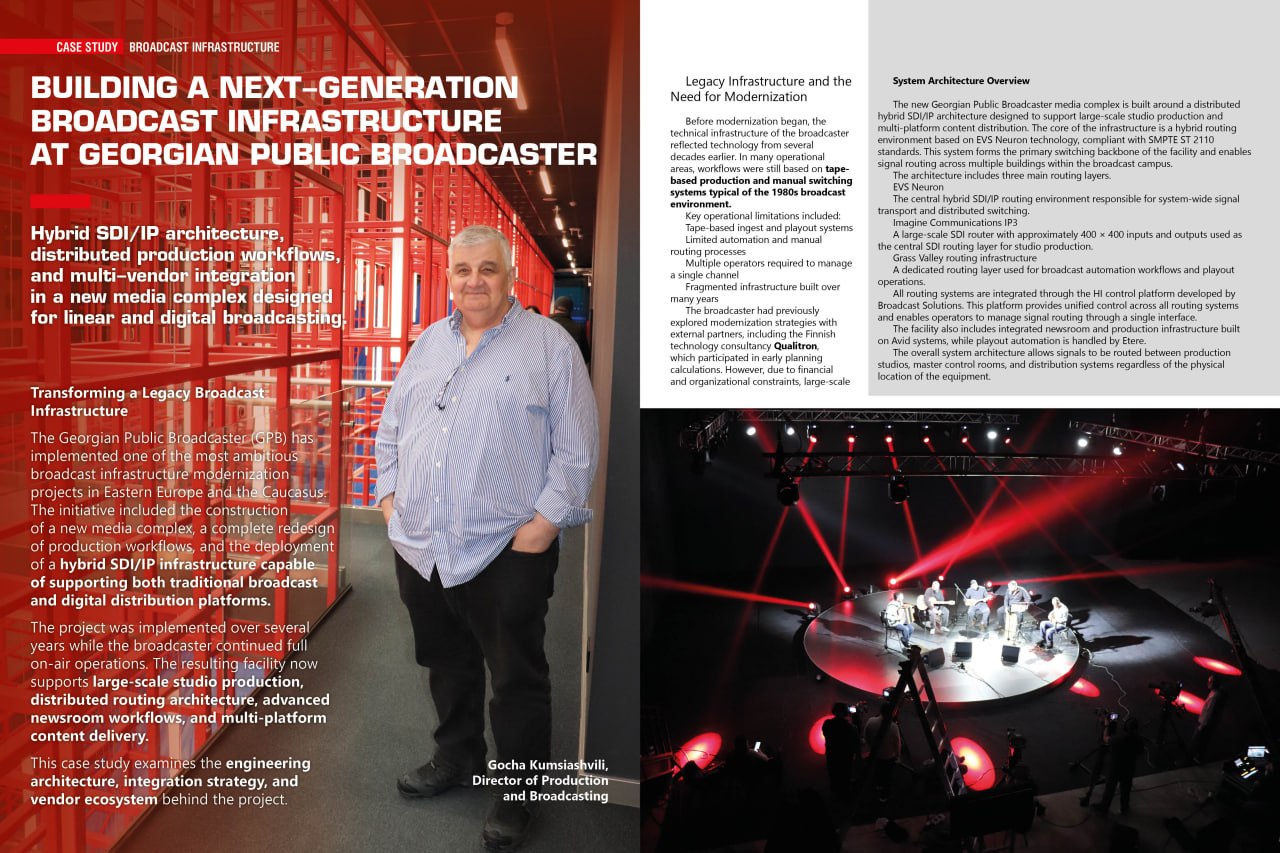
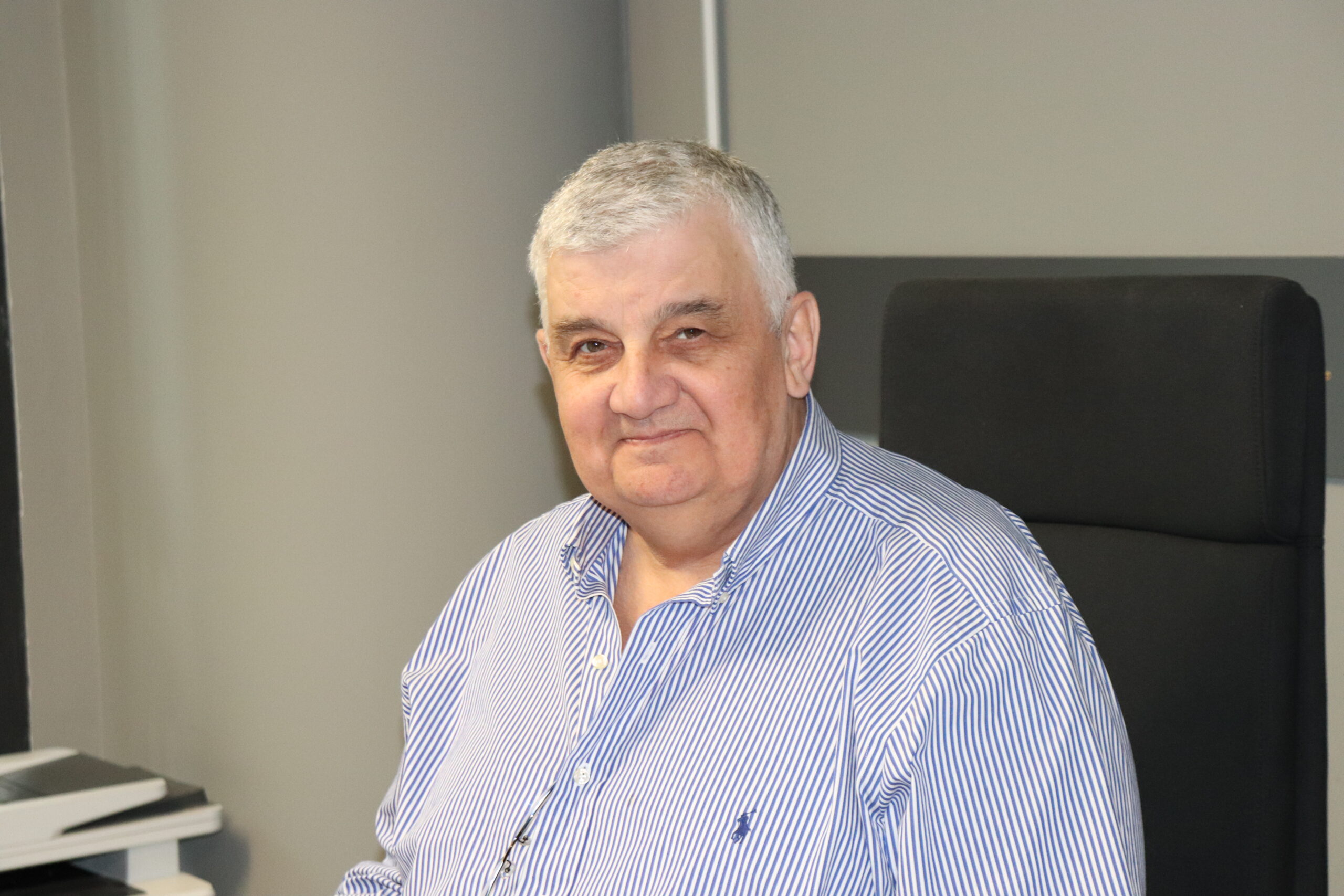
Hybrid SDI/IP architecture, distributed production workflows, and multi-vendor integration in a new media complex designed for linear and digital broadcasting. This case study was prepared on the basis of an exclusive interview with Gocha Kumsiashvili, Director of Broadcast and Production at the Georgian Public Broadcaster (GPB), Georgia.
Transforming a Legacy Broadcast Infrastructure
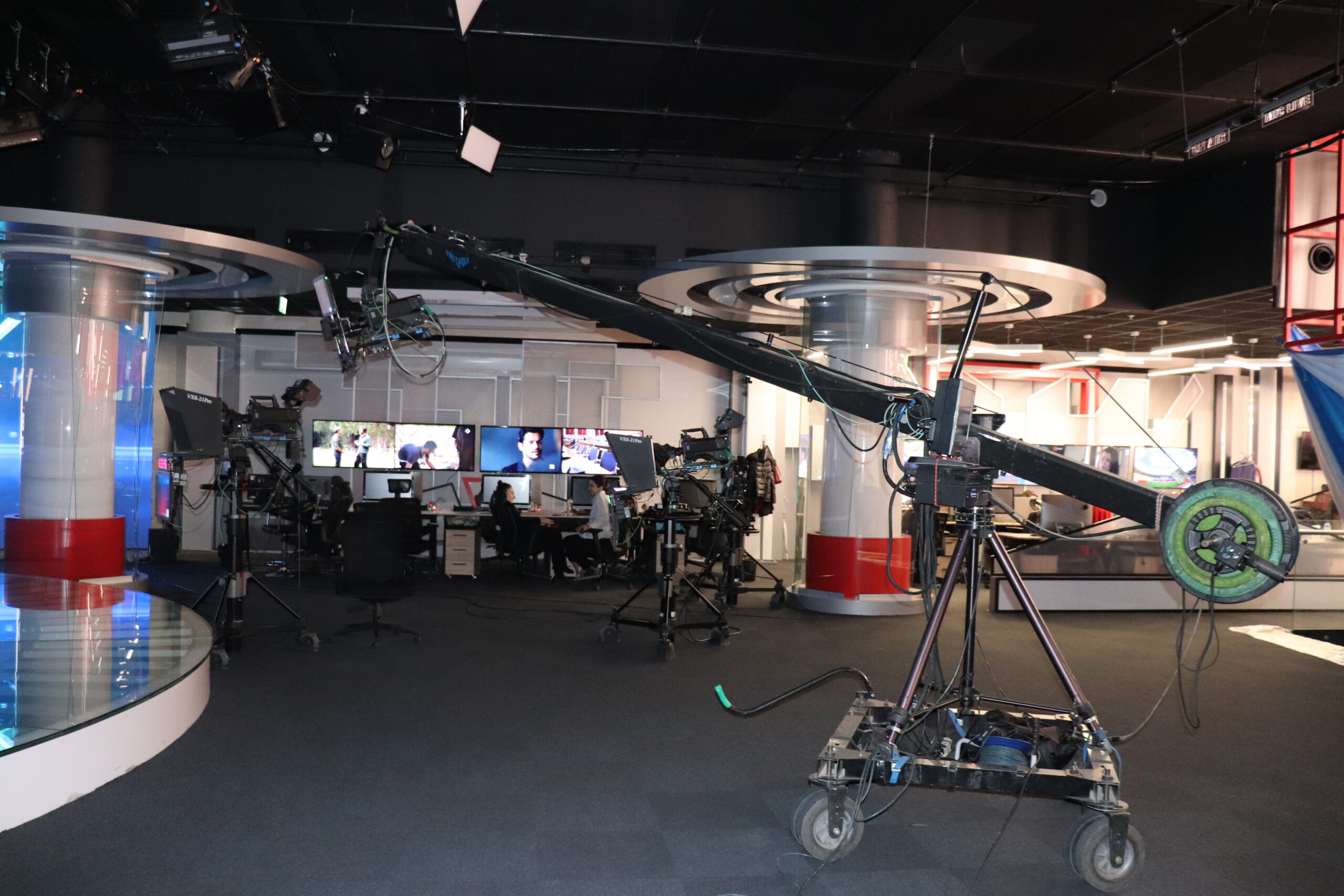
The Georgian Public Broadcaster has implemented one of the most ambitious broadcast infrastructure modernization projects in Eastern Europe and the Caucasus. The initiative included the construction of a new media complex, a complete redesign of production workflows, and the deployment of a hybrid SDI/IP infrastructure capable of supporting both traditional broadcast and digital distribution platforms.
The project was implemented over several years while the broadcaster continued full-on-air operations. The resulting facility now supports large-scale studio production, distributed routing architecture, advanced newsroom workflows, and multi-platform content delivery.
This case study examines the engineering architecture, integration strategy, and vendor ecosystem behind the project.
System Architecture Overview
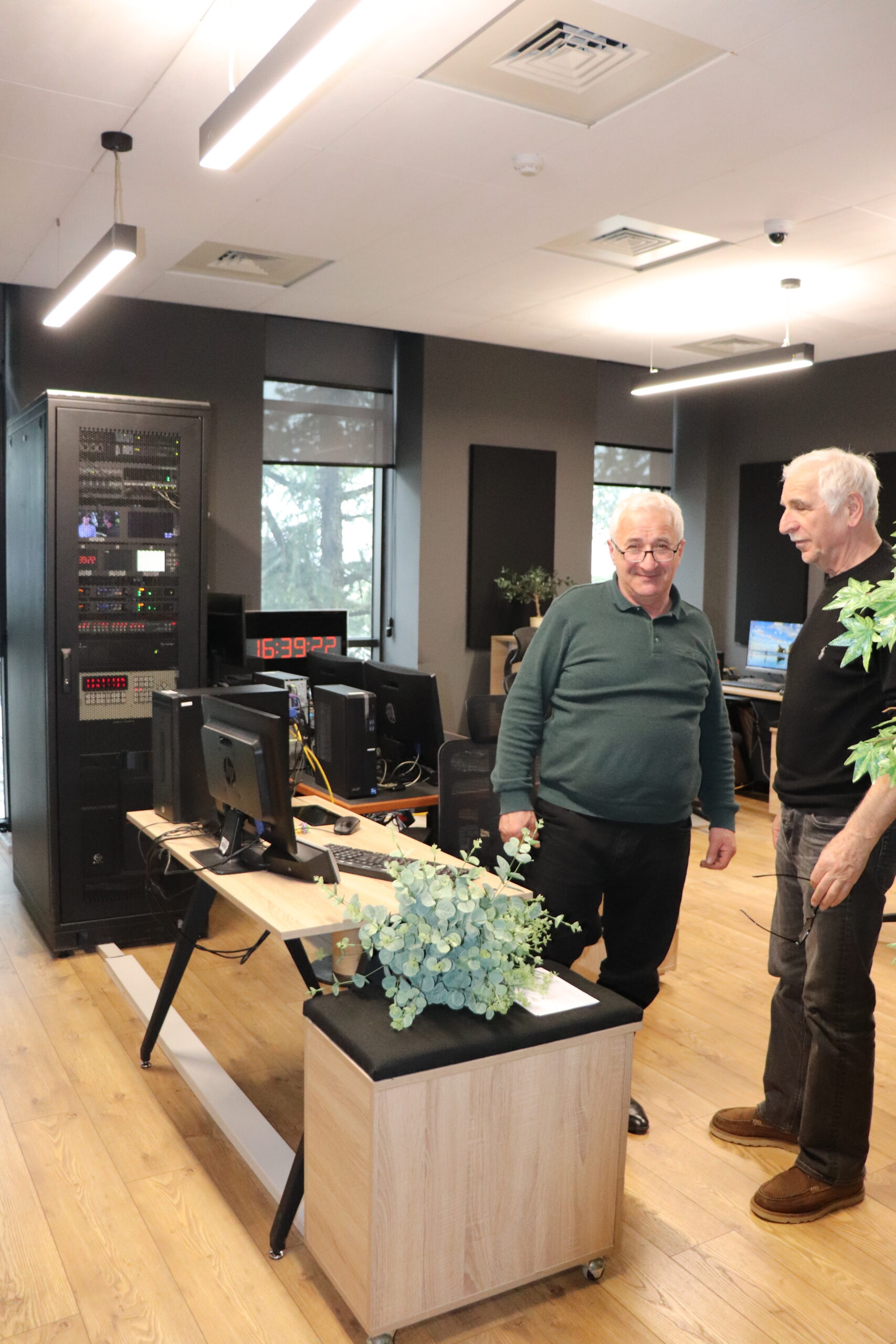
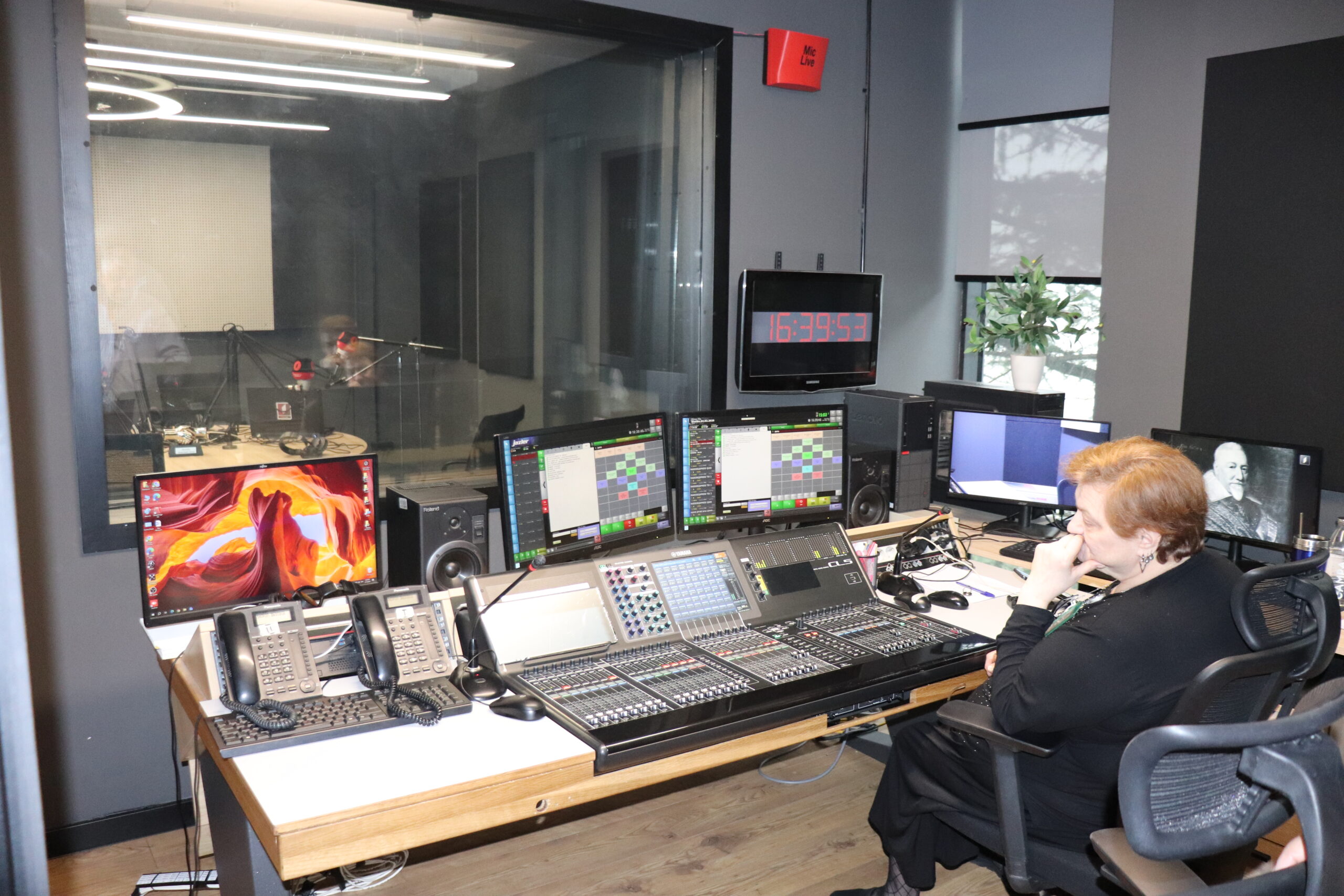
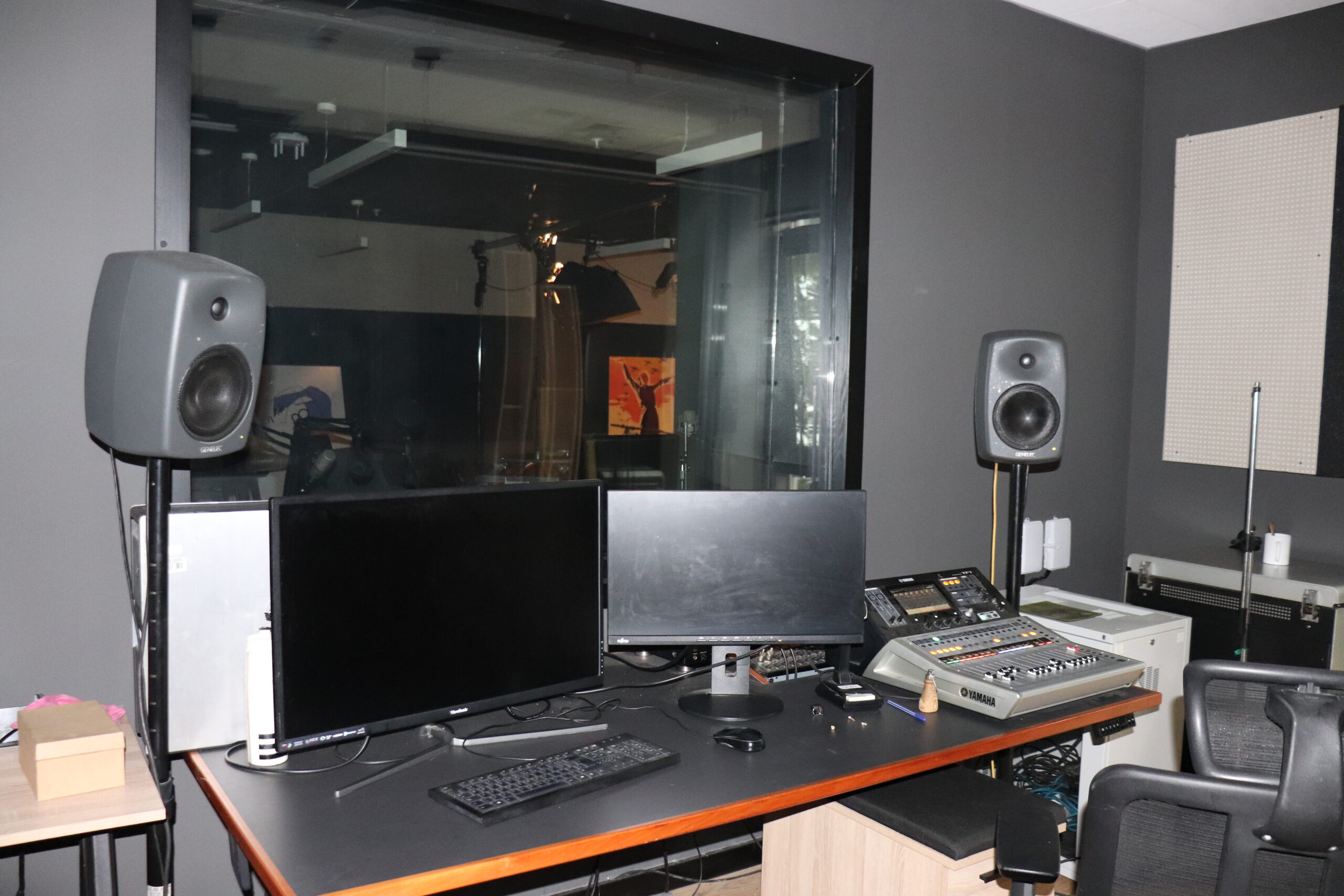
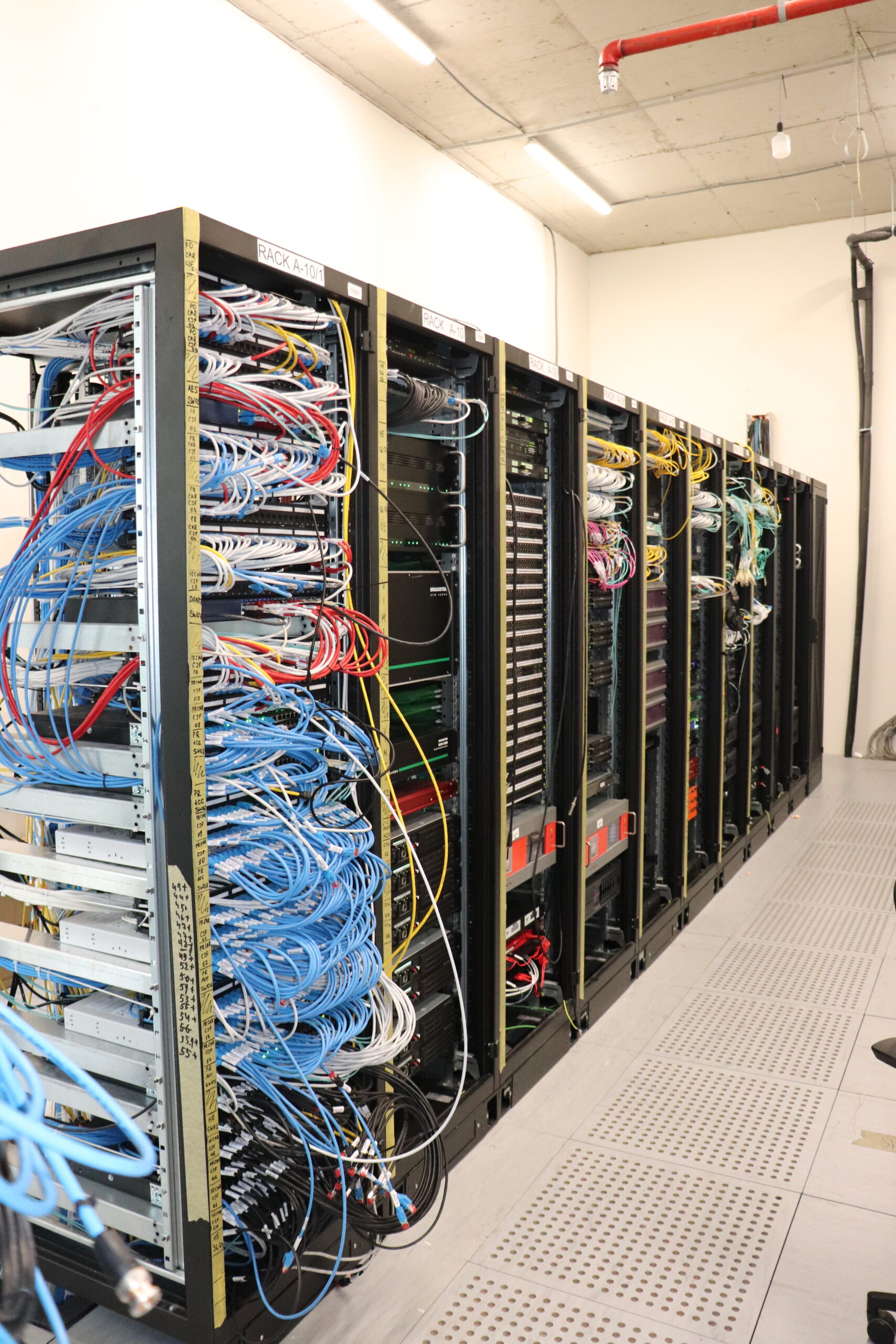
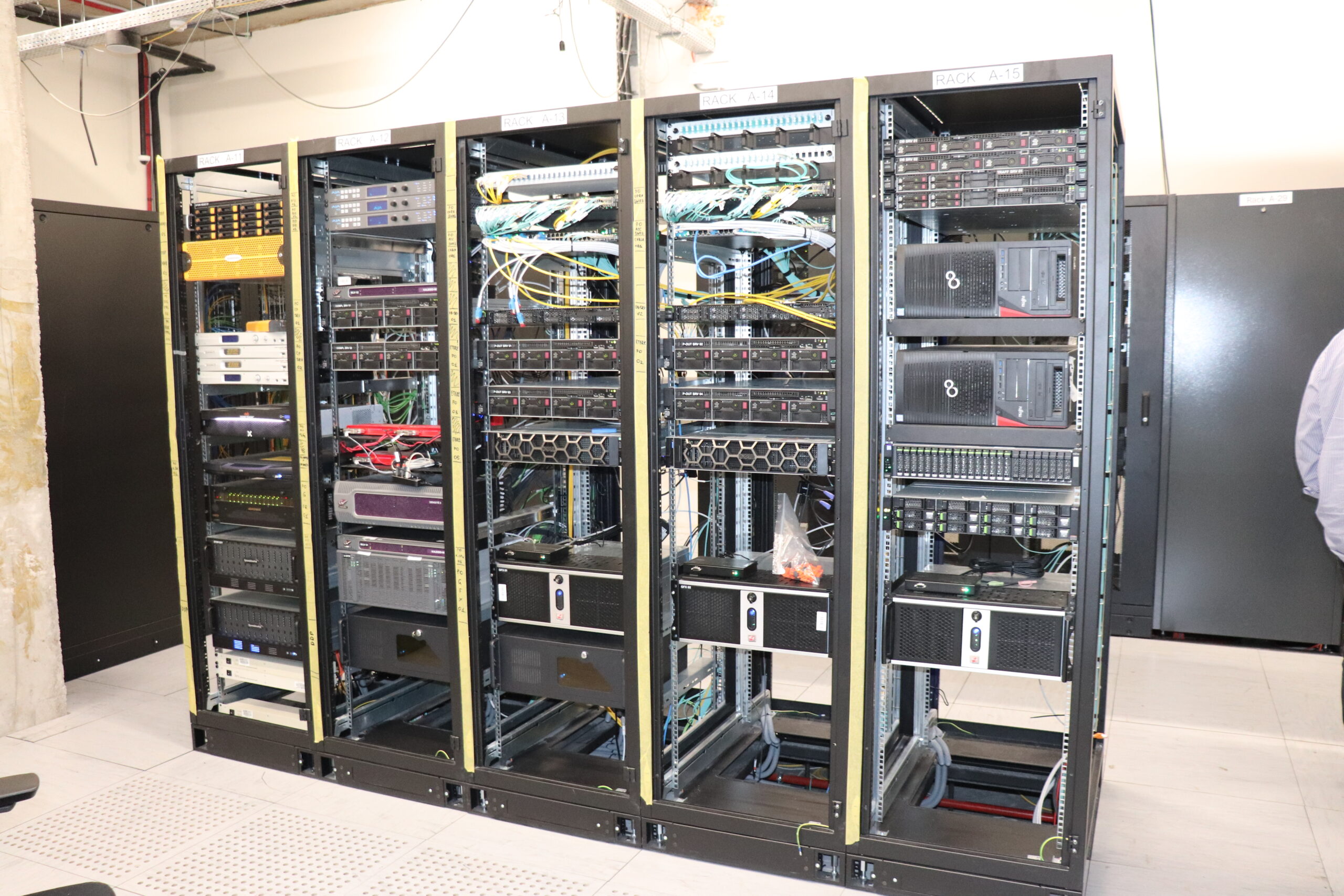
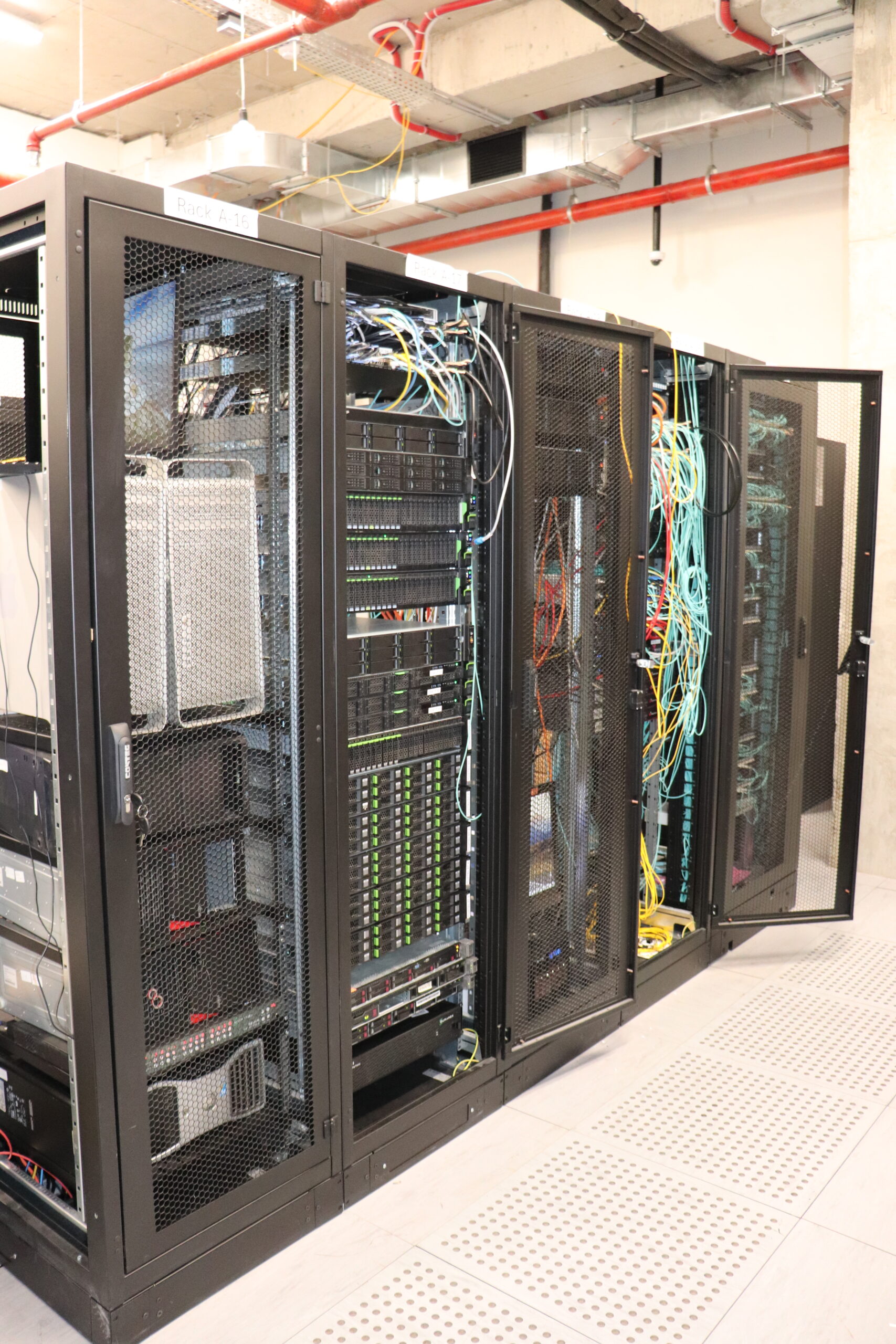
The new Georgian Public Broadcaster media complex is built around a distributed hybrid SDI/IP architecture designed to support large-scale studio production and multi-platform content distribution. The core of the infrastructure is a hybrid routing environment based on EVS Neuron technology, compliant with SMPTE ST 2110 standards. This system forms the primary switching backbone of the facility and enables signal routing across multiple buildings within the broadcast campus.
The architecture includes three main routing layers.
- EVS Neuron: the central hybrid SDI/IP routing environment responsible for system-wide signal transport and distributed switching.
- Imagine Communications IP3: the SDI routing layer used for traditional studio production paths.
- Grass Valley: the routing layer supporting automated playout workflows. A large-scale SDI router with approximately 400 × 400 inputs and outputs is used as the central SDI routing layer for studio production.
A dedicated routing layer used for broadcast automation workflows and playout operations. All routing systems are integrated through the HI control platform developed by Broadcast Solutions. This platform provides unified control across all routing systems and enables operators to manage signal routing through a single interface.
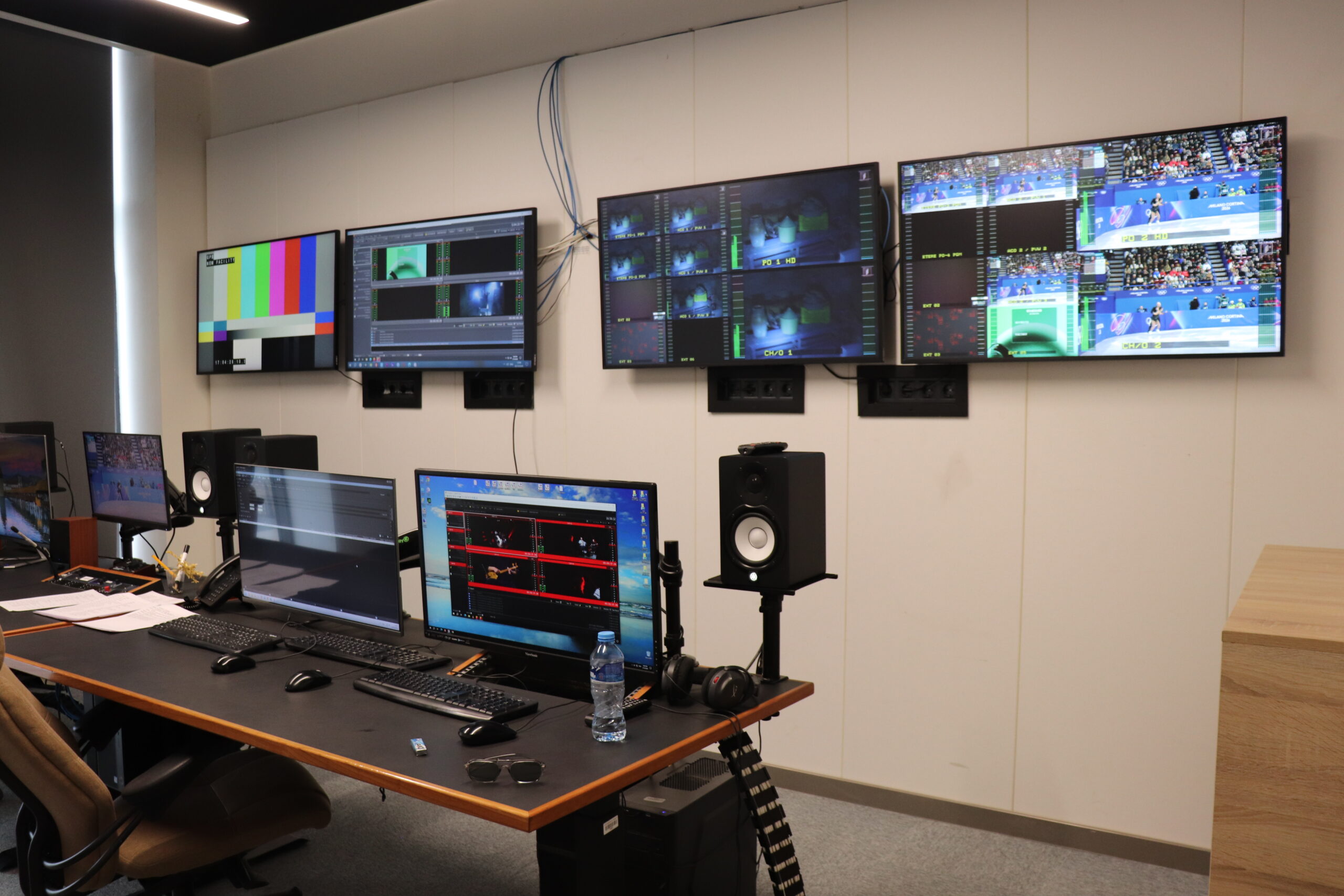
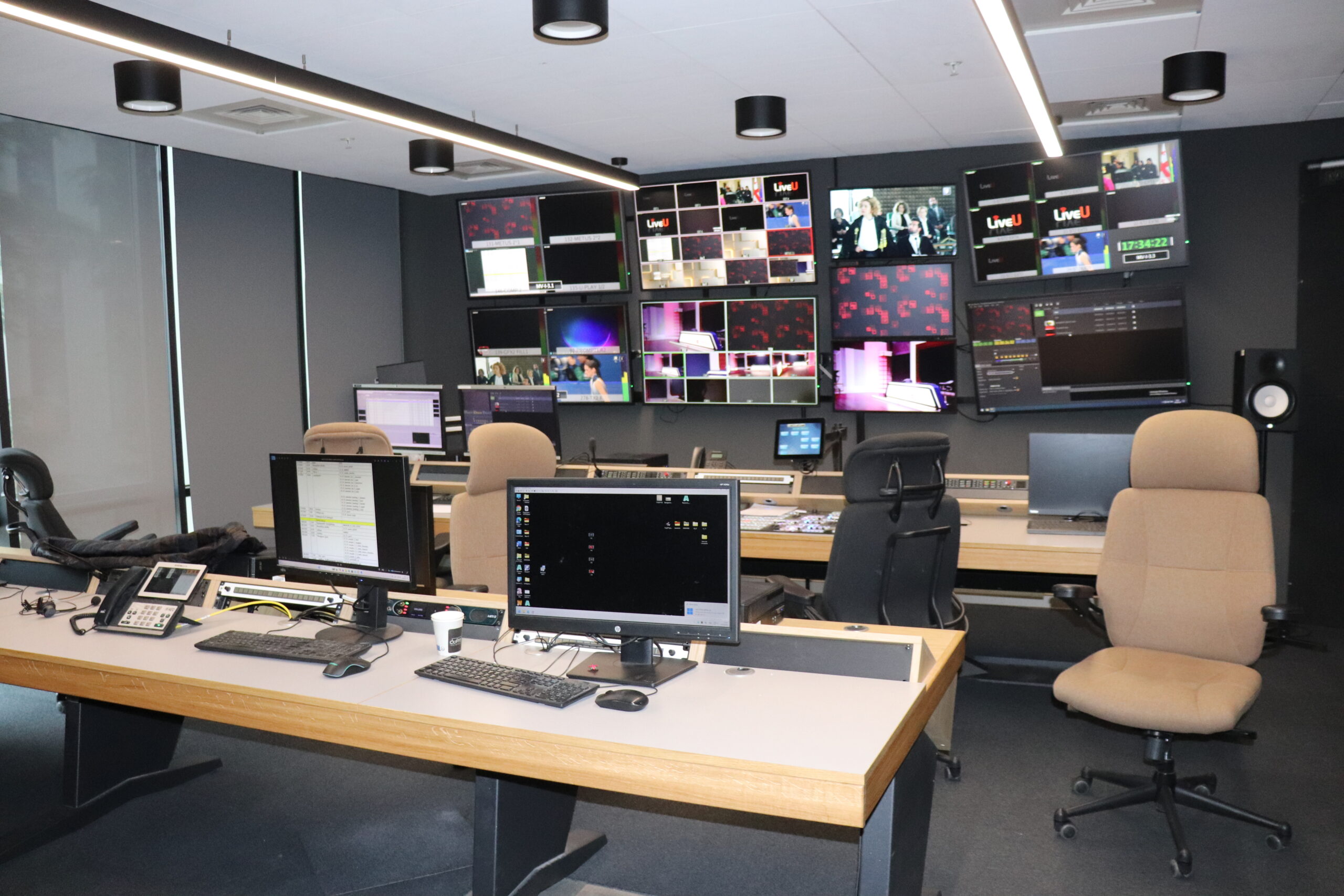
The facility also includes an integrated newsroom and production infrastructure built on Avid systems, while Etere handles playout automation. The overall system architecture allows signals to be routed between production studios, master control rooms, and distribution systems regardless of the physical location of the equipment.
Legacy Infrastructure and the Need for Modernization
Before modernization began, the broadcaster’s technical infrastructure reflected technology from several decades earlier. In many operational areas, workflows were still based on tape-based production and manual switching systems typical of the 1980s broadcast environment.
Key operational limitations included:
- Tape-based ingest and playout systems.
- Limited automation and manual routing processes.
- Multiple operators are required to manage a single channel.
- Fragmented infrastructure built over many years.
The broadcaster had previously explored modernization strategies with external partners, including the Finnish technology consultancy Qualitron, which participated in early planning calculations. However, due to financial and organizational constraints, large-scale transformation had been postponed for years. The new project, therefore, required a complete redesign of the broadcast technology environment rather than incremental upgrades.
Architecture of the New Media Complex
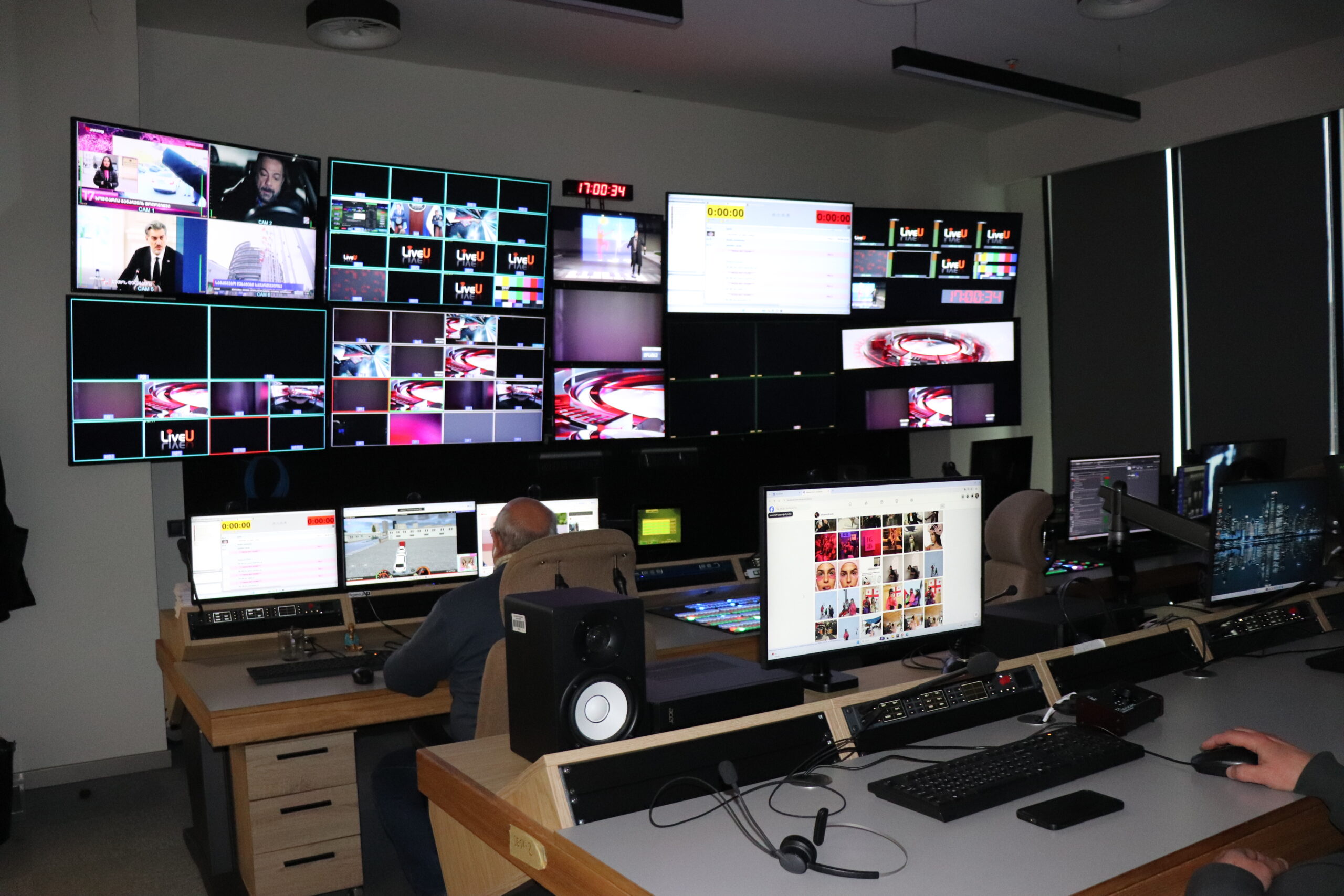
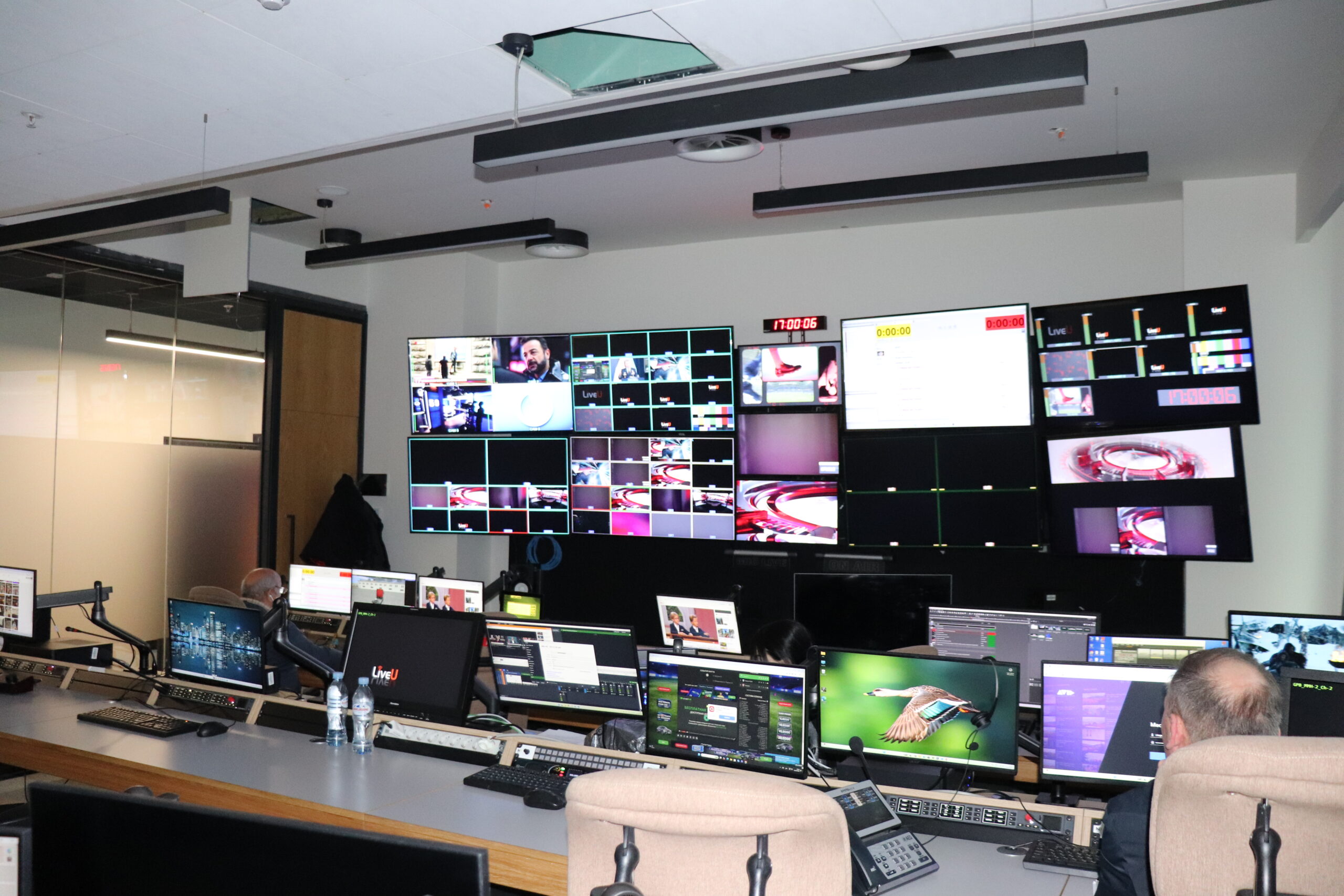
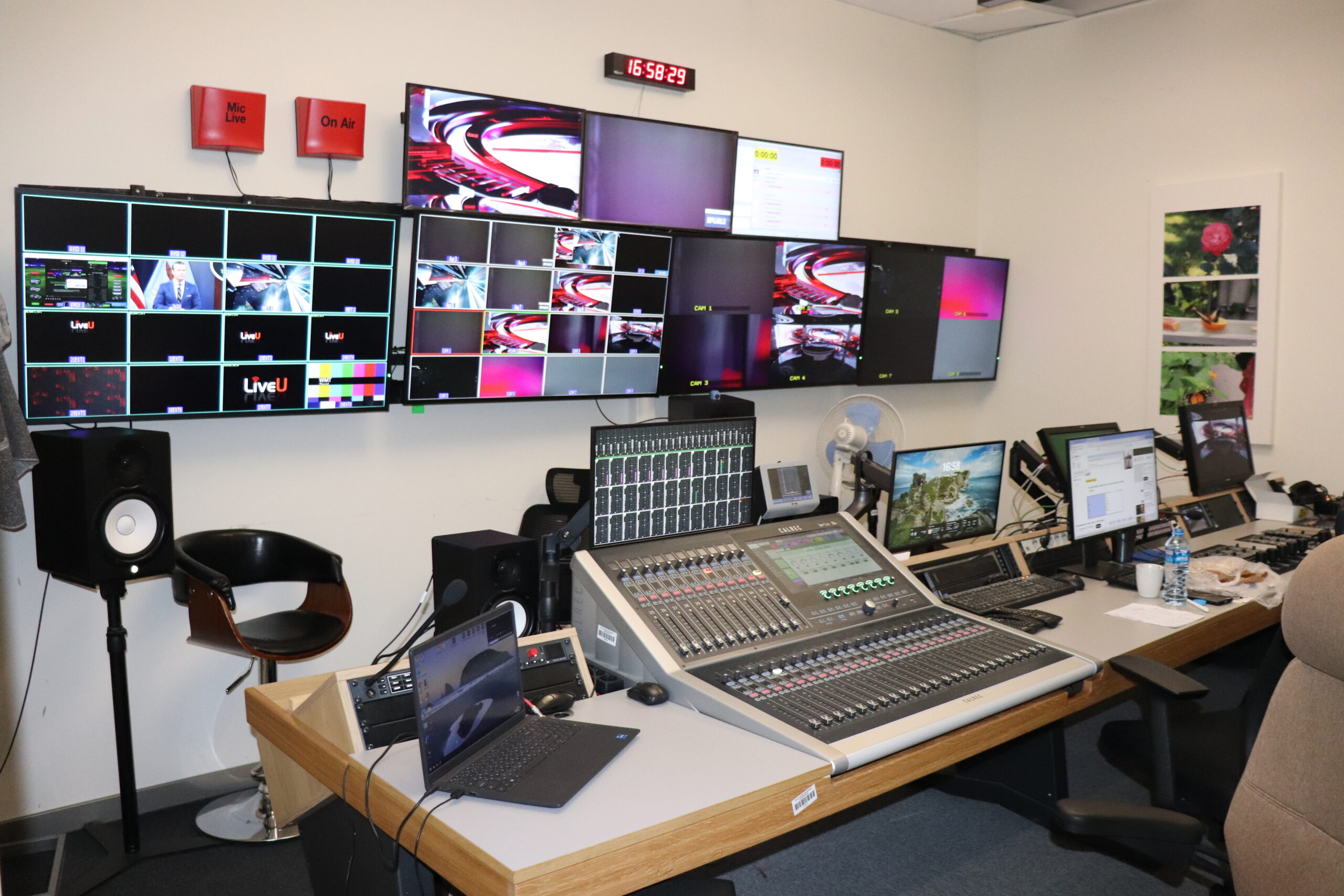
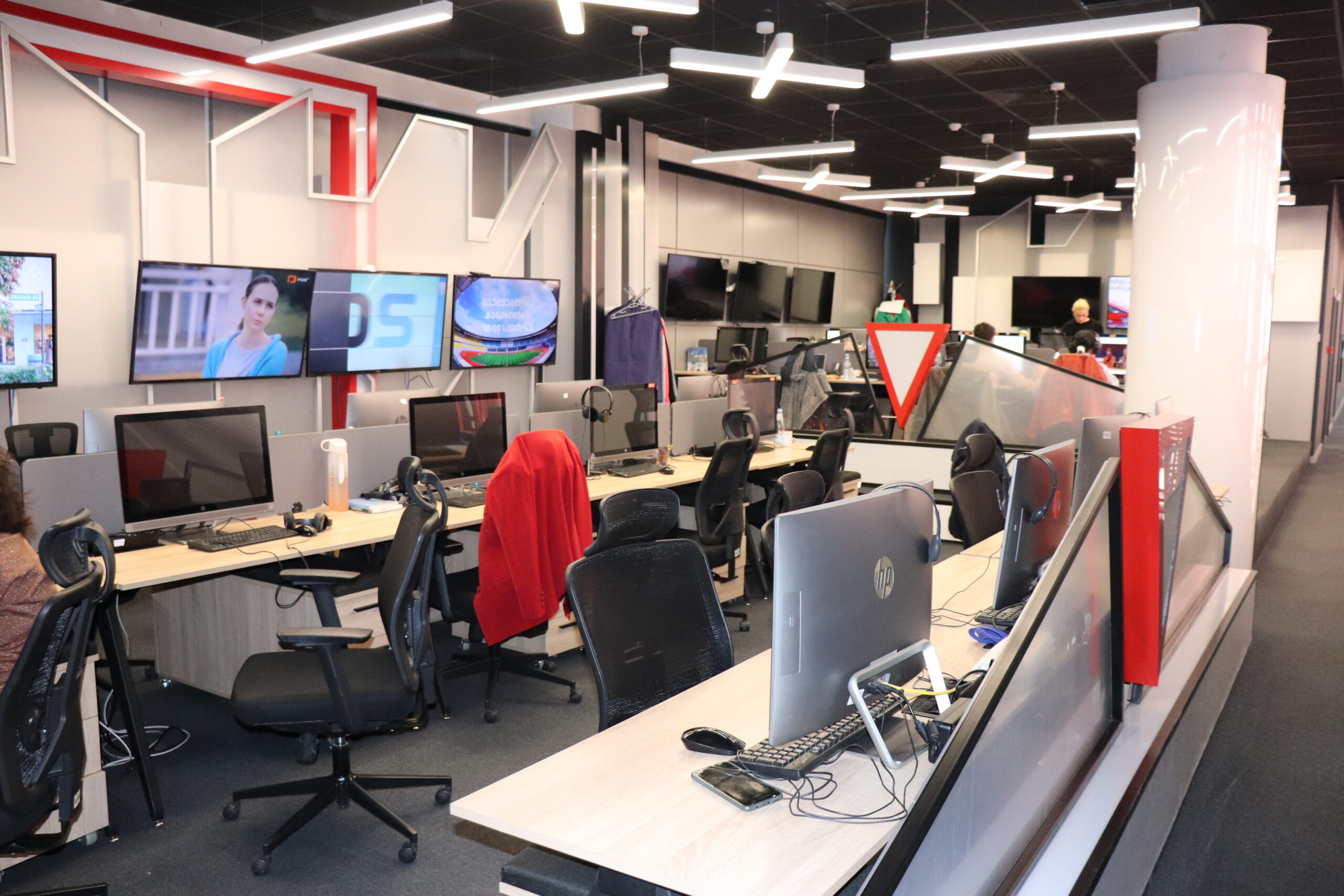
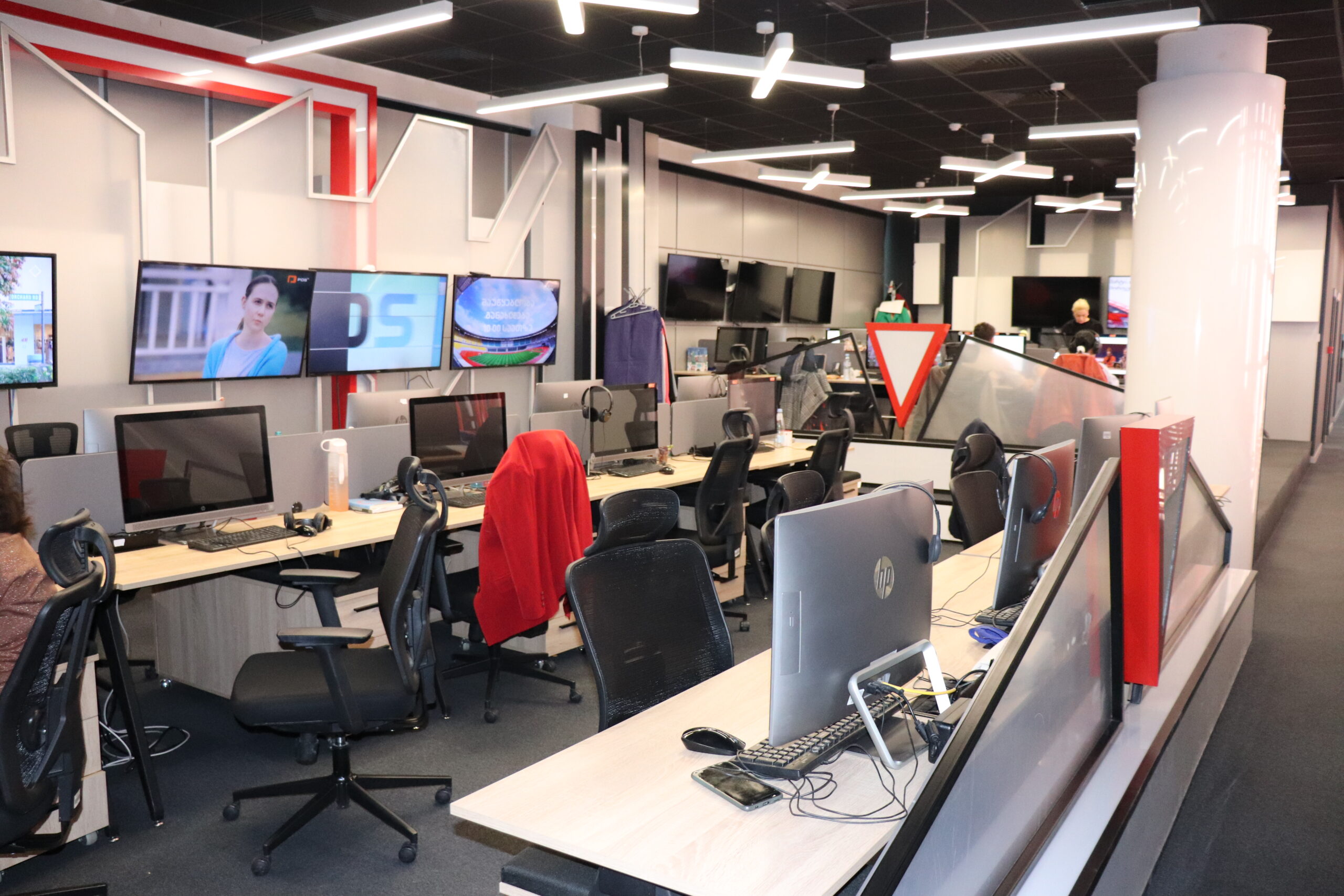
The new facility was designed as a multi-building broadcast campus, with infrastructure divided into two primary operational blocks:
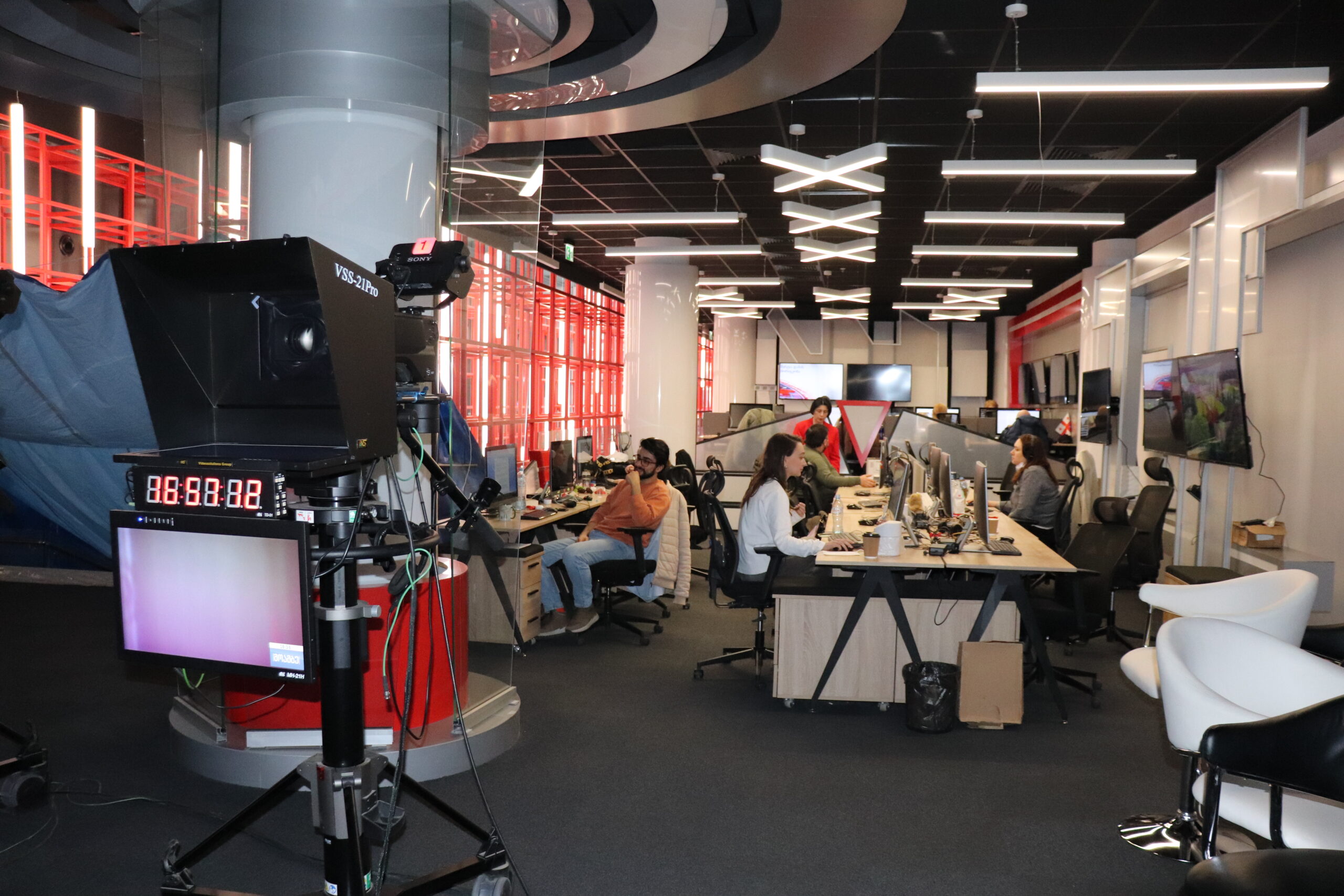
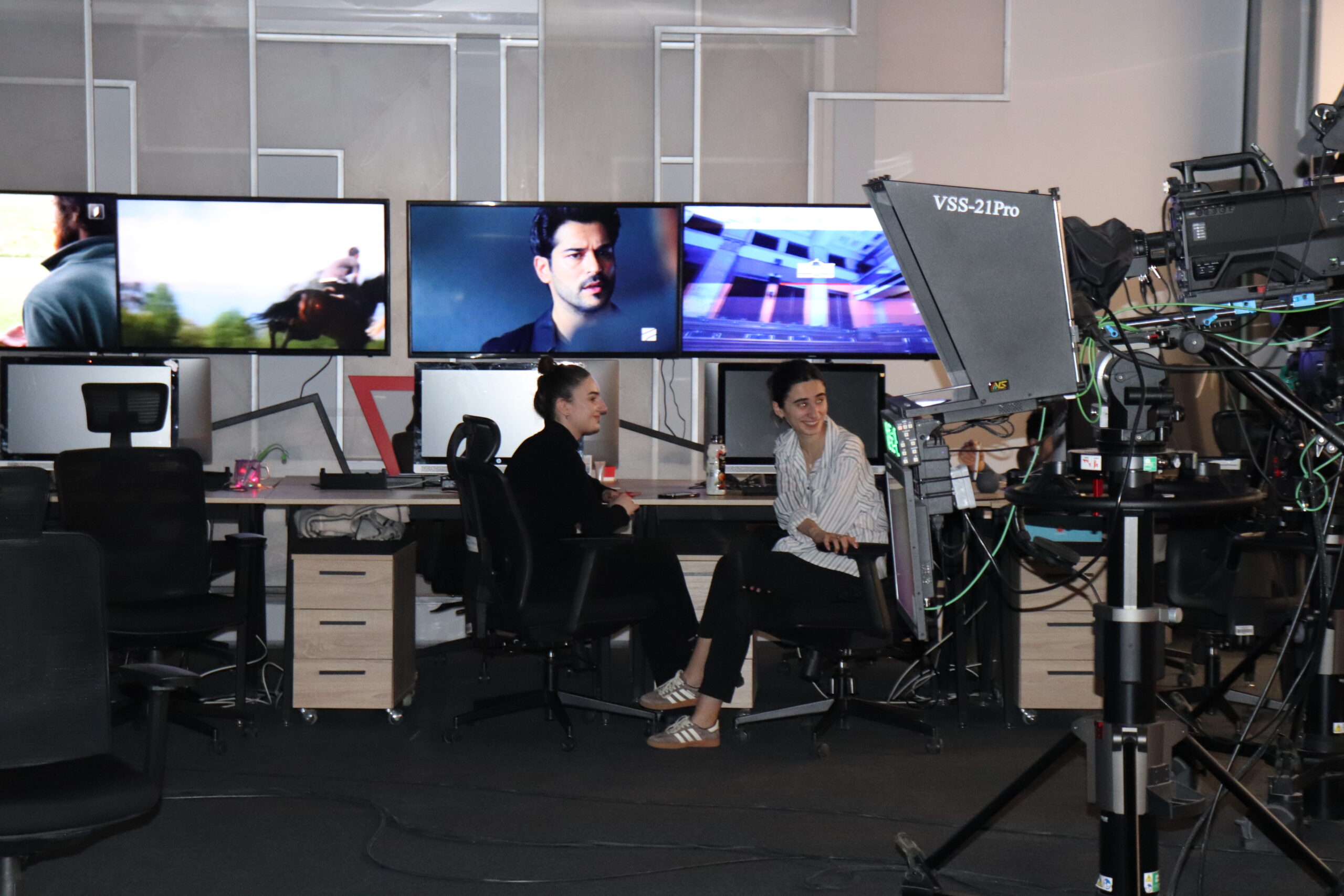
- Editorial and newsroom operations.
- Studio production and technical infrastructure
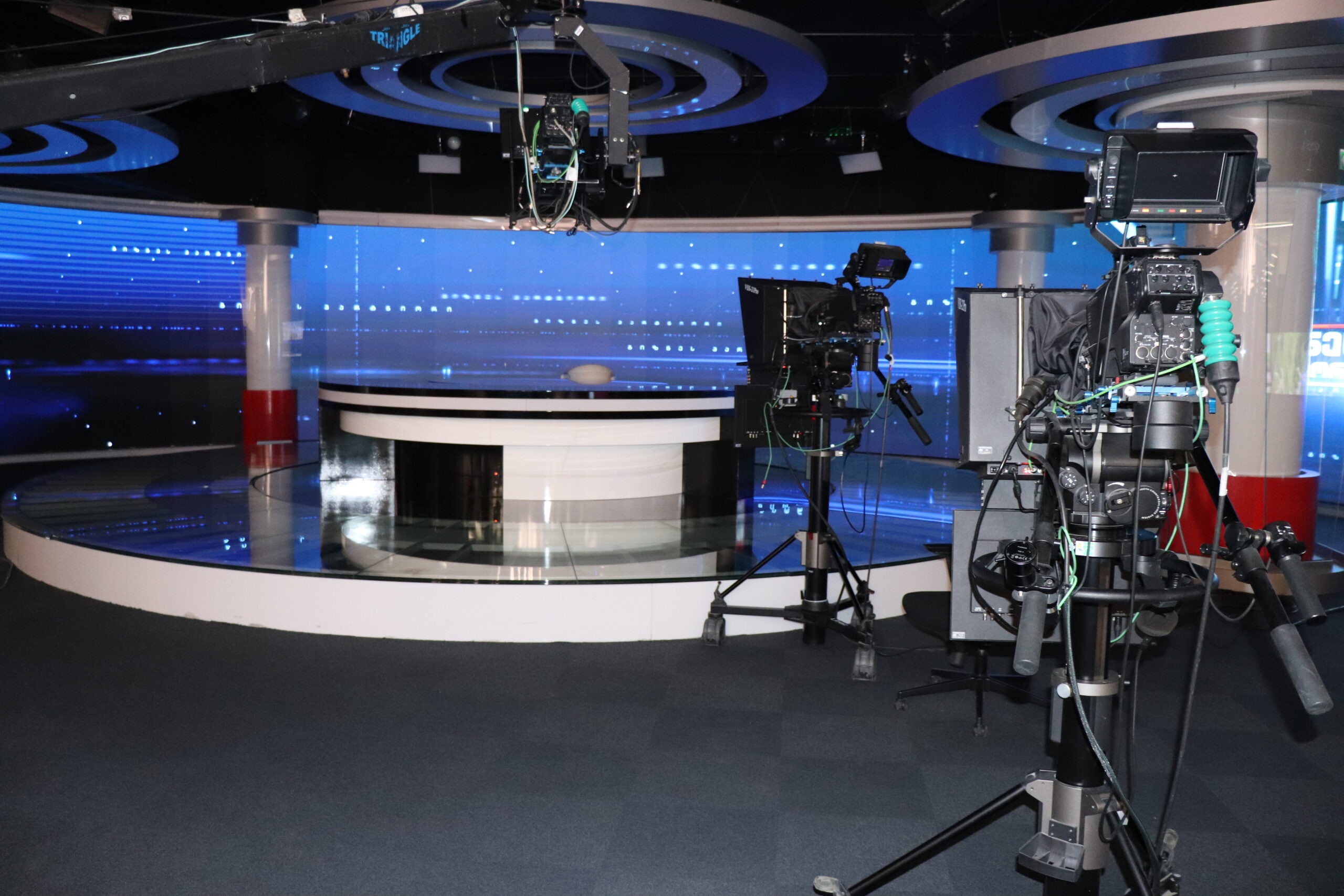
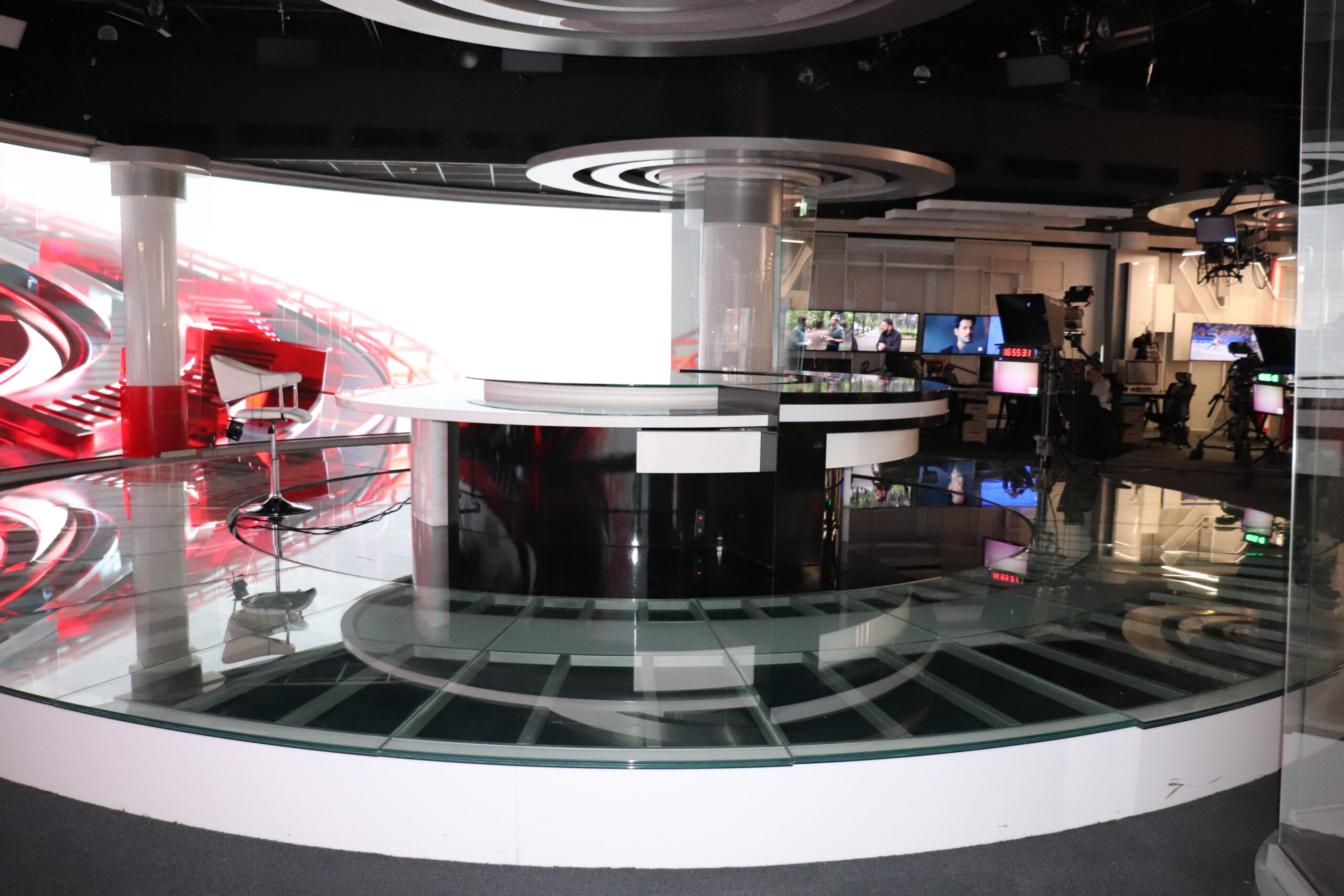
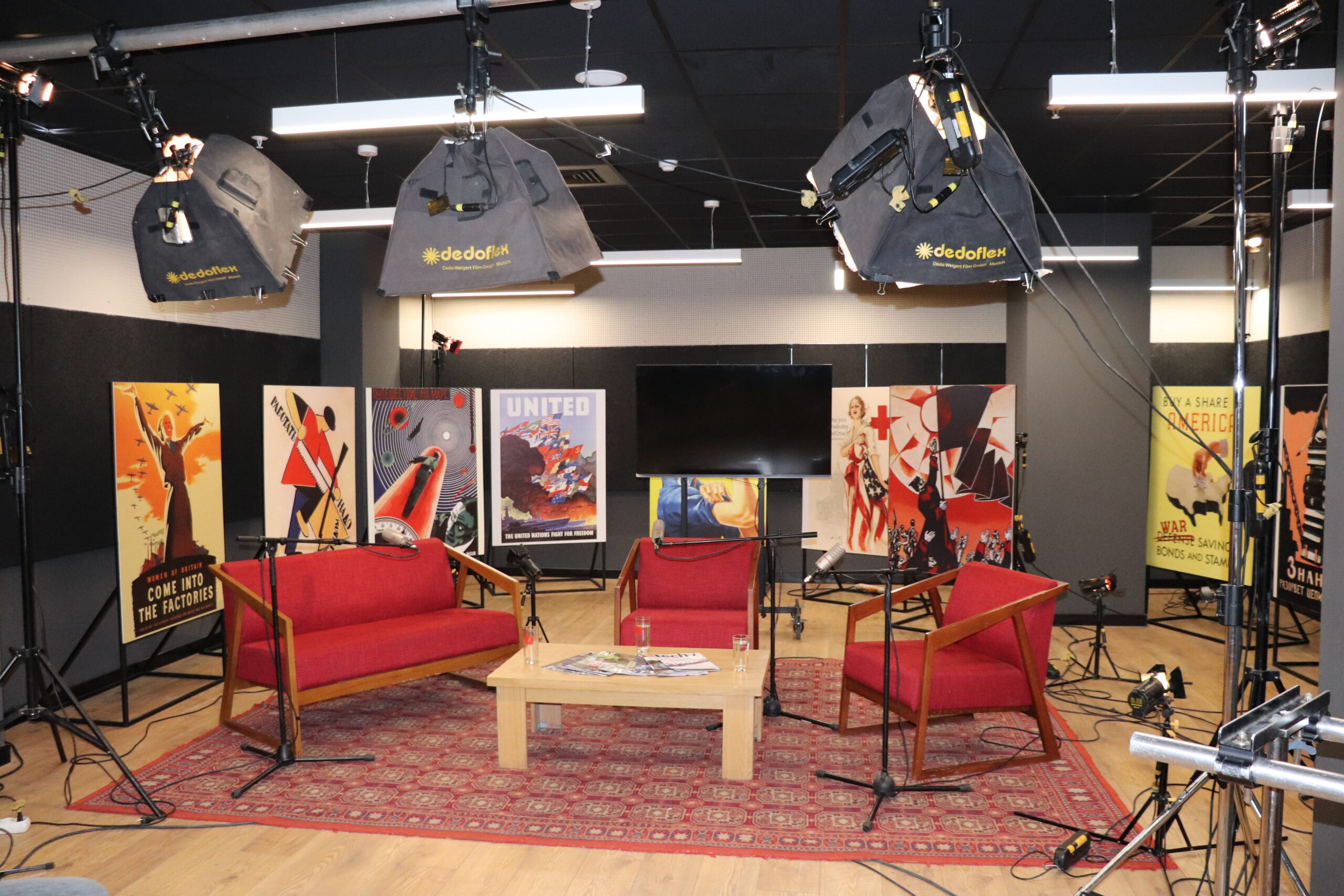
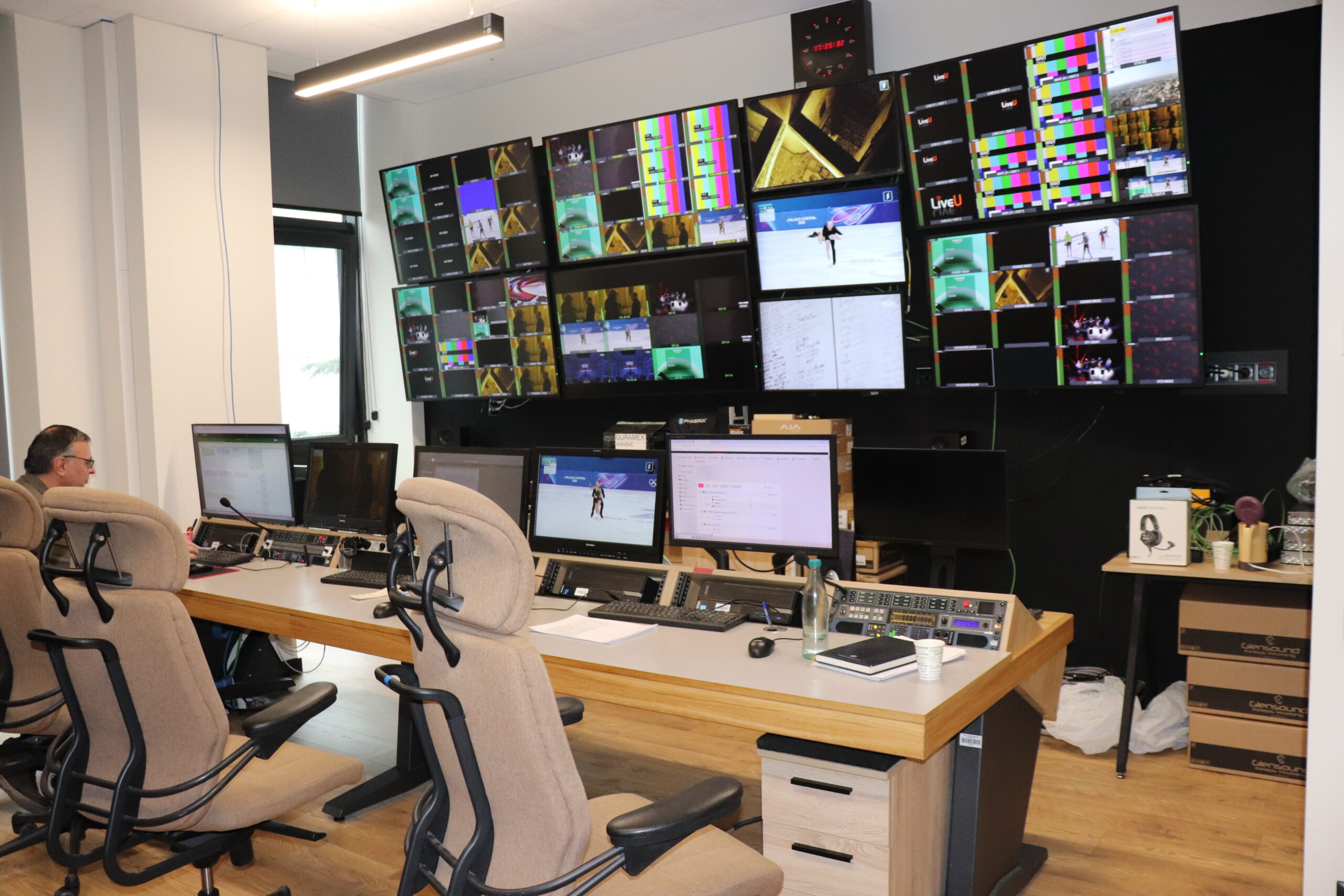
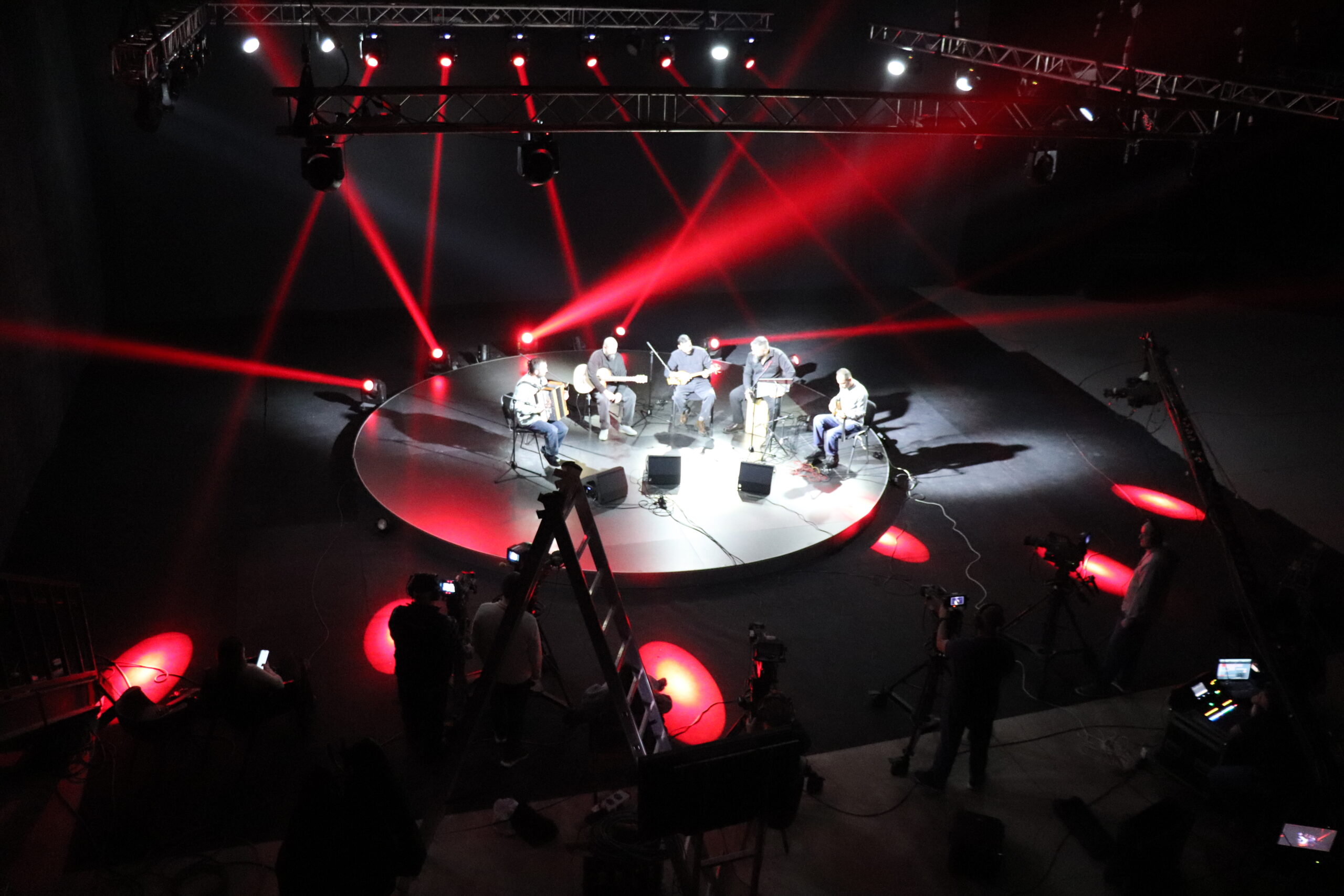
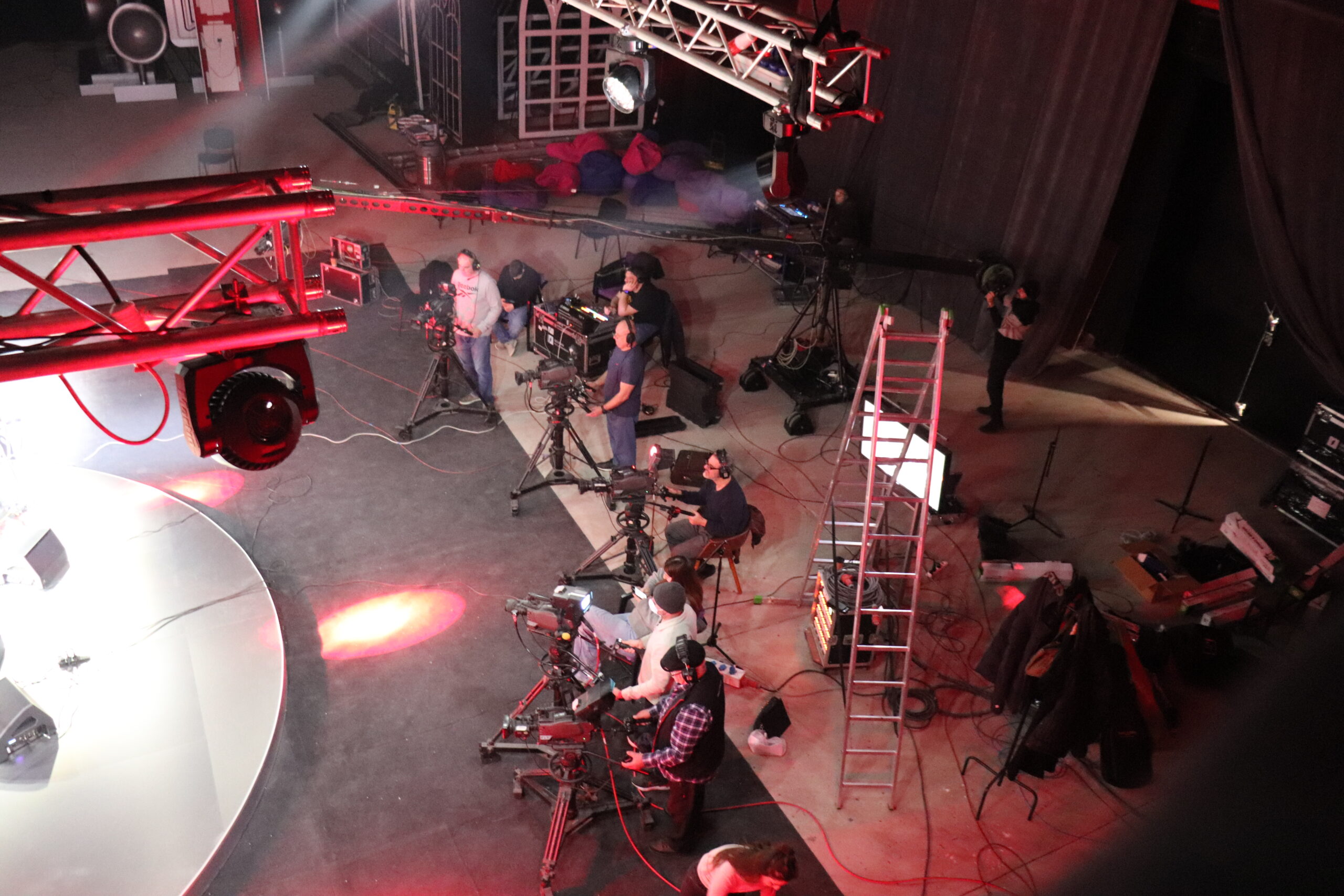
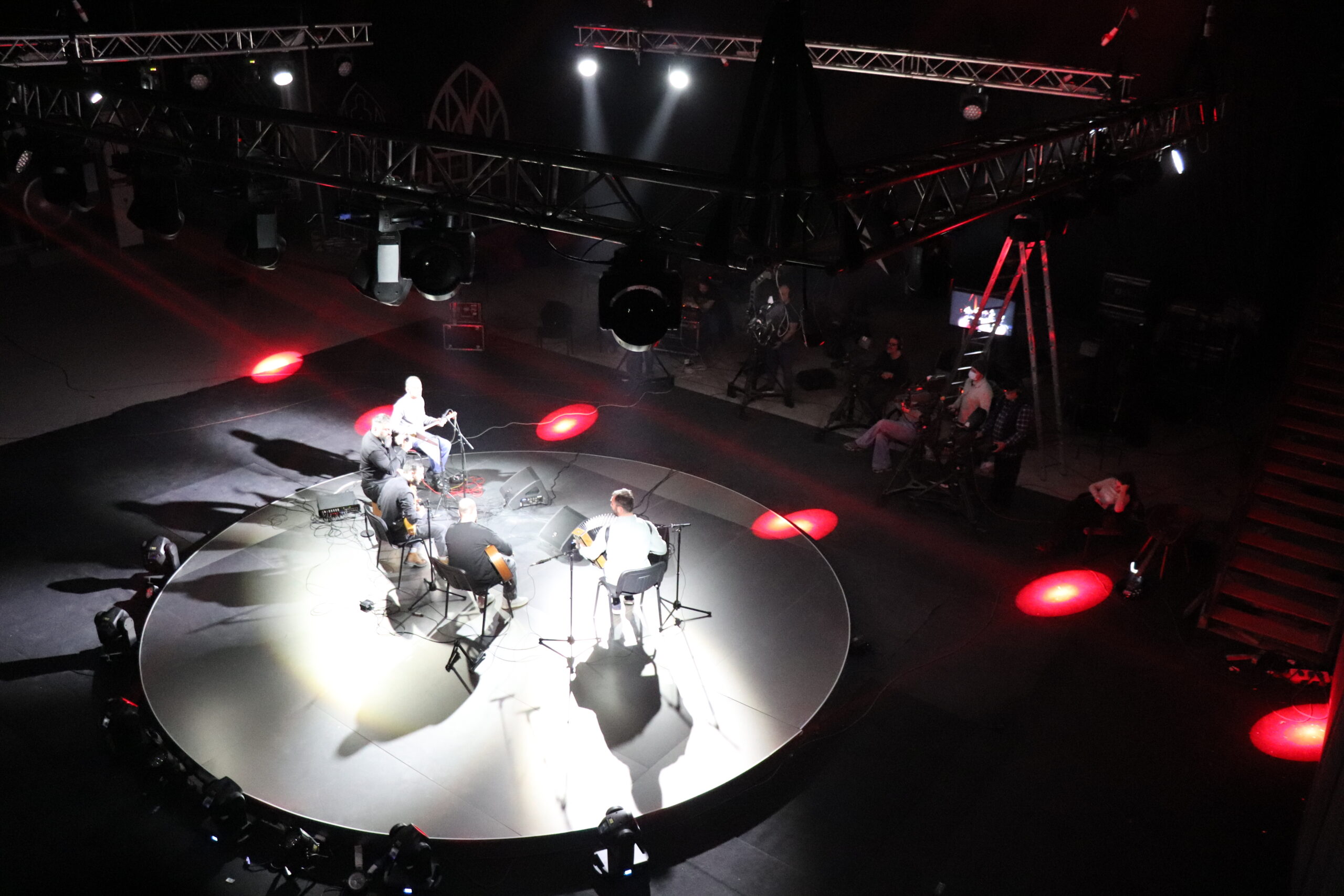
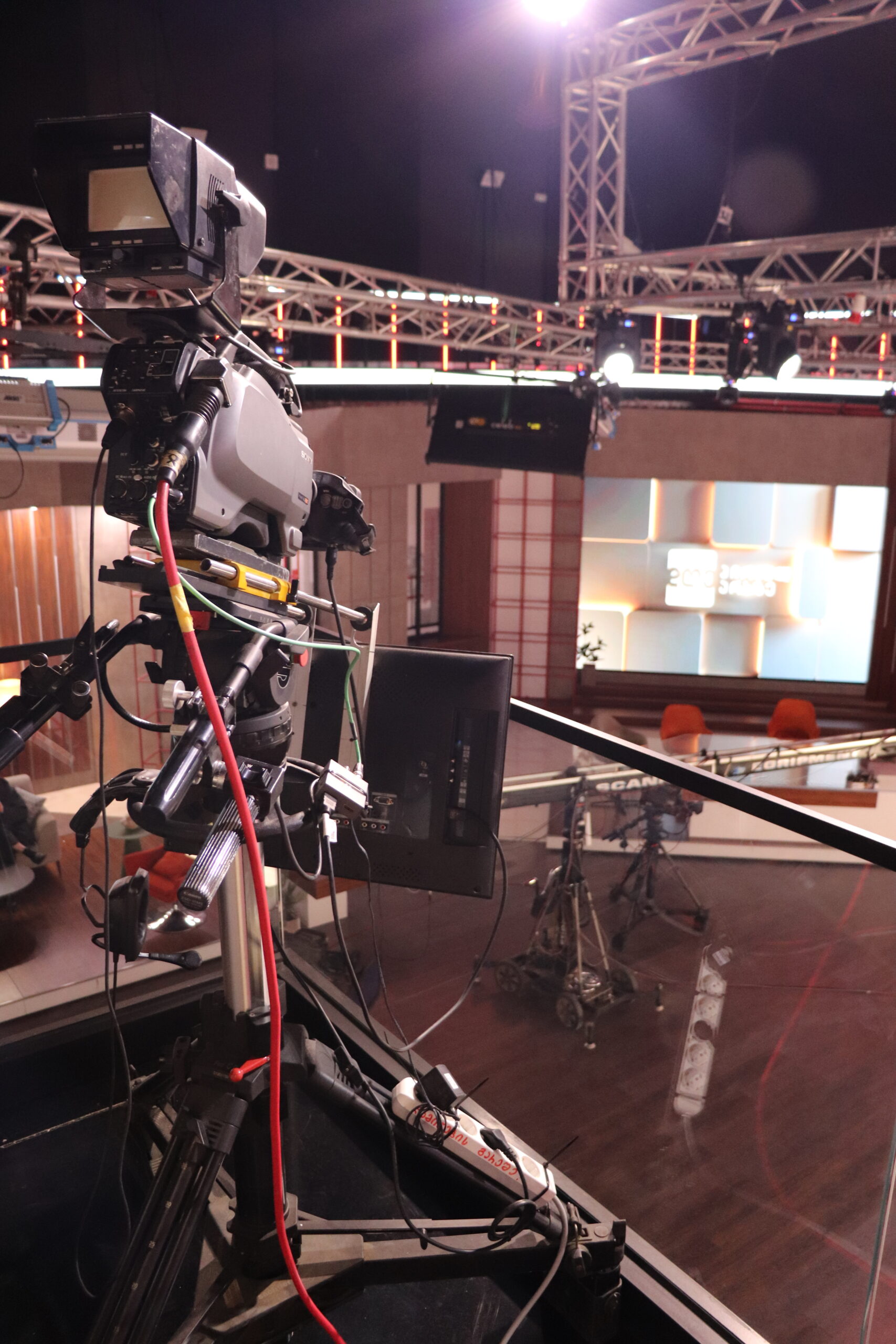
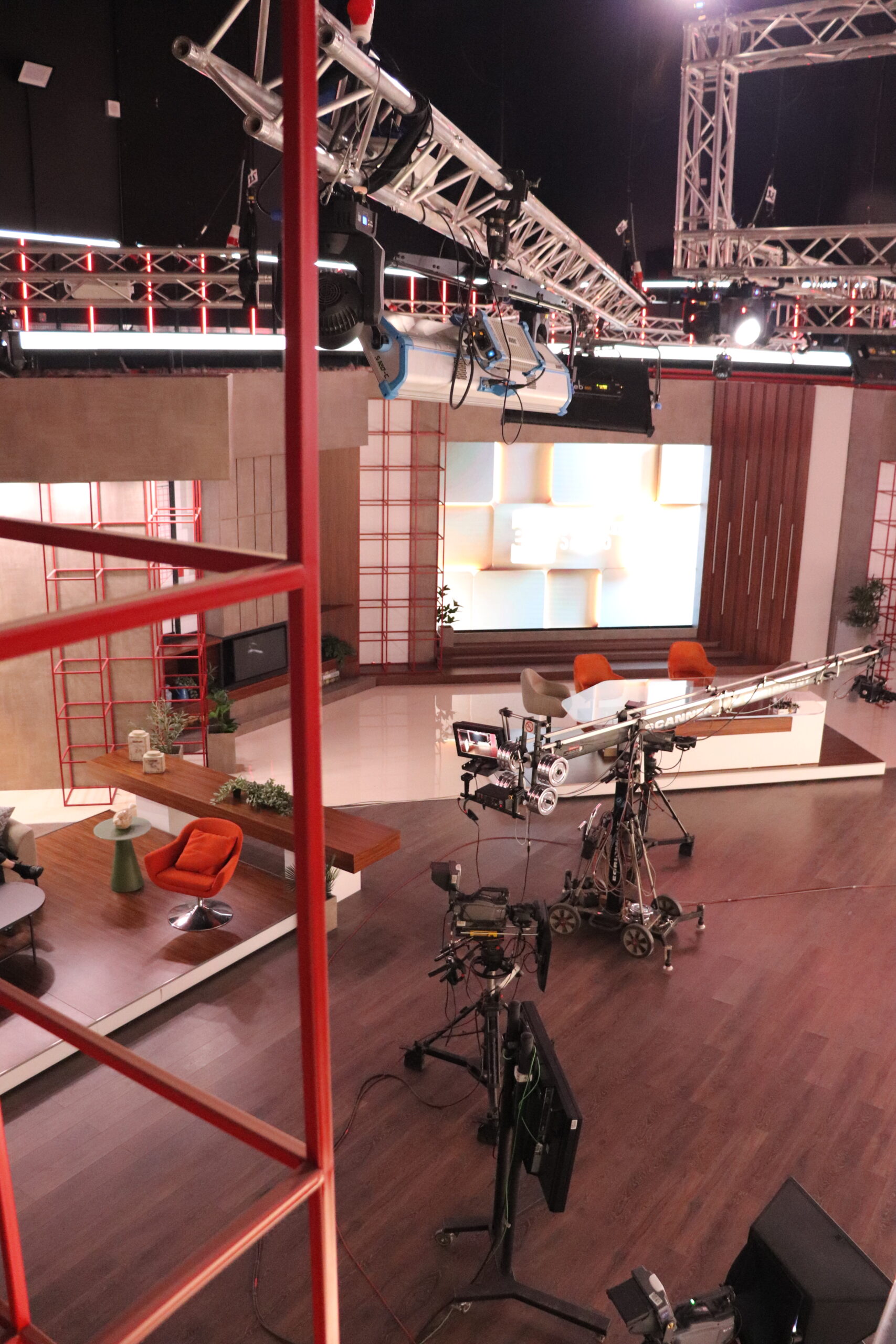
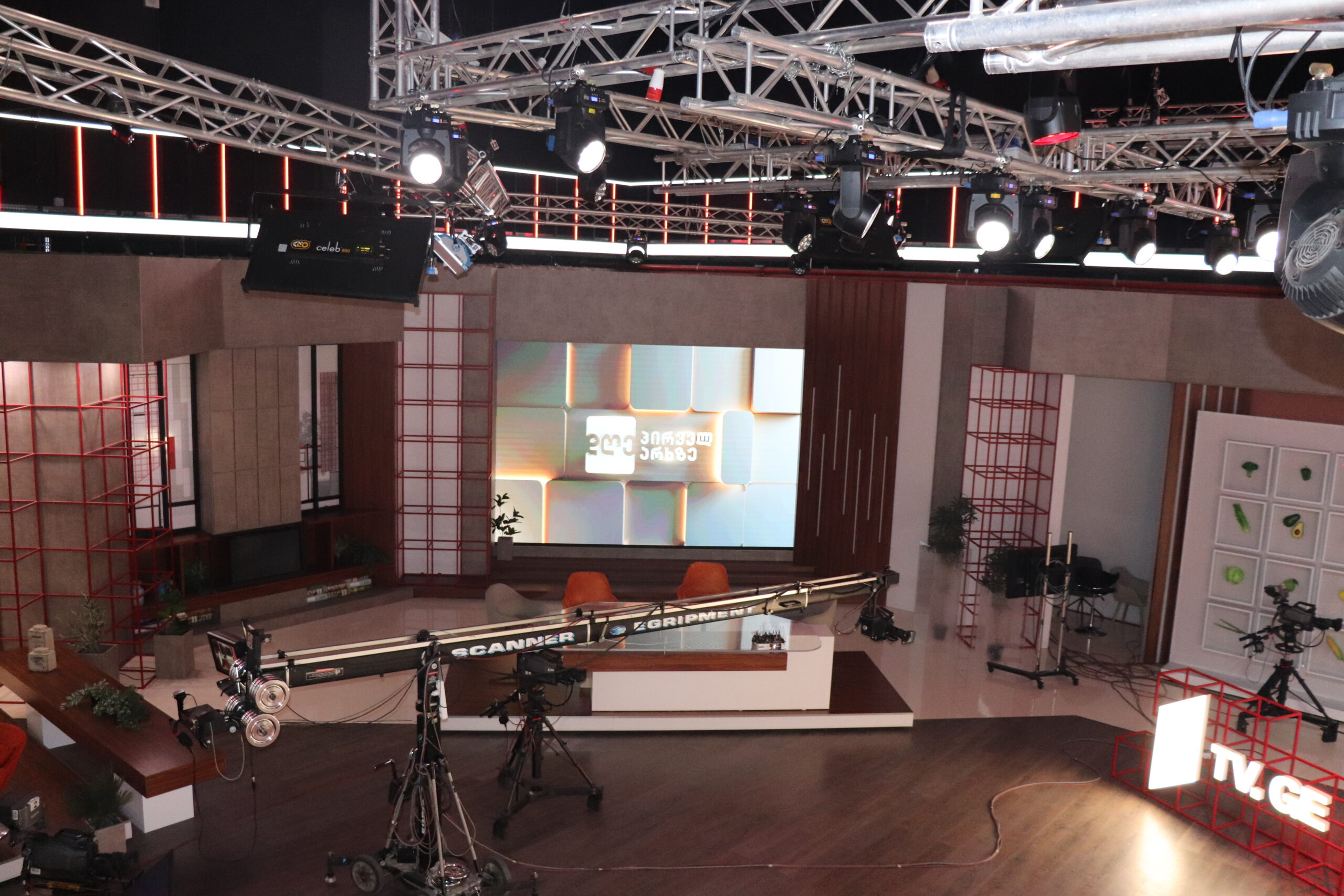
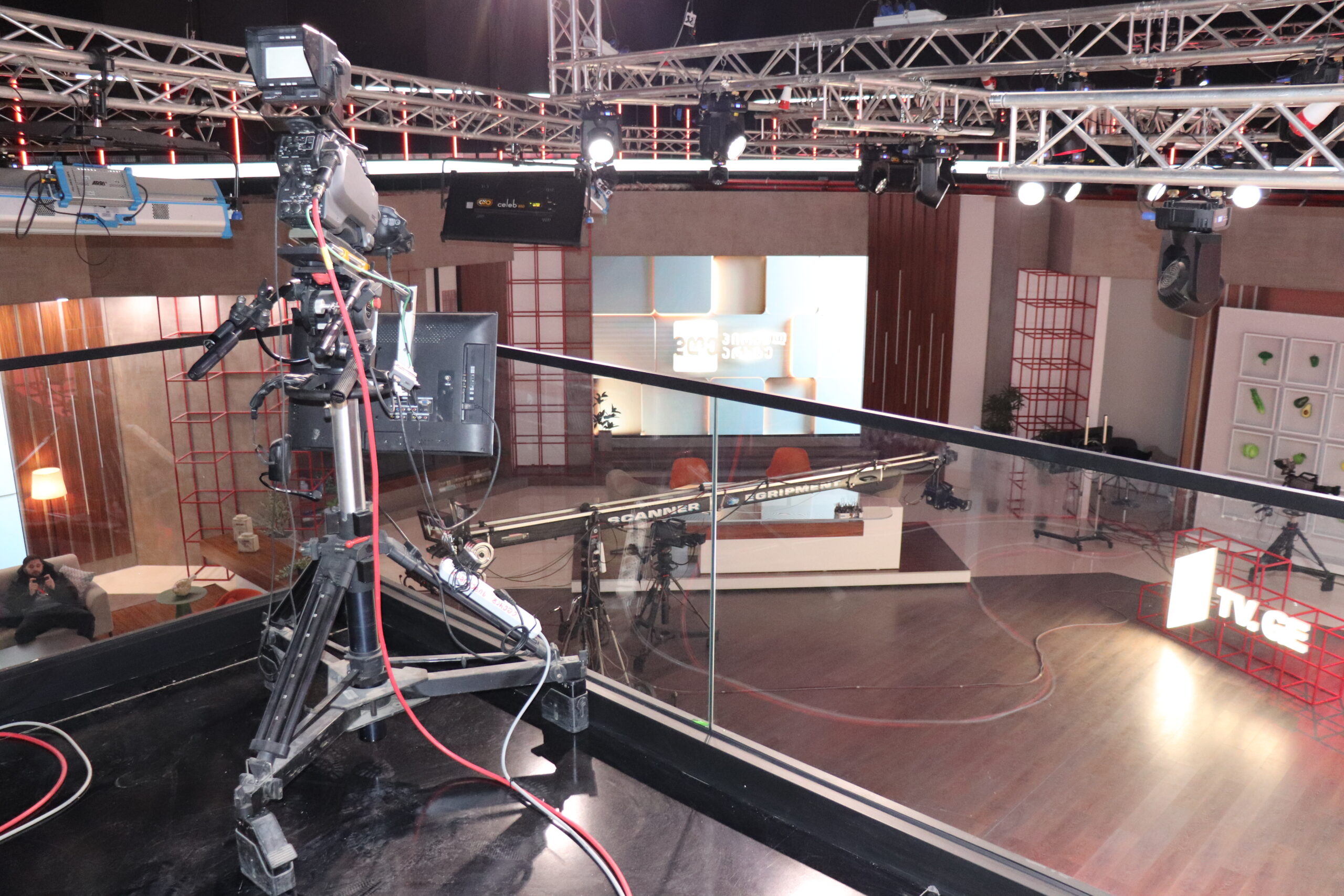
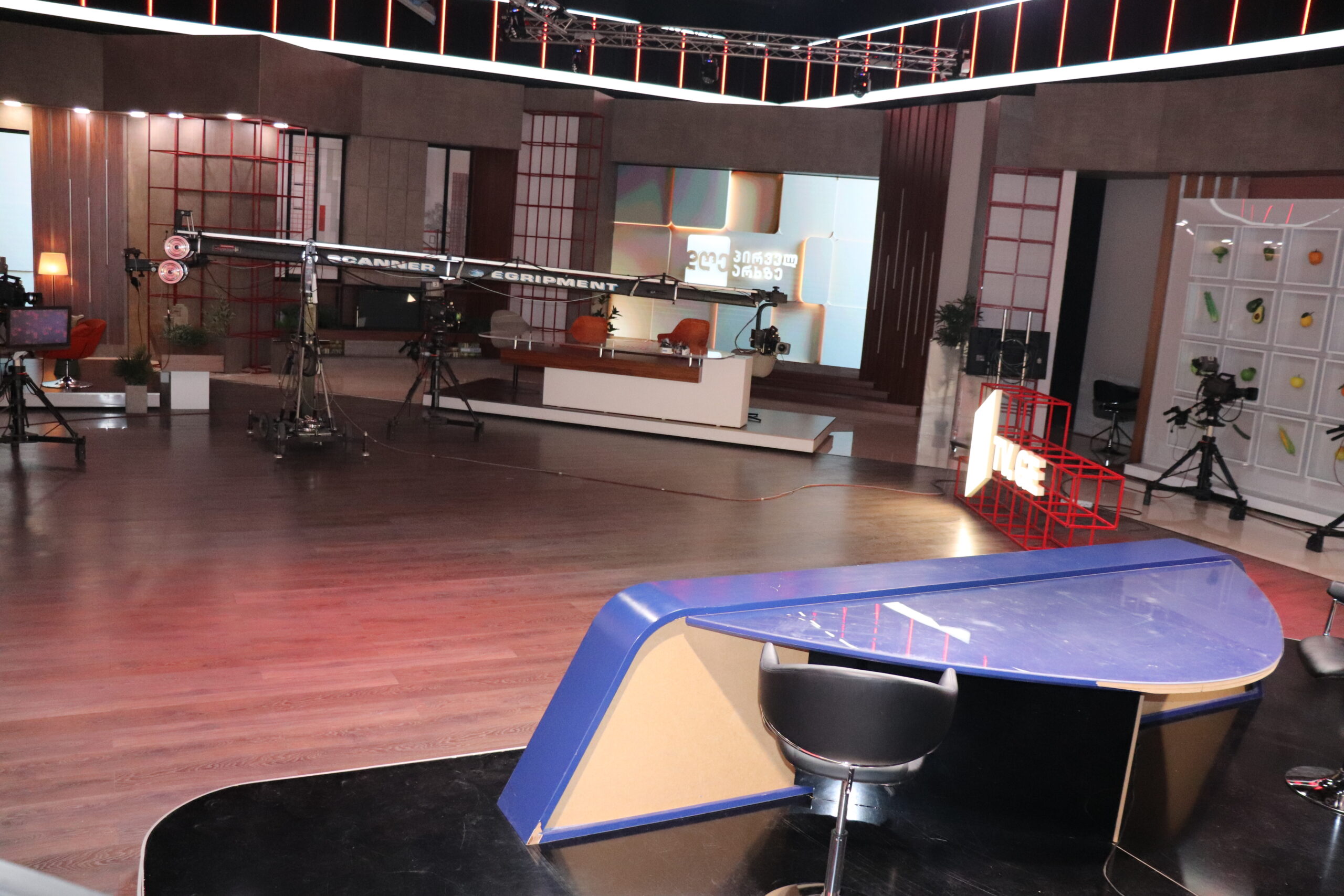
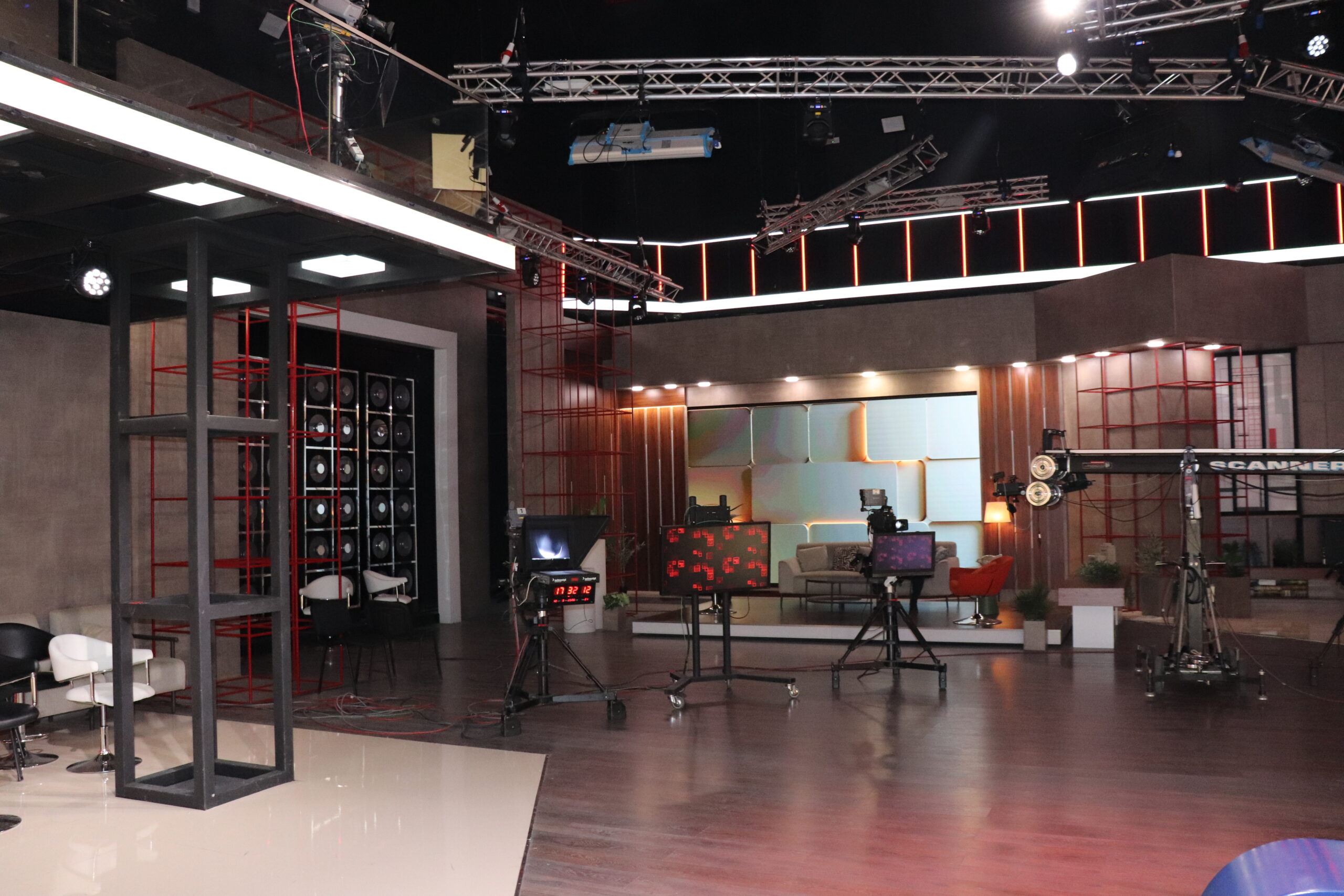
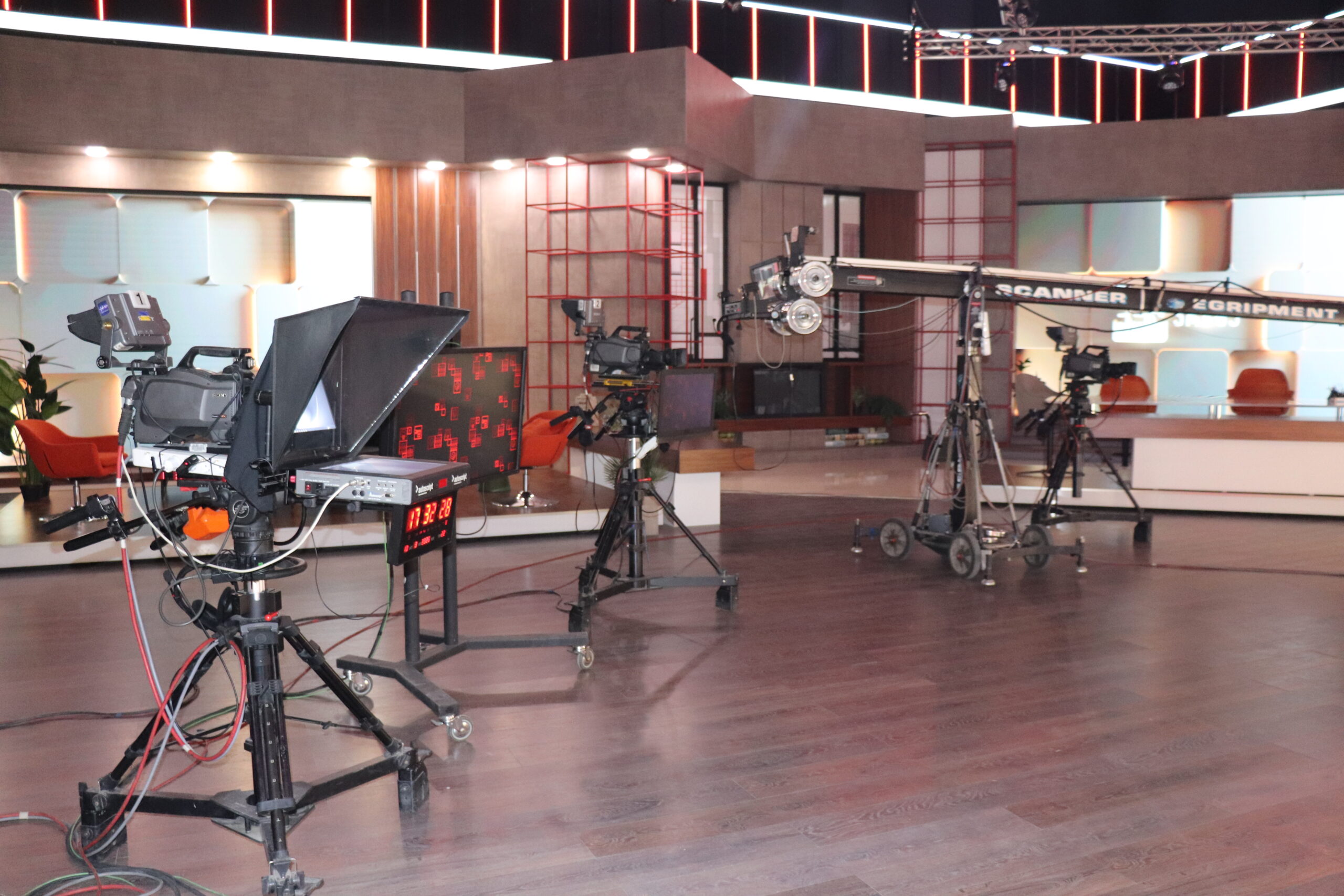
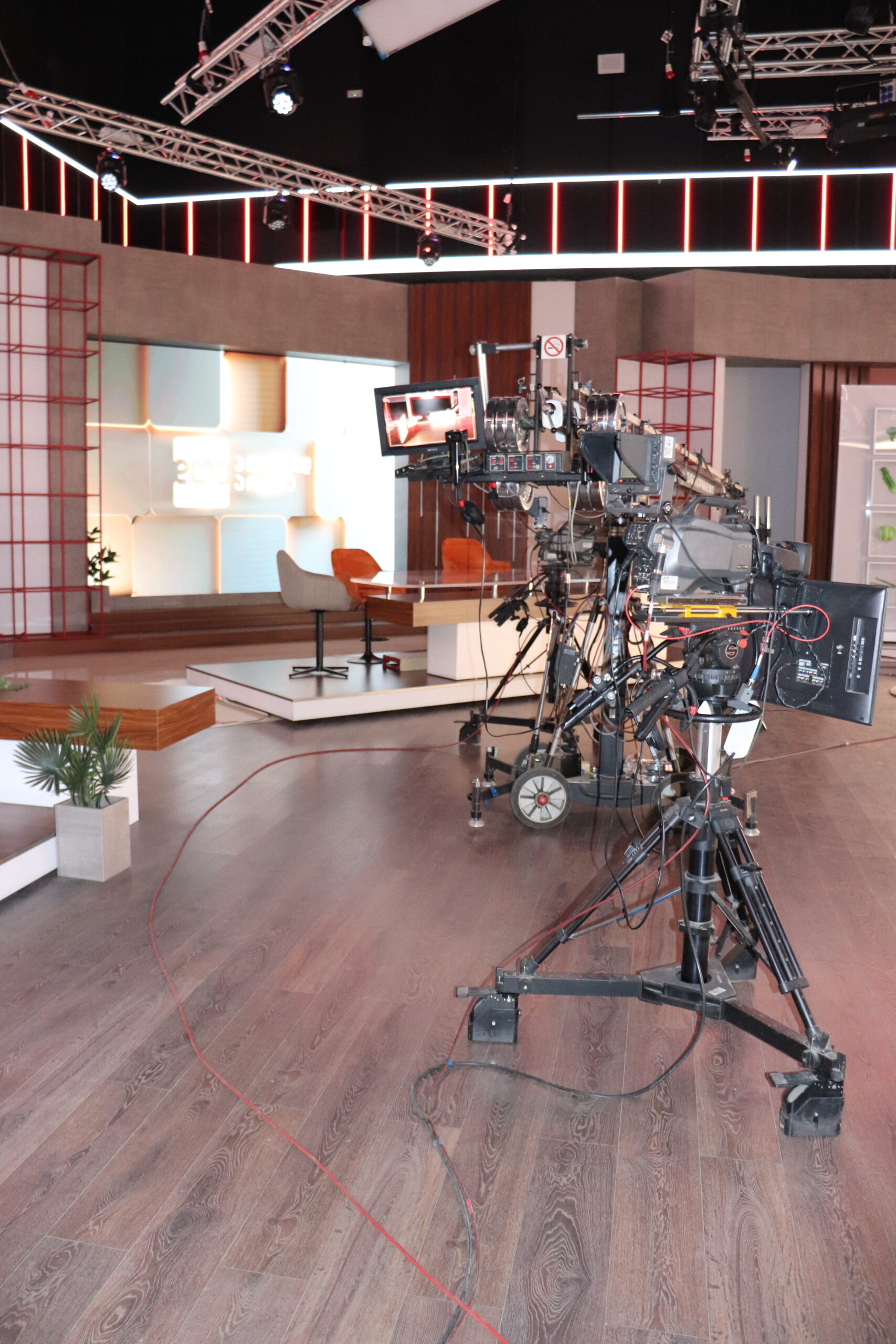
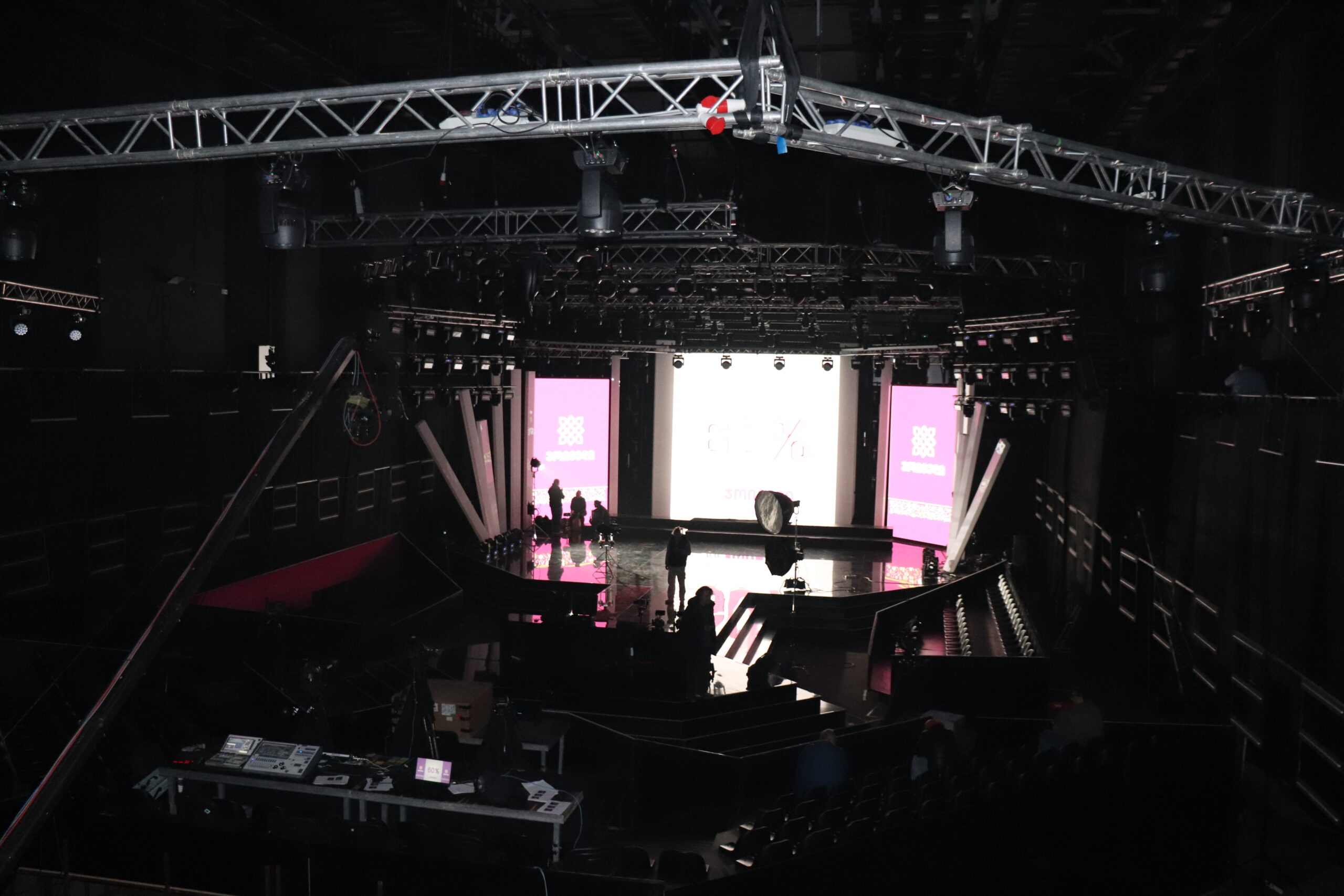
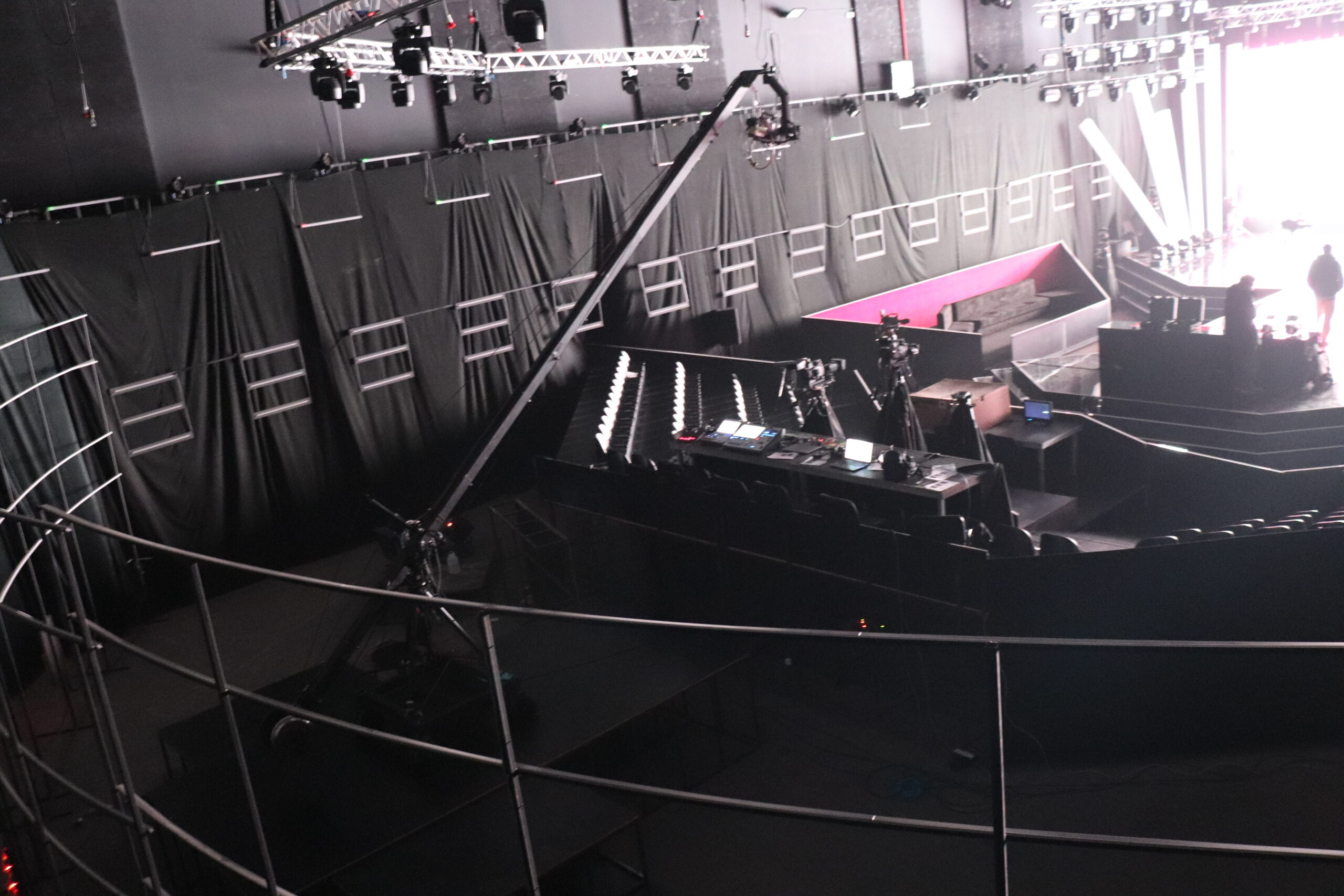
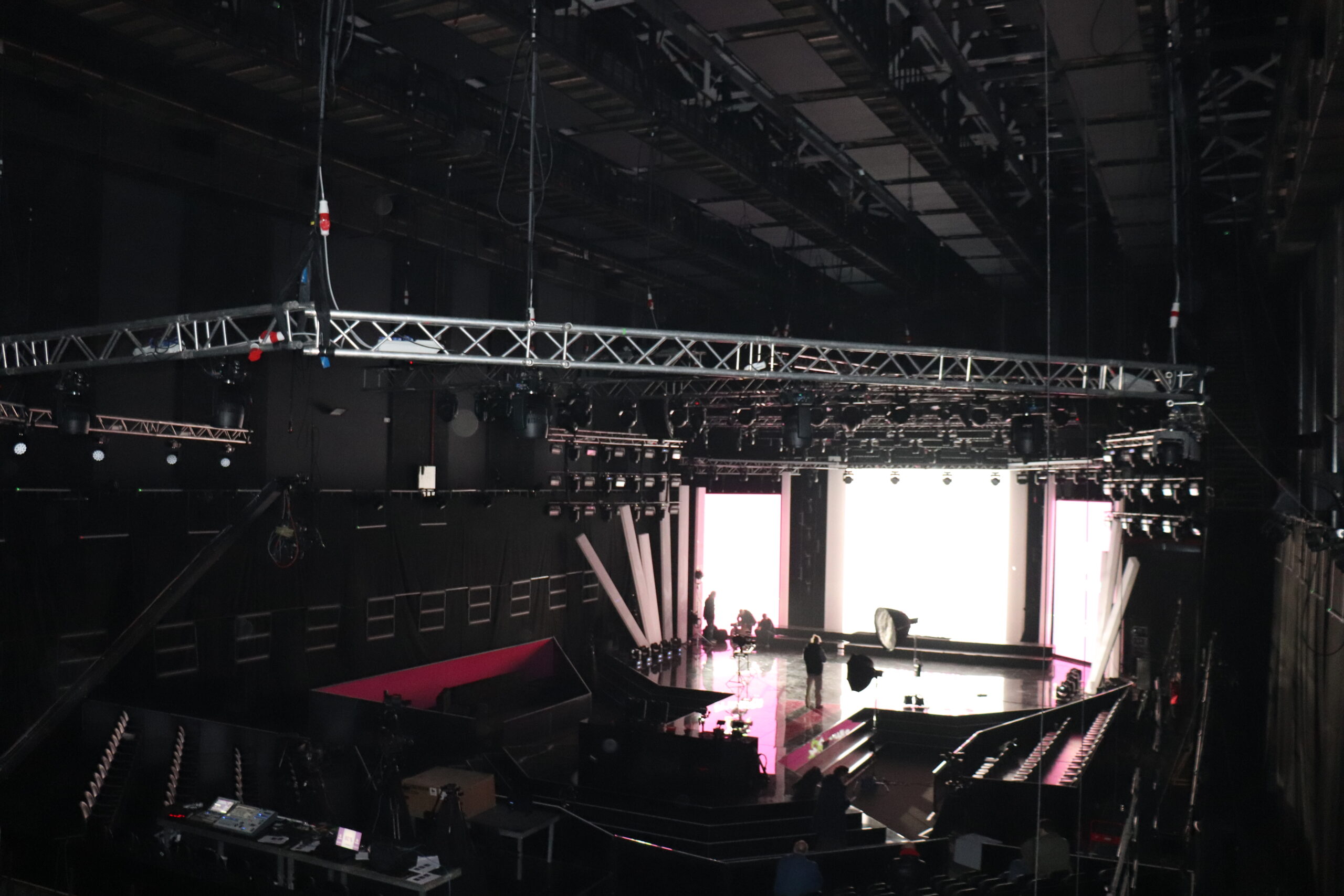
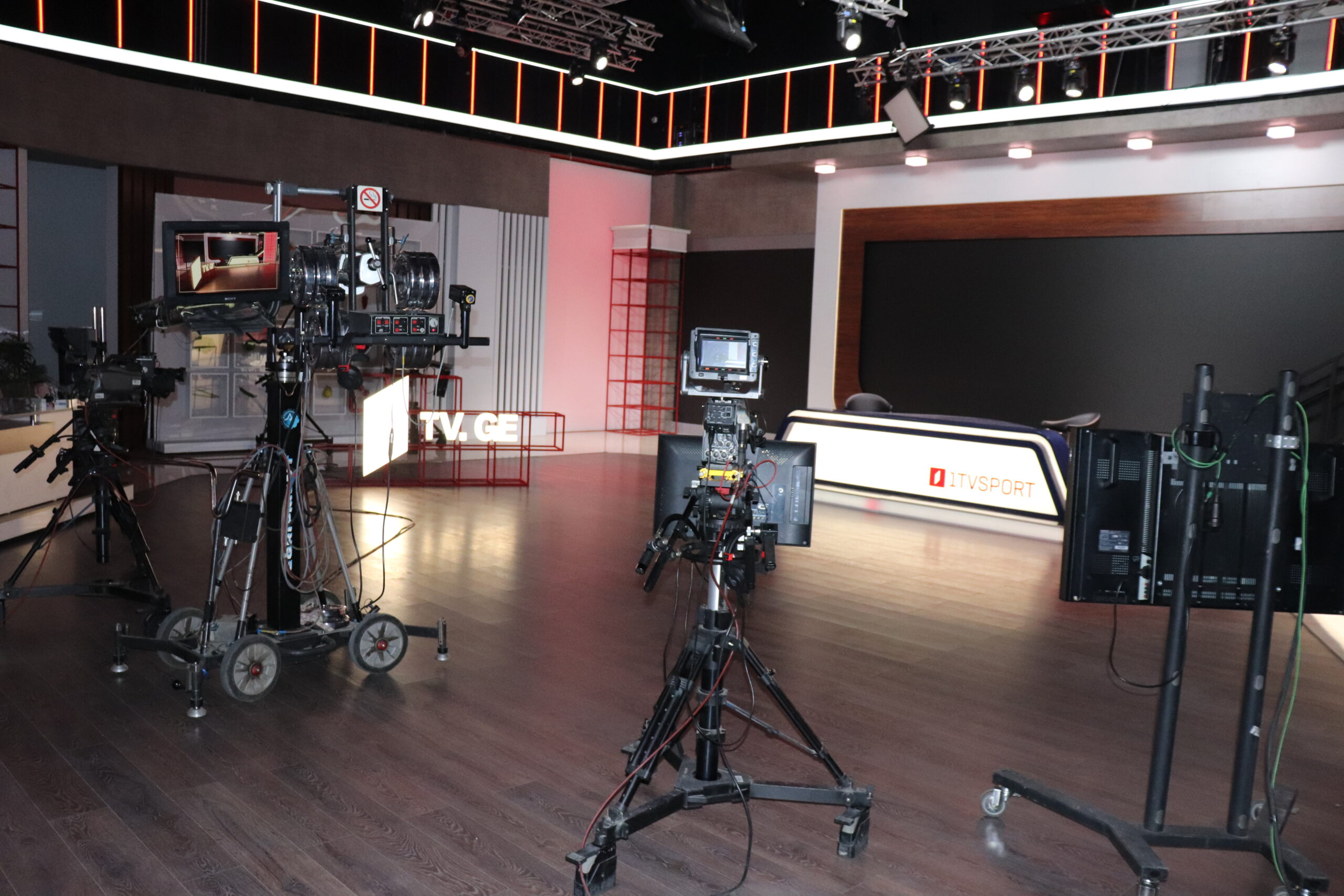
The studio block includes four studios, three of which are large production studios designed for multi-camera productions and entertainment formats. One of these studios is the largest television studio in Georgia, enabling large-scale productions involving multiple camera chains and complex set designs.
Engineering priorities during design included:
- High-capacity studio production environments.
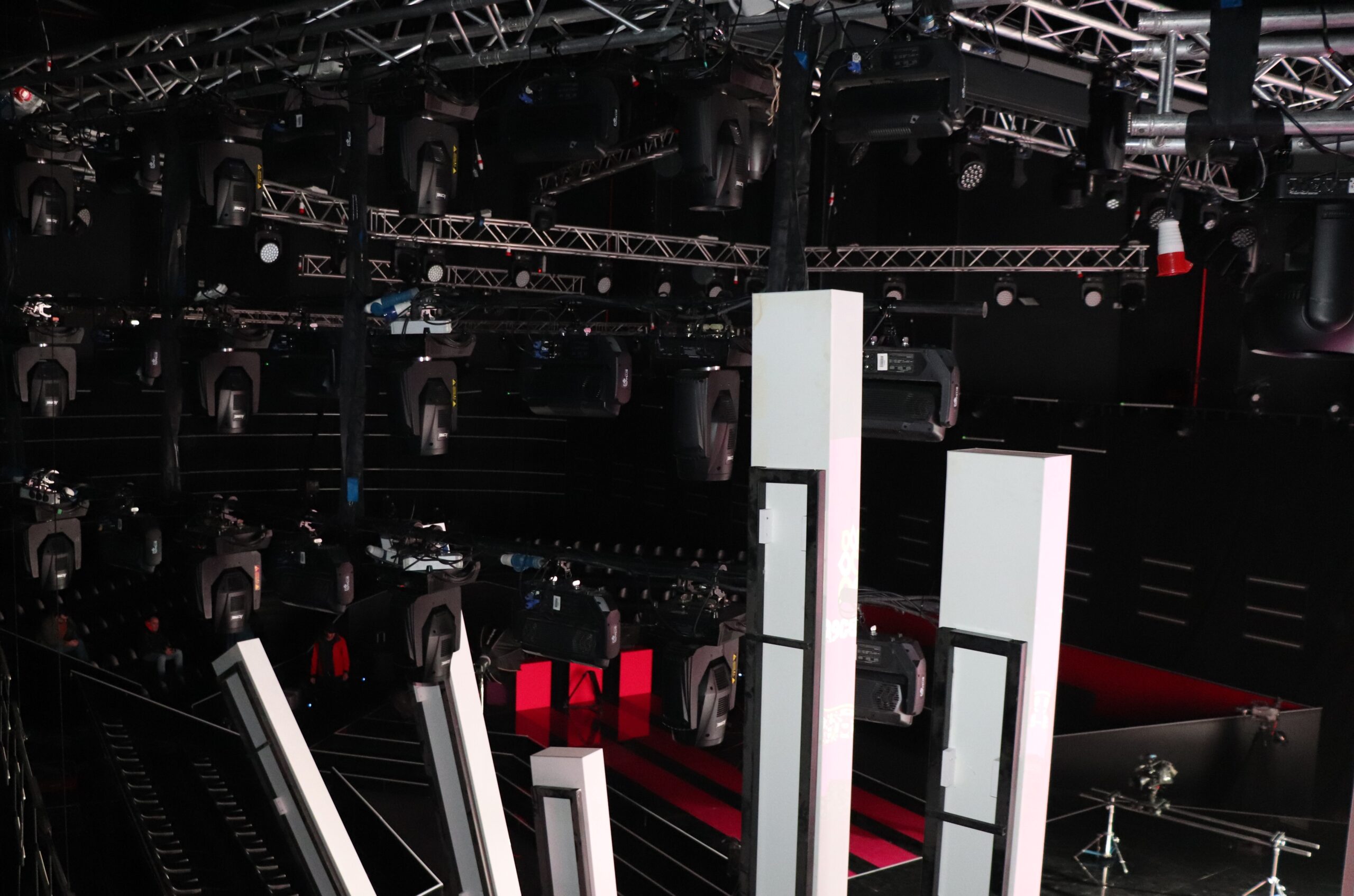
- Efficient lighting and acoustic infrastructure.
- Energy-efficient technical systems.
- Flexible signal routing architecture.
Distributed Production Architecture
A central engineering concept in the project was the adoption of a distributed production architecture, allowing technical systems to operate across multiple buildings.
Key infrastructure components include:
- Studios.
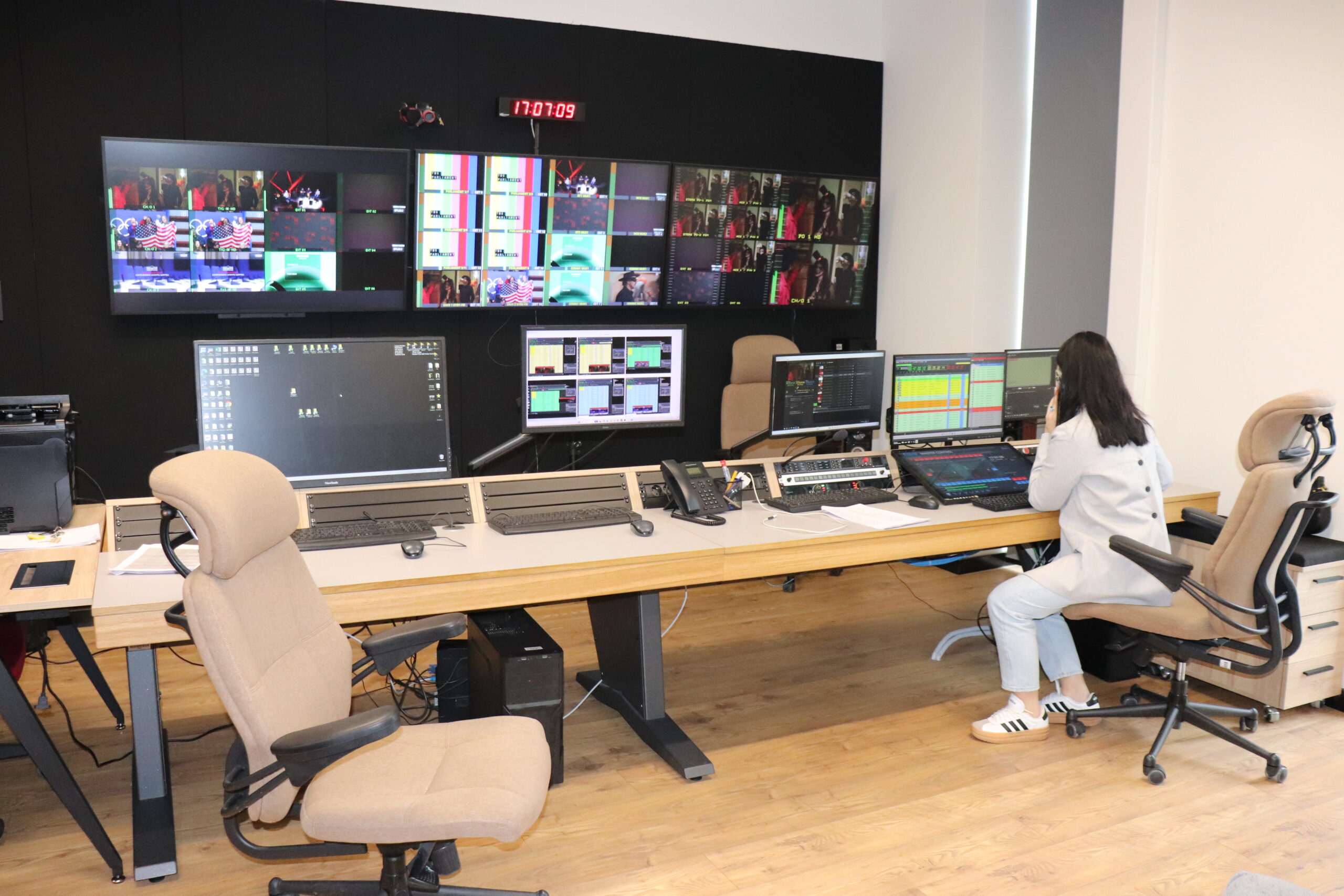
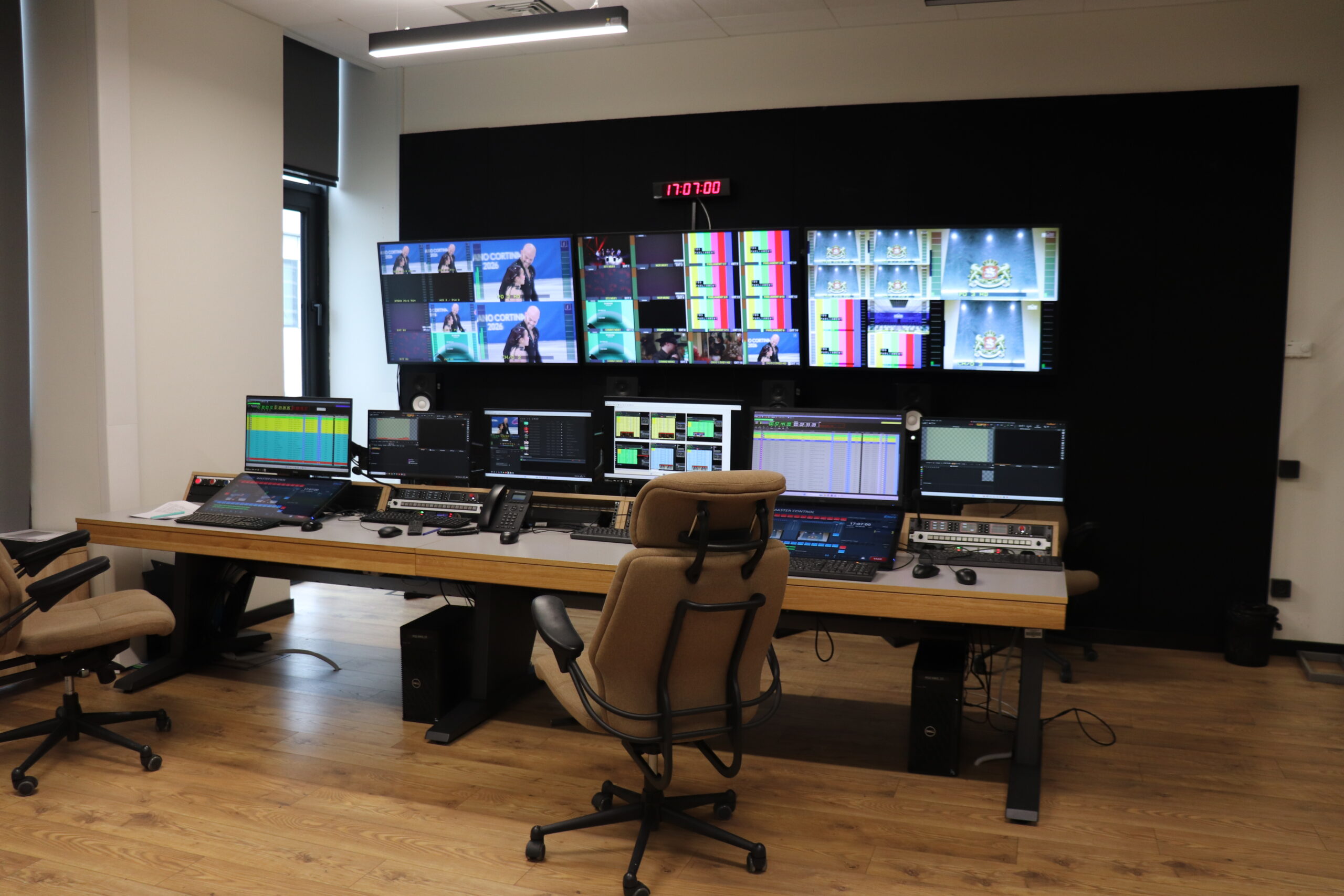
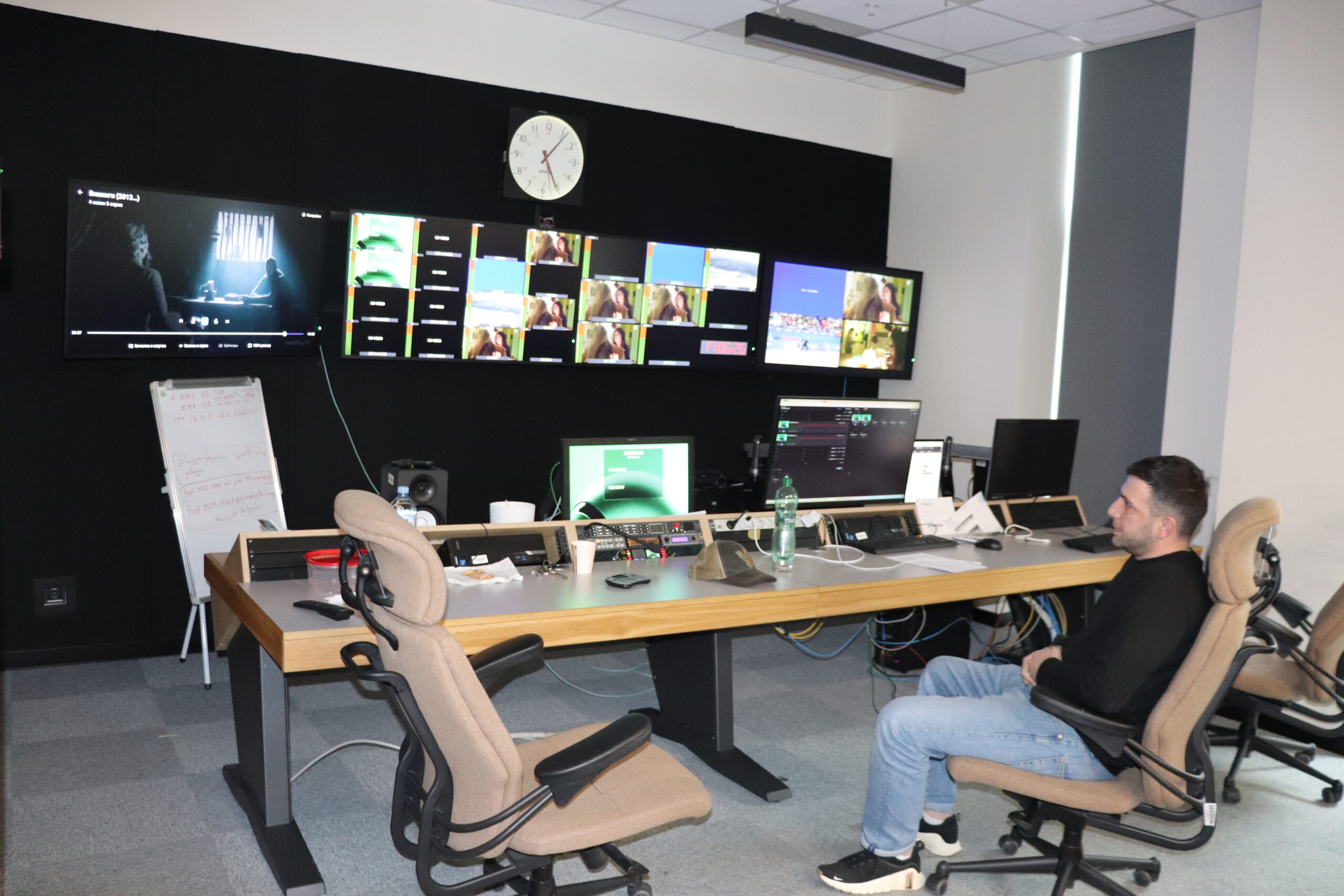
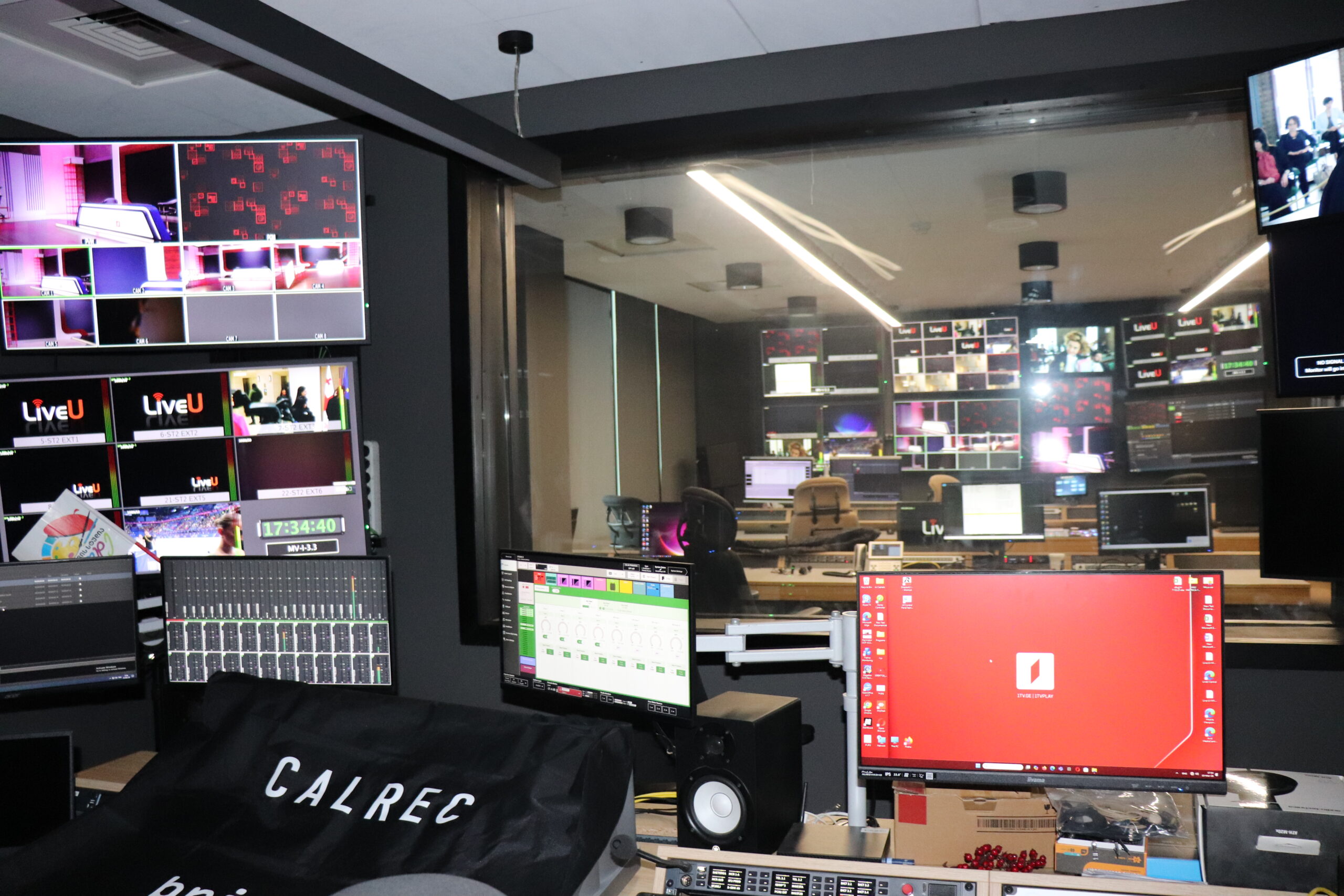
- Master control rooms.
- Data centers.
- Production servers.
All sites are interconnected via optical fiber links, enabling high-bandwidth bidirectional signal transmission. This approach allowed production and broadcast operations to continue during the construction phase while new infrastructure was gradually introduced. The distributed model also reflects industry practices increasingly used in remote production environments.
Hybrid SDI/IP Infrastructure
One of the project’s most important architectural decisions was the adoption of a hybrid SDI/IP broadcast infrastructure. Although the industry continues moving toward full IP production, GPB chose not to implement a pure IP environment at this stage. The decision was driven by three practical factors: the need to preserve existing investment in SDI equipment, the importance of operational reliability, and the requirement to keep the project within a realistic budget.
Instead, the broadcaster deployed a hybrid architecture capable of supporting both SDI and IP workflows within the same infrastructure.
At the core of this hybrid SDI/IP broadcast infrastructure is the EVS Neuron routing platform, a modular router that supports SMPTE ST 2110 standards and enables SDI and IP signals to coexist within a single routing environment. This approach provides flexible signal transport across multiple facilities while also creating a clear migration path toward future IP-based workflows.
Hybrid SDI/IP Signal Flow
The facility was designed to support both legacy SDI equipment and modern IP-based production environments. Most studio production equipment continues to operate in 3G-SDI. Cameras, vision mixers, and studio infrastructure remain primarily SDI-based. These signals are routed through the Imagine Communications IP3 router within the studio production block.
When signals need to enter the distributed IP infrastructure, they are converted and routed through the EVS Neuron hybrid routing platform. This allows SDI signals to coexist with IP-based streams following SMPTE ST 2110 standards.
The signal flow typically follows this sequence:
- Studio cameras and sources feed the SDI routing layer.
- Signals are processed through the Imagine Communications router.
- Selected signals are transferred into the EVS Neuron IP routing environment.
- Signals can then be routed to master control, playout servers, or external distribution systems.
This architecture allows the broadcaster to maintain full compatibility with existing SDI equipment while preparing for future IP-based production workflows. The design also ensures that new IP-based devices can be integrated without replacing the existing studio infrastructure.
 EVS Neuron Core Routing Infrastructure
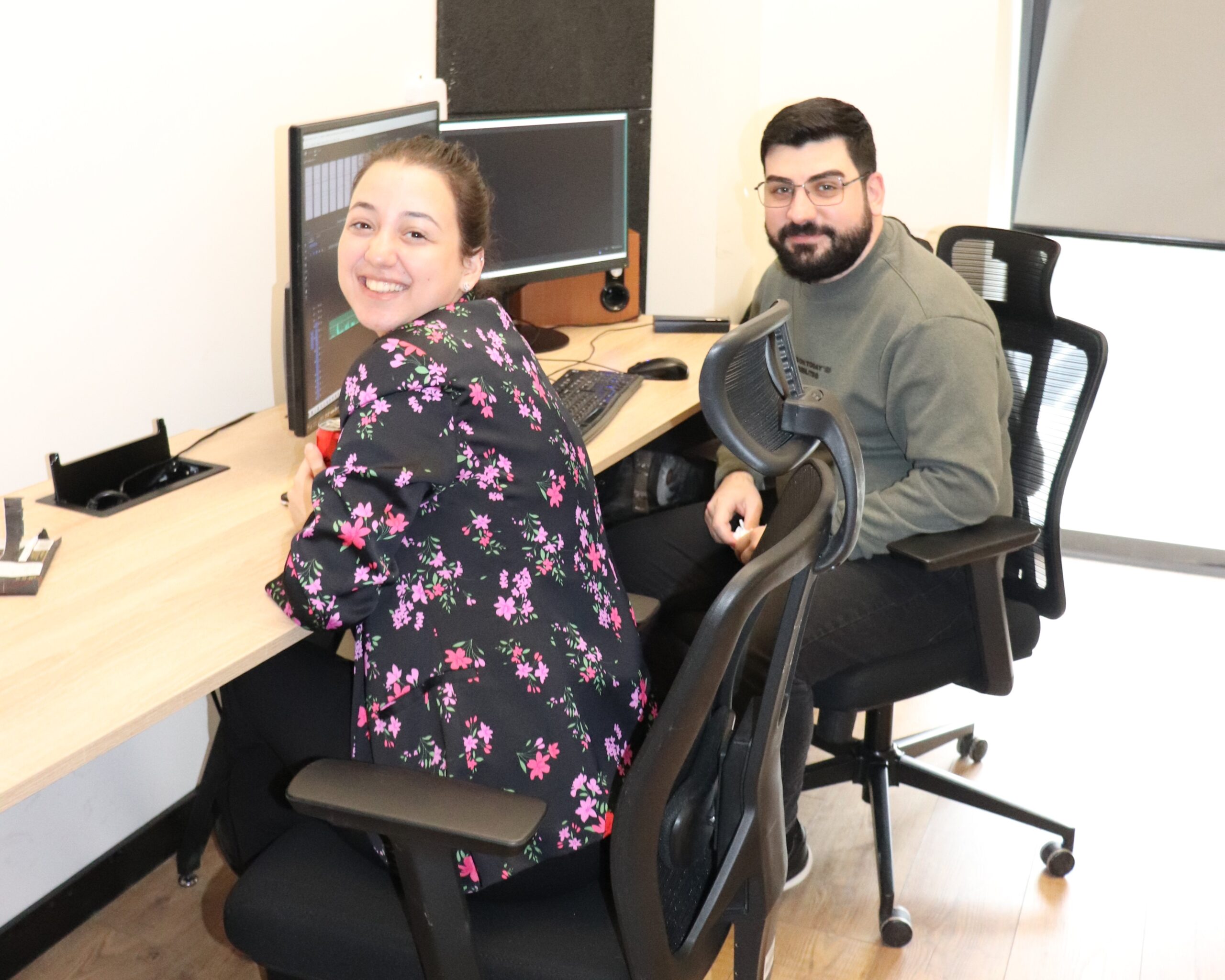
The EVS Neuron platform forms the central switching backbone of the entire broadcast ecosystem.
The system enables the creation of a single distributed routing environment connecting multiple facilities, allowing signals to be routed across the infrastructure regardless of the physical location of production equipment. The Neuron system is widely known for deployments in major sports broadcasting environments. For example, the central routing infrastructure at the International Broadcast Centre during the Paris Olympic Games was built using EVS Neuron technology.
However, the installation at the Georgian Public Broadcaster represents one of the first large-scale studio infrastructure deployments of the Neuron platform.
Multi-Router Broadcast Infrastructure
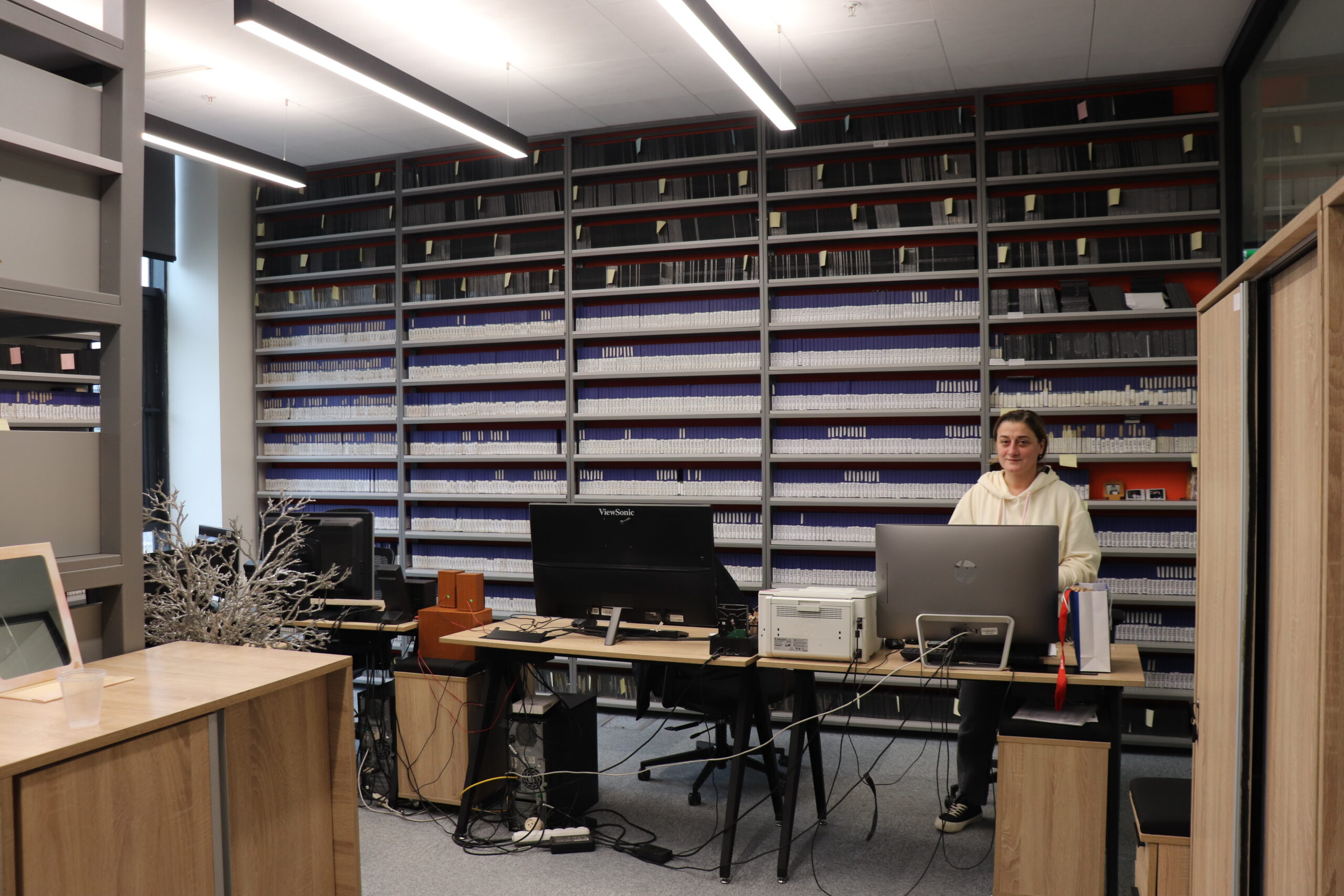
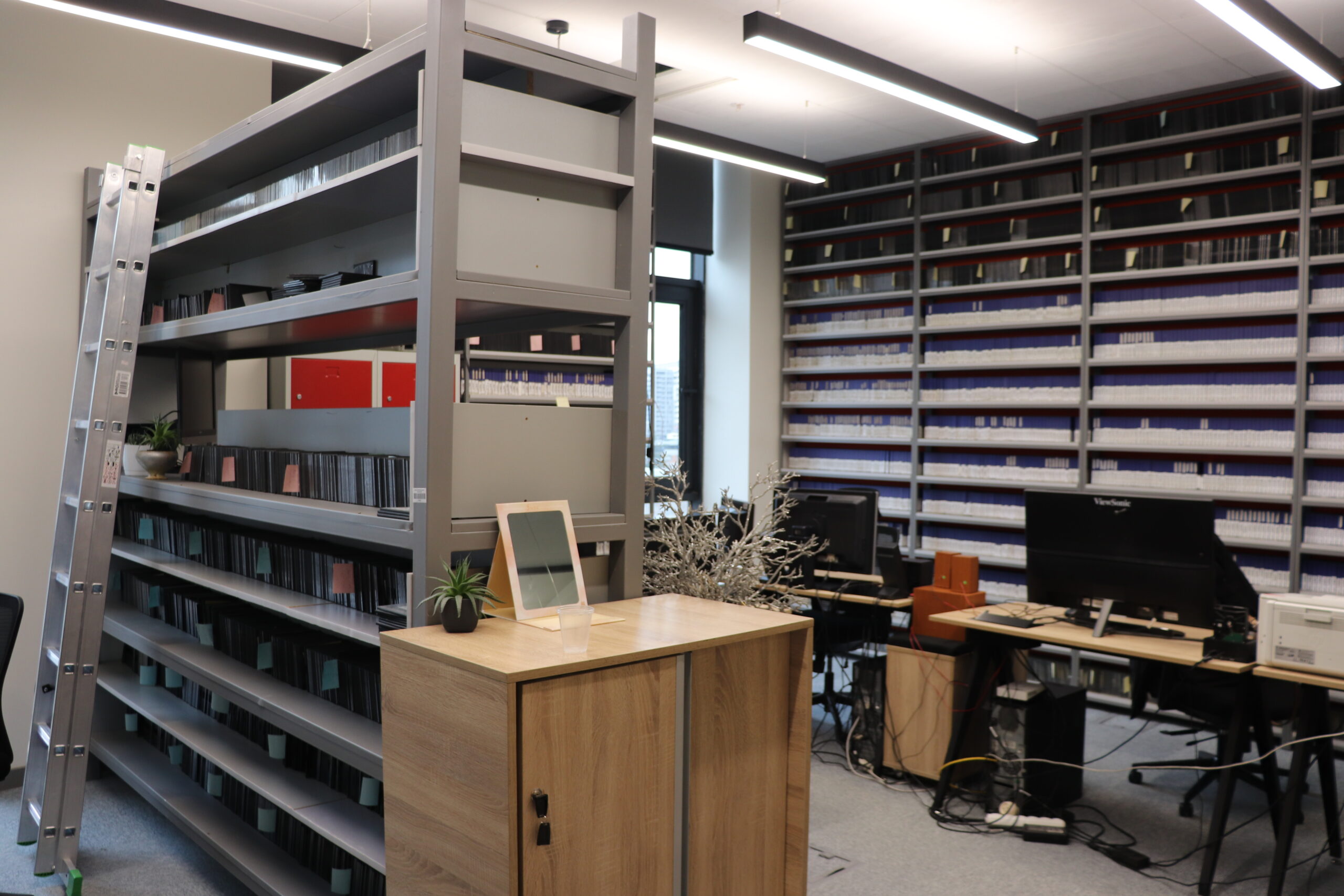
The broadcast infrastructure incorporates several routing layers, each optimized for a specific operational environment:
- EVS Neuron: the core hybrid SDI/IP routing infrastructure.
- Imagine Communications IP3: the studio SDI routing infrastructure.
- Grass Valley routing system: the routing layer used for broadcast automation.
The Imagine Communications IP3 router, originally deployed in the previous broadcast facility, includes approximately 400 × 400 inputs and outputs and now serves as the central SDI routing system for studio operations. Despite the industry shift toward IP workflows, SDI remains essential in studio production environments because cameras, vision mixers, and many production devices still operate in 3G-SDI signal formats.
Unified Control Platform
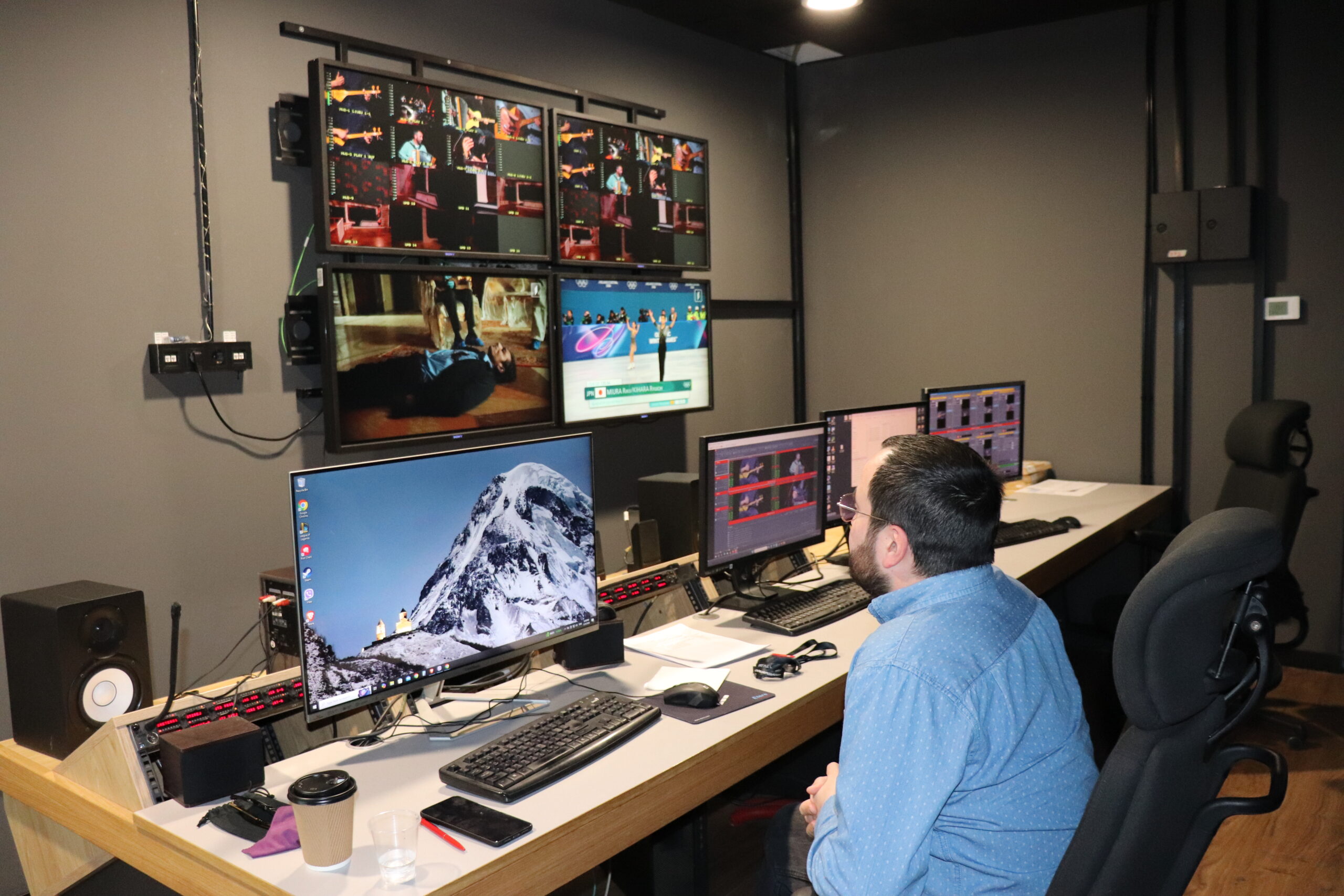
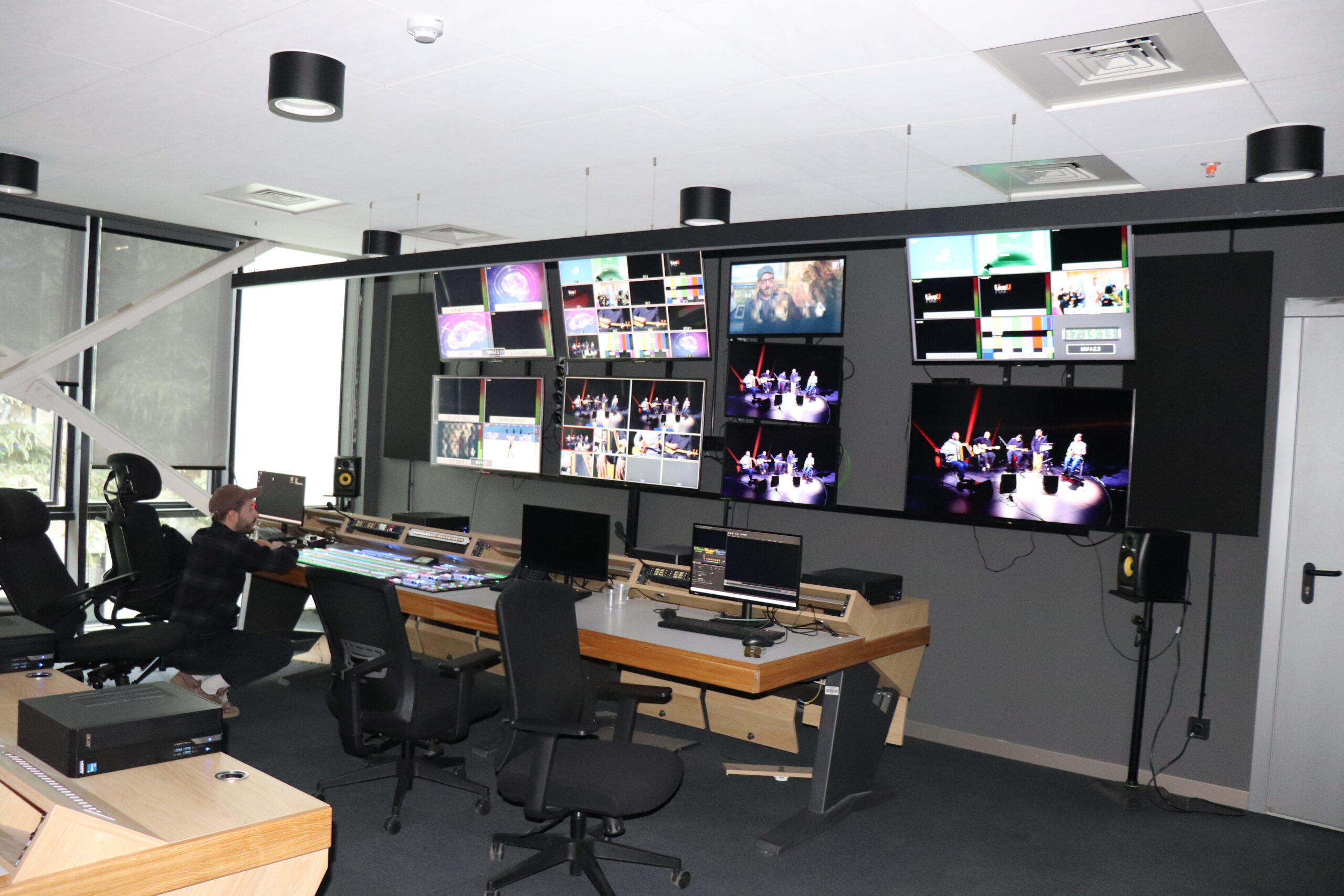
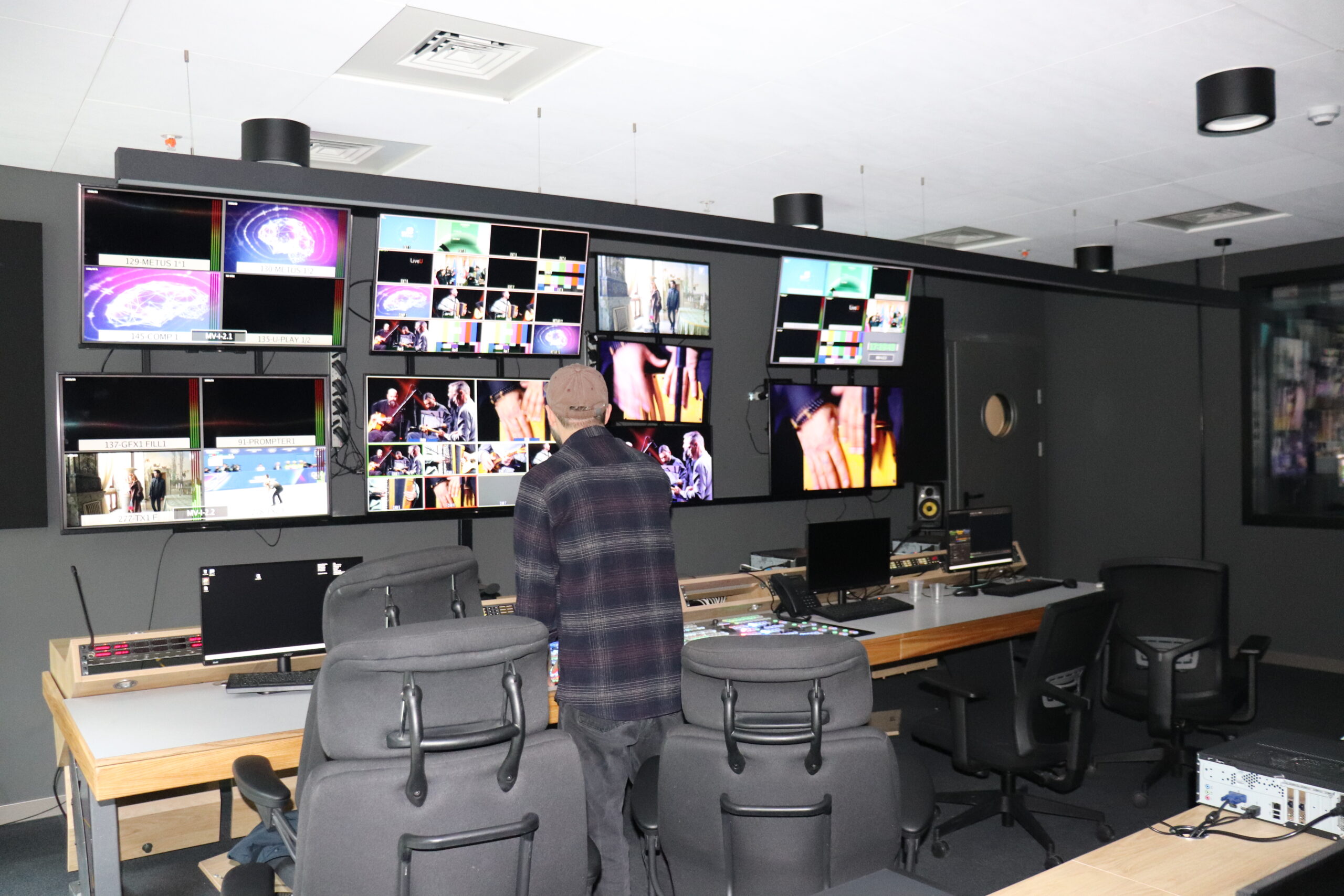
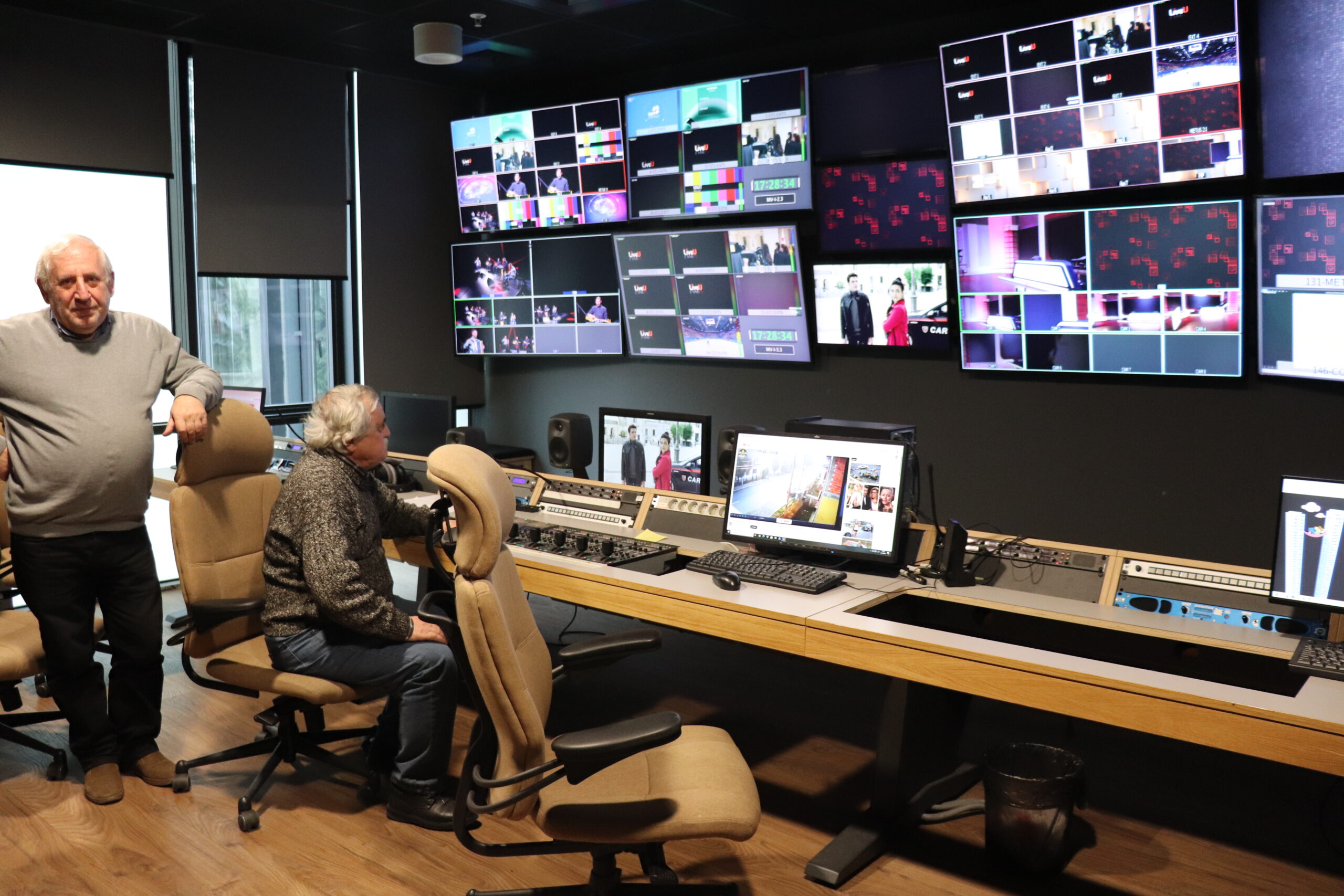
To manage the complexity of multiple routing systems, the broadcaster implemented a centralized control platform developed by HI, a technology division of Broadcast Solutions. The HI platform provides:
- Unified control of multiple routing systems.
- Integration across different vendor protocols.
- Centralized infrastructure monitoring.
For operators, routing operations are simplified to selecting a source and a destination. Behind the scenes, the system automatically manages complex routing chains across multiple switching matrices. This approach reduces operational complexity and significantly improves reliability for master control operations.
Broadcast Automation Platform
Broadcast automation is handled by the Etere automation platform, which manages playout operations, ingest workflows, and broadcast scheduling. The automation system was implemented through Broadcast Solutions and deployed in multiple server racks, delivered pre-configured for installation. A vendor specialist from Etere conducted on-site training sessions for operational staff before transitioning to remote support.
Etere was selected due to:
- Comprehensive feature setю
- Strong support for sports broadcasting workflows.
- Competitive pricing compared to alternative automation platforms.
 Newsroom Production Environment
The newsroom environment is built on Avid production systems, including:
- Avid iNews.
- Avid MediaCentral.
- Avid playout servers.
This integrated environment allows newsroom teams to manage the entire news production workflow within a unified platform.
Functions integrated into the system include:
- Editorial planning.
- Script writing.
- Ingest operations.
- Editing workflows.
- Broadcast rundown management.
The decision to use a single-vendor Avid architecture ensured seamless integration between the newsroom and playout infrastructure.
Vendor Evaluation Process
During the design phase, the engineering team evaluated several alternative technology platforms. For newsroom systems, the following vendors were considered:
- Octopus Newsroom.
- ANOVA media management platform.
Octopus was evaluated as a modern newsroom solution, but required additional integration layers to meet all workflow requirements. ANOVA, a comprehensive German media management system capable of integrating television, radio, print, and digital media, was considered but ultimately rejected due to its high cost.
For system control and orchestration, the team also evaluated VSN systems, which provide device control and media management platforms. However, these solutions were significantly more expensive than the HI control platform provided by Broadcast Solutions.
Systems Integration
The overall integration project was led by Broadcast Solutions, one of the major system integrators in the European broadcast industry. Engineering responsibilities were distributed across multiple teams. The main Broadcast Solutions headquarters managed installation activities and technical deployment. The company’s Kyiv engineering office, led by project manager Ilya Valovich, handled architecture design and technical supervision of the project.
Additional technical work was performed by engineers from TVC, a company previously involved in deploying the Imagine Communications routing infrastructure in the broadcaster’s earlier facility. These engineers provided valuable continuity during the transition to the new architecture.
Studio Visual Infrastructure
The studio complex features a large curved LED video wall approximately 26 meters high, which serves as the main visual element for studio productions. The LED panels were manufactured by a Chinese supplier and installed by a local system integrator. During initial deployment, several defective pixels appeared across the display. The manufacturer eventually replaced the entire panel installation to ensure consistent image quality.
Migration Strategy Without Broadcast Interruption
A major technical challenge in the project was migrating operations from the old facility to the new media complex without interrupting broadcast operations. The migration was achieved through:
- Distributed routing infrastructure.
- Optical fiber interconnections between facilities.
- Parallel operation of multiple master control rooms
At one stage of the transition, three master control rooms were operating simultaneously. Two control rooms remained active in the old facility while a third was launched in the new complex. These systems were connected in a ring architecture, allowing engineers to migrate signal paths between infrastructures gradually. Approximately 30 coordinated signal transitions were executed during the migration process, each carefully planned to prevent disruptions to external distribution partners.
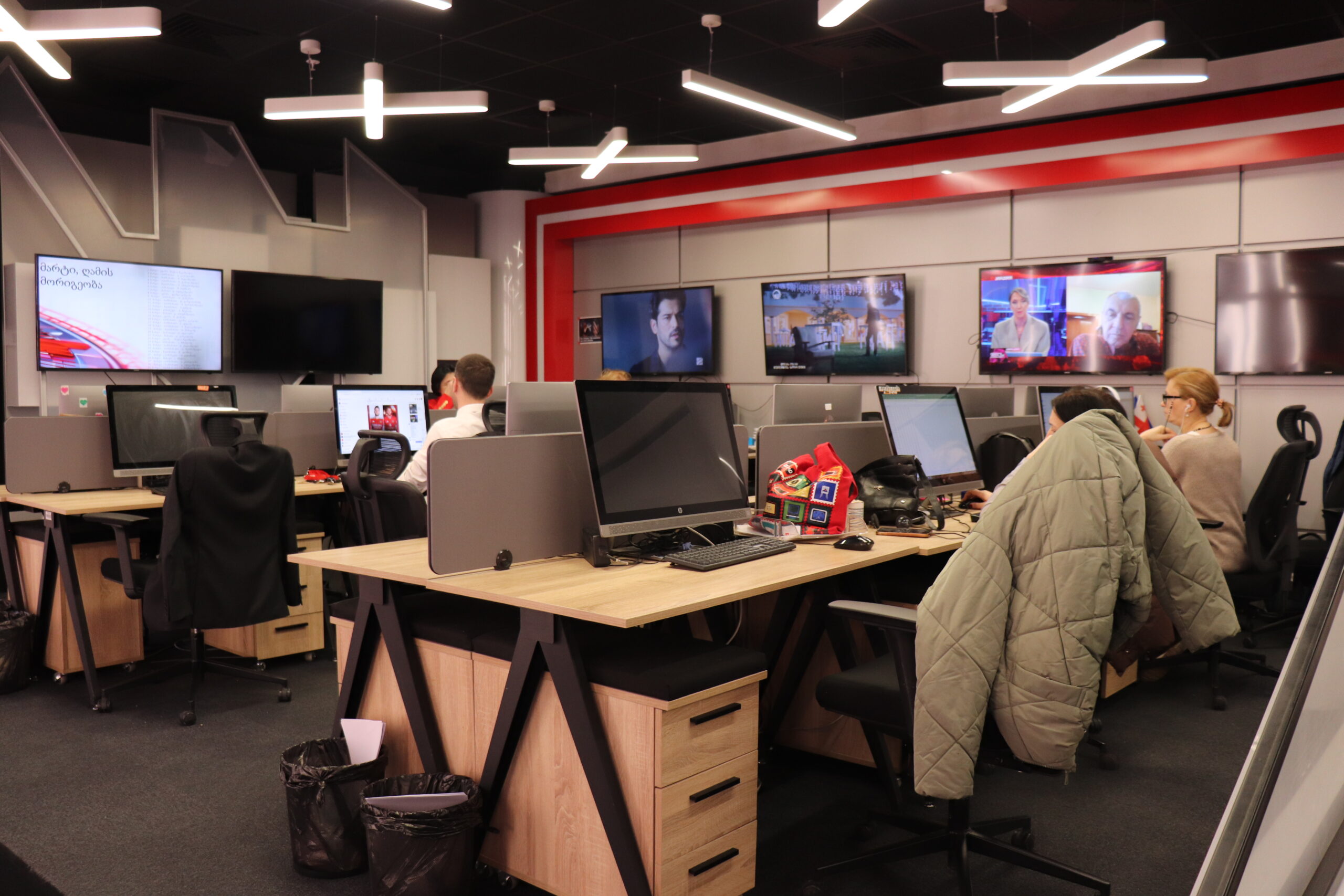
Engineering Lessons from the Migration Project
One of the most complex technical challenges of the project was the migration from the legacy broadcast facility to the new media complex while maintaining uninterrupted on-air operations. The engineering team adopted a distributed migration strategy based on several key principles. First, both facilities were interconnected using optical fiber links, creating a single signal transport environment between buildings.
Second, three master control rooms operated simultaneously during the migration period. Two control rooms remained active in the old facility while the new master control room was gradually integrated into the system. Third, the infrastructure was designed as a distributed routing environment, allowing signals to be switched between facilities without physically relocating equipment.
TFT1957 | TV & Film Tech Magazine Special Edition for NAB Show 2026
Approximately thirty major signal transitions were executed during the migration process. Each transition required coordination with external distribution partners, including cable operators, satellite uplinks, and digital streaming platforms. The distributed architecture enabled engineers to gradually switch transmission paths and verify system stability before decommissioning the legacy infrastructure.
This approach ensured that the broadcaster maintained continuous broadcast operations throughout the entire migration period.
Cloud and Digital Distribution
The broadcaster has also implemented cloud-based infrastructure for digital content distribution.
Cloud services currently support:
- Online streaming.
- Digital content delivery.
Future infrastructure plans include:
- Cloud-based disaster recovery playout.
- Cloud archive storage.
- Cloud-assisted production workflows.
OTT distribution relies on Content Delivery Networks (CDN) to scale viewer access without overloading the broadcaster’s internal data centers.
Cybersecurity Strategy
The broadcaster previously experienced a major cyberattack that encrypted several servers and portions of its archive. Following the incident, the technical team implemented a comprehensive cybersecurity strategy combining:
- Internal security administrators.
- External cybersecurity support providers.
This hybrid security model ensures both operational monitoring and advanced incident response capabilities.
From Legacy Infrastructure to a Flexible Broadcast Ecosystem
The modernization of the Georgian Public Broadcaster demonstrates how legacy broadcast organizations can transition toward modern digital production environments while maintaining operational continuity.
The project combines:
- Hybrid SDI/IP infrastructure.
- Distributed production architecture.
- Integrated newsroom workflows.
- Centralized routing control.
- Cloud-enabled digital distribution.
Through careful planning and a multi-vendor integration strategy involving EVS, Broadcast Solutions, HI, Imagine Communications, Grass Valley, Etere, Avid, Qualitron, TVC, VSN, Octopus, and ANOVA, the broadcaster has created a hybrid SDI/IP broadcast infrastructure that supports traditional television production while preparing the organization for future digital media services.
Inside GPB’s Transformation: Building Georgia’s Largest Broadcast Complex