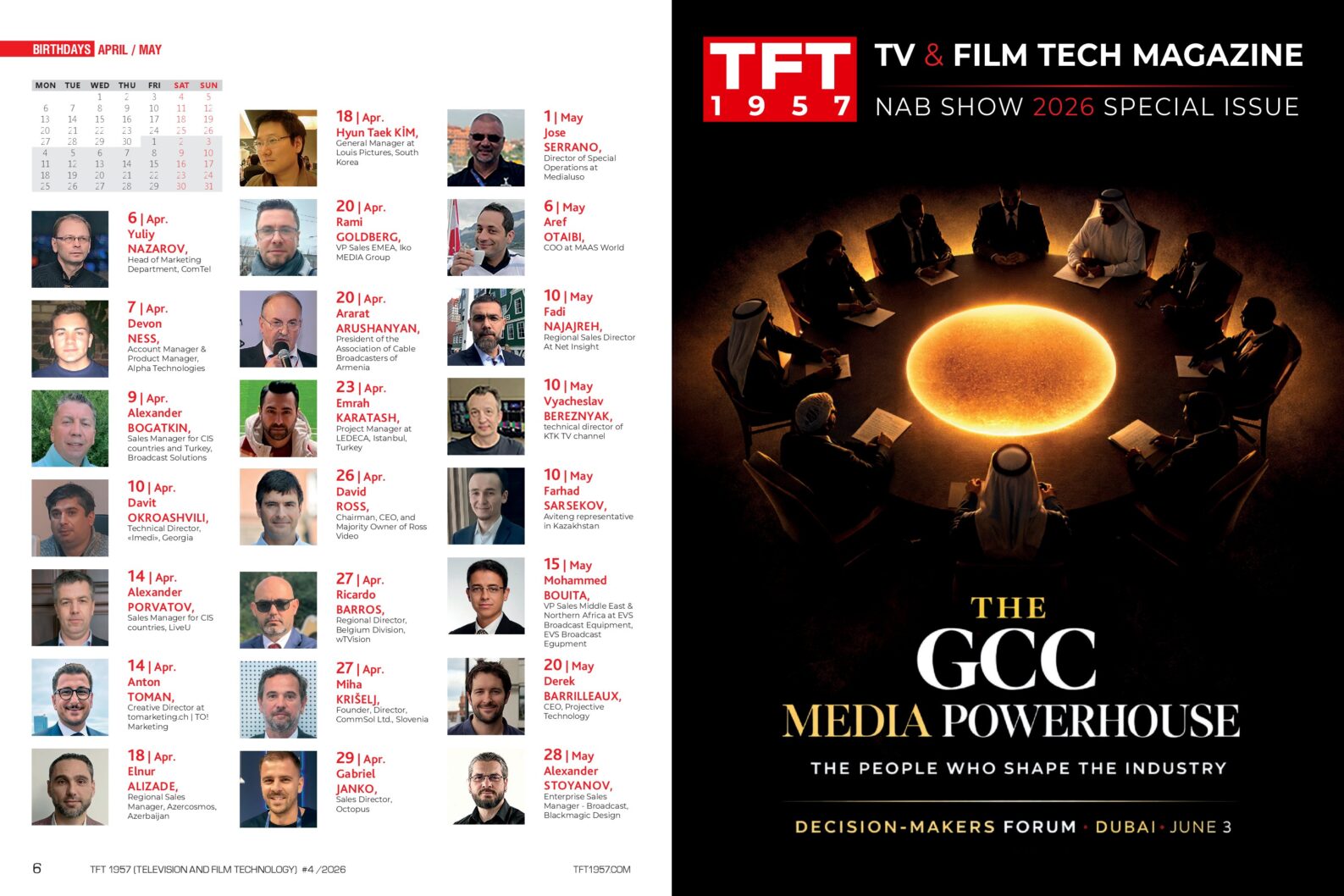
April and May Birthdays
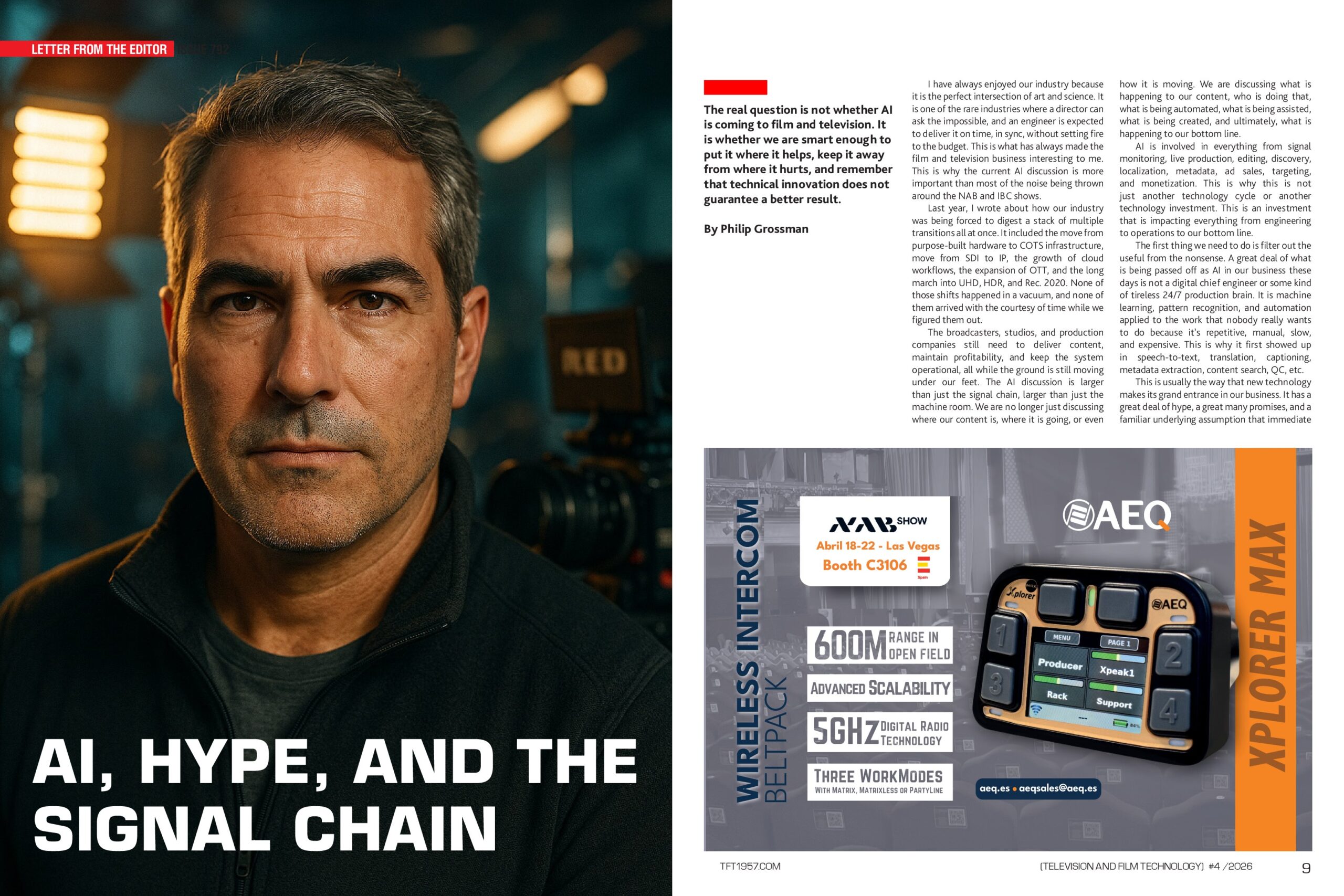
Letter From the Editor
AI, Hype, and the Signal Chain
As AI moves deeper into film and television, the real challenge is not adoption — it is application. Where does it add value, where does it introduce risk, and how do we ensure that innovation actually improves outcomes? This editor’s letter examines how AI is reshaping the signal chain, operations, and business models — and why smarter implementation matters more than the technology itself.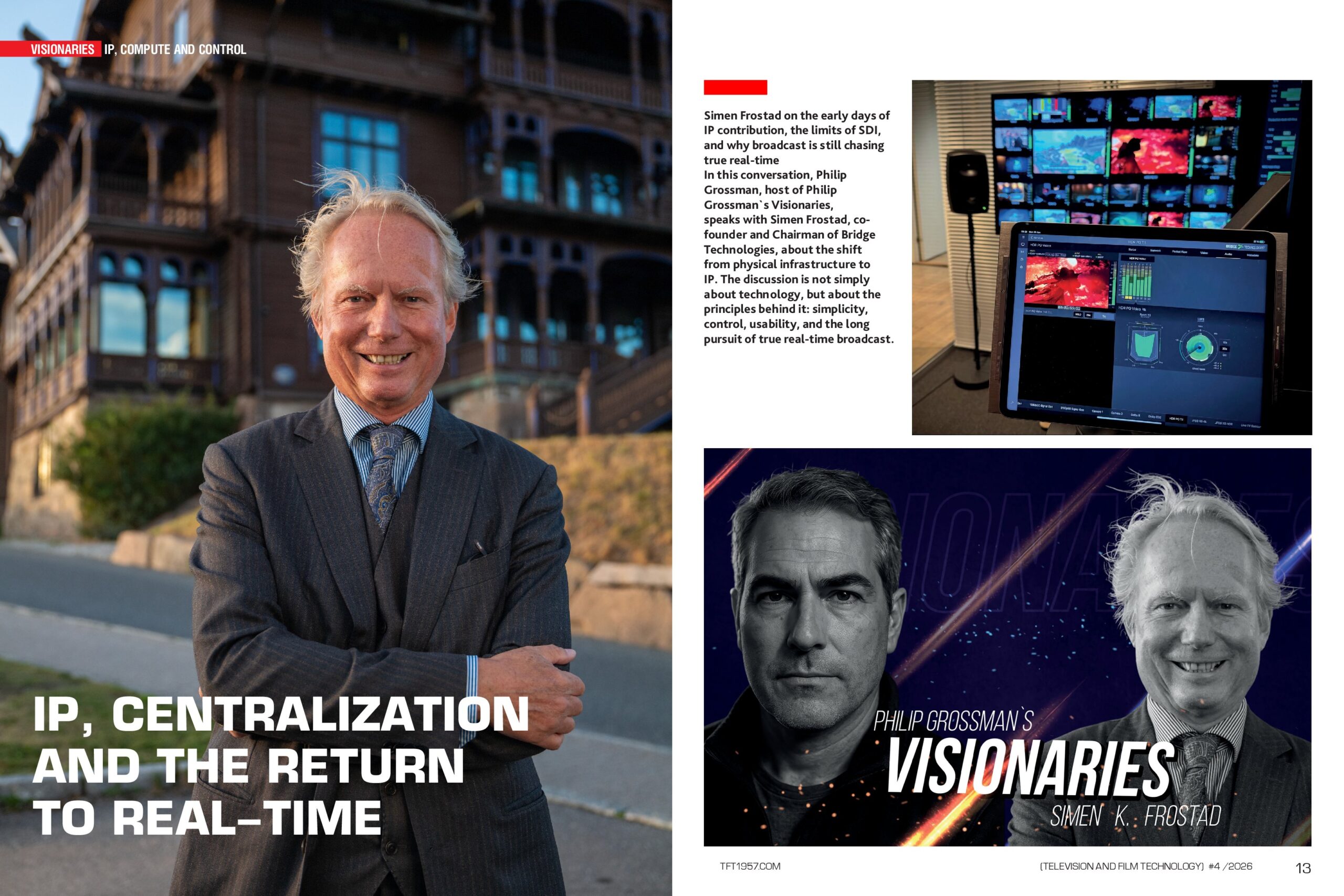 Visionaries | IP, Compute and Control
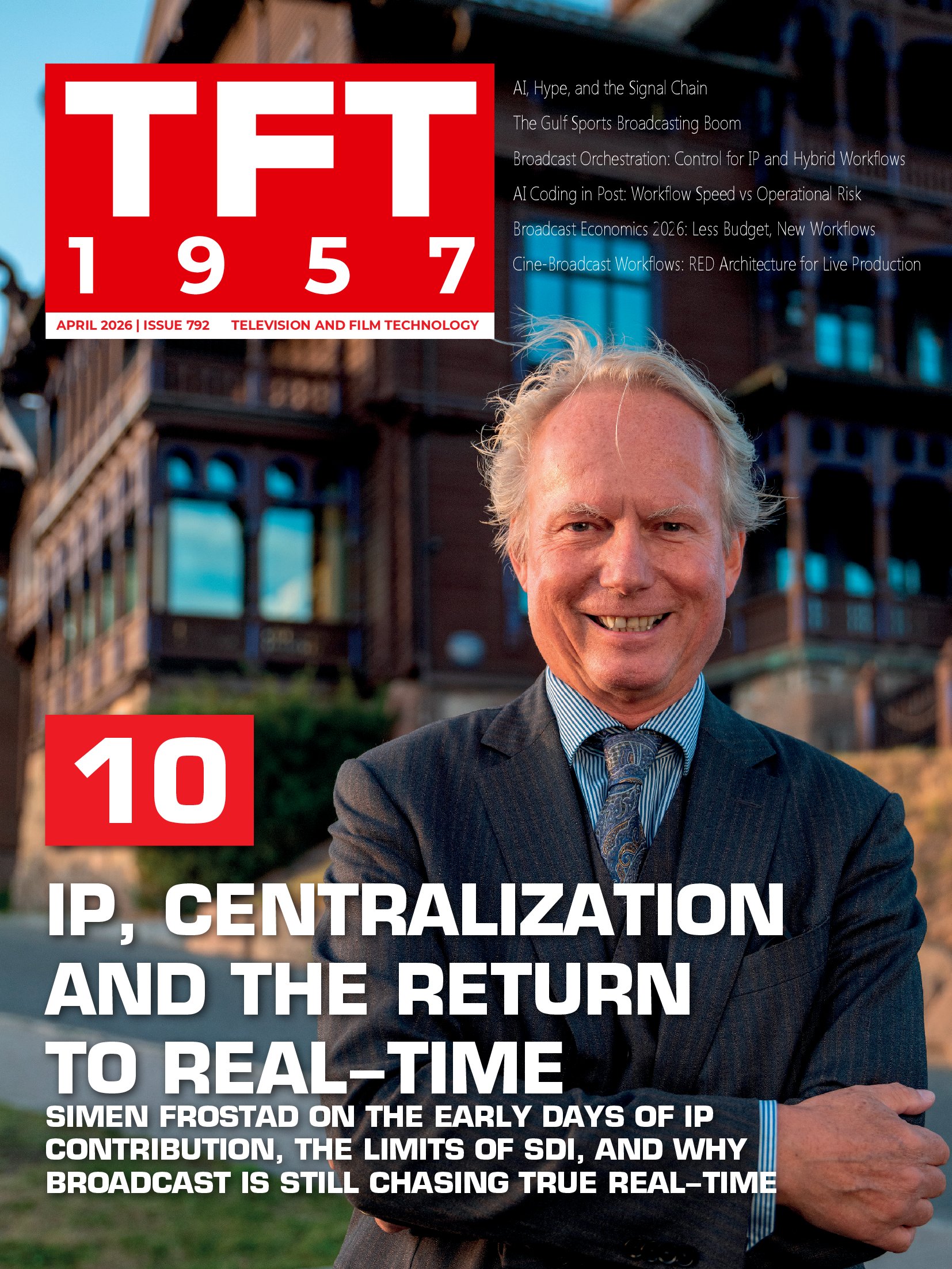
IP, Centralization, and the Return to Real-Time
In this conversation, Philip Grossman, Editor-in-Chief of TFT1957 and host of Visionaries, speaks with Simen Frostad, co-founder and Chairman of Bridge Technologies. They discuss the transition from SDI to IP, the shift toward centralized, software-defined infrastructure, and why the industry is still working toward true real-time broadcast, with a focus on simplicity, control, and operational usability.
Decision Makers | The Gulf Broadcast Market
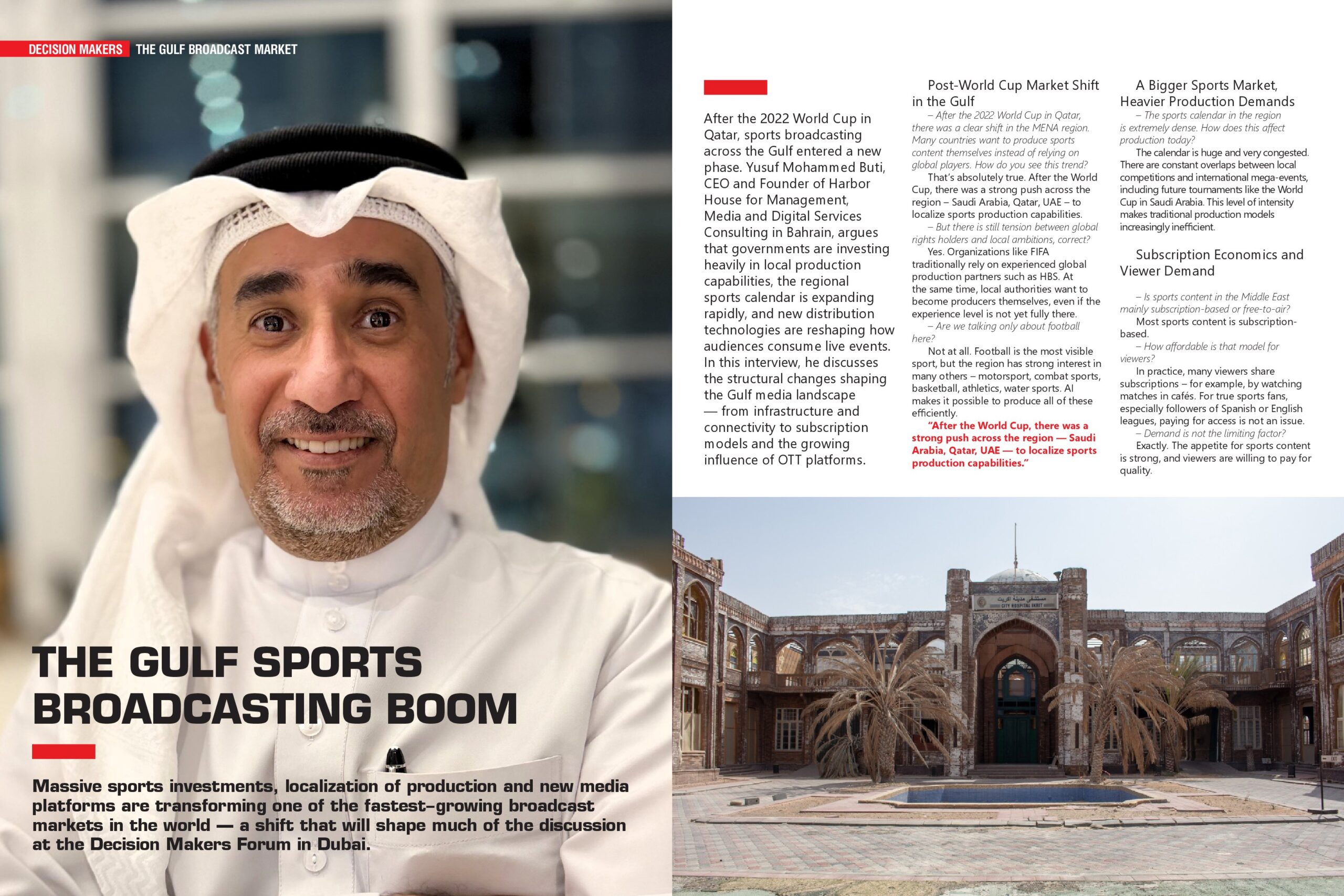
The Gulf Sports Broadcasting Boom
In this conversation, Yusuf Mohammed Buti, CEO and Founder of Harbor House for Management, Media and Digital Services Consulting in Bahrain, outlines how major sports investment, localized production, and new media platforms are reshaping the Gulf broadcast market. The piece examines the structural forces behind that growth, including infrastructure, connectivity, subscription models, OTT expansion, and the changing economics of live sports distribution.
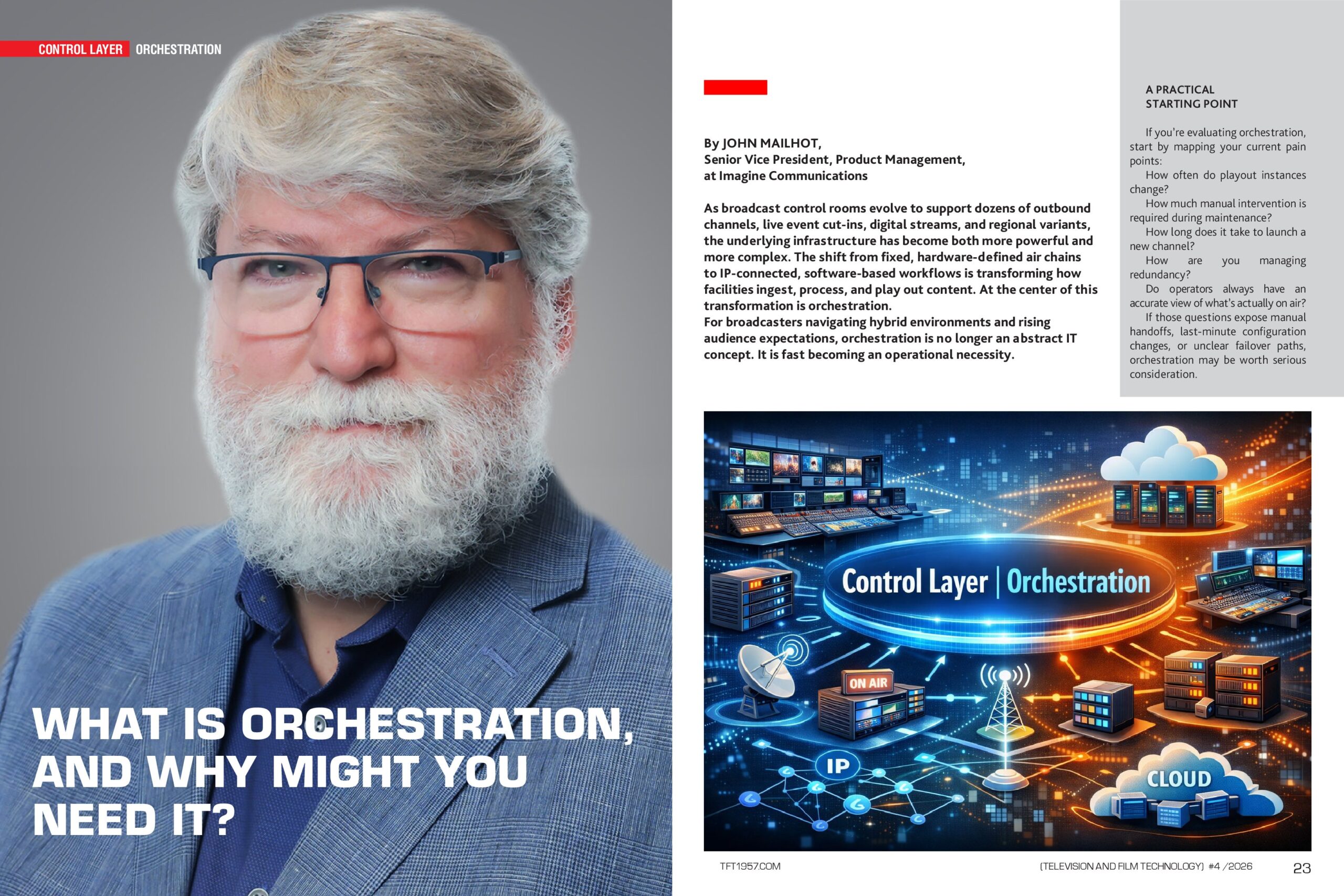
Control Layer | Orchestration
What Is Orchestration, and Why Might You Need It?
In this article, John Mailhot, Senior Vice President, Product Management, at Imagine Communications, explains why orchestration is becoming a core operational layer in modern broadcast. As control rooms move toward IP-connected, software-based workflows, the piece examines how orchestration helps broadcasters manage complexity. It also looks at how orchestration aligns infrastructure with automation. In addition, it shows how orchestration supports hybrid operations, regional variants, and dynamic channel deployment.
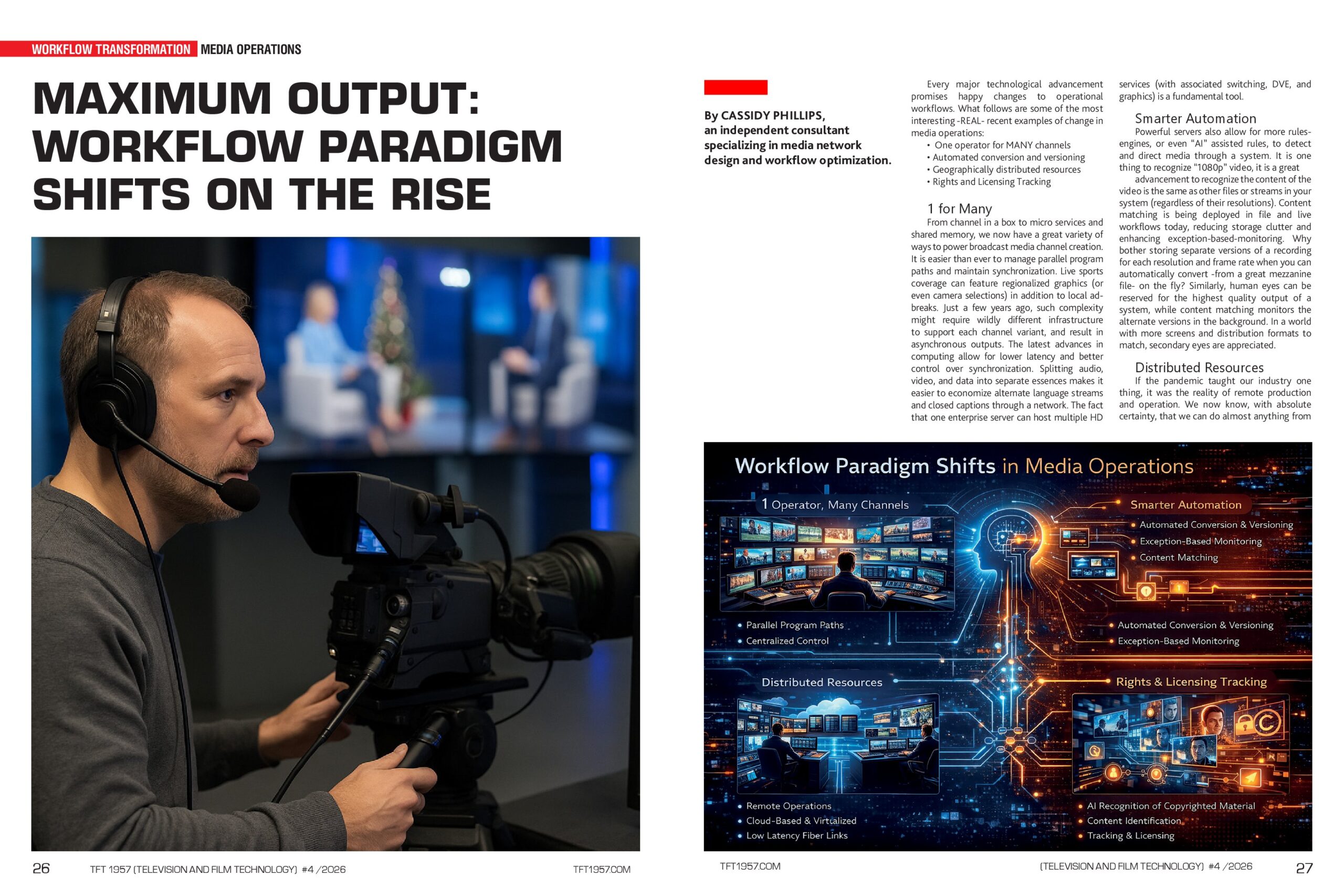
Workflow Transformation | Media Operations
Maximum Output: Workflow Paradigm Shifts on the Rise
In this article, Cassidy Phillips, an independent consultant specializing in media network design and workflow optimization, outlines how recent technology shifts are redefining media operations. The piece highlights real-world changes, including multi-channel control by a single operator, automated versioning, distributed production resources, and integrated rights and licensing tracking across modern workflows.
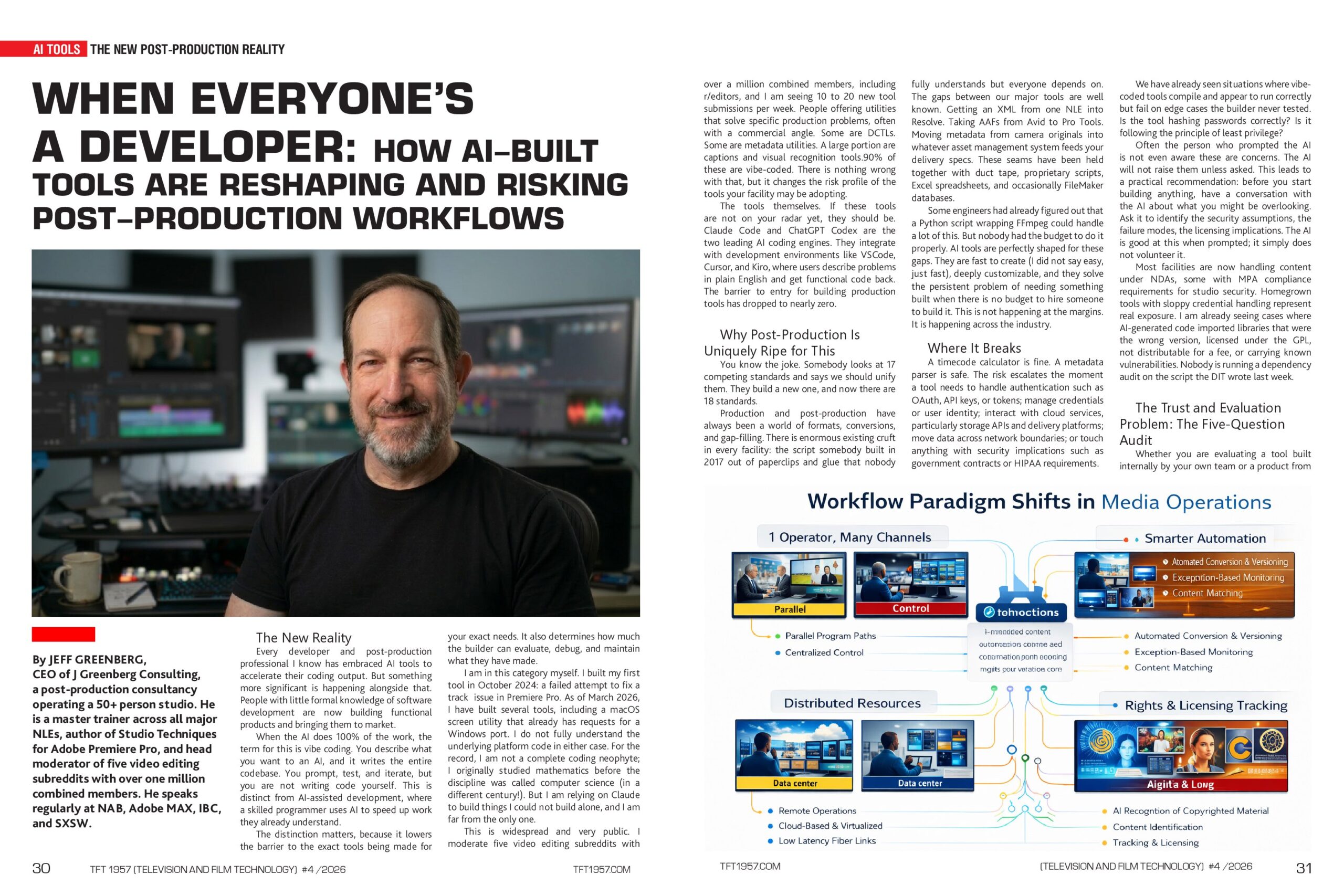
AI Tools | The New Post-Production Reality
When Everyone’s a Developer
In this article, Jeff Greenberg, CEO of J Greenberg Consulting, examines how AI-generated tools are reshaping post-production workflows. As non-developers begin building functional software through “vibe coding,” the piece explores the shift from traditional development to AI-driven creation. It also examines the operational risks and implications this introduces for production environments.
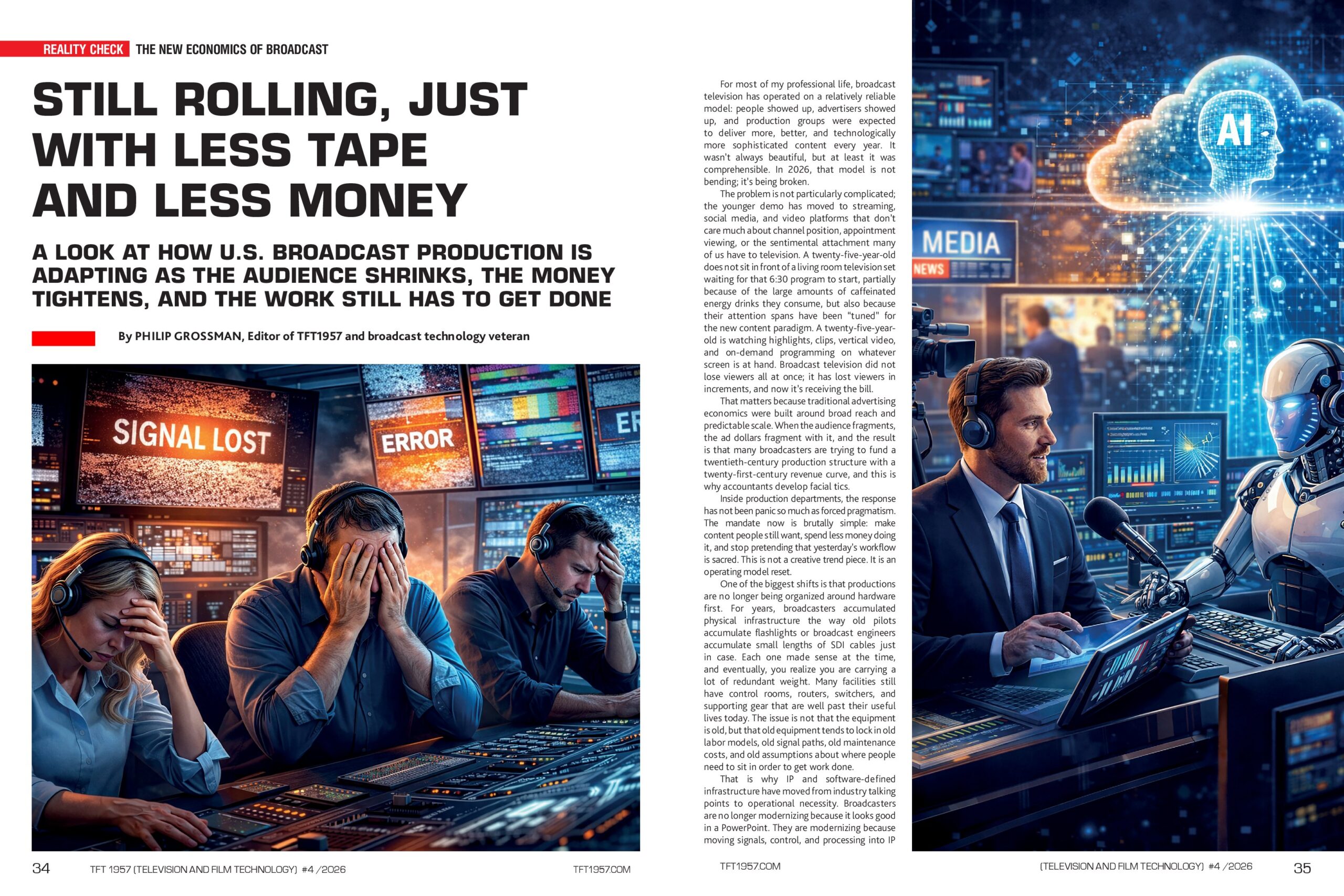
Broadcast Reality Check | Economics, Workflows & Operational Reset
Still Rolling, Just With Less Tape and Less Money
In this article, Philip Grossman, Editor of TFT1957, examines how the U.S. broadcast industry is adjusting to shrinking audiences, tighter budgets, and rising production demands. The piece looks at the shift toward IP-based infrastructure and REMI workflows. It also highlights the move to leaner, multi-skilled teams and the use of practical AI tools. Together, these changes show how broadcasters are rethinking legacy operating models and adapting to a more fragmented, efficiency-driven media economy.
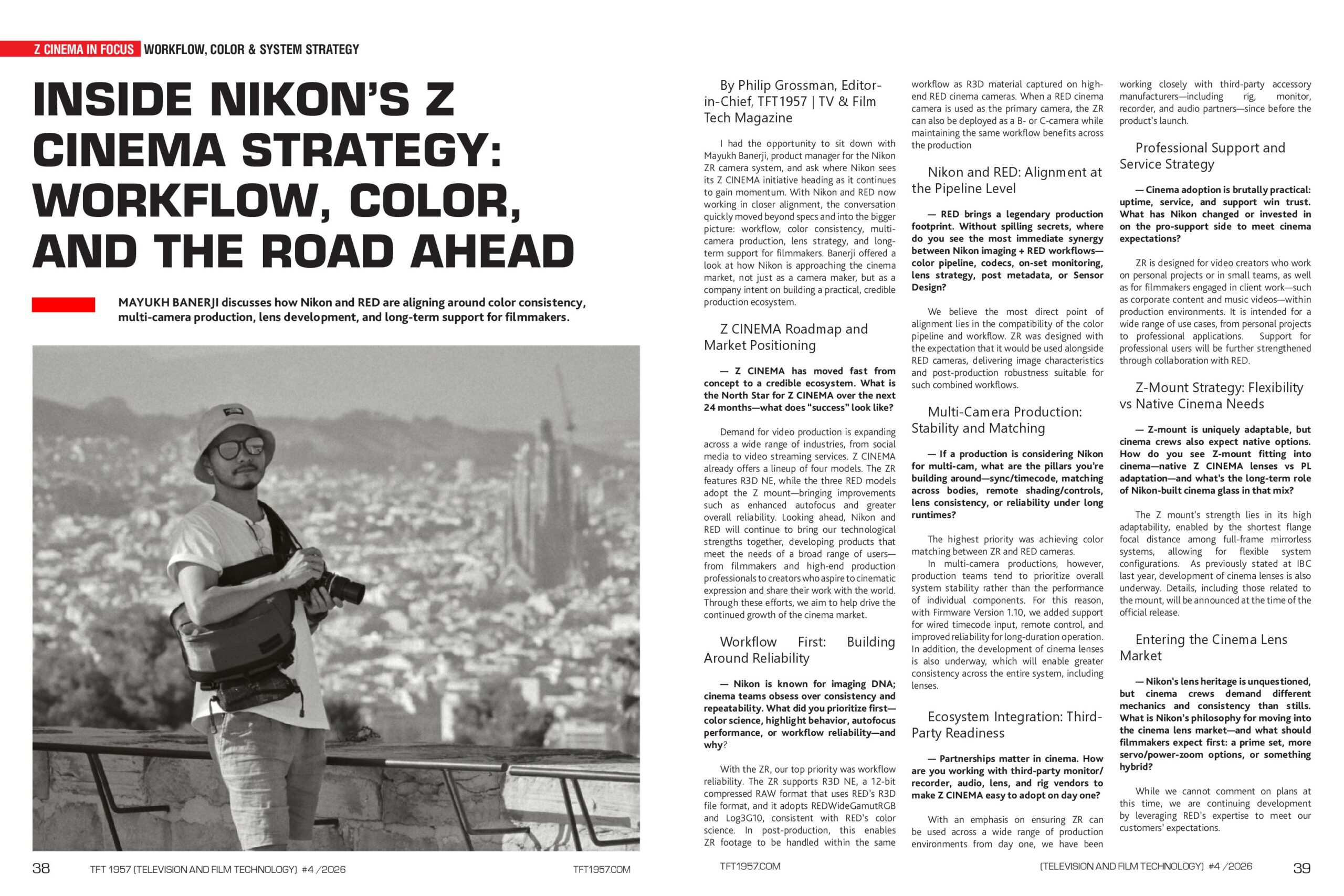
Z Cinema in Focus | Workflow, Color & System Strategy
Inside Nikon’s Z CINEMA Strategy: Workflow, Color, and the Road Ahead
In this conversation, Philip Grossman, Editor-in-Chief of TFT1957, speaks with Mayukh Banerji, Product Manager for the Nikon ZR camera system. They discuss Nikon’s evolving Z CINEMA strategy. The conversation explores how Nikon and RED are aligning on color science, multi-camera workflows, and lens development. It also looks at how the companies are building a practical production ecosystem focused on consistency, reliability, and long-term support for filmmakers.
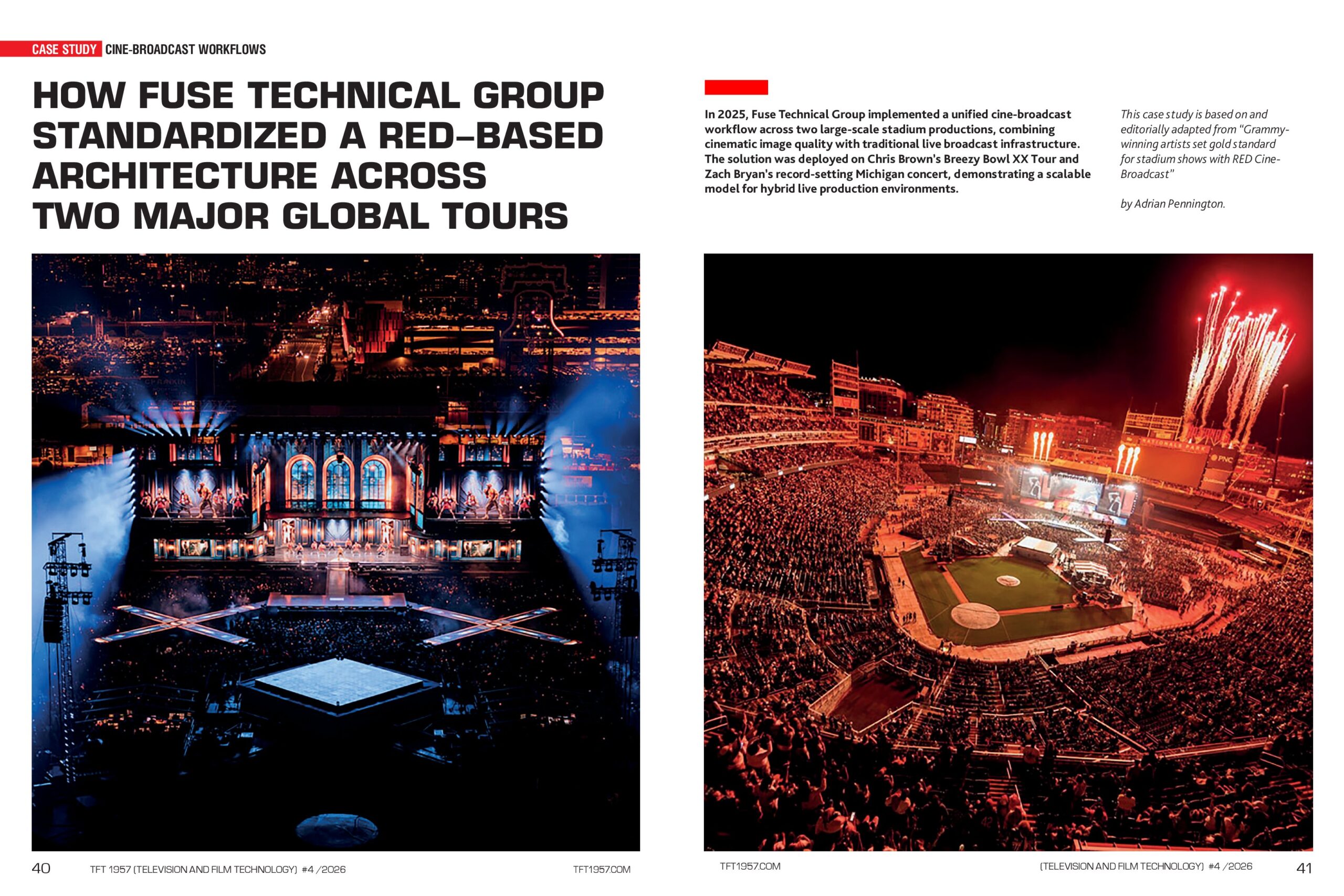
Case Study | Cine-Broadcast Workflows
Standardizing RED-Based Architecture for Large-Scale Live Production
This case study examines how Fuse Technical Group deployed a unified cine-broadcast workflow across two major global tours. It also looks at how RED-based systems were integrated into traditional live production environments. The project demonstrates a scalable approach to combining cinematic image quality with broadcast infrastructure, applied in high-demand stadium productions.
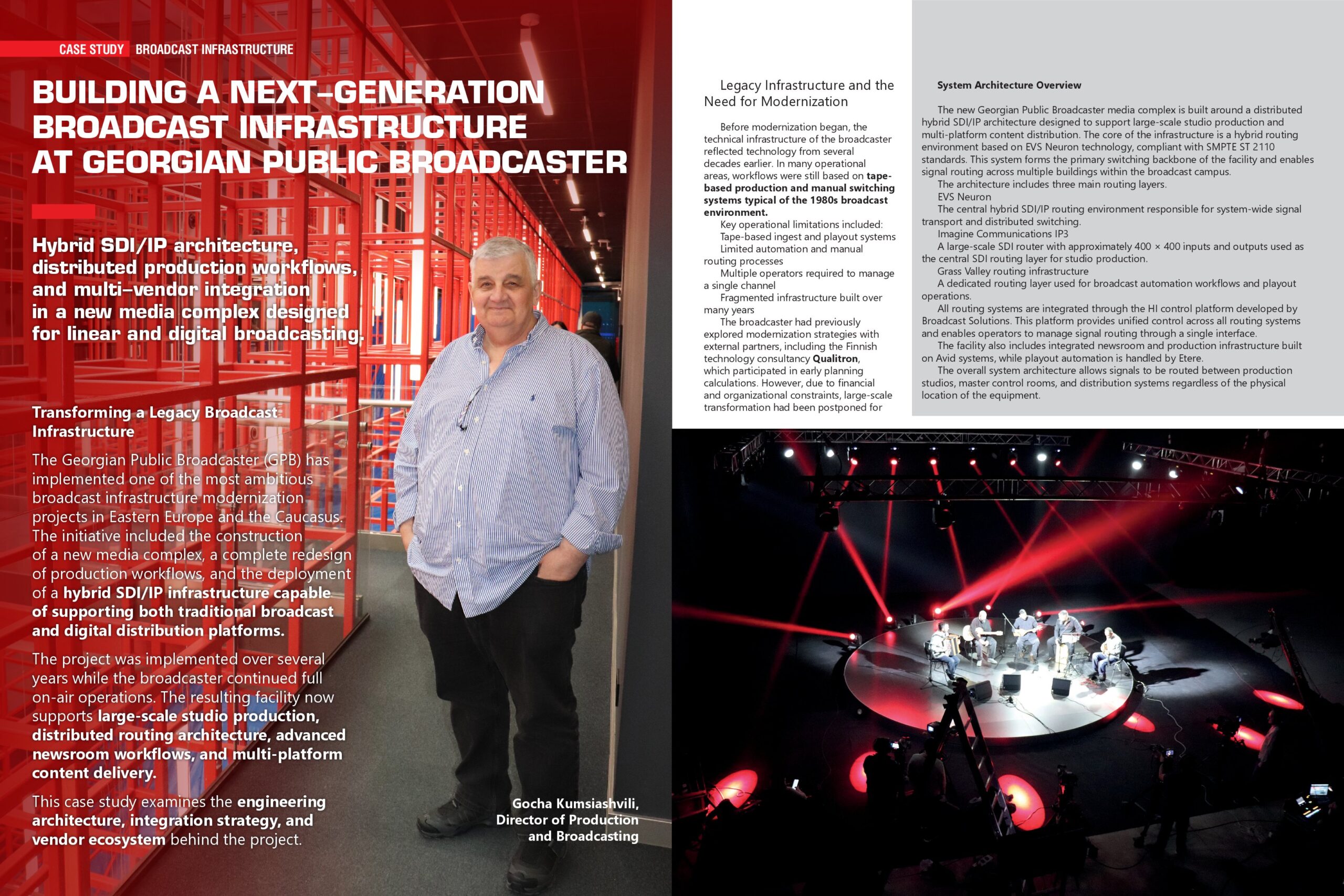
Case Study | Broadcast Infrastructure
Building a Next-Generation Broadcast Infrastructure at Georgian Public Broadcaster
This case study, based on insights from Gocha Kumsiashvili, Director of Production and Broadcast at GPB, examines the development of a new hybrid SDI/IP media complex at the Georgian Public Broadcaster. The project covers the transition from legacy infrastructure to distributed production workflows and multi-vendor system integration. It also examines a scalable architecture supporting both linear and digital broadcasting.
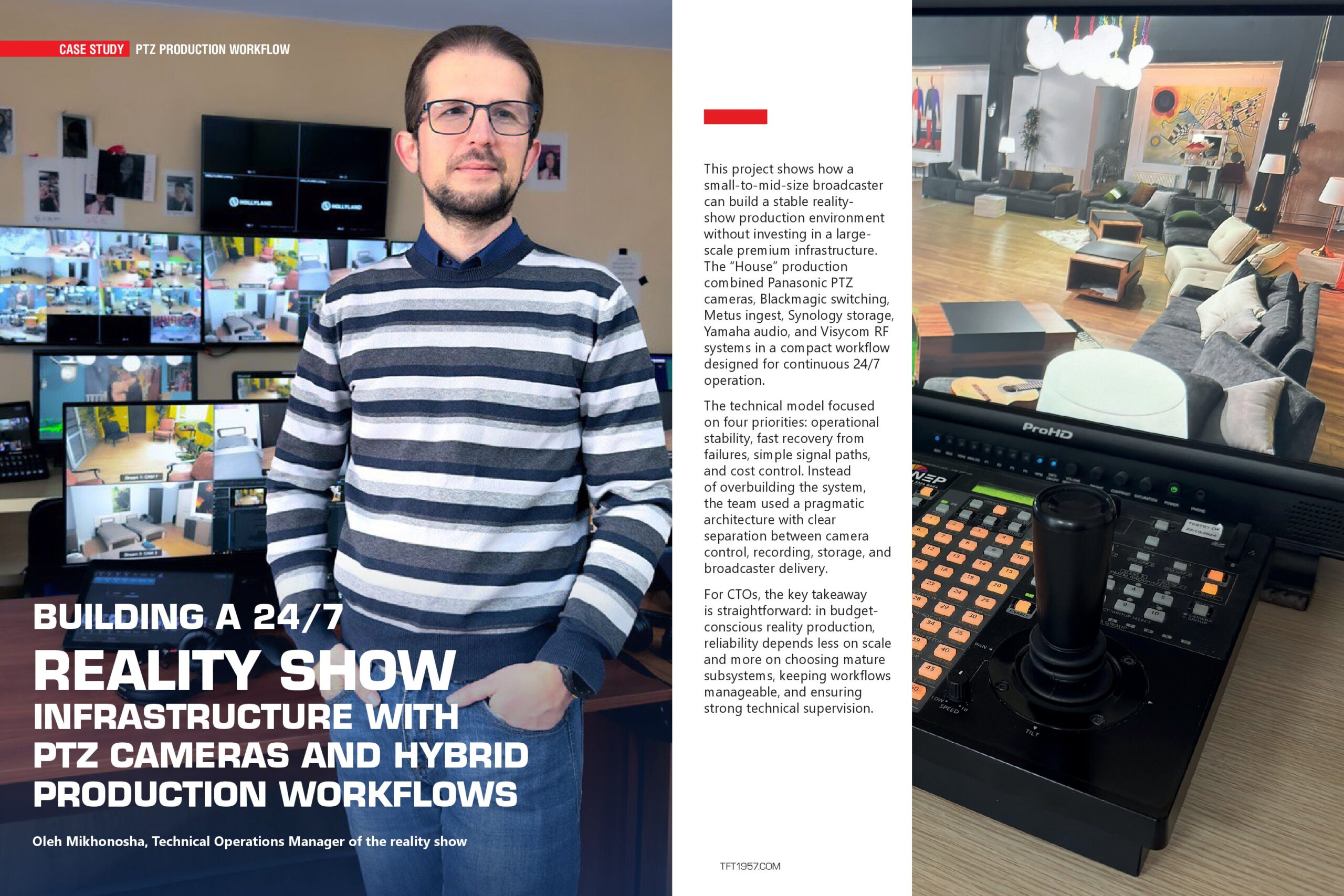
Case Study | PTZ Production Workflow
Building a 24/7 Reality Show Infrastructure with PTZ Cameras and Hybrid Production Workflows
This case study is based on insights from Oleg Mikhonosha, TOM. It examines how a small-to-mid-size broadcaster built a stable reality-show production environment using PTZ cameras and a compact hybrid workflow. The piece focuses on practical system design. It looks at operational stability, failure recovery, simplified signal paths, and cost control across a 24/7 production model.