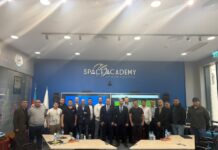

Ibrahim Al-Jabry, Engineering Manager at Asharq, believes AI is accelerating broadcast engineering but cannot replace the people behind complex technical systems. He also explains why compact ProAV facilities and large traditional broadcast operations can continue to coexist.
Inaugural Gulf & MENA Decision-Makers Forum 2026 Concludes in Dubai
A participant in the inaugural Gulf & MENA Decision-Makers Forum, held in Dubai on October 5, 2026, Al-Jabry shares his perspective in this follow-up express interview on AI, broadcast infrastructure, and the Gulf media market.
AI and the Future of Broadcast Engineering in MENA
— What major changes do you expect AI to bring to sports broadcasting and media technology in MENA over the next two or three years?
We’re already experiencing major technological disruptions, and I believe change will move particularly quickly in the Middle East. There is tremendous investment in AI across the region. People here are increasingly familiar with the technology and eager to adopt it. From a broader technology perspective, the pace of development is already remarkable.
Look at how quickly projects can now be developed and delivered. Tasks that previously took considerable time are becoming much faster. I don’t think some of today’s project timelines would have been achievable five or six years ago. This acceleration affects both customers and technology vendors, not just broadcasters.
AI Will Push More Sports Production Offsite, but Crews Still Matter: Elie Roukoz
— Where do you see AI making the biggest difference in broadcasting?
We need to distinguish between editorial workflows and technical broadcast infrastructure. AI is already having a significant impact on editorial operations. It can help journalists develop stories, summarize information, and identify important moments in content. These capabilities are becoming increasingly useful in everyday production.
From an engineering perspective, things are different. Broadcasting still depends heavily on physical equipment and complex technical infrastructure. I see AI becoming particularly valuable for troubleshooting, identifying problems, and optimizing workflows. But I don’t expect it to replace broadcast engineers or fully take over technical operations. We still have a long way to go.
“AI is already here and it’s getting enhanced on a daily basis.”
— How is AI changing the work of broadcast technology vendors and engineering teams?
Vendors are already using AI extensively to troubleshoot software problems, resolve bugs, and respond to customer issues. This is one reason technical projects are moving much faster than before. AI helps teams identify solutions more quickly and reduce the time needed to address problems.
The same applies to deployment planning and workflow optimization. AI can help engineers develop solutions and improve existing processes. These capabilities are evolving every day, and I expect their influence to keep growing.
AI in Sports Production: Why Tenders Hold Back Innovation — Waleed Isaac
ProAV and Broadcast: Two Models That Can Coexist
— Professional AV technology is becoming more affordable and accessible. How do you see the relationship between ProAV and traditional broadcast systems evolving?
That’s a very interesting question because we’re accustomed to traditional broadcasting facilities with large studios and complex infrastructure. Today, however, there are very different approaches to building a media operation. The choice depends on an organization’s investment capacity and what it wants to achieve. No single solution works for everyone.
For example, you can now create a small production facility in a three-by-three-meter room. Add a green screen, an NDI-based TriCaster system, and a newsroom system. You can potentially get a television channel up and running with a relatively compact setup. At the other extreme, you still have traditional facilities with physical studios, large production galleries, master control rooms, and transmission areas. These represent very different scales of investment and infrastructure.
— Do you think more affordable ProAV technologies will eventually replace large traditional broadcast facilities?
I don’t see traditional broadcast facilities disappearing. Broadcasters in the Middle East continue investing in large studios and infrastructure. The same is true in North America, where new facilities are still being built. I remain in touch with colleagues there, and I see that investment continuing.
AI and Multiplatform Sports Broadcasting: Hamad Abdelrazaq on New Workflows
Major sports organizations, including the NFL and NBA, still require substantial broadcast infrastructure and capital investment. At the same time, newer technologies allow smaller organizations to launch operations with far fewer resources. Whether this shift is entirely positive is difficult to judge today. Both approaches have advantages and disadvantages, depending on the organization’s needs.
“I think both can coexist at the same time, at the moment.”
The Gulf Broadcast Market: Looking Ahead
— Given the current political uncertainty in the region, how do you see the Gulf broadcasting market developing over the next year or two?
I believe the market is here to stay and will continue to grow. Yes, the region faces challenges, but difficult periods come and go worldwide. Looking ahead, I see significant opportunities. More events, activities, and sporting competitions are driving demand for media production.
We’re also seeing a great deal of creative talent emerging across the region, particularly in sports and content creation. The amount of content being produced is remarkable, even compared with just a year or two ago. From a media perspective, these developments give me confidence in the future.
Related: Hamad Abdelrazaq on AI and multiplatform sports broadcasting.
Ammar Hina Appointed Strategic Chair of The Gulf & MENA Decision-Makers Forum 2026