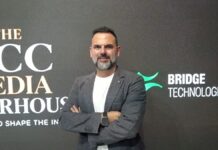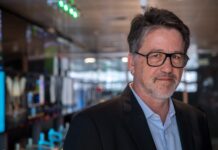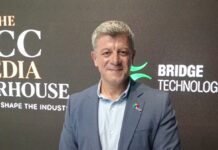
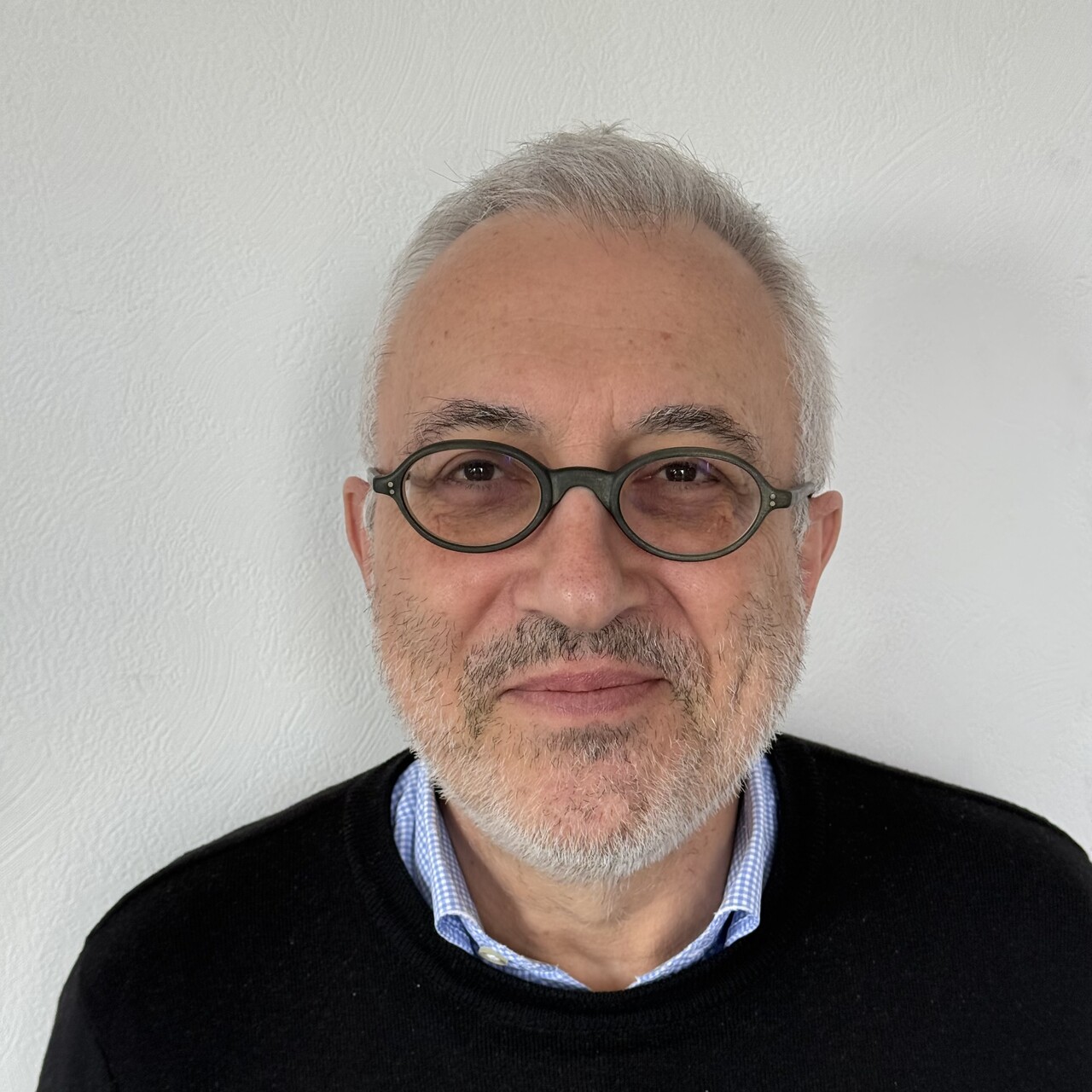
From Japanese television and war reporting to the FIFA World Cup, UEFA EURO and the Paris Olympic Games, Nicolas Deal has spent more than three decades building the technology that allows billions of people to watch history unfold — while remaining almost completely unknown.
“If nobody knows your name after an event of that scale, it usually means you have done your job properly.”
Ammar Hina Appointed Strategic Chair of The Gulf & MENA Decision-Makers Forum 2026
That philosophy has defined Nicolas Deal’s career. From covering wars for Japanese television to leading broadcast operations for the FIFA World Cup, UEFA EURO, Rugby World Cup and the Paris Olympic Games, he has consistently worked behind the scenes, solving problems that viewers never notice. Today, as Founder and CEO of Overcast SA in Switzerland, he is applying more than 30 years of experience to a new challenge: building a platform designed to transform how the world’s most valuable data is exchanged.
From UEFA to the biggest event in television
— Why did you leave UEFA?
In 2019, Orange invited me to join the company to lead the contribution and distribution network for the FIFA Women’s World Cup in France and to begin preparations for the 2024 Paris Olympic Games. It was a natural next step, so I left UEFA and moved to Paris.
My first assignment was the Women’s World Cup, after which my focus shifted almost entirely to the Olympic Games.
— Was the Rugby World Cup part of that preparation?
Very much so. I would not officially call it a rehearsal, but for our teams it played exactly that role. Many people within Orange had never worked on an event of this scale, so the Rugby World Cup 2023 became an opportunity to train people, establish workflows, and prepare for the Olympics.
I was responsible for the International Broadcast Center for both tournaments, so it was a logical progression from one event to the next.
“If nobody knows your name after an event of that scale, it usually means you have done your job properly.”
— What was your role during the Olympic Games?
The Olympic Games were the biggest project of my career. I was responsible for the contribution and distribution network, television and CATV distribution across the Olympic perimeter, and the broadcast preparation for the Opening Ceremony.
According to OBS, it became the biggest live television event in broadcasting history.
— What was the biggest challenge?
Coordinating an enormous number of organizations, technical teams, and operational partners. Projects like this are not only about technology—they are about people, planning, and execution. Everything has to come together at exactly the right moment.
Fortunately, everything worked as planned.
— Looking back, what makes you most proud?
Probably the fact that nobody has ever heard my name. In our business, that usually means everything worked exactly as it should. If viewers remember the event rather than the infrastructure behind it, you have done your job well.
Ursula Romero Takes Over Global Sports Broadcasting Company After Her Father’s Death
Success, recognition and the next dream
— Looking back, what would you consider your greatest achievement?
Probably the fact that very few people know my name.
People often find that answer surprising, but I have never wanted to be the story myself. What matters is the work and the value it creates. When millions of people can enjoy a sporting event without ever thinking about the technology behind it, I know we have succeeded.
— But now you have your own company. Doesn’t that change things?
Of course, from a business perspective, people need to know the company. But personally, I still believe that the focus should remain on what we deliver rather than on me.
My greatest satisfaction has always been making life easier for other people. Whether it was the Olympic Games or any other major event, knowing that everything worked seamlessly for broadcasters and viewers has always been the real reward.
— What is your dream today?
My dream is to make this company successful by simplifying technology. I want our customers to exchange data without worrying about the platform’s complexity.
That requires a tremendous amount of work in standardization, certification, and engineering. But my goal is simple: I want using our platform to feel as natural and effortless as using an iPhone. When technology becomes invisible, that’s when you know you’ve done it right.
Building the future of data exchange
— People often describe you as both a technology leader and an innovator. Where does that come from?
I have been told many times that I’m a creative person, though it feels completely natural to me. I don’t try to invent things for the sake of innovation. I simply spend a lot of time thinking about better ways of solving problems.
More than 20 years ago, I was among the first people transporting uncompressed video over IP. At the time, many people thought it was almost impossible. Today it is standard practice, but back then it was considered a major innovation. I’ve never been afraid of trying something new if I believe it is a better solution.
“I’m not interested in innovation for its own sake. I’m interested in finding a better way of doing things.”
— You recently founded your own company. What is its mission?
The idea is to build a private cloud and create a platform for exchanging data. We are starting with sports organizations and sports-related companies because sports content represents enormous volumes of valuable data.
But the long-term vision goes much further. We want to build a marketplace where broadcasters, sports federations, betting companies, AI companies, and many other organizations can securely and efficiently exchange data.
— Why did you choose Geneva?
Geneva is one of the world’s largest centers for commodity trading. Oil, metals, and many other commodities are traded there every day. I believe that, in the future, data will become a commodity as well.
He Built Global Sports Television Across Four Continents — Then Started Again at 46
That ecosystem perfectly matches our vision. We are not simply building another technology platform. We are creating an environment where data can be exchanged as easily and efficiently as any other valuable asset.
Euro 2012, Euro 2016 and the rise of remote production
– Was Euro 2012 a difficult project?
Yes, it was quite demanding. Working across Poland and Ukraine at that time was not simple. The relationship between the two countries was not especially easy, and from an operational point of view there were real complexities. I was working mainly with telecom operators — Orange Poland and Ukrtelecom — and one of the major challenges was connecting the two networks and infrastructures across different legal and technical environments.
It required a great deal of coordination and persistence. But in the end, everything worked well during the tournament, which is what matters most in this kind of work.
— What happened after Euro 2012?
After that, I began preparing UEFA Euro 2016 in France. In some respects, it was simpler, because it was back in my home country. But at the same time, another important strand of work was developing in parallel: remote production.
In 2012, while I was based in Warsaw, I had already started working on projects built around the idea that only cameras and camera operators would be on site, with the production itself carried out elsewhere. The aim was to move away from the traditional full outside-broadcast model and test more distributed production workflows.
— When did this shift toward remote production become a real focus for you?
We started those experiments in 2012 and continued developing them through to 2016. During Euro 2016, we also carried out remote operations, and then in 2017 we did something much more ambitious.
— What did that involve?
We produced a football match in Kraków, while the director was in London. The signal path was 4K uncompressed between the two countries. At the time, that was a very interesting and quite innovative approach. It showed that remote production could move well beyond theory and isolated tests and become a serious operational model for live sports.
After Euro 2016, I continued working on these developments while also beginning preparations for UEFA Euro 2020, which was planned across 12 countries.
Technology without an engineering degree
— You studied economics and languages yet eventually became a CTO. How did that happen?
I have never been an engineer by education. Throughout my career, however, I kept moving into areas with no established role, so I had to learn continuously and define my own responsibilities.
Studying Japanese was actually very important because it trained me to think systematically and to absorb complex information.
— When did technology become the center of your career?
One of the turning points came at UEFA. Although I was working in broadcast, my team was placed inside the IT department for budget reasons. At first it seemed unusual, but it forced me to understand both worlds.
Later, when I moved again into television production, I was able to bridge the gap between broadcast and IT—a gap that many organizations were struggling with at the time.
— So what became your biggest strength?
My ability to learn and to innovate. Technology certainly requires engineering knowledge, but it also requires creativity. You have to find new ways of solving problems, rethink existing workflows, and sometimes create approaches that simply did not exist before. I believe that ability has shaped my entire career.
From consultant to UEFA executive
— Let’s go back to where all of this began. How did you first become involved in global sporting events? How did your relationship with UEFA begin?
In 2007, UEFA asked me to carry out an audit in preparation for UEFA Euro 2008, which was to be held in Switzerland and Austria. At the time, I was still with Globecast, but I was working as a consultant for UEFA on contribution and distribution solutions for the tournament.
From Bahrain to Building Media Cities: The Journey of Yusuf Mohammed Buti
I completed the audit and delivered my report. UEFA then came back and said, in effect, “Now you should do it.”
— So the consultant became the operator?
Exactly. I joked with them that consultants are paid to say many things in theory, and that perhaps they should not take everything too literally. But they replied that, unfortunately for me, they had believed me — and now wanted me to implement it.
So I incorporated a company in Switzerland and, through that company, worked as a consultant for UEFA to deliver Euro 2008. I hired local people and took responsibility for the contribution and distribution side, including the RFP processes and the operational framework around them. In the end, it worked well.
— And then UEFA hired you full-time?
Yes. In the period that followed, I continued to take on several consulting assignments through my own company. But in 2010, UEFA decided to bring me in as a full-time employee to prepare the next tournament, UEFA Euro 2012, which was to be held in Poland and Ukraine.
At that point, I more or less stopped my own company and joined UEFA full-time.
Globecast in Tokyo and a return to Europe
— Did you stay with HBS after the World Cup?
No. After the World Cup, I left HBS and returned to Europe. For the rest of that year, I worked in the news department at the EBU. Then, at the beginning of 2003, I was hired by Globecast, an Orange subsidiary, to open its Tokyo office. So I moved back to Japan once again.
— What was your task there?
I was responsible for establishing and developing the Tokyo office, covering both Japan and South Korea. That meant I was traveling to Korea quite often, but my main focus was the Japanese market. I worked with all the major broadcasters — NHK, NTV, Fuji TV, TV Asahi, TBS, and TV Tokyo. The mission was to develop business with Japanese broadcasters and build Globecast’s presence in that part of the market.
— What exactly were you doing for Japanese broadcasters through Globecast?
I was providing them with the full range of services they might need outside Japan — transmission services, production support, and related operational solutions. Some work was done in Japan, of course, but in practice the scope was international because Japanese broadcasters were active worldwide.
— How long did you stay in Tokyo after opening the office?
I spent three years there.
— What came next?
After that, I moved back to France, to Globecast’s headquarters, and took charge of major events. I became Head of Major Events, which meant working on projects such as the Olympic Games, the FIFA World Cup, the UEFA European Championship, and other large-scale broadcasts.
You Either Stay, or You Go: The Director Behind Saudi Football’s Global Rise
In that role, I was dealing directly with organizations such as FIFA, UEFA, the IOC, and OBS. It was a move from regional business development into the center of global sports-event operations.
The World Cup years with HBS
— What was your position at HBS?
I joined as Senior Coordination Manager. My role was to handle the liaison between the organizing committee and HBS, which meant being at the center of many different processes. Part of the work was production-related, part was technical, including telecommunications, and part was simply coordination in the broadest sense. In the end, it was about making things work again.
— What did that period look like in practice?
My wife and I moved to Japan and were based in Tokyo. My main responsibility was to conduct site surveys and help prepare the operational framework for the World Cup in close cooperation with the organizing committee.
I worked with the committee’s technical teams and various HBS departments to prepare the tournament across 10 venues in Japan. The work covered everything from power supply and cabling to production infrastructure and transmission. It was about ensuring that, when match day came, everything functioned properly — that the stadium had power, light, connectivity, production capacity, and the ability to deliver the signal to audiences around the world.
— So this was not just television production in the narrow sense?
No, not at all. It was much broader than that. You had to think about the entire chain. The event had to work in terms of physical, technical, editorial, and logistical aspects. Only then could the pictures be produced and distributed globally.
Living as a foreigner in Japan
— Japan is another planet.
Yes, in many ways it is. But rules are rules, and every society has its own system.
— So being a foreigner also gave you a kind of distance?
Yes, exactly. I knew that if I wanted to leave, I could leave. That changes your relationship to the whole system. I was able to function within it, but I was not trapped by it. That is why I did not suffer from it as much as many Japanese employees probably did. I could play the role, but I did not have to surrender myself to it.
From Paris 2024 to the Saudi Pro League: The Global Broadcast Journey of Filipe Sobral Santos
— Were there also annoying sides to being a foreigner in Japan?
Yes, of course. The difficulty of living in Japan as a foreigner is that people keep reminding you of it. Whatever you do is explained by that fact. If you drink a glass of water, someone says you are a foreigner. If you like something, it is, again, because you are a foreigner. It becomes a little repetitive and a little boring. Not dramatic, but tiring.
— Was it harder for your wife than for you?
In some ways, yes. My wife is Japanese, but she had lived in France for a long time. So when we were in Japan, the pressure on her was stronger.
— Why stronger?
Because she was seen as Japanese, but she did not behave in the fully conventional Japanese way. In a sense, she was judged more strictly than I was. I was a foreigner, so people expected differences from me. But she was Japanese, and yet she had a more international way of behaving. That created more pressure on her.
So for me, again, it remained a kind of performance. I knew how to act, how to work, how to fit into the structure. But inwardly, I remained free.
— How did you meet your wife?
We met at university. We were studying together — she was learning French, and I was learning Japanese.
— Do you have children?
No.
— Why did you leave NTV?
It was not because I was unhappy there. On the contrary, it was an extraordinarily interesting period. I was constantly traveling, covering major events, and often found myself at the center of history as it was unfolding. But after ten years in news — and especially in hard news, in war zones and crisis areas — the emotional cost became very high. I lost a number of friends and colleagues. Many people I knew were killed.
So although it was a deeply important experience, it was also a very tough one. At that moment, I received an offer from HBS to work on the 2002 FIFA World Cup in Japan and South Korea. The timing was right. It was a complete change of direction, but sometimes such changes become necessary.
So I said yes.
Ten years in the field: global news and conflict zones
— What did that involve on a daily basis?
You were sent somewhere in the world, often at short notice, and had to organize everything on the ground. That included transmitting footage, setting up live connections, and coordinating production.
Floris Molijn: From Dutch Live Production to Leading Oranda in Asia
We worked in many regions — the Middle East, including Baghdad at the time, South America, South Africa, Rwanda, and many other places. The pattern was always the same: something happened, we were deployed, and we had to ensure full coverage.
In small teams, especially in foreign countries, you are responsible for everything — from logistics to interviews to technical setup.
— How long did you stay with the company?
Ten years, from April 1990 until the end of 2000.
— That was a very intense period globally.
Yes. During those years, I covered many major conflicts and crises — the wars in the former Yugoslavia, Rwanda, Iraq, and others. It was a decade with a high concentration of major global events, and I was directly involved in covering many of them.
Languages, discipline and entering television
— You mentioned it felt unusual at times?
Yes, it was sometimes strange, but it was also very good training. I had to learn how to express the same ideas in Japanese, in French, and in English. There was no shortcut — I had to learn everything the hard way.
At the same time, studying Japanese, including linguistics, helped structure my thinking. It changed how I approached learning and how I understood systems and processes.
— How did you move into television? What was your first company?
I was hired by a Japanese TV station, NTV. NTV was the first and largest private television network in Japan, comparable in position to NBC in the United States.
— You were based in France?
Yes, I worked in the Paris office.
— How did you get that job?
They were looking for someone with a background in cinema or television, who could speak Japanese and was ready to travel and work in the field. You had to be able to handle many things at once. My role was essentially as a news producer. In practical terms, it meant making things work, whatever the situation.
— How was it for you to work inside a Japanese company?
It was demanding. In Japan, there are very clear expectations about how work should be done — long hours, strong respect for hierarchy, and a very codified way of behaving.
— Was it difficult for you personally?
In a way, yes, but not in the same way it is difficult for Japanese people themselves. I speak Japanese quite naturally, and I can behave the way people expect. I understood the codes, and I knew how to follow them. But for me, it was always, in a sense, a role. I could adapt to the system without fully becoming part of it.
— What do you mean by that?
I mean that I could work long hours, respect the boss, follow the hierarchy, and do everything properly — but without believing in the system from the inside. That was the difference. I kept a certain inner freedom. For many Japanese people, that freedom does not really exist in the same way. They live inside that social structure permanently, and there is no easy escape from it unless they leave the country.
Japan and first steps in media
— How old were you when you left university and joined the navy?
I was 20.
— Your parents were shocked?
Yes, but in my family, traveling and living abroad was always very natural. My father had lived in Tunisia, Morocco, and Algeria. My mother’s family also spent time abroad. On both sides of the family, there were many journeys — across Africa, Madagascar, and other continents.
I Tried to Leave Television — and Ended Up at the Champions League
So there was a kind of tradition, a family culture of moving, discovering new places, and spending time in different countries.
— What happened after your military service?
While I was still in Senegal, I had the idea of going to Japan. I went to the Japanese embassy in Dakar to ask for information. The woman at the reception gave me a document — one side in French, the other in Japanese — but she handed me the Japanese side first.
At that moment, I realized I had a problem, because I couldn’t understand a single word. So when I returned to Paris, I enrolled at the Oriental Language School and began studying Japanese.
— You also studied Chinese?
Yes, very superficially, and I know that Oriental languages are not easy. But Japanese is relatively easier to speak than Chinese. There are no tones, which simplifies things for French — and I think also for Russian — speakers.
The writing system is still demanding. The characters are similar to Chinese, just fewer in number. In the end, it comes down to repetition — learning and relearning. You forget them quickly and acquire them slowly.
— How long did you study Japanese?
Four years. But by then, I had already started working.
I worked as a photographer for Japanese magazines while I was studying. At the same time, I was involved in radio. I started working with small radio stations when I was young, so I continued working in radio, editing, and similar tasks.
That’s where I learned the fundamentals. At that time, editing meant physically cutting tape — with scissors and adhesive — not working on a computer. So I understood very clearly what “cutting” really means.
In photography, everything was still on film. You had to understand light, exposure, and the underlying technical processes. All of this became very useful later, when I moved into television, because I already understood the basics.
— You mentioned something unusual about learning technical language?
Yes. I learned all the television and broadcast terminology in Japanese first.
So later, when I worked in France, it was a bit unusual — I knew very precise technical terms in Japanese, but not always in French. I had to ask colleagues for the correct words. From the outside, it probably looked a bit strange.
Paris, military service and Dakar
— After finishing school, where did you go? What university or college did you choose?
After graduation, I went to Paris to study economics. But, to be honest, I found it rather boring. During that period, instead of focusing fully on my studies, I watched a lot of films and spent a lot of time sailing and windsurfing.
Eventually, I left university and had to complete my military service.
— Is that when you joined the navy?
Yes. I joined the French navy and ended up spending my military service — in fact, a little longer than the normal term — in Dakar, Senegal.
— Was there a particular reason for that?
I had to serve in the military anyway, but I wanted to go abroad. At that time, the only real way to do that was to join the navy and be sent to Dakar.
— So this was regular service in the French navy?
Yes, absolutely. It was standard service in the French navy.
— How long were you there?
A year and a half.
— Was it really a good experience, or are you joking a little?
No, it was genuinely a very good experience. For a young Frenchman, going to Africa, discovering a different world, and living through all of it was extraordinary. It was not just enjoyable — it was formative. For me, it was a fantastic experience.
Family, childhood and school
— When and where were you born? Who were your parents?
I was born in 1963 in Nantes, in western France. My father had lived in North Africa since childhood, and he spoke several languages, including Arabic and Italian. My mother was from Marseille, also in France. So, in a way, my roots are very much in the south of France, around the Mediterranean.
Tahir Aliyev, International Sport Broadcasting: I Visualize a Story as a Shot
My father worked for a transport and shipping company. My mother was focused on the family and on raising my sister and me.
— What is your first memory?
My first memory is from Nantes. I must have been very young, because I left Nantes when I was about three years old. I remember being in a place that my mother later told me was the doctor’s office, where I had gone for a routine consultation. What stayed with me very clearly was the space itself — the plants, the atmosphere, the setting. That is my earliest memory.
— What subjects did you like at school?
I liked history, geography, and philosophy.
— Did you play sports?
At school, yes. I played rugby and similar sports, but never very seriously. It was more of a casual approach.
Later on, though, I did a lot of sailing. Sailing and windsurfing became much more important to me.
The Journey Continues
— Looking back, would you change anything?
No, I firmly believe that any experience is valuable, even if it’s not easy to handle. I have learned so much and had many opportunities to restart!
– What would you like your legacy to be?
Using the past to contemplate the future. The transfer of knowledge and experience to future generations is the most important thing I can focus on.
– Finally, what advice would you give to young professionals who want to build a career in broadcasting and media technology?
Find a destination and go for it! You are the only one to decide where you go.