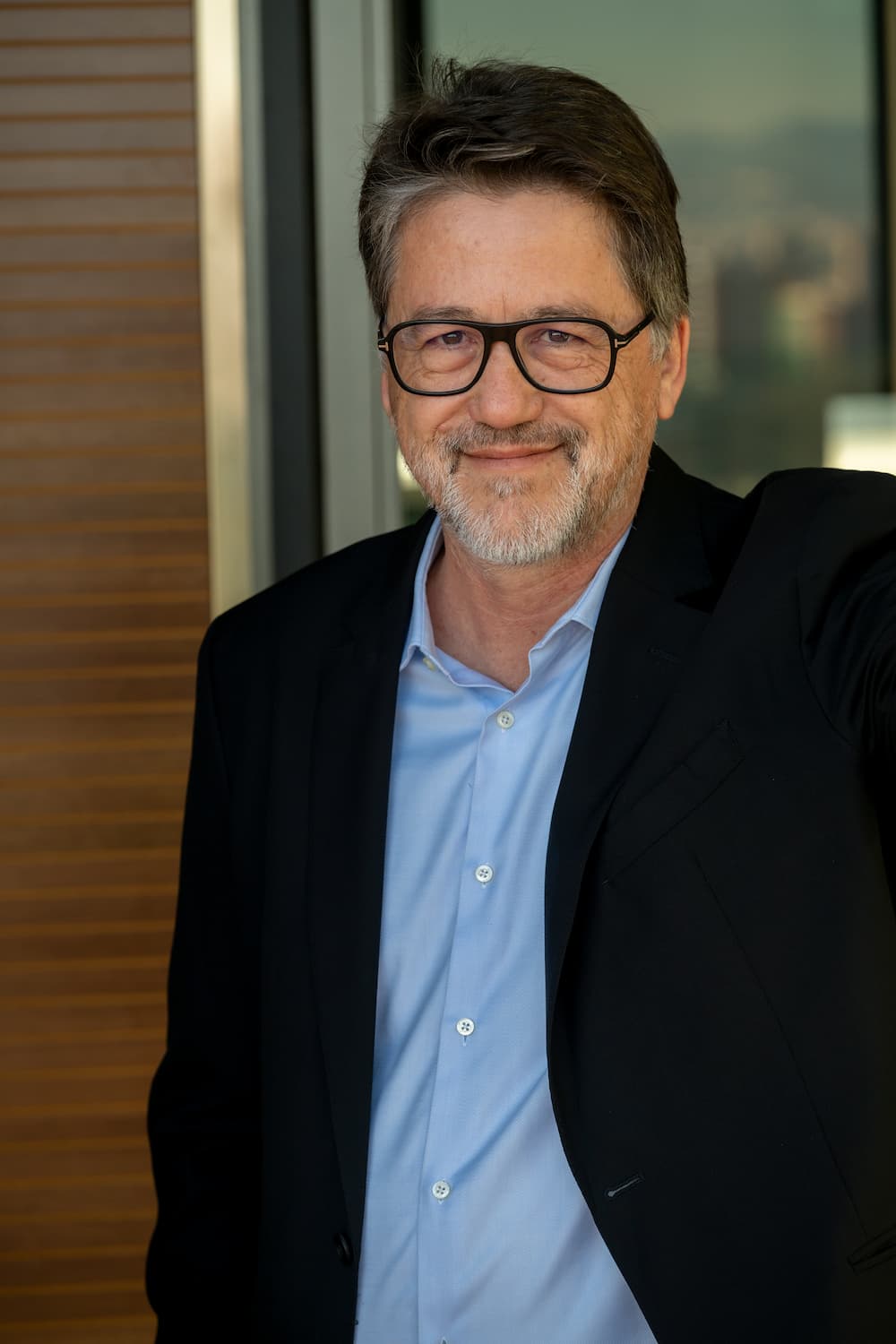
 From a disco bar in Figueres to early IP contribution, remote production, and HDR simulcast workflows at Mediapro, Emili Planas reflects on three decades of broadcast transformation — and the next shift toward software and AI.
Inaugural Gulf & MENA Decision-Makers Forum 2026 Concludes in Dubai
Emili Planas’s career traces the evolution of modern broadcasting: from analog ENG and small OB vans to linear channels, IP contribution, remote production, 4K, HDR, and software-based workflows. Yet the most important lesson he draws from that journey is not about equipment. Technology can often be designed faster than organizations can be persuaded to change.
After approximately 30 years within the Mediapro group, Planas is taking time to decide what comes next. In this interview, he explains how remote production was built around the needs of every operational team, why 4K resolution alone failed to impress him, and where AI can — and cannot yet — meet broadcast’s reliability requirements.
Three Months to Design, Six Months to Convince
— How long did it take to define the remote production workflow?
We brought all the relevant teams together and defined every part of the system. I coordinated the group and made the final workflow decisions. Within three months, we had established how remote production could be deployed across the company.
The technical design was only the first stage. We then spent another six months convincing people that the workflow would be safe and reliable. We also had to demonstrate its business value: fewer people would need to travel, accommodation and per diem spending would fall, and the entire production model would change.
— Was the new model eventually accepted?
Yes. Convincing people took longer than designing the technology, but we eventually began using the system regularly for tier-one competitions. The productions were successful, and the workflow proved that remote production could operate reliably at the highest level.
“Convincing people took longer than designing the technology.”
Figueres, Family, and a Disco Bar
— When and where were you born?
I was born in Figueres, a small city in Catalonia near the French border, about 150 kilometers north of Barcelona. I lived there until I was 19 or 20.
— Who were your parents?
My parents worked in tourism and hospitality. They ran a bar, a restaurant, and a disco bar. That disco became where I first started learning about technology.
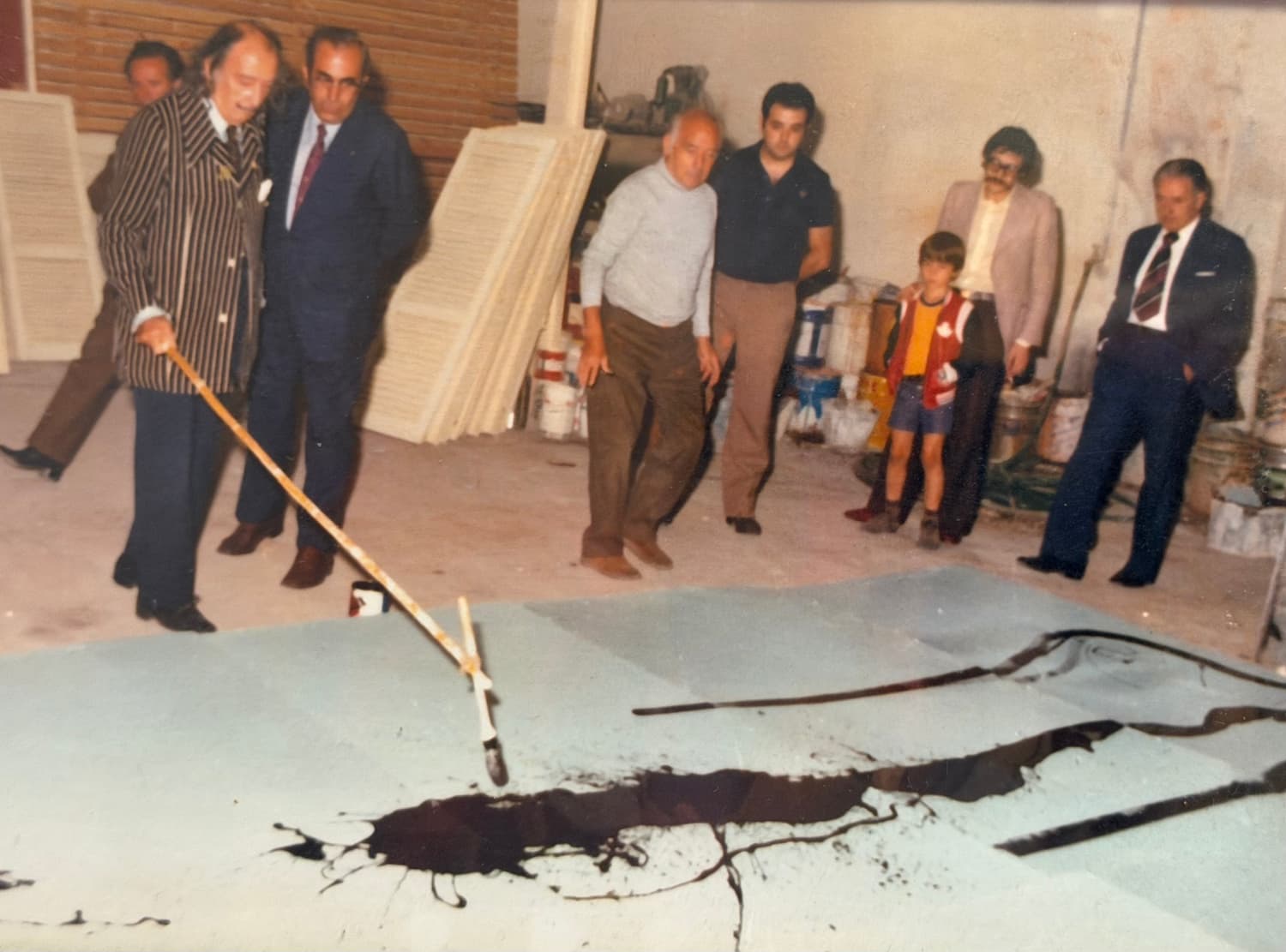
— What attracted you to that environment?
I was fascinated by its constant need to evolve. Music changes every six months, and entertainment venues must also keep reinventing themselves. You can build a fantastic disco, but after two, three, or perhaps four years, you need to renew it and create something new to keep attracting people.
Watching that process when I was young shaped the way I later approached the technology industry. You cannot remain still. You must continue learning, changing, and evolving every day.
A Failed Radio Test and a Lesson in Staying Calm
— What early experience had a particularly strong influence on you?
When I was 18, Catalunya Ràdio announced a DJ opening. I had relationships with DJs at local radio stations in Figueres, although I didn’t have much professional radio experience. I recorded several sessions on cassette at the disco bar, submitted one, and was selected for an audition in Barcelona.
The audition was a disaster. I was extremely nervous and could not demonstrate what I knew. But that failure taught me something important about handling stressful situations and professional challenges. When stress blocks you, you cannot use your knowledge properly. When you remain calm, you can think clearly, draw on your experience, and find a solution.
“When stress blocks you, you cannot use what you know. When you remain calm, you can think clearly and find a solution.”
School, Sport, and the Search for the Right Education
— What kind of student were you?
My primary school was in Figueres. During the first years, I could pass my courses simply by listening in class. I hardly ever opened my books before an exam.
AI in Sports Production: Why Tenders Hold Back Innovation — Waleed Isaac
That changed when I was about 12 or 13. The subjects became more demanding, and for the first time, I had to put in extra effort and learn how to study properly. It was a difficult adjustment because I had never developed a study method before.
— Did you play sports?
Yes. I played basketball for a registered competitive team for many years, although I was not an outstanding player. In secondary school, I also took general sports training, including handball, basketball, football, swimming, athletics, and several other disciplines. I had to learn the rules and pass practical exams in each sport.
I also played tennis recreationally at weekends. Sport has always been something I enjoyed, and for many years I continued playing basketball with friends every Monday.
— What did you decide to study after finishing school?
Choosing an educational path was difficult because none of the available programs combined my two main interests. Engineering focused on traditional technology, frequencies, and radio frequencies but offered very little creativity.
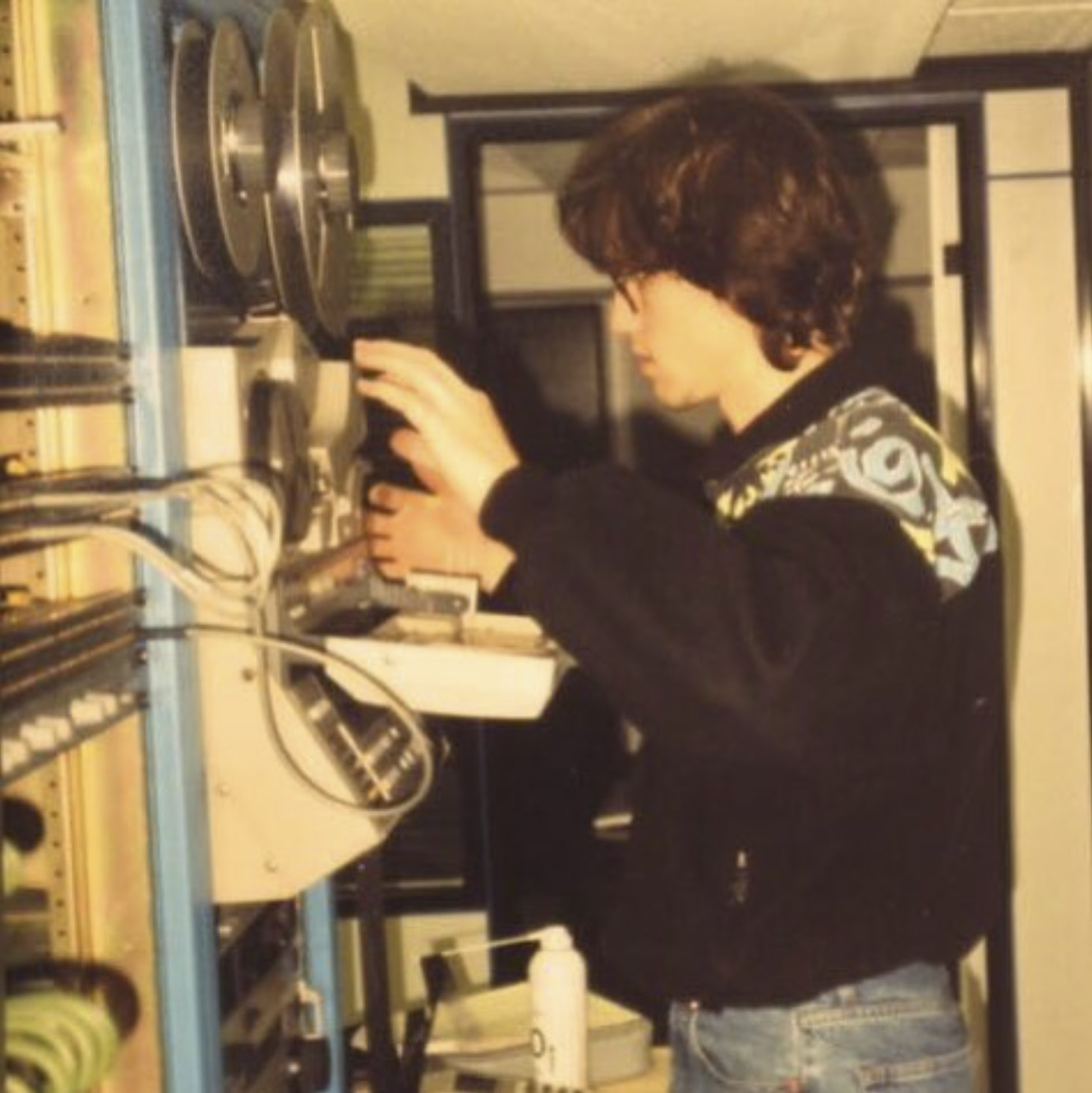
I enrolled in the Image and Sound program at Center Calassanç, from which ESCAC, the Cinema and Audiovisual School of Catalonia, later emerged. At that time, it was vocational education rather than a university program. It gave me exactly the combination I was looking for: content creation together with the technology required for video and cinema production.
— What did you take away from your audiovisual education?
The first high-definition experiences were beginning to appear, although the environment in which I studied was still entirely analog. Most importantly, I learned what I had hoped to learn: how technology and creativity interact.
That relationship has remained part of my professional philosophy ever since. Technology should not exist separately from the creative process. The two must work together.
Weddings, Teaching, and Almost No Sleep
— What was your first job?
My first professional work involved filming what we jokingly called BBC: bodas, bautizos y comuniones, meaning weddings, baptisms, and communions. I filmed and produced these social events as a freelancer. Technically, it was not a permanent position, but I did it continuously for three or four years.
At the same time, I had two other jobs in Barcelona. One was at the professional school where I had studied, and the other was at a production company.
— How did you become a teacher after studying there for only one year?
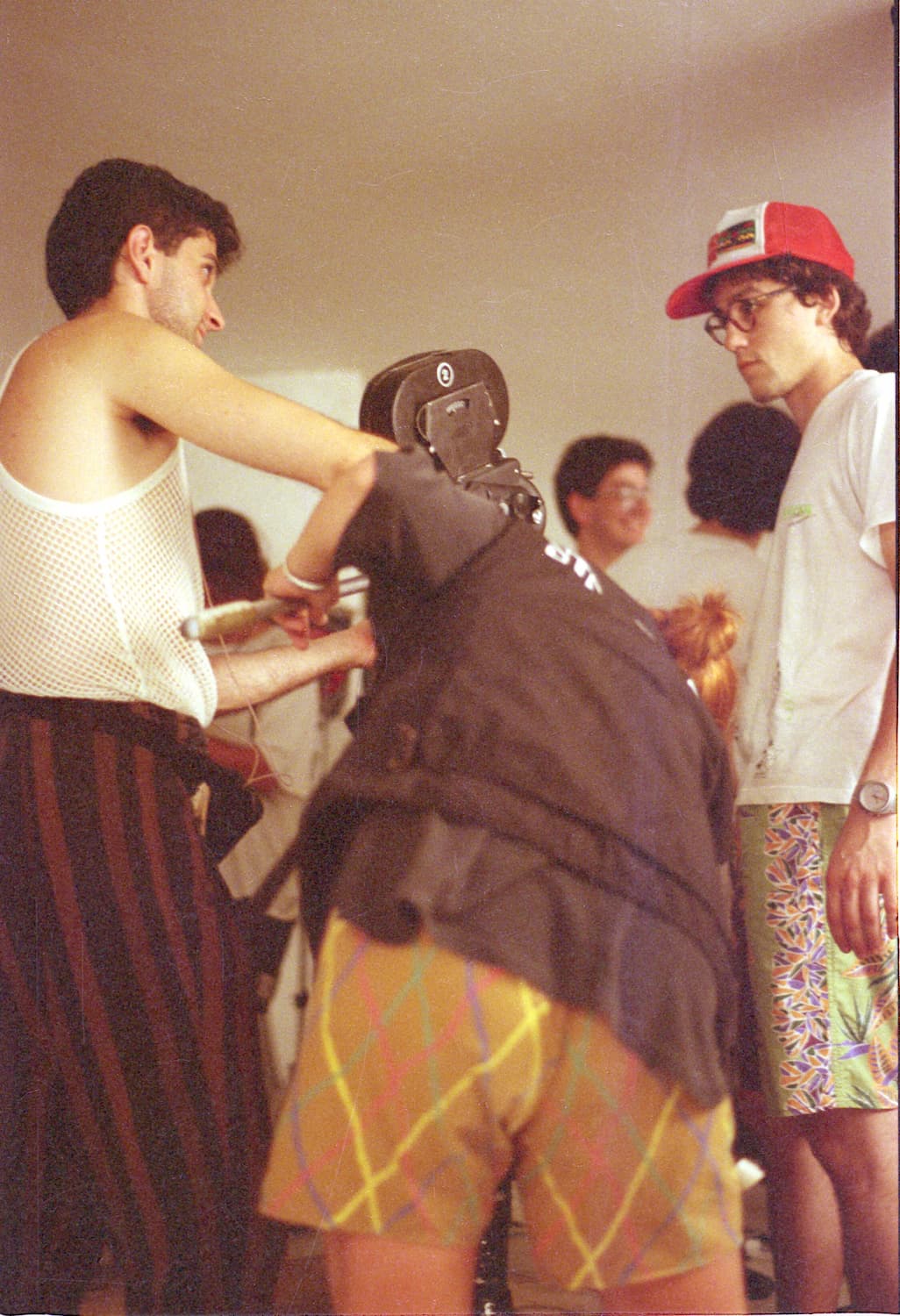
During my first year, I studied ENG and camera operation. At the same time, I was already working professionally as an ENG camera operator. The school saw my practical experience and believed I could teach other students.
As a result, during my second year I was both a student and a teacher. It was slightly surreal, but it was also a fantastic opportunity.
“They paid me not only for teaching, but also for learning.”
— What subjects did you teach?
I initially taught ENG and camera operation. When the school decided to introduce a post-production course, I spent the summer receiving additional training so that I could teach it in Barcelona. At the same time, I worked professionally in post-production, so I learned and applied the same skills in parallel.
Later, as Barcelona prepared for the 1992 Olympic Games, the private school decided to introduce outside broadcast production. It needed to build a small OB van from scratch, and I joined the team responsible for creating it. We then used that vehicle to train students.
— How did you manage all those responsibilities?
It was a period with very little time for sleep. I was teaching, working as an ENG camera operator and later in post-production, and still producing weddings and other social events.
It was extremely demanding, but it gave me experience across several parts of the production process early in my career.
From the University to a Fourteen-Hour Working Day
— What happened when the production company closed?
The company ceased operations in January 1993. I then joined Universitat Autònoma de Barcelona, or UAB, where I worked for three years as a technical operator at the Faculty of Communication Sciences, supporting television studios and radio infrastructure.
I was part of the university’s technology team and worked with the technical systems used by students and teaching staff.
— Why did you leave the university?
I received a call offering me a six-month contract as the technical manager of a studio producing a program in Barcelona. It seemed like a more interesting professional opportunity, so I accepted it.
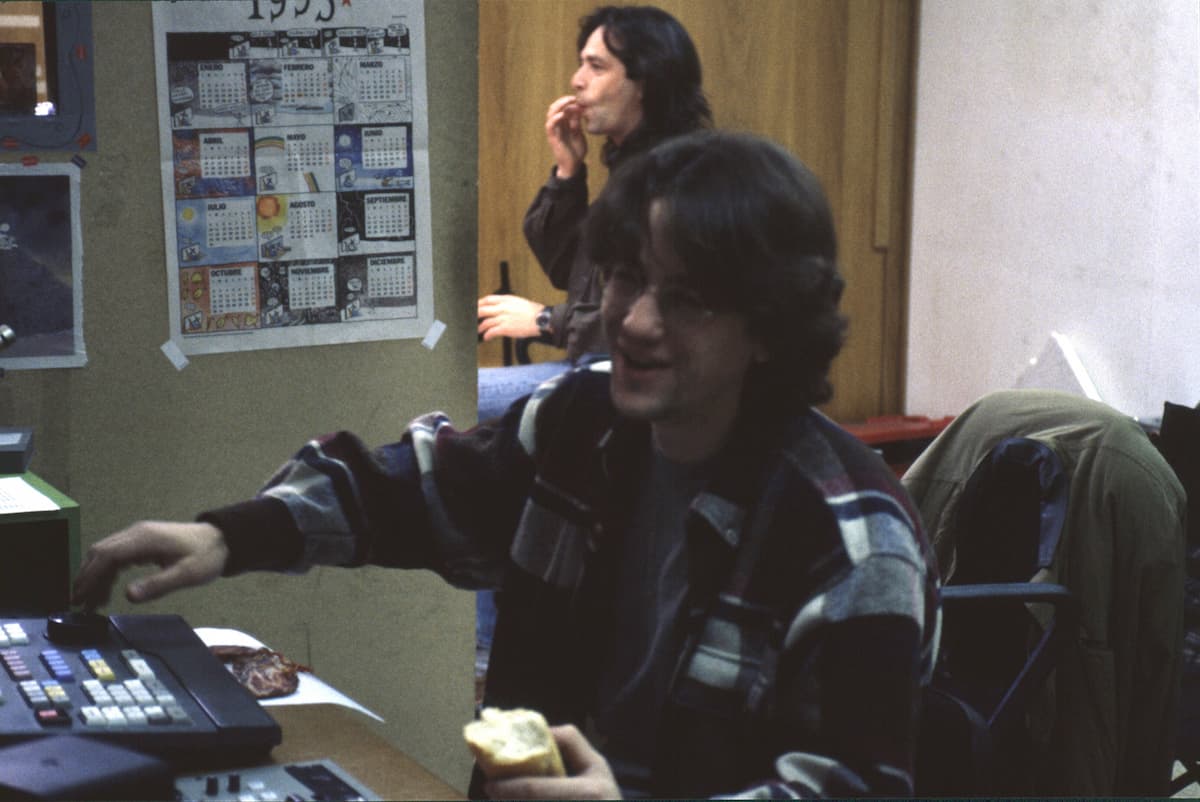
When I arrived, the company was also looking for someone to handle post-production in the mornings. I knew that work, so I became a post-production engineer in the morning and the studio’s technical manager in the afternoon. I worked 14, and sometimes 16, hours a day in the same facility.
Intervideo, OB Vans, and MediaMovil
— What happened after the six-month contract ended?
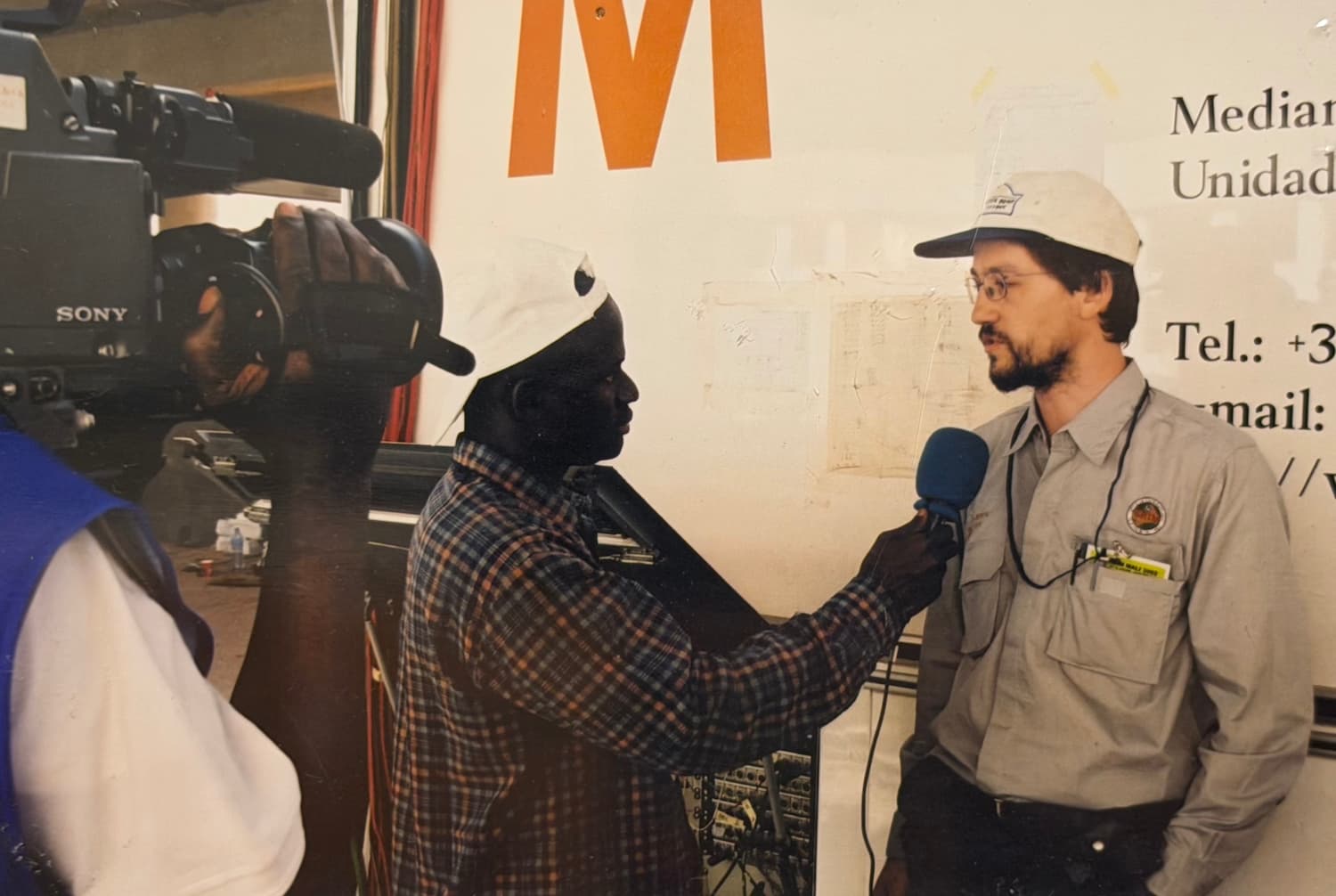
In 1995, I was offered a position at Intervideo, a company based in Girona. At the time, the company was primarily focused on ENG services for television news, but I joined just as it decided to expand into live sports production and launch its first OB van.
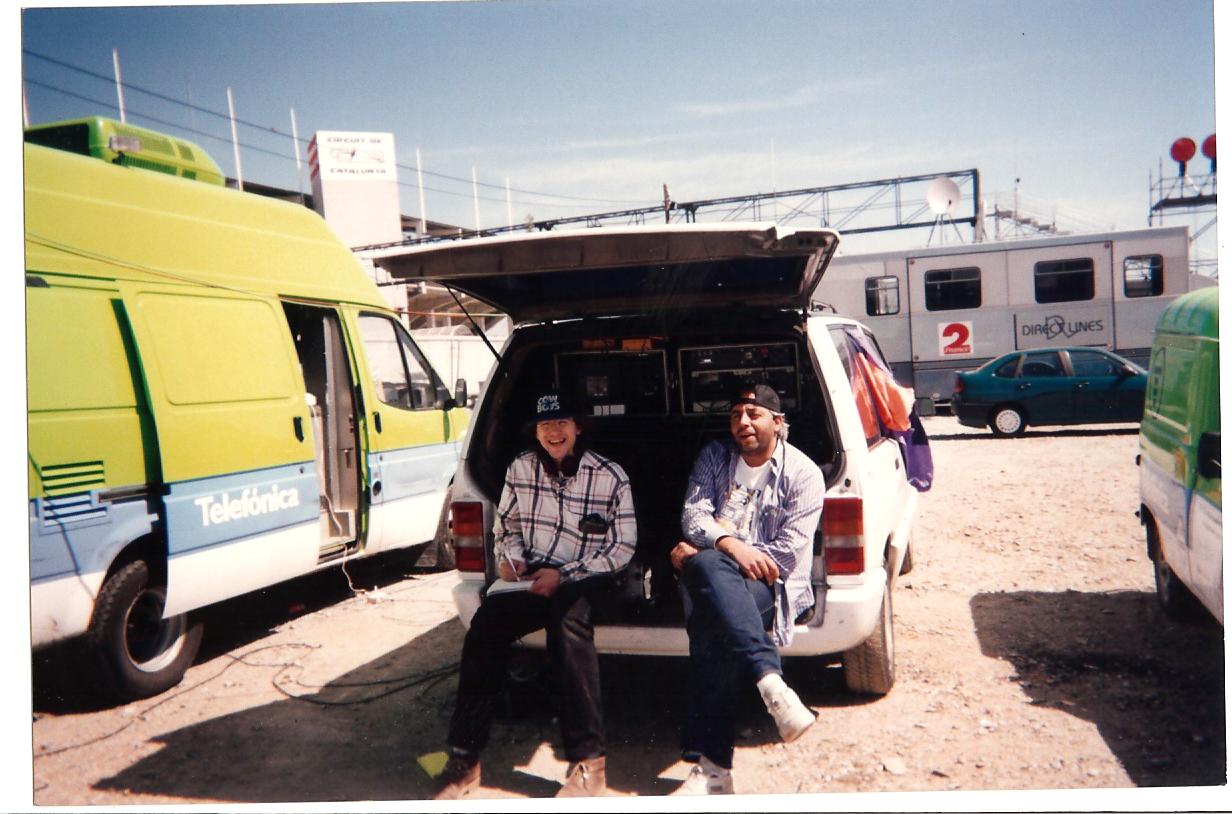
It was a small five-camera unit, and I joined as a technician. That was the beginning of a long period in outside broadcast production for me.
— How did the outside broadcast operation develop?
The business grew quickly. We started with that first small OB van, then built larger units and continued renewing the equipment and expanding the fleet every one or two years.
By 1999, the operation had been integrated into the Mediapro Group as MediaMovil. The people and much of the infrastructure remained largely the same, while the operation continued to grow in scale.
— What were the major technical transitions during those years?
When we transitioned from analog video to SDI in the mid-1990s, we also moved from mono to stereo audio. A few years later, we began incorporating Dolby Pro Logic into some productions.
Around the turn of the century, we started moving to 16:9 widescreen and introduced 5.1 surround sound, typically using Dolby Digital or Dolby E depending on the production. It was a period when both the video and audio sides of television production were changing significantly.
Mediapro: From Production to 24/7 Channels
— What changed for you in 2003?
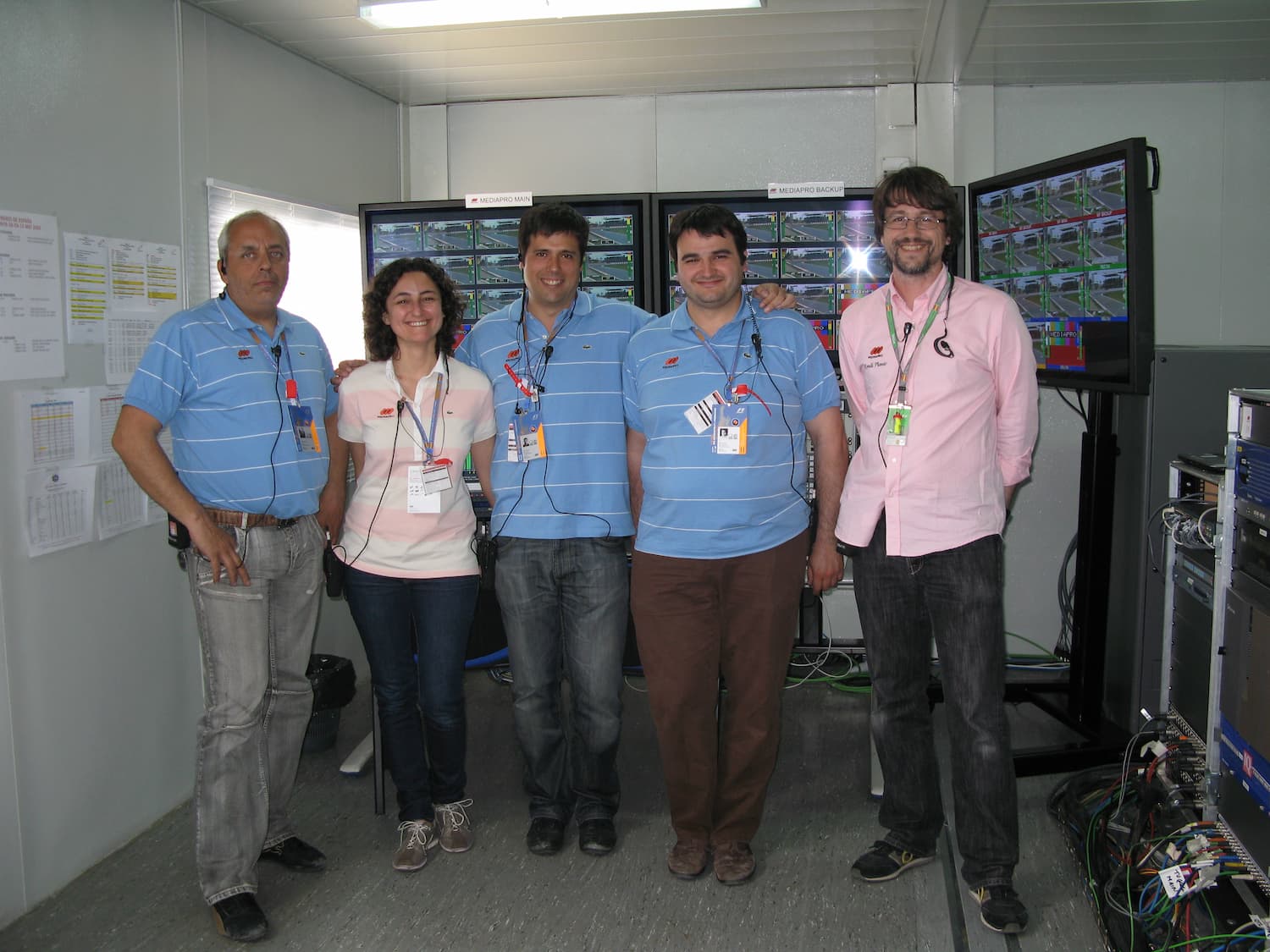
In 2003, I officially moved into Mediapro’s corporate organization and became responsible for technology at its new production center near Barcelona. My responsibilities included the studios, technical infrastructure, archive systems, and the technology supporting the production facility as a whole.
Until then, most of my experience had been in production and outside broadcasting. At Mediapro, I began working more extensively with playout operations and linear television channels.
— What did you have to learn in that new role?
We launched several free-to-air channels in 2004, and added premium services soon after, in 2006. As the operation expanded, we maintained a mix of both.
I had to understand the difference between producing individual events and operating permanent broadcast services. That meant working with service-level agreements and organizing reliable 24/7 operations to keep multiple channels on air continuously.
Digital Broadcasting and the First IP Links
— What made that period particularly important technologically?
The free-to-air channels we operated in Spain had very high technical standards. It was a period of continuous learning as we managed the transition from analog to digital free-to-air television and developed new methods to deploy these technologies and channels.
— What other changes were taking place within Mediapro?
At the same time, Mediapro was expanding rapidly and establishing production centers worldwide. We began exploring IP connectivity for video contribution between buildings and production facilities.
This was around 2003 or 2004, when professional video contribution still relied largely on satellite and other traditional transmission methods. IP-based professional video contribution was still highly unusual then.
Bridge Technologies Joins Gulf & MENA Decision-Makers Forum as Partner
Turning a Logical Question into an IP Contribution Network
— How did the IP contribution project begin?
One of Mediapro’s founders asked me a very logical question. We were already compressing standard-definition signals for satellite contribution at approximately nine or 12 megabits per second. If a signal could be compressed to nine megabits, why couldn’t we send it over a 100-megabit IP connection? In principle, we should have been able to transport several signals through the same network.
I found a modular encoding and decoding platform from Thomson’s Vibe series. Alongside the encoding, decoding, and ASI cards, Thomson had developed an IP interface card that appeared to offer exactly what we needed. I contacted Thomson and asked whether the card could be used with the private IP networks we wanted to test.
— How did you develop the solution?
Thomson was still developing the IP interface and welcomed the opportunity to test it on our network. We began working together to confirm that the equipment could support our requirements.
Within approximately two months, we had defined how to transport and manage contribution-quality standard-definition video over private IP networks. At a time when IP contribution was not yet commonly used in the broadcast business, we were already operating a practical solution.
— What was the most difficult part of introducing these technologies?
The hardest part wasn’t the technology. I can usually understand what a technology offers, how it can fit into an existing workflow, and how it can improve the business. The greater challenge is changing the mindset of people who are uncomfortable with new ways of working.
Every innovation requires a different approach. You have to understand the operational team’s concerns, determine whether the timing is right, and convince financial decision-makers that the investment will make the company more competitive in the future.
“The most difficult part of innovation is not the technology. It is changing the mindset of people.”
Building a Complete Remote Production Workflow
— What do you consider one of your main professional achievements?
The IP contribution network was probably my first major achievement. The infrastructure and workflow we defined continued operating for many years without significant changes.
The next step began when the same Mediapro founder asked another logical question: if we could send several signals through the network, why could we not send all the camera feeds from a stadium and produce the event remotely?
— What was the first technical challenge?
The first challenge was latency. The production team needed to have the same experience as if everyone were working locally. When a director requested a shot, the camera operator’s response needed to appear immediate.
We tested how camera-shading operators, television directors, and camera operators experienced the latency and determined the maximum acceptable latency for a football production. We then looked for encoding and decoding systems that could meet that limit within the bandwidth available at the time. One manufacturer offered an innovative ultra-low-latency mode that made the remote production concept technically possible.
— Was low-latency encoding enough to build the system?
No. We then had to define the complete workflow, including tally, intercom, audio, and all the other communication and control systems. The solution also needed to work reliably across different OB vans, venues, and production galleries at the central facility.
For example, OB van one might work with gallery one on Saturday and gallery five on Sunday. The tally, audio, and intercom routing had to change correctly each time. Connecting another OB van also could not interrupt a production already on air from another gallery.
— How did you approach such a complex project?
My proposal was to involve representatives from every part of the operation. This included production planners responsible for scheduling and costs, television directors, network and IP engineers, OB van teams, studio and gallery teams, and an operations specialist from my own department.
Remote production could not be designed by the technology team alone. It required a workflow that reflected the needs of everyone who would plan, operate, manage, and deliver the production.
— When did remote production move from testing into live production?
From November to December 2013, we were running remote productions in parallel with our traditional ones. The first remote production we completed and distributed internationally was a LaLiga match between Getafe CF and Real Sociedad, which we produced on January 19, 2014.
TVU Networks Joins Gulf & MENA Decision-Makers Forum as Partner
Why Resolution Alone Was Not Enough
— What was the next major innovation?
In 2015, coinciding with the first El Clásico of the 2015–16 LaLiga season, we produced our first live football match in 4K. Although it was still experimental at the time, we broadcast it internationally.
The 4K production used only three cinema cameras because those were the only 4 K cameras available to us. At the same time, the regular HD production used approximately 24 cameras. So there was no real comparison in terms of storytelling. The 4K program was essentially a technical experiment.
— What did you learn from that first production?
We later demonstrated the two versions to clients on high-quality television screens. I explained that 4K allowed viewers to see faces and details in the crowd more clearly. However, I realized that the difference was only clearly visible when I stood about one meter or less from the screen.
That was a frustrating but important discovery. Producing in 4K made little sense if viewers had to stand extremely close to the television to appreciate the improvement.
— How did that observation change your approach?
I studied the proposed development path for ultra-high-definition television. The industry expected the next stages to include high dynamic range, a wider color gamut, and higher frame rates over about ten years.
Our initial test had increased only the resolution. I asked why we shouldn’t start with high dynamic range instead. HDR produced a difference that viewers could see from a normal viewing distance, making the improvement much more meaningful.
Defining an HDR Simulcast Workflow
— How did you begin developing HDR production?
I started defining an HDR production workflow while camera and production-equipment manufacturers were still deciding what the next generation of systems should look like. I worked closely with Panasonic on the cameras and with the Snell/SAM team on the production switchers. The project began around the time Snell was transitioning to the SAM name, while our points of contact remained the same.
Together with those companies and several other manufacturers involved in parts of the workflow, we developed what we understood to be the first simulcast workflow capable of delivering 4K HDR and 1080i SDR simultaneously.
— Why was the simulcast element important?
Broadcasters could not simply replace all existing services with HDR. We needed a workflow that would produce a new HDR version while continuing to deliver a conventional SDR signal for existing distribution and viewers.
The workflow we developed is still in use today. Because we started early, we learned which elements of HDR production were genuinely important and which were less relevant in practical operations. Today, high-end productions are delivered in UHD HDR with immersive audio, including 5.1.4 formats such as Dolby Atmos or Audio Vivid.
— What makes you particularly proud of that project?
Some of the people who worked with me on the original definition later became HDR supervisors and took responsibility for major international productions, including the 2026 FIFA Men’s World Cup in the United States, Canada, and Mexico.
For me, the decisive moment came during that client demonstration, when I realized higher resolution alone wasn’t enough. That observation changed our direction and led us to a workflow with a much greater and more visible impact.
wTVision Joins Gulf & MENA Decision-Makers Forum 2026 as Sponsor
Software-Based Production and the Next Revolution
— What technological transformation are you focused on now?
I am extremely enthusiastic about the changes the industry needs to make now. Software-based production changes almost everything, and the transformation goes far beyond simply moving video over IP.
Broadcasters, service providers, producers, manufacturers, and other participants must recognize that the rules for creating both live and non-live content are changing. Some companies already understand this very well, but successful transformation requires several elements to come together.
— What conditions are necessary?
A company must understand the changes, invest in implementing them, and prepare its people to work differently. Aligning all those elements is not easy, but I believe it is the only way to adapt to this period of fundamental change.
Traditional production models will continue for certain tier-one events for a long time, although some functions are already being centralized. At the World Cup, for example, replay and camera shading can be centralized as part of a remote production workflow.
The next stage is software-based production combined with new tools, including artificial intelligence. This changes not only the infrastructure but also how systems are operated and content is produced. That is the transformation I am now focused on helping the industry deploy.
Broadcast, Pro AV, and Cinema Are Converging
— How will the growth of Pro AV influence the broadcast market?
We should not look only at the convergence of Pro AV and broadcast. We must also include traditional cinema production. These three major areas of audiovisual production are moving closer together every day.
Films are now being produced with smartphones and small cameras, while broadcast and Pro AV productions increasingly use cinema cameras and large-format sensors. Software tools originally developed for inexpensive streaming, social media, or AV productions are also being adopted for professional live broadcasting.
— What does this convergence mean for the industry?
Professionals in all three sectors need to remain open-minded and adopt useful tools and methods from the other markets. I have worked in broadcast, cinema, and Pro AV at different stages of my career, so I understand what each sector needs and which technologies from one field may be valuable in another.
Managing this exchange will be key to the industry’s development over the next several years. The traditional belief that Pro AV automatically offers lower quality or reliability than broadcast is no longer valid. All three sectors can now achieve very high technical standards.
— Does cinema still represent the highest level of image quality?
When I was young, cinema was considered the unquestionable benchmark. Nothing else could match that image quality. Today, however, cinema does not automatically lead in every technical category.
In classes with cinema students, I sometimes challenged that traditional assumption. Cinema generally operates at 24 or 25 frames per second, while television may work at 50. Broadcast systems can also offer higher resolution, a wider color gamut, and different dynamic-range capabilities. Cinema may still lead in storytelling, but it is no longer automatically superior in terms of technology.
— What should professionals in these industries learn from one another?
We need a broader view of the audiovisual industry. Professionals should understand what other sectors are doing and consider how their technologies and methods could improve quality, efficiency, and operability within their own market.
No sector should assume that it automatically has the best solutions. Broadcast, cinema, and Pro AV must respect one another and accept that another industry may sometimes be doing something better, more efficiently, or more affordably. That willingness to learn will be essential to the industry’s future development.
NEP Middle East & Asia to Host Inaugural Gulf & MENA Decision-Makers Forum in Dubai
AI Must Be Evaluated Solution by Solution
— Some people believe that the current enthusiasm around AI is becoming a bubble. How do you expect AI to change live broadcast production over the next three to five years?
Most innovations follow a similar hype cycle. AI is currently receiving enormous attention, but we should not discuss it as a single technology. We must examine every AI product and deployment individually.
Some AI solutions will prove unsuitable or too expensive compared with traditional methods. Others will be extremely valuable for specific applications. The key is to understand the actual problem, the required level of reliability, and whether AI genuinely delivers better business and operational results.
— Why do some promising AI products fail to become practical broadcast solutions?
An AI system may improve very quickly from zero to 75 or 80 percent accuracy. At that stage, commercial and marketing teams may believe they already have a revolutionary product. However, progress normally slows considerably after that.
Moving from 80 to 85 percent may require considerably more work, while reaching the 99.9 percent or higher reliability expected in many broadcast applications can sometimes be impossible. An 85 percent solution may support a manual process or work in another market, but it may not be reliable enough to operate independently in broadcasting.
“The final few percentage points of accuracy are often the most difficult and expensive part of an AI solution.”
From Virtual Advertising to Camera Shading
— Can you give an example of AI successfully replacing a more complicated workflow?
Supponor’s virtual advertising system is a good example. Its earlier workflow was technically complex, using infrared lighting and additional cameras attached to the main broadcast cameras. We worked with the company to help develop and integrate that workflow.
Ursula Romero Takes Over Global Sports Broadcasting Company After Her Father’s Death
The newer system uses AI to detect and track the advertising surfaces, players, the ball, and other activity on the field. It can then replace the visible perimeter advertising with virtual advertising in real time during a live broadcast. The system now operates with high reliability, and the quality of the virtual insertion is significantly better than with the earlier workflow.
— Which other areas of production could benefit from AI?
AI-assisted software development will make some solutions much faster and easier to build. It could also improve production planning and help with technically complex tasks such as camera shading.
Matching cameras is particularly difficult when a live HDR simulcast production combines different equipment. A team may need to match a RED cinema camera with conventional broadcast cameras from Grass Valley, Panasonic PTZ cameras, and specialist miniature cameras. This requires highly experienced operators who can make all the pictures look consistent.
— Is AI already able to perform that work?
I am not aware of a fully deployed AI solution that can manage this entire process today. However, creating such a system without AI would be almost impossible, while AI may eventually make it achievable.
This is part of the wider move toward software-based production: integrating AI into selected parts of the workflow rather than expecting it to replace the complete production process.
— Does every AI application require the same level of accuracy?
No. The required accuracy depends entirely on the task. AI can identify events in an image, generate additional content, or create personalized versions for different audiences. In those applications, an occasional incorrect image or irrelevant clip may not be a serious problem, especially when the system produces a very large volume of content.
Virtual advertising is different. If the system replaces an area that was not intended for advertising, the mistake will be immediately visible to the audience. That application requires extremely high accuracy. That is why every AI solution must be evaluated based on its purpose and the consequences of an error.
A Family Built Alongside a Career
— Tell us about your family.
I have a wife and two children. My wife and I have lived together since 1994, and we married in 1995. Our first child was born in 1996, and our second in 2003.
We are a happy family.
Omar Pleite Guerra: “Technology Should Serve the Story, Not Replace It”
After 30 Years, Time to Choose Carefully
— After spending approximately 30 years within the same group, how does this new period feel?
I don’t feel like I am outside the industry. I continue receiving many proposals, which makes me very happy. However, after leaving Mediapro, I deliberately decided to disconnect for a short period, close that chapter properly, and give myself some time to relax.
I worked in the same group for about 30 years. I have extensive experience changing roles, developing new workflows, and adapting to constantly evolving technologies, but I have almost no experience choosing between companies or deciding what is best for me personally over the long term.
— Have you considered creating your own consulting company?
It is one possibility, and I haven’t ruled it out. Technical consulting, broadcast consulting, or live production consulting could all be options, but I need time to decide what’s best for the next stage of my career.
I enjoy my profession and want to keep working for as long as possible. The challenge is not finding a job. It is deciding which opportunity is genuinely right for me and how I can best use my experience.
“It’s a good time to decide which project I’d like to get involved in.”
TFT1957 | TV & Film Technology Magazine October 2026, Issue 797